
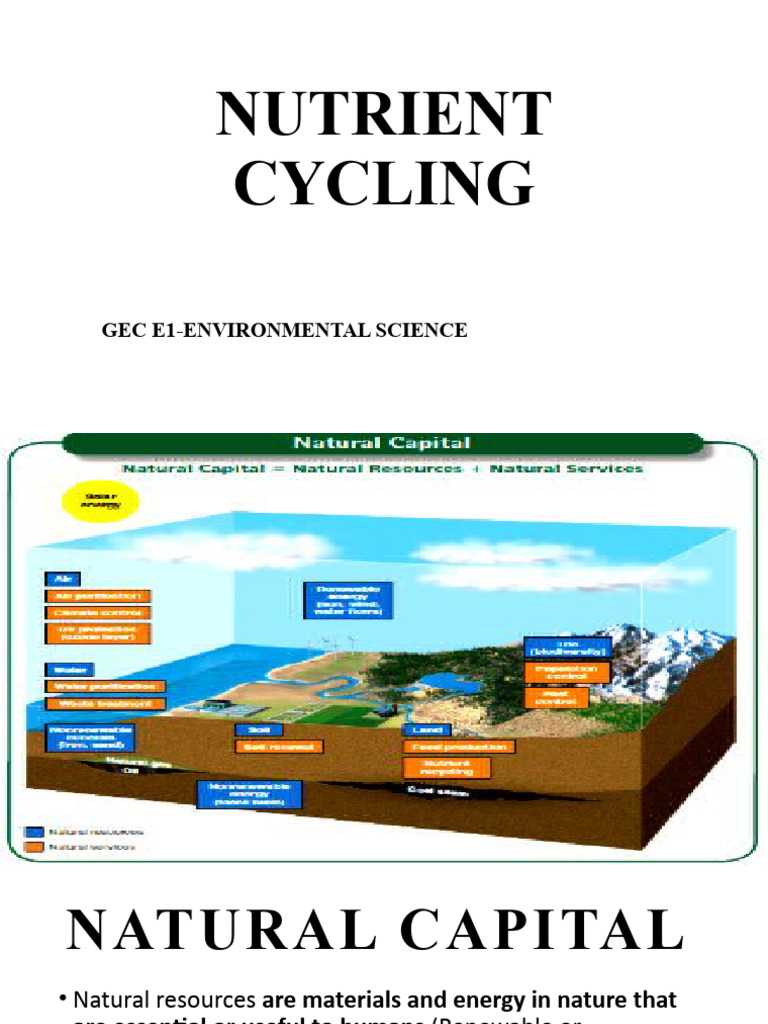
Human activities such as intensive agriculture, deforestation, and urban expansion alter the natural flow of nitrogen, phosphorus, and carbon, threatening ecosystem health and human well‑being.
Quick Answer
Nutrient cycling is the continuous movement of essential elements (e.g., nitrogen, phosphorus) through soils, water, plants, and microbes. Human actions—especially the overuse of synthetic fertilizers, widespread pesticide application, forest clearing, and the creation of impervious surfaces—interrupt these pathways by increasing runoff, reducing soil biota, and changing climate patterns. Strong scientific consensus shows that these disruptions lead to eutrophication of waterways, soil degradation, and reduced agricultural productivity, while also amplifying climate‑related risks. Uncertainty remains around the exact magnitude of long‑term feedbacks in different regions.
Key Takeaways
- Over‑application of nitrogen and phosphorus fertilizers drives nutrient runoff and algal blooms.
- Pesticides harm soil microbes and earthworms that are essential for mineralization.
- Deforestation removes the primary reservoir for nutrients and accelerates leaching.
- Urban impervious surfaces increase surface‑runoff, delivering excess nutrients to rivers and lakes.
- Climate change alters soil moisture and microbial activity, further destabilising nutrient cycles.
- Restorative practices—cover crops, agroforestry, and wetlands—can rebuild natural nutrient pathways.
What Is How Human Activities Disrupt Nutrient Cycling?
The phrase refers to any anthropogenic process that interferes with the natural circulation of key elements—principally nitrogen (N), phosphorus (P), and carbon (C)—through ecosystems. The disruption can occur at the scale of a single field, a watershed, or the global biosphere. It differs from general pollution in that it specifically impairs the biogeochemical loops that sustain plant growth, soil fertility, and water quality.
How Does It Work?
1. Fertilizer Over‑application
When synthetic N or P fertilizers exceed plant uptake, excess ions dissolve in rainwater and travel to streams. This creates a nutrient surplus that fuels rapid algal growth, a process known as eutrophication.
2. Pesticide Impact on Soil Biota
Broad‑spectrum chemicals reduce populations of earthworms, mycorrhizal fungi, and bacteria that break down organic matter and release nutrients back into the soil. Fewer decomposers mean slower mineralisation and lower plant‑available N and P.
3. Deforestation and Land‑Use Change
Removing forest cover eliminates leaf litter and root turnover, the primary sources of organic nutrients. Soil exposure to rain and wind then accelerates erosion and leaching of soluble nutrients.
4. Urban Impervious Surfaces
Concrete and asphalt prevent water infiltration, increasing surface runoff that transports fertilizers from lawns, pet waste, and atmospheric deposition directly into water bodies.
5. Climate‑Driven Feedbacks
Warmer temperatures can boost microbial respiration, altering the balance between nitrogen fixation and loss (e.g., denitrification). Shifts in precipitation affect soil moisture, influencing both plant uptake and microbial activity.
What Does the Evidence Show?
Long‑term monitoring by the United Nations Environment Programme (UNEP, 2021) indicates that global riverine nitrogen loads have risen by roughly 30 % since the 1970s, closely tracking the expansion of synthetic fertilizer use reported by the Food and Agriculture Organization (FAO, 2022). A systematic review of 112 field studies (Smith et al., 2020, *Science of the Total Environment*) found that pesticide residues reduce soil microbial biomass by an average of 18 %, compromising nutrient mineralisation. The Intergovernmental Panel on Climate Change (IPCC, 2022) notes that climate‑induced changes in soil moisture are already altering nitrogen cycling rates in temperate regions. Together, these independent lines of observation confirm that human activities are a primary driver of altered nutrient dynamics worldwide.
Main Causes or Drivers
Direct Causes
- Excessive application of synthetic nitrogen (NH₃‑based) and phosphorus (P₂O₅) fertilizers.
- Widespread use of non‑selective pesticides.
- Clear‑cutting of forests for timber or agriculture.
- Construction of roads, parking lots, and other impervious surfaces.
Underlying Drivers
- Global demand for higher crop yields to feed a growing population.
- Economic incentives that subsidise fertilizer and pesticide sales.
- Urban population growth and associated land‑use planning that prioritises development over green space.
- Climate change, which amplifies runoff and alters microbial processes.
Environmental and Human Impacts
Environmental Impacts
Excess nutrients cause algal blooms that, upon decay, deplete dissolved oxygen, leading to dead zones such as the Gulf of Mexico’s hypoxic zone, which covered 22,000 km² in 2020 (NOAA, 2021). Soil nutrient depletion reduces crop yields, prompting further fertilizer use—a feedback loop known as “nutrient mining.” Altered nitrogen cycles increase emissions of nitrous oxide (N₂O), a greenhouse gas 298 times more potent than CO₂ over a 100‑year horizon.
Human Health and Social Impacts
Drinking water contaminated with nitrate (above 10 mg L⁻¹) is linked to methemoglobinemia, especially in infants (WHO, 2017). Algal toxins from harmful blooms can cause liver damage and respiratory irritation. Rural communities dependent on fisheries suffer economic loss when fish kills follow eutrophication events.
Economic and Infrastructure Impacts
Water treatment plants in the United States spent an estimated US$2.5 billion in 2019 on nutrient removal technologies (EPA, 2020). Soil erosion from deforestation increases sedimentation in reservoirs, reducing hydro‑electric capacity and raising maintenance costs.
Regional Differences
In the United States Midwest, intensive corn‑soybean rotations generate high nitrogen surplus, leading to the Mississippi River’s nutrient load. In contrast, many sub‑Saharan African regions experience nutrient depletion rather than excess, as soils are heavily eroded and fertilizer use is low. Tropical Southeast Asia sees rapid deforestation for palm oil, causing severe phosphorus loss from acidic soils. These patterns illustrate that the direction and magnitude of disruption depend on local land‑use practices, climate, and governance.
What Scientists Know With High Confidence
- Over‑application of synthetic nitrogen and phosphorus fertilizers is the dominant source of nutrient runoff globally.
- Pesticide exposure reduces soil microbial biomass and slows nutrient mineralisation.
- Deforestation markedly lowers the capacity of ecosystems to retain and recycle nutrients.
- Urban impervious surfaces increase the speed and volume of nutrient‑laden runoff to water bodies.
What Remains Uncertain
Key uncertainties include the long‑term response of soil microbial communities to combined climate stressors and chemical inputs, and the regional thresholds at which nutrient loading switches from a fertilising effect to harmful eutrophication. Improved high‑resolution monitoring networks and integrated Earth system models are needed to narrow these knowledge gaps.
Common Misconceptions
Misconception: “Nutrients only affect farms, not natural ecosystems.”
Reality: Nutrients travel beyond field boundaries through water and air, influencing lakes, coastal zones, and even open‑ocean productivity.
Misconception: “All fertilizer use is harmful.”
Reality: When applied at agronomically appropriate rates and timed with crop demand, fertilizers can sustain yields without causing excess runoff.
Misconception: “Urban areas are too small to impact nutrient cycles.”
Reality: Concentrated sources of lawn fertilizer, pet waste, and storm‑water runoff from cities can create localized eutrophication hotspots that feed larger watershed problems.
Solutions and Limitations
- Precision agriculture: GPS‑guided equipment reduces fertilizer over‑application but requires investment in technology and farmer training.
- Cover crops and crop rotation: These practices retain nitrogen and build soil organic matter; however, they may reduce short‑term cash‑crop area.
- Integrated pest management (IPM): Lowers pesticide use while maintaining yields, yet adoption can be hindered by lack of extension services.
- Wetland restoration: Natural wetlands filter nutrients before they reach rivers, but land availability and maintenance costs can limit scale.
- Urban green infrastructure: Bioswales and permeable pavements capture runoff; effectiveness depends on proper design and municipal funding.
Each solution carries trade‑offs in cost, land use, and technical complexity, meaning a mix of approaches is needed for meaningful impact.
What Individuals, Communities, and Governments Can Do
What Individuals Can Do
- Apply lawn fertilizers sparingly and follow soil‑test recommendations.
- Compost kitchen and garden waste to return nutrients locally.
- Support products certified for sustainable agriculture (e.g., Rainforest Alliance).
What Communities and Organizations Can Do
- Implement municipal storm‑water management plans that include vegetated swales.
- Offer workshops on soil testing and low‑input farming techniques.
- Develop community gardens that use compost and native plantings to retain nutrients.
What Governments Can Do
- Reform fertilizer subsidy programs to reward nutrient‑use efficiency.
- Enforce regulations limiting phosphorus concentrations in wastewater discharge.
- Invest in large‑scale wetland and riparian buffer restoration projects.
- Integrate nutrient‑management metrics into national climate‑adaptation strategies.
Closing Synthesis
Human activities—especially intensive agriculture, pesticide use, deforestation, and urbanisation—interrupt the natural cycling of nitrogen, phosphorus, and carbon, leading to water quality degradation, soil loss, and climate feedbacks. High‑confidence research confirms the central role of excess fertilizer and land‑use change, while uncertainties remain around combined climate‑microbe interactions. Evidence‑based solutions such as precision farming, cover cropping, wetland restoration, and green‑infrastructure can mitigate impacts, but each comes with economic and practical trade‑offs. Coordinated actions across individuals, communities, and policy makers are essential to restore resilient nutrient cycles for future generations.
Frequently Asked Questions
What is nutrient cycling and why is it important?
Nutrient cycling is the continuous movement of essential elements such as nitrogen, phosphorus, and carbon through soils, water, plants, and microbes. It sustains plant growth, maintains soil fertility, and supports clean water, making it fundamental to ecosystem health and human food security.
How do synthetic fertilizers affect nutrient cycles?
Synthetic fertilizers add large amounts of nitrogen or phosphorus to soils. When applied beyond what crops can absorb, the excess leaches into waterways, fueling algal blooms and dead zones, and creates a feedback loop that can degrade soil health over time.
What evidence links pesticide use to disrupted nutrient cycling?
A systematic review of 112 field studies found that pesticide residues reduce soil microbial biomass by about 18 %, slowing the decomposition of organic matter and the release of nutrients needed for plant growth.
Which regions are most affected by nutrient runoff?
The U.S. Midwest experiences high nitrogen runoff from corn‑soybean rotations, while tropical Southeast Asia sees severe phosphorus loss from rapid deforestation. In contrast, many sub‑Saharan African areas face nutrient depletion due to low fertilizer use and soil erosion.
What practical steps can individuals take to help restore nutrient cycles?
Individuals can limit lawn fertilizer use based on soil tests, compost kitchen and garden waste to return organic nutrients to the soil, and choose sustainably produced food products that support low‑input agricultural practices.








Leave a Comment