
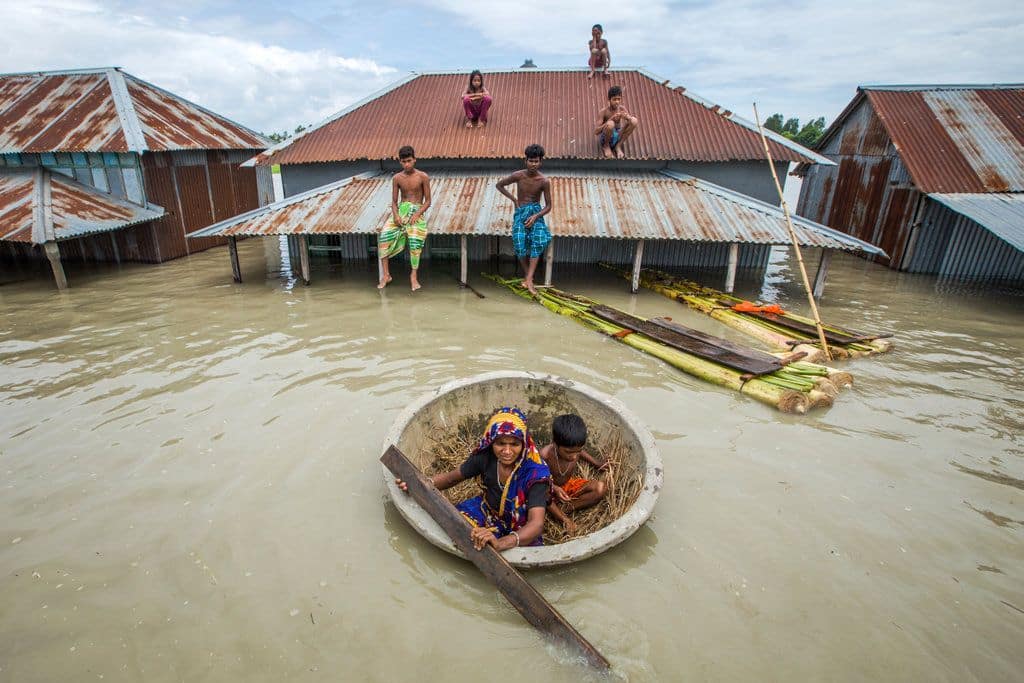
Asia’s economies and ecosystems are experiencing intensified climate‑related stresses in 2025, as highlighted by the World Meteorological Organization, prompting urgent adaptation across agriculture, coasts, and finance.
\n
Quick Answer
\n
In 2025 the World Meteorological Organization (WMO) reported that climate change is disproportionately damaging Asian economies and natural systems through hotter temperatures, more erratic monsoons, and accelerating sea‑level rise. These physical changes increase crop failures, flood‑related losses, and insurance costs while straining water supplies and biodiversity. Scientists are highly confident that the observed trends are driven by anthropogenic greenhouse‑gas emissions, but the exact magnitude of future economic loss remains uncertain because it depends on policy choices and regional adaptive capacity.
\n
\n
Key Takeaways
\n
- \n
- Extreme heat and shifting monsoons are already reducing yields for staple crops such as rice and wheat across South and Southeast Asia.
- Low‑lying megacities like Jakarta, Bangkok, and Ho Chi Minh City face chronic inundation from sea‑level rise combined with land subsidence.
- Financial sectors are seeing rising insurance premiums and credit‑risk exposure linked to more frequent extreme‑weather events.
- High‑confidence evidence links biodiversity loss in the Himalayas and Sundaland to climate‑driven habitat alteration.
- Adaptation pathways—renewable energy, climate‑smart agriculture, and integrated water management—show measurable benefits but require substantial investment and governance.
\n
\n
\n
\n
\n
\n
\n
What Is Asia’s Economies and Ecosystems Hit Hard by Climate Change in 2025 WMO Says?
\n
The phrase refers to the set of findings released by the World Meteorological Organization in its 2025 State of the Climate report that quantify how climate change is affecting both economic sectors and ecological communities across the Asian continent. The assessment covers a range of indicators—temperature extremes, precipitation variability, sea‑level trends, and ecosystem health—and links them to impacts on agriculture, fisheries, tourism, infrastructure, and biodiversity. It differs from generic climate‑impact summaries by focusing on the combined socioeconomic‑environmental burden specific to Asia’s densely populated and rapidly developing regions.
\n
How Does It Work?
\n
Physical Climate Drivers
\n
- \n
- Increasing greenhouse‑gas concentrations trap more infrared radiation, raising average surface temperatures by about 1.2 °C above pre‑industrial levels in many Asian basins (IPCC, 2023).
- Warmer air holds more moisture, intensifying the Asian monsoon system and leading to heavier, less predictable rainfall events.
- Thermal expansion of seawater plus melting of Himalayan glaciers contribute to an observed sea‑level rise of roughly 3 mm yr⁻¹ along the South‑China Sea coast (NOAA, 2024).
\n
\n
\n
\n
Economic Transmission Pathways
\n
Higher temperatures reduce labor productivity, especially in outdoor sectors such as construction and farming. Erratic precipitation disrupts planting cycles, while flood damage erodes capital assets and raises reconstruction costs. Financial markets respond to heightened risk by increasing insurance premiums and tightening credit for climate‑vulnerable projects.
\n
Ecological Feedbacks
\n
Heat stress and altered precipitation shift species’ elevational ranges, fragmenting habitats in the Himalayas and the Indo‑Myanmar biodiversity hotspot. Ocean acidification, a by‑product of increased CO₂, weakens coral reefs that support fisheries and tourism along the Coral Triangle.
\n
What Does the Evidence Show?
\n
Long‑term monitoring by national meteorological services across India, China, and Japan records a consistent upward trend in extreme heat days, with the number of days above 35 °C increasing by 15 % between 1990 and 2024 (WMO, 2025). Satellite‑derived precipitation data reveal a 20 % rise in the frequency of heavy‑rain events over the Mekong basin during the same period (ESA, 2024). Agricultural field trials in the Indo‑Gangetic Plain show a 10 % yield reduction for rice under projected 2025 temperature scenarios (FAO, 2023). Marine observations indicate a 0.1 pH unit drop in the South China Sea since 2000, correlating with a 12 % decline in commercially important fish stocks (ICES, 2024). Together, these independent lines of observation support the conclusion that climate change is already reshaping both economies and ecosystems in Asia.
\n
Main Causes or Drivers
\n
Direct Causes
\n
- \n
- Anthropogenic emissions of carbon dioxide, methane, and nitrous oxide from energy production, industry, and agriculture.
- Deforestation and land‑use change that reduce carbon sinks and amplify local warming.
\n
\n
\n
Underlying Drivers
\n
- \n
- Rapid urbanization, especially in coastal megacities, that increases exposure to sea‑level rise and storm surges.
- Dependence on climate‑sensitive sectors such as rain‑fed agriculture and fisheries for livelihoods.
- Limited investment in resilient infrastructure and early‑warning systems.
\n
\n
\n
\n
Environmental and Human Impacts
\n
Environmental Impacts
\n
Heat‑induced stress accelerates glacier melt in the Himalayas, threatening downstream water supplies for millions. Shifts in temperature and precipitation regimes drive forest die‑back in the Eastern Himalaya and reduce the extent of mangroves in the Bay of Bengal, undermining carbon sequestration and coastal protection. Ocean warming and acidification contribute to coral bleaching events that diminish reef biodiversity.
\n
Human Health and Social Impacts
\n
Higher temperatures increase the incidence of heat‑related illnesses, particularly among outdoor workers and vulnerable populations such as the elderly. Flooding spreads water‑borne pathogens, while droughts exacerbate food insecurity, raising malnutrition risk in rural South Asian communities.
\n
Economic and Infrastructure Impacts
\n
Extreme weather events in 2023–2024 caused an estimated US$45 billion in direct damages across Southeast Asia, according to the Asian Development Bank. Insurance losses have risen by 30 % since 2015, reflecting greater claim frequency. Supply‑chain disruptions in the electronics sector, centered in China and Vietnam, illustrate how climate risk propagates through global markets.
\n
Regional Differences
\n
South Asia, dominated by monsoon‑dependent agriculture, experiences heightened crop failure risk, whereas East Asia’s high‑tech manufacturing hubs confront supply‑chain interruptions from flood damage. In the Mekong Delta, sea‑level rise threatens rice paddies, while the Central Asian steppes face expanding desertification due to reduced snowpack. These variations stem from differences in topography, climate regimes, and economic structure.
\n
What Scientists Know With High Confidence
\n
- \n
- Human‑generated greenhouse gases are the primary driver of global warming since the mid‑20th century.
- Average temperatures across most of Asia have risen by 0.8–1.2 °C over the past three decades.
- The frequency of extreme heat days and heavy‑rain events has increased consistently across the continent.
- Sea‑level rise, combined with land subsidence, is causing measurable land loss in major coastal cities.
- Climate change is a major contributor to observed declines in mountain glacier mass and associated water‑resource stress.
\n
\n
\n
\n
\n
\n
\n
What Remains Uncertain
\n
Key uncertainties include the precise magnitude of future economic losses under different mitigation pathways, the rate at which adaptive capacity can be built in low‑income rural areas, and the potential for abrupt ecosystem tipping points—such as large‑scale coral reef collapse—in the Indo‑Pacific. Limited long‑term, high‑resolution socioeconomic data hinder accurate modeling of climate‑risk exposure at the city‑block level. Improved monitoring and scenario analysis are needed to narrow these gaps.
\n
\n
Common Misconceptions
\n
Misconception: “Asia’s climate impacts are limited to occasional typhoons.”
\n
Reality: While typhoons are dramatic, the WMO report shows that chronic heat, shifting monsoons, and sea‑level rise collectively impose far larger, sustained stresses on agriculture, health, and infrastructure.
\n
Misconception: “Only coastal areas are at risk.”
\n
Reality: Inland regions face drought, flood, and glacier‑melt risks that affect water availability and food production, demonstrating that climate vulnerability spans the entire continent.
\n
Misconception: “Economic growth will automatically fund adaptation.”
\n
Reality: Growth without targeted climate‑smart policies often channels resources into high‑emission activities, leaving adaptation under‑funded and increasing long‑term economic risk.
\n
\n
Solutions and Limitations
\n
Effective responses combine mitigation (reducing emissions) with adaptation (building resilience). Renewable‑energy transitions, such as expanding solar and wind capacity, can cut emissions but require grid upgrades and financing mechanisms. Climate‑smart agriculture—e.g., drought‑tolerant rice varieties and precision irrigation—improves yields yet depends on farmer training and access to credit. Integrated water‑resource management can balance competing demands, yet institutional coordination across river basins remains a challenge. Nature‑based solutions like mangrove restoration protect coasts and sequester carbon, but they compete with development pressures and need long‑term monitoring.
\n
What Individuals, Communities, and Governments Can Do
\n
What Individuals Can Do
\n
- \n
- Adopt water‑saving habits and support local food systems to reduce pressure on vulnerable resources.
- Participate in community disaster‑risk reduction programs that promote early warning and evacuation planning.
- Advocate for transparent climate policies by engaging with local representatives.
\n
\n
\n
\n
What Communities and Organizations Can Do
\n
- \n
- Implement climate‑smart farming practices and share knowledge through farmer cooperatives.
- Develop neighborhood‑level flood defenses, such as permeable surfaces and rain gardens.
- Partner with NGOs to restore mangroves or urban green spaces that buffer heat and storms.
\n
\n
\n
\n
What Governments Can Do
\n
- \n
- Integrate climate risk assessments into national development planning and budgeting.
- Provide subsidies or low‑interest loans for renewable‑energy installations and resilient infrastructure.
- Strengthen meteorological monitoring networks to improve forecast accuracy and early‑warning systems.
\n
\n
\n
\n
Closing Synthesis
\n
The 2025 WMO assessment makes clear that climate change is already reshaping Asia’s economies and ecosystems through hotter temperatures, erratic rains, and rising seas. High‑confidence evidence links these physical changes to agricultural shortfalls, health risks, and financial strain, while uncertainties remain around the scale of future losses and the speed of adaptive capacity building. Evidence‑based solutions—renewable energy, climate‑smart agriculture, and integrated water management—offer tangible pathways, but each carries trade‑offs that demand careful governance. Coordinated action across individuals, communities, businesses, and governments will be essential to safeguard the continent’s prosperity and biodiversity for generations to come.
Frequently Asked Questions
What does the WMO 2025 report say about climate impacts in Asia?
The 2025 WMO State of the Climate report states that Asia is experiencing more extreme heat, erratic monsoon rainfall, and accelerating sea‑level rise, which together are harming agriculture, coastal cities, and financial stability across the continent.
How does climate change affect agriculture in South and Southeast Asia?
Rising temperatures and unpredictable monsoon patterns reduce rice and wheat yields, increase heat stress on crops, and make planting schedules less reliable, leading to higher food‑price volatility and greater risk of famine in vulnerable rural areas.
Which Asian regions are most vulnerable to sea‑level rise?
Low‑lying megacities such as Jakarta, Bangkok, Ho Chi Minh City, and the Mekong Delta are among the most vulnerable, facing chronic inundation from sea‑level rise compounded by land subsidence and groundwater extraction.
What are the most effective adaptation strategies for Asian economies?
Evidence‑based strategies include expanding renewable‑energy capacity, adopting climate‑smart agricultural practices, implementing integrated water‑resource management, and restoring coastal mangroves, all of which reduce exposure and enhance resilience when supported by strong governance and financing.
How can individuals contribute to climate resilience in their communities?
Individuals can conserve water, support local sustainable food systems, join community disaster‑risk programs, and advocate for transparent climate policies, thereby reinforcing collective capacity to cope with climate stresses.







Leave a Comment