
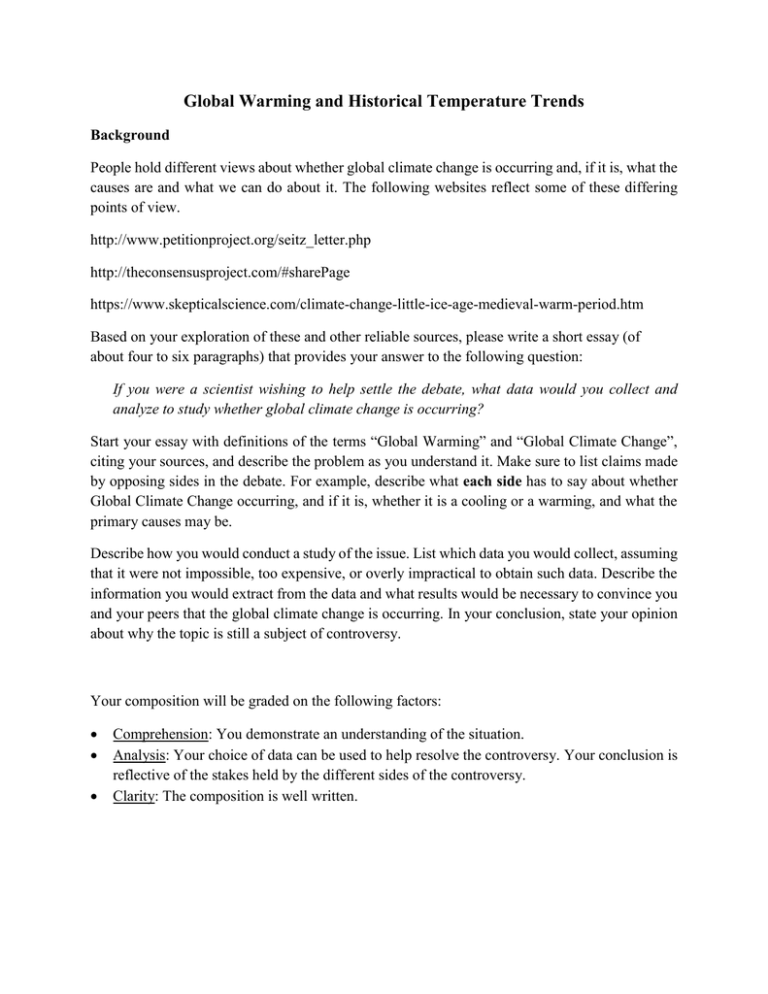
Climate change is the long‑term alteration of Earth’s temperature and weather patterns caused primarily by human‑released greenhouse gases, leading to measurable impacts on ecosystems, societies, and the global economy.
Quick Answer
Climate change refers to sustained shifts in average temperature, precipitation, and extreme‑event frequency driven by the accumulation of greenhouse gases—especially carbon dioxide, methane, and nitrous oxide—in the atmosphere. The scientific consensus, based on multiple lines of observation and modelling, is that human activities since the Industrial Revolution are the dominant cause of the rapid warming observed since the mid‑20th century. This warming is already raising sea levels, intensifying heatwaves, and altering ecosystems, while uncertainties remain around the exact timing of regional impacts and feedbacks.
Key Takeaways
- Human‑derived greenhouse gases are the primary driver of the observed global temperature rise since the 1950s.
- Long‑term monitoring shows a consistent increase in global average surface temperature of about 1.1 °C above pre‑industrial levels (IPCC, 2021).
- Sea‑level rise, more frequent heatwaves, and shifting precipitation patterns are the most robust impacts documented worldwide.
- Mitigation (reducing emissions) and adaptation (preparing for change) are both essential; no single solution can address all challenges.
- Uncertainties remain in regional climate sensitivity, carbon‑cycle feedbacks, and the socio‑economic outcomes of future emissions pathways.
What Is Climate Change Short Essay: A Clear and Simple Explanation?
In this context, a “short essay” is an concise, evidence‑based overview that defines climate change, outlines its mechanisms, and highlights its significance. Climate change differs from short‑term weather variability because it concerns statistically significant trends over decades to centuries. Understanding it matters because the Earth’s climate system underpins food production, water availability, health, and the stability of natural habitats.
How Does It Work?
1. Solar Energy and the Greenhouse Effect
Sunlight reaches Earth as short‑wave radiation; the surface absorbs it and re‑emits long‑wave infrared radiation. Greenhouse gases (GHGs) absorb and re‑emit part of this infrared energy, trapping heat and keeping the planet habitable.
2. Human Amplification of the Greenhouse Effect
Since the late 18th century, burning coal, oil, and natural gas has added roughly 440 ppm of CO₂ to the atmosphere (from 280 ppm pre‑industrial). Deforestation reduces the biosphere’s capacity to absorb CO₂, while agriculture releases methane (CH₄) and nitrous oxide (N₂O).
3. Feedback Loops
Warming can trigger feedbacks that amplify change: melting Arctic sea ice lowers surface albedo (reflectivity), causing more solar absorption; permafrost thaw releases additional CH₄ and CO₂; and warmer oceans hold less CO₂, reducing a natural sink.
4. Timescales and Inertia
Because the climate system has large thermal inertia—especially the oceans—temperature responses lag behind emissions. This means that even if emissions stopped today, warming would continue for decades.
What Does the Evidence Show?
Multiple independent data streams converge on the same conclusion:
- Instrumental records: Global mean surface temperature rose by ~0.18 °C per decade from 1970 to 2020 (NASA GISS, 2023).
- Satellite observations: Tropospheric warming of ~0.13 °C per decade since 1979 (NOAA, 2022).
- Ice core data: Past CO₂ concentrations correlate tightly with temperature over glacial‑interglacial cycles, confirming the greenhouse effect’s potency.
- Attribution studies: Detection‑and‑attribution analyses attribute >95 % of the warming since 1950 to anthropogenic GHGs (IPCC, 2021).
Main Causes or Drivers
Direct Causes
- Combustion of fossil fuels for electricity, transport, and industry.
- Land‑use change, especially deforestation and conversion of wetlands.
- Agricultural practices that emit CH₄ (livestock, rice paddies) and N₂O (fertilizer use).
Underlying Drivers
- Economic growth models that prioritize short‑term output over carbon efficiency.
- Global population increase and rising per‑capita energy demand.
- Policy frameworks that have historically subsidized fossil‑fuel extraction.
Environmental and Human Impacts
Environmental Impacts
- Sea‑level rise: Global mean sea level increased by 20 cm between 1901 and 2020, endangering low‑lying coastal zones (IPCC, 2021).
- Extreme weather: Frequency of heatwaves and heavy precipitation events has risen in most mid‑latitude regions.
- Ecosystem disruption: Coral bleaching events have become 2‑3 times more common since the 1980s, threatening marine biodiversity.
Human Health and Social Impacts
- Heat‑related mortality increases, especially among older adults and outdoor workers.
- Air‑quality degradation from ground‑level ozone and particulate matter worsens respiratory conditions.
- Food security risks arise from reduced crop yields in heat‑stressed regions, potentially affecting up to 300 million people by 2050.
Economic and Infrastructure Impacts
- Damage from extreme storms and flooding cost billions annually; the US alone incurred $50 billion in direct losses from climate‑related disasters in 2022.
- Infrastructure in coastal cities faces accelerated degradation from saltwater intrusion.
Regional Differences
Impacts are not uniform. High‑latitude regions experience faster warming (up to 2 °C per decade in the Arctic) and permafrost thaw, whereas some tropical islands confront immediate sea‑level threats. Developing nations often have higher exposure to heat stress and lower adaptive capacity, while wealthier nations may experience more pronounced economic losses from property damage but possess greater resources for mitigation and adaptation.
What Scientists Know With High Confidence
- The planet is warming; the average surface temperature is higher than at any time in at least the last 2,000 years.
- Human activities, especially fossil‑fuel combustion, are the dominant cause of observed warming since the mid‑20th century.
- Increasing concentrations of CO₂, CH₄, and N₂O enhance the natural greenhouse effect.
- Sea level is rising due to thermal expansion of seawater and melting of land ice.
- Extreme heat events and heavy precipitation are becoming more frequent and intense in most regions.
What Remains Uncertain
Key uncertainties include the magnitude of carbon‑cycle feedbacks such as permafrost methane release, the regional timing of precipitation changes, and the socioeconomic pathways that will shape future emissions. These gaps affect projections of sea‑level rise beyond 2100 and the exact thresholds at which abrupt ecosystem changes may occur.
Common Misconceptions
Misconception: Climate change is just a future problem.
Reality: Observable impacts—heatwaves, sea‑level rise, and shifting species ranges—are already occurring and affecting communities worldwide.
Misconception: Only CO₂ matters.
Reality: While CO₂ is the largest long‑lived GHG, methane, nitrous oxide, and short‑lived pollutants like black carbon also contribute significantly to warming and air‑quality impacts.
Misconception: Individual lifestyle changes can solve climate change alone.
Reality: Personal actions matter, but systemic changes in energy, transportation, and land‑use policies are required to achieve the deep emissions cuts needed for net‑zero.
Solutions and Limitations
Effective responses combine mitigation (reducing GHG emissions) and adaptation (preparing for unavoidable changes). Major strategies include:
- Decarbonizing energy: Shifting to wind, solar, and hydro reduces emissions, but intermittency requires storage solutions and grid upgrades.
- Energy efficiency: Improving building insulation and industrial processes cuts demand; however, rebound effects can offset some gains.
- Reforestation and afforestation: Restores carbon sinks, yet long‑term success depends on land‑use security and biodiversity considerations.
- Carbon pricing: Provides economic incentives, yet political acceptance varies and must be designed to avoid regressive impacts.
- Adaptation measures: Coastal defenses, heat‑action plans, and climate‑resilient agriculture can reduce vulnerability, but they require substantial investment and local tailoring.
Each approach carries trade‑offs: renewable infrastructure needs raw materials; large‑scale bioenergy may compete with food production; and adaptation can be costly for low‑income regions.
What Individuals, Communities, and Governments Can Do
What Individuals Can Do
- Reduce personal energy use—switch to LED lighting, improve home insulation, and choose energy‑efficient appliances.
- Prefer low‑carbon transportation: walk, cycle, use public transit, or drive electric vehicles when feasible.
- Support policies and companies that commit to science‑based emission targets.
What Communities and Organizations Can Do
- Develop local climate action plans that integrate renewable energy projects and green infrastructure.
- Implement community gardens and urban tree planting to enhance carbon sequestration and heat mitigation.
- Educate members about climate risks and preparedness measures.
What Governments Can Do
- Set ambitious, legally binding emissions reduction targets aligned with the Paris Agreement’s goal of limiting warming to 1.5 °C.
- Invest in public transit, grid modernization, and research on low‑carbon technologies.
- Provide financing and technology transfer to vulnerable nations for adaptation and resilient infrastructure.
Synthesis
Climate change is a scientifically robust, human‑driven alteration of the Earth’s climate system, confirmed by decades of observations and rigorous assessments. The strongest evidence links rising greenhouse‑gas concentrations to global warming, sea‑level rise, and more extreme weather. While many aspects—such as regional climate sensitivity and carbon‑cycle feedbacks—remain uncertain, these gaps do not undermine the core conclusion that rapid mitigation and thoughtful adaptation are essential. By combining systemic policy action with targeted individual and community steps, societies can limit the most severe impacts while building resilience for the changes already underway.
Frequently Asked Questions
What is the definition of climate change?
Climate change is the long‑term alteration of average temperature, precipitation, and extreme‑event patterns caused primarily by the buildup of greenhouse gases in the atmosphere.
How do greenhouse gases cause the planet to warm?
Greenhouse gases absorb and re‑emit infrared radiation emitted by Earth’s surface, trapping heat in the lower atmosphere and raising global average temperatures.
What are the most well‑documented impacts of climate change?
The most robust impacts include rising global average temperatures, sea‑level rise, more frequent heatwaves, increased heavy‑rain events, and disruptions to ecosystems such as coral bleaching.
Why is there still uncertainty about future climate impacts?
Uncertainty remains in areas like carbon‑cycle feedbacks from permafrost, regional precipitation changes, and socioeconomic pathways that determine future emissions, which affect long‑term projections.
What actions can individuals realistically take to help address climate change?
Individuals can lower household energy use, choose low‑carbon transportation, and support policies and businesses that set science‑based emissions targets, contributing to broader systemic change.









Leave a Comment