
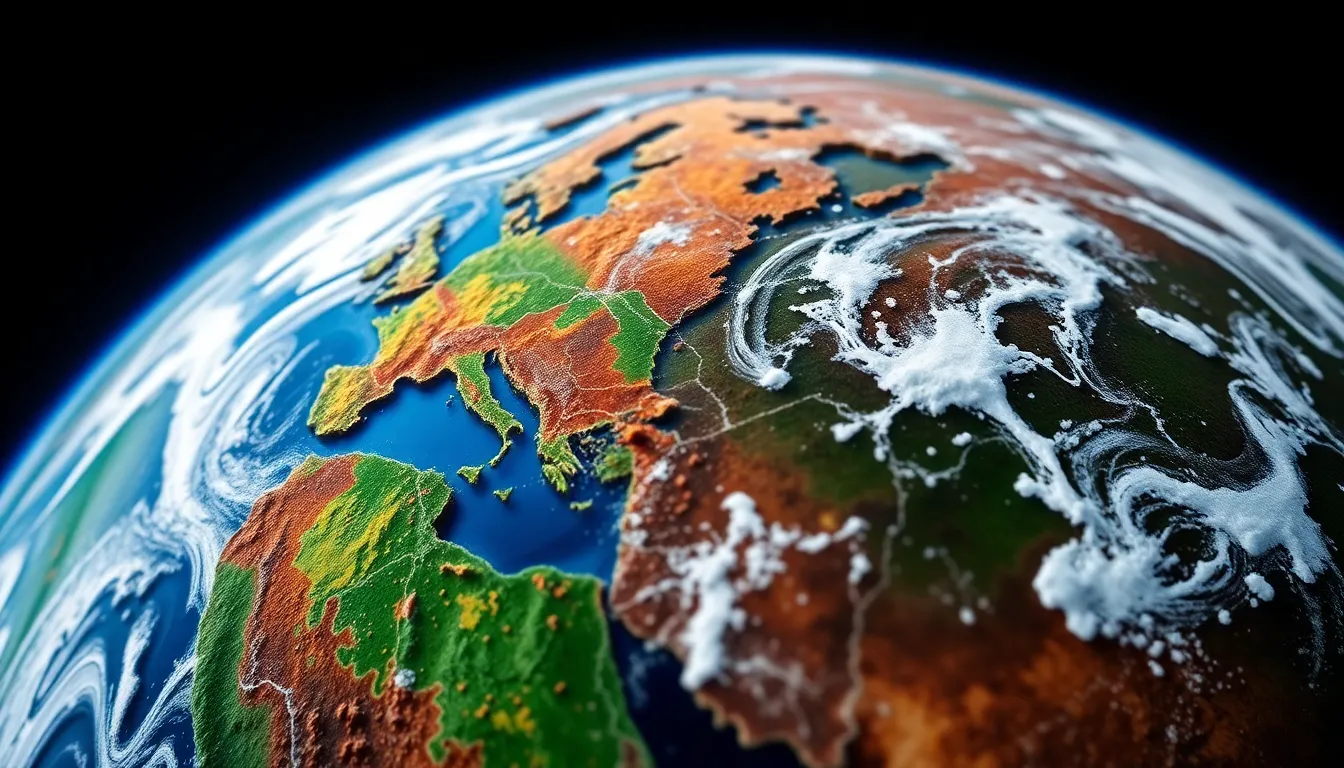
Introduction: Why Climate Change Matters Now
Climate change is no longer a distant scientific warning. It is already visible in rising temperatures, melting ice, shifting rainfall patterns, hotter oceans, stronger heat extremes, coastal flooding, ecosystem stress and increasing risks to food, water, health and infrastructure. The phrase can sound abstract, but the process is simple: human activities are adding heat-trapping gases to the atmosphere faster than natural systems can absorb them. That extra heat changes the balance of Earth’s climate system.
The scientific consensus is clear: Earth is warming, and human activity is the main cause. NASA states that there is “unequivocal evidence” that Earth is warming at an unprecedented rate and that human activity is the principal cause. The IPCC, the United Nations body that assesses climate science, concludes that human-caused greenhouse gas emissions have already led to widespread and rapid changes in the atmosphere, ocean, cryosphere and biosphere.
This pillar guide explains the essentials: what climate change means, how it differs from global warming, how the greenhouse effect works, why carbon matters, what evidence scientists use, how climate change affects extreme weather, what climate attribution can and cannot tell us, and what solutions can reduce risks.
Climate Change Basics
Climate change refers to long-term changes in average weather patterns over decades or longer. These changes include temperature, rainfall, wind patterns, ocean conditions, snow and ice cover, and the frequency or intensity of extreme events. Weather describes what happens today or this week. Climate describes the long-term pattern behind that weather.
A useful way to think about climate is as Earth’s operating system. The atmosphere, oceans, land, ice sheets, forests, soils and living organisms all exchange energy, water and carbon. When the balance changes, the whole system responds.
For more beginner-friendly explanations, visit Climate Change Basics.
Climate change can happen naturally through volcanic activity, solar changes, orbital cycles and internal climate variability. However, today’s rapid warming is mainly driven by human activities, especially the burning of coal, oil and gas, deforestation, industrial processes and agriculture. These activities increase the concentration of greenhouse gases in the atmosphere.
The most important point is this: climate change is not just about temperature. Temperature is the headline indicator, but the consequences include sea-level rise, stronger heatwaves, heavier rainfall in many regions, drought stress in others, ocean acidification, glacier loss, biodiversity decline and rising risks for human communities.
Global Warming vs. Climate Change
Global warming is the rise in Earth’s average surface temperature. Climate change is broader. It includes global warming plus the many connected changes that warming causes.
For example, when the planet warms, evaporation can increase, oceans store more heat, ice melts, sea levels rise and atmospheric circulation patterns can shift. This can make some regions wetter, others drier, and many places more exposed to weather extremes.
Learn more in Global Warming.
NOAA reports that Earth’s temperature has risen by about 0.06°C per decade since 1850, with the rate increasing to about 0.20°C per decade since 1975. NOAA also reported that 2025 was the third-warmest year in its 176-year record, after 2024 and 2023. Copernicus similarly reported that 2025 was the third-hottest year on record and that the last 11 years were the 11 warmest on record.
This does not mean every year is warmer than the one before it. Natural variability, such as El Niño and La Niña, can make individual years warmer or cooler. But the long-term direction is upward, and the warming trend is clear across multiple independent datasets.
The Greenhouse Effect
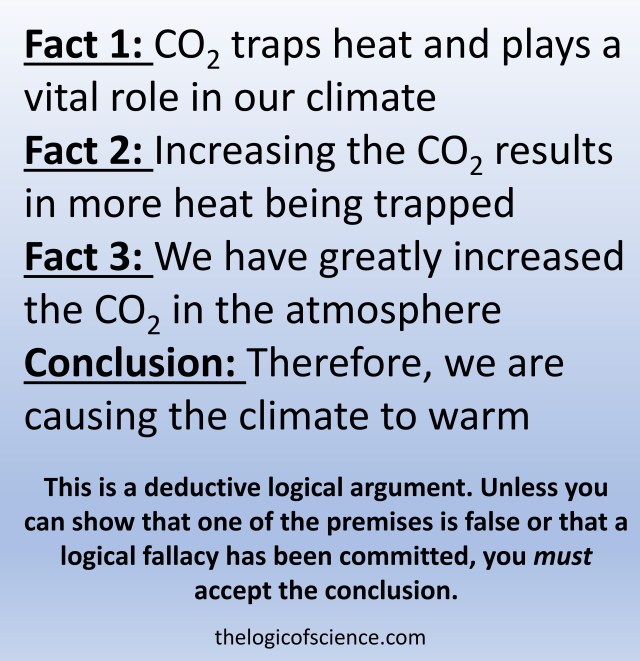
The greenhouse effect is a natural process that makes Earth habitable. The Sun sends energy to Earth. Some of that energy is reflected back to space, while the rest warms the surface. Earth then releases heat as infrared radiation. Greenhouse gases absorb some of this outgoing heat and re-radiate it, keeping the lower atmosphere warmer than it would otherwise be.
Without the natural greenhouse effect, Earth would be far colder. The problem is not that the greenhouse effect exists. The problem is that human activity is strengthening it.
NASA explains that the greenhouse effect is essential for life, but human-made emissions are trapping and slowing the loss of heat to space. For a deeper explanation, see Greenhouse Effect.
Think of the atmosphere like a thermal blanket. A thin blanket keeps you warm enough. A thicker blanket traps more heat. By adding more greenhouse gases, humans are thickening Earth’s atmospheric blanket.
This added heat does not remain only in the air. Much of it is stored in the oceans. Some melts land ice. Some warms soils and ecosystems. Some changes atmospheric circulation. This is why climate change is a whole-system problem, not just an air-temperature problem.
Greenhouse Gases
The main greenhouse gases linked to human-caused climate change are carbon dioxide, methane, nitrous oxide and fluorinated gases. Water vapor is also a greenhouse gas, but it mainly acts as a feedback rather than the main human-controlled driver. A warmer atmosphere can hold more water vapor, which can amplify warming.
Explore this topic in Greenhouse Gases.
Carbon dioxide
Carbon dioxide, or CO₂, is the most important long-lived greenhouse gas from human activity. It is released when fossil fuels are burned for electricity, heating, transport and industry. It is also released through cement production and land-use change, including deforestation.
CO₂ matters because it remains in the climate system for a long time. Some is absorbed quickly by plants and oceans, but a significant portion persists for centuries or longer. This makes cumulative emissions important. The total amount humans emit over time strongly influences total warming.
The Global Carbon Project projected fossil CO₂ emissions at a record high in 2025, with fossil emissions rising again and reaching about 38.1 billion tonnes of CO₂. Its broader 2025 carbon budget estimated total anthropogenic CO₂ emissions from fossil fuels and land-use change at around 42.2 billion tonnes of CO₂.
Methane
Methane is less abundant than CO₂ but much more powerful at trapping heat over shorter time periods. Major sources include fossil fuel production, livestock digestion, rice cultivation, landfills and wetlands. Cutting methane can slow near-term warming because methane has a shorter atmospheric lifetime than CO₂.
Nitrous oxide
Nitrous oxide comes mainly from agriculture, especially fertilizer use and manure management. It also comes from industrial processes and combustion. It is a powerful greenhouse gas and also contributes to stratospheric ozone depletion.
Fluorinated gases
Fluorinated gases are synthetic gases used in refrigeration, air conditioning, electronics and industrial applications. They are often present in smaller amounts, but some have extremely high warming potential.
The Carbon Cycle
The carbon cycle is the movement of carbon between the atmosphere, oceans, land, rocks, soils and living things. Plants absorb CO₂ through photosynthesis. Animals and microbes release CO₂ through respiration. Oceans exchange CO₂ with the atmosphere. Rocks store carbon over geological time.
Learn more in Carbon Cycle.
Before industrialization, carbon moved through these natural systems in a relatively balanced way. Human activity has disrupted that balance by transferring large amounts of carbon from underground fossil fuel reserves into the atmosphere.
Forests, soils and oceans currently absorb part of human CO₂ emissions, which slows the rise of atmospheric CO₂. But they do not absorb all of it. The rest accumulates in the atmosphere, strengthening the greenhouse effect.
The carbon cycle also creates feedback risks. For example, heat and drought can reduce forest carbon uptake. Wildfires can release stored carbon. Warming can alter soil respiration. Oceans can become less efficient carbon sinks under some conditions. This means protecting natural carbon sinks is important, but it cannot replace the need to reduce fossil fuel emissions.
A healthy climate strategy must do both: reduce emissions at the source and protect or restore forests, wetlands, peatlands, grasslands, soils and coastal ecosystems.
Evidence of Climate Change
Climate change is measured through many independent indicators. Scientists do not rely on one thermometer or one dataset. They use surface temperature records, satellite observations, ocean measurements, glacier surveys, ice core records, sea-level data, snow cover, sea ice extent, biological changes and atmospheric gas measurements.
Visit Climate Indicators for more.
Rising global temperature
The clearest indicator is global temperature. Multiple scientific agencies show long-term warming, with the warmest years concentrated in the most recent decades. NOAA reported that the 10 warmest years in its historical record have all occurred since 2015. WMO reported that 2015–2025 were the hottest 11 years on record, with 2025 about 1.43°C above the 1850–1900 average.
Ocean warming
Oceans absorb most of the excess heat trapped by greenhouse gases. This matters because warmer oceans can contribute to coral bleaching, marine heatwaves, stronger rainfall potential and sea-level rise through thermal expansion.
Melting ice
Glaciers are shrinking in many mountain regions. Ice sheets in Greenland and Antarctica are losing mass. Arctic sea ice has declined sharply over recent decades. Ice loss matters because it affects sea level, ecosystems, water supplies and Earth’s reflectivity.
Sea-level rise
Sea level rises mainly because warmer water expands and land ice melts into the ocean. Rising seas increase coastal flooding, erosion, saltwater intrusion and storm surge risks.
Shifting seasons and ecosystems
Spring events are happening earlier in many regions. Species ranges are shifting. Coral reefs, forests, wetlands and polar ecosystems are under increasing stress. These biological changes are important because ecosystems support food, water, livelihoods and cultural identity.
Extreme Weather and Climate Change
Climate change does not create every weather event. Weather has always included storms, floods, droughts and heatwaves. But climate change can change the background conditions in which weather happens.
The simplest example is heat. A warmer climate makes extreme heat more likely and more intense. Another example is rainfall. A warmer atmosphere can hold more water vapor, which can increase the potential for heavier downpours in many regions.
For more, visit Extreme Weather.
Extreme weather links vary by event type and region. Heatwaves have one of the clearest connections to human-caused warming. Heavy rainfall events are also increasing in many places. Drought is more complex because it depends on rainfall, evaporation, soil moisture, vegetation and water management. Tropical cyclones are influenced by ocean heat, atmospheric conditions and regional patterns; the clearest concerns include heavier rainfall and higher storm surge risks as seas rise.
The WMO’s 2025 climate report highlighted that extreme events, including intense heat, heavy rainfall and tropical cyclones, caused disruption and devastation around the world.
A helpful analogy is loaded dice. Climate change does not decide the outcome of every roll, but it changes the odds. Some extremes become more likely. Some become more intense. Some happen in places or seasons where communities are not prepared.
Climate Attribution
Climate attribution is the science of estimating how much human-caused climate change influenced a specific event or trend. It asks questions such as: Did climate change make this heatwave more likely? Did it make the rainfall heavier? How much warmer was this event because of human-caused warming?
Read more in Climate Attribution.
Attribution studies usually compare the real world, with human-caused greenhouse gas emissions, to a modeled world without those emissions. Scientists use observations, climate models, statistics and physical understanding to estimate changes in probability and intensity.
World Weather Attribution explains that it uses weather observations and climate models to understand how climate change influences the intensity and likelihood of extreme weather events, while also considering vulnerability and exposure. NOAA describes extreme event attribution as a way to evaluate how much of the risk or “credit” for an event should be assigned to global warming versus natural weather variability.
Attribution is not the same as saying climate change “caused” one storm or one heatwave in a simple, direct way. It is more precise: climate change can make certain events more probable, more intense or more damaging. In some cases, scientists find a strong climate signal. In others, the signal is weak, uncertain or not yet detectable.
This field is increasingly important for risk planning, infrastructure design, insurance, legal debates, disaster response and public communication.
Climate Impacts
Climate impacts are the real-world effects of climate change on people, ecosystems and economies. They are not distributed equally. Communities with fewer resources, weaker infrastructure, high exposure, political instability or dependence on climate-sensitive livelihoods often face greater risks.
Explore Climate Impacts.
Health impacts
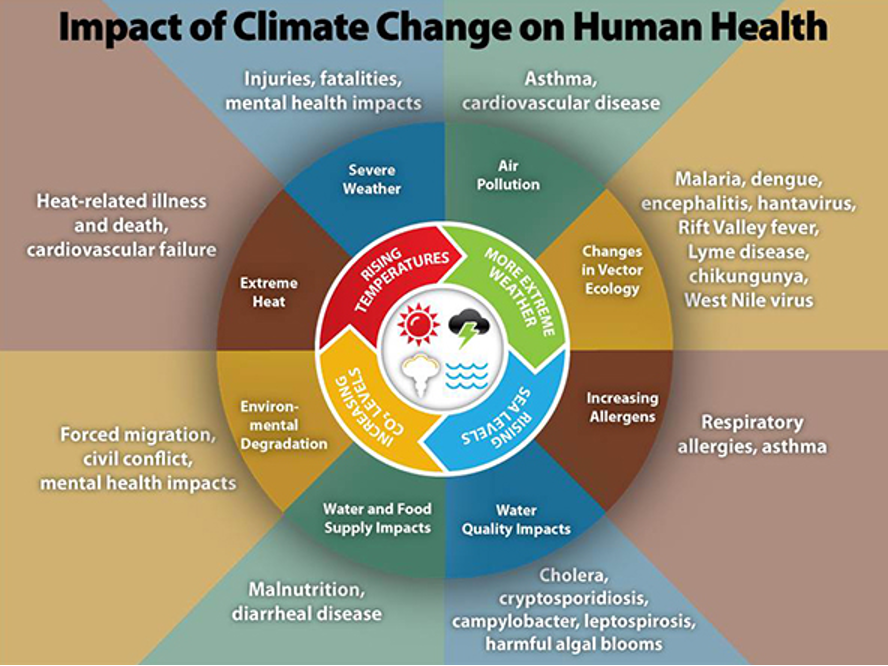
Heatwaves increase risks of heat exhaustion, heatstroke, cardiovascular stress and mortality. Air pollution can worsen under some conditions. Wildfire smoke can travel long distances and affect respiratory health. Changing climate conditions can also influence disease-carrying insects in some regions.
Food and agriculture
Climate change affects crop yields, water availability, pests, soil moisture and livestock health. Some cooler regions may experience temporary benefits for certain crops, but global risks increase as warming rises, especially when heat, drought, floods and supply chain disruptions overlap.
Water systems
Warming changes rainfall patterns, snowpack, glacier melt and evaporation. Some regions face heavier floods, while others face deeper drought stress. Water quality can decline through warmer water, algal blooms, saltwater intrusion and flood contamination.
Coastal communities
Sea-level rise increases chronic flooding, erosion and storm surge damage. Low-lying islands, deltas and coastal cities face particularly high risks. Coastal adaptation can be expensive, and some locations may eventually face difficult relocation decisions.
Ecosystems and biodiversity
Climate change shifts habitats, disrupts migration patterns, increases heat stress and contributes to ecosystem degradation. Coral reefs are especially vulnerable to marine heatwaves and ocean acidification. Forests face increased risks from heat, drought, pests and fire in some regions.
Economic impacts
Climate impacts can damage homes, roads, power grids, ports, farms, fisheries, insurance markets and public health systems. The economic cost of inaction tends to rise as warming increases.
The IPCC Working Group II report assesses climate impacts across ecosystems, biodiversity and human communities, including vulnerabilities and the limits of adaptation.
Adaptation and Resilience
Adaptation means adjusting to climate risks that are already happening or expected in the future. Resilience means the ability to withstand, recover from and transform in response to shocks.
Learn more in Adaptation and Resilience.
Adaptation is not surrender. It is practical risk management. Even if emissions fall quickly, some climate impacts will continue because the climate system responds slowly. Communities need to prepare for heat, floods, droughts, storms, sea-level rise and ecosystem changes.
Examples of adaptation include:
- Heat action plans and cooling centers
- Early warning systems for floods, storms and heatwaves
- Climate-resilient roads, bridges and drainage
- Urban trees, shade and reflective surfaces
- Water conservation and drought planning
- Coastal wetlands, dunes, seawalls and managed retreat
- Climate-smart agriculture
- Fire-resistant land management and building design
- Public health preparedness
- Insurance reform and risk-informed zoning
UNEP’s 2025 Adaptation Gap Report warned that adaptation finance gaps in developing countries are putting lives, livelihoods and economies at risk. This matters because adaptation capacity is uneven. Wealthier communities can often build defenses, upgrade infrastructure and recover faster. Poorer communities may face the greatest risks while contributing the least to historical emissions.
Good adaptation is local. A coastal town, a mountain farming region, a tropical city and a dry inland community need different strategies. But the best adaptation plans share common principles: use science, include local knowledge, protect vulnerable groups, plan for future extremes, avoid creating new risks and combine natural and built solutions.
Climate Solutions: What Can Reduce the Risk?
Climate solutions fall into two broad categories: mitigation and adaptation. Mitigation reduces the causes of climate change by cutting greenhouse gas emissions or increasing carbon removal. Adaptation reduces harm from impacts that cannot be avoided.
The strongest climate strategy combines both.
1. Clean electricity
Electricity generation is a major source of emissions in many countries. Replacing coal and gas power with low-carbon energy such as solar, wind, hydro, geothermal and nuclear can significantly reduce emissions. Clean grids also make it easier to decarbonize transport, buildings and industry.
2. Energy efficiency
The cleanest energy is the energy not wasted. Efficient buildings, appliances, motors, lighting and industrial systems reduce demand and lower costs. Energy efficiency is often one of the fastest and most affordable climate solutions.
3. Electrified transport
Electric vehicles, better public transport, walking, cycling, rail systems and compact urban design can reduce oil use. For heavy transport, solutions may include electrification, sustainable fuels, hydrogen in specific use cases and logistics efficiency.
4. Cleaner buildings
Buildings can reduce emissions through insulation, heat pumps, passive cooling, efficient appliances, rooftop solar and low-carbon materials. In hot climates, cooling demand is a major issue, making efficient air conditioning and urban heat design especially important.
5. Industrial decarbonization
Steel, cement, chemicals and heavy manufacturing are harder to decarbonize, but solutions include efficiency, electrification, green hydrogen, alternative materials, carbon capture in specific sectors and circular economy strategies.
6. Methane reduction
Methane cuts can reduce near-term warming. Key actions include fixing oil and gas leaks, improving landfill management, changing livestock and manure practices, reducing food waste and improving rice cultivation methods.
7. Forests and ecosystems
Protecting forests, peatlands, mangroves, wetlands and grasslands helps store carbon, support biodiversity and reduce flood or heat risks. Restoration is valuable, but it must not be used as an excuse to delay fossil fuel cuts.
8. Climate-smart food systems
Food systems can reduce emissions through lower food waste, improved fertilizer use, soil health, sustainable livestock practices, agroforestry and diet shifts where appropriate. The goal is not a single global diet, but a system that is healthier, more resilient and less wasteful.
9. Carbon removal
Some carbon removal will likely be needed to balance remaining emissions, especially from hard-to-abate sectors. Options include reforestation, soil carbon, biochar, direct air capture and enhanced weathering. However, carbon removal should complement deep emissions cuts, not replace them.
10. Policy, finance and behavior
Technology alone is not enough. Climate progress depends on policy, investment, planning, standards, education, public participation and fair transitions for workers and communities. Individual choices matter, but system-level change is essential because infrastructure, energy markets and public policy shape what choices are available.
Common Misconceptions About Climate Change
“The climate has always changed, so this is natural.”
Yes, Earth’s climate has changed before. But past natural changes do not explain the speed and pattern of current warming. Today’s warming aligns with the physics of greenhouse gases and the rise of human emissions.
“Cold weather disproves global warming.”
A cold day or winter storm does not disprove long-term warming. Weather varies day to day. Climate is the long-term pattern. Even in a warming world, cold events can still happen, but the overall temperature distribution shifts warmer.
“CO₂ is plant food, so more is good.”
Plants need CO₂, but ecosystems also depend on water, nutrients, temperature limits, soil health and stable seasons. Extra CO₂ does not cancel the damage from heat stress, drought, floods, pests, wildfires and ocean changes.
“Climate models are just guesses.”
Climate models are tools based on physics, chemistry, mathematics and observations. They are tested against past and present climate behavior. Models are not perfect, but they are useful for understanding risks and comparing possible futures.
“Adaptation means we do not need to cut emissions.”
Adaptation is necessary, but it has limits. Some impacts become much harder or impossible to manage at higher warming levels. Cutting emissions reduces the scale of future adaptation needed.
How to Read Climate Information Critically
Climate change is a complex topic, so readers should evaluate information carefully. Reliable climate content usually has these qualities:
- It distinguishes weather from climate
- It explains uncertainty without exaggerating doubt
- It cites scientific institutions or peer-reviewed research
- It avoids cherry-picking one year, one region or one dataset
- It separates causes, impacts, risks and solutions
- It recognizes both mitigation and adaptation
- It explains who is most vulnerable and why
Be cautious of claims that rely on one graph without context, confuse local weather with global climate, treat uncertainty as ignorance, or suggest that one solution can fix everything.
Climate literacy is not about memorizing every statistic. It is about understanding the system: greenhouse gases trap heat, human activities are increasing those gases, Earth is warming, impacts rise with warming, and choices made now affect future risks.
Conclusion: Climate Change Is a Risk Multiplier, but Solutions Exist
Climate change is one of the defining environmental challenges of the modern era. It is driven mainly by human greenhouse gas emissions, especially from fossil fuels and land-use change. The evidence is visible across temperature records, ocean heat, ice loss, sea-level rise, climate indicators, ecosystems and extreme weather patterns.
But climate change is not only a story of danger. It is also a story of choices. Every fraction of a degree matters. Faster emissions cuts can reduce future harm. Better adaptation can save lives and protect communities. Stronger ecosystems can store carbon and buffer impacts. Smarter infrastructure can reduce disaster risk. Cleaner energy can improve air quality and reduce long-term costs.
The goal is not simply to “stop climate change” as if flipping a switch. The goal is to limit warming, reduce vulnerability, protect natural systems, build resilience and create a safer future.
For readers who want to go deeper, explore the full Climate & Atmosphere library, including Climate Change Basics, Global Warming, Greenhouse Effect, Greenhouse Gases, Carbon Cycle, Climate Indicators, Extreme Weather, Climate Attribution, Climate Impacts and Adaptation and Resilience.
Frequently Asked Questions
What is climate change in simple terms?
Climate change means long-term changes in Earth’s average weather patterns, including temperature, rainfall, storms, droughts, sea level and ice cover. Today’s climate change is mainly caused by human greenhouse gas emissions.
Is climate change the same as global warming?
No. Global warming is the rise in average global temperature. Climate change includes global warming plus related changes such as sea-level rise, shifting rainfall, melting ice, ocean warming and extreme weather risks.
What is the main cause of modern climate change?
The main cause is human activity, especially burning coal, oil and gas, deforestation, agriculture and industrial processes that release greenhouse gases.
Which greenhouse gas matters most?
Carbon dioxide is the most important long-lived greenhouse gas from human activity because of its large volume and long-lasting effect. Methane, nitrous oxide and fluorinated gases also play important roles.
Can climate change be solved?
Climate change cannot be undone quickly, but its future severity can be limited. Rapid emissions cuts, clean energy, efficiency, methane reduction, ecosystem protection, adaptation and resilience planning can reduce risks.
Why does 1.5°C or 2°C matter?
Small global averages can mean large regional changes. Higher warming increases the risk of heat extremes, sea-level rise, ecosystem loss, food and water stress, and limits to adaptation.
What can individuals do?
Individuals can reduce energy waste, choose cleaner transport, reduce food waste, support climate-smart policies, improve home efficiency, protect local ecosystems and help communities prepare. The biggest changes also require governments, businesses and institutions to transform energy, transport, food and infrastructure systems.




Leave a Comment