
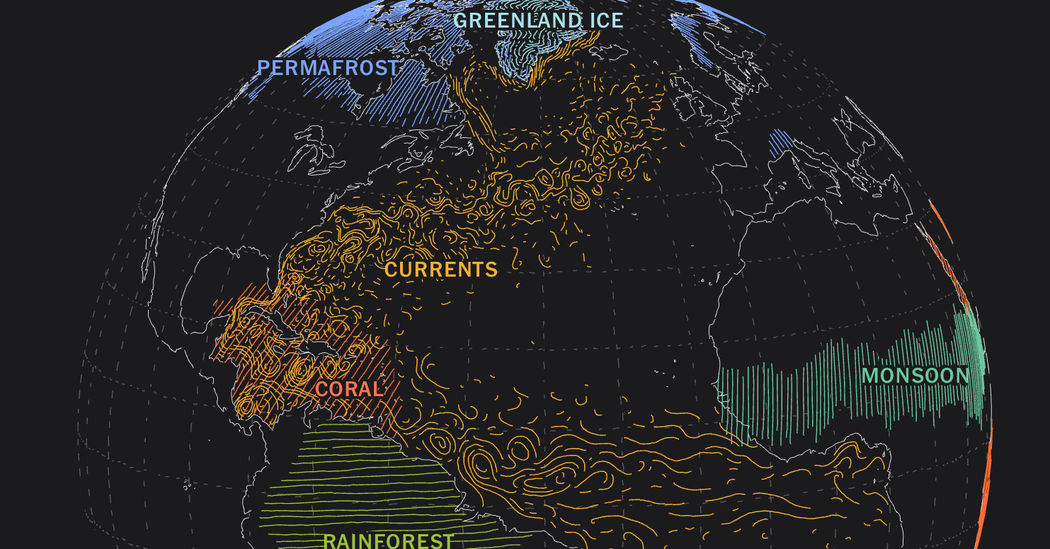
Earth’s chance of slipping into a “Hothouse” climate depends on whether humanity can curb greenhouse-gas forcing, manage feedback loops, and implement large-scale mitigation and adaptation before irreversible thresholds are crossed.
Quick Answer
A “Hothouse Earth” scenario describes a state in which global average temperatures rise 3 °C or more above pre-industrial levels, triggering self-reinforcing feedbacks that lock the climate into a much warmer, less hospitable condition. The scientific consensus, based on multiple lines of observation and modeling, is that avoiding this outcome is still possible if total anthropogenic greenhouse-gas emissions are reduced sharply—by roughly 45 % by 2030 and to net-zero by mid-century. However, uncertainty remains around the exact timing of tipping elements and the social-political capacity to achieve the required emission cuts.
Key Takeaways
- Hothouse Earth implies a sustained >3 °C warming that could become self-reinforcing.
- Strong evidence links current greenhouse-gas emissions to approaching climate thresholds.
- Key feedbacks include Arctic ice loss, permafrost thaw, and forest die-back.
- Regional impacts will be uneven, with the Arctic, low-lying coasts, and tropical agriculture most at risk.
- Rapid decarbonisation, ecosystem restoration, and equitable policy are the most effective mitigation pathways.
- Uncertainties remain about the exact thresholds of several feedbacks and the speed of societal response.
What Is “Can Earth Avoid a ‘Hothouse’ Climate Tipping Point?”
The phrase asks whether the planet can stay below the temperature and feedback thresholds that would lock the climate system into a substantially hotter state. “Hothouse Earth” is a term coined by climate scientists to describe a regime where positive feedbacks dominate, making it difficult to reverse warming even if emissions fall. The tipping-point concept refers to a critical threshold beyond which a small change can trigger large, often irreversible, shifts in the Earth system. Understanding this question matters because crossing such thresholds would reshape ecosystems, water resources, and human societies for centuries.
How Does It Work?
Greenhouse-gas Forcing
CO₂, CH₄, and N₂O trap infrared radiation, raising the planet’s energy balance. Since 1750, atmospheric CO₂ has risen from ~280 ppm to over 420 ppm (NOAA, 2023), and methane concentrations have increased ~150 % (WMO, 2022). This radiative forcing drives global mean surface temperature upward.
Feedback Loops
Several processes amplify the initial warming:
- Albedo loss: Melting sea ice and snow expose darker ocean or land, absorbing more solar energy.
- Permafrost carbon release: Thawing soils release stored CO₂ and CH₄, adding to atmospheric concentrations.
- Forest die-back: Heat stress and drought reduce carbon uptake, turning forests from sinks into sources.
- Water-vapour feedback: Warmer air holds more water vapor, a potent greenhouse gas, further enhancing warming.
Thresholds and Timescales
Each feedback has a characteristic threshold—e.g., Arctic sea-ice extent falling below ~1 million km² in summer is associated with rapid albedo loss. The timescales range from decades (ice-albedo) to centuries (permafrost carbon). When multiple feedbacks cross their thresholds, they can interact, potentially pushing the system toward a Hothouse state.
What Does the Evidence Show?
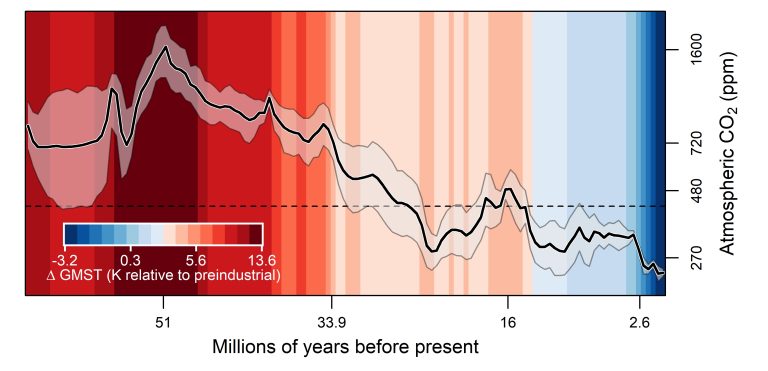
Long-term instrumental records (1880‑present) indicate a global average warming of ~1.2 °C (IPCC AR6, 2021). Paleoclimate reconstructions reveal that past intervals with >3 °C warming were accompanied by markedly higher sea levels and reduced biodiversity. Model intercomparison projects (CMIP6) consistently project that under high-emission pathways (SSP5-8.5), global warming exceeds 3 °C by 2050, triggering strong feedbacks. Observational studies have documented accelerating Arctic ice loss, increased frequency of extreme heatwaves, and rising methane emissions from permafrost hotspots, all of which align with the hypothesized Hothouse pathway.
Main Causes or Drivers
Direct Human Drivers
- Fossil‑fuel combustion for energy, transport, and industry.
- Deforestation and land‑use change that reduce carbon sinks.
- Industrial agriculture that emits CH₄ and N₂O.
Underlying Structural Drivers
- Economic systems that prioritize short-term growth over carbon accounting.
- Population growth and urbanisation increasing energy demand.
- Policy gaps that delay the deployment of renewable energy and efficiency measures.
Environmental and Human Impacts
Environmental Impacts
Exceeding 3 °C would likely cause:
- Sea-level rise of 0.7–1.5 m by 2100, threatening coastal ecosystems.
- Widespread coral-reef bleaching and loss of marine biodiversity.
- Expansion of desert zones and loss of temperate forest cover.
- Altered precipitation patterns, intensifying droughts in the Mediterranean and enhancing monsoon extremes in South Asia.
Human Health and Social Impacts
Heat-related mortality is projected to increase, especially among the elderly and outdoor workers. Vector-borne diseases such as malaria may expand poleward. Food security could be compromised by reduced yields for staple crops like wheat and maize in already vulnerable regions.
Economic and Infrastructure Impacts
Infrastructure in flood‑prone areas faces higher repair costs, while energy systems may experience greater strain from heat‑induced demand spikes. Global GDP could be reduced by up to 10 % under unchecked warming (IMF, 2022).
Regional Differences
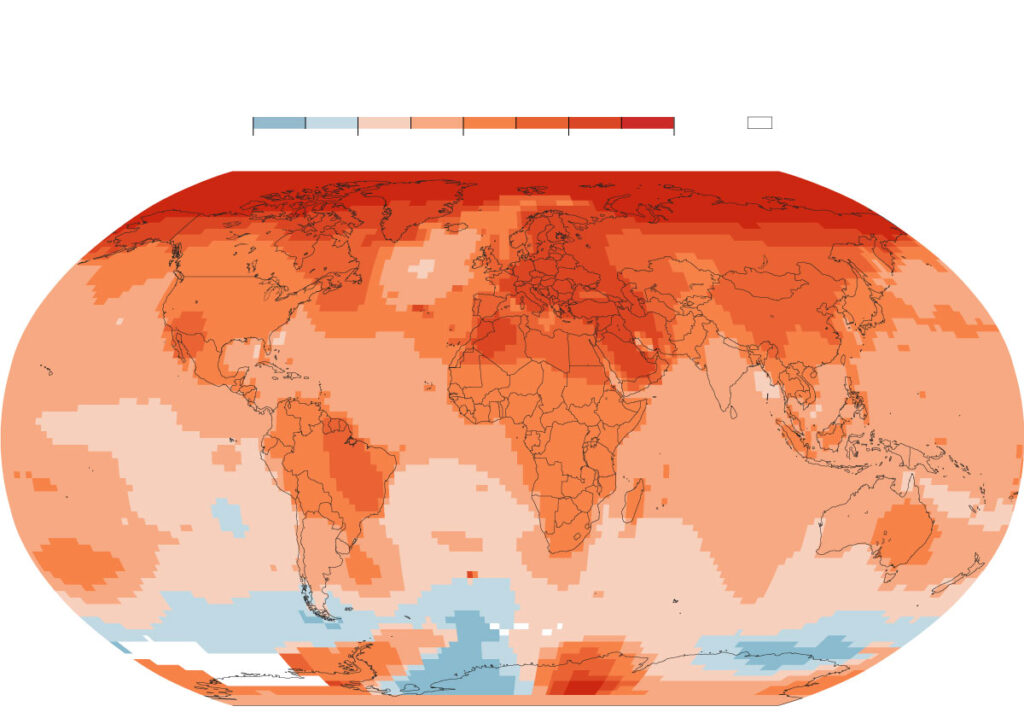
High‑latitude regions experience the fastest temperature rise, amplifying Arctic feedbacks. Low‑lying island nations such as the Maldives face existential threats from sea-level rise, while sub‑Saharan Africa may confront compounded drought and food insecurity. Conversely, some higher‑latitude agricultural zones could temporarily benefit from longer growing seasons, but these gains are likely outweighed by global losses.
What Scientists Know With High Confidence
- Human activities are the dominant cause of observed warming since the mid‑20th century.
- Positive feedbacks—especially ice-albedo loss and water-vapour increase—are real and measurable.
- Limiting warming to below 2 °C requires rapid, sustained emission reductions.
- Regional climate changes (e.g., Arctic amplification) are already observable.
What Remains Uncertain
Key uncertainties involve the exact magnitude and timing of permafrost carbon release, the resilience of major forest biomes under combined heat and drought stress, and the social‑political feasibility of achieving net-zero emissions worldwide. These gaps do not overturn the overall conclusion that immediate, deep cuts in greenhouse-gas emissions are essential to avoid a Hothouse trajectory.
Common Misconceptions
Misconception: “A few individual lifestyle changes can stop a Hothouse Earth.”
Reality: Individual actions matter for building social demand, but systemic emission reductions—such as decarbonising power grids and industry—are required to keep global warming below critical thresholds.
Misconception: “If we plant trees, the climate problem solves itself.”
Reality: Afforestation helps, but it cannot offset the scale of current fossil-fuel emissions; it must be paired with rapid cuts in CO₂ output.
Misconception: “The climate will adjust naturally without human intervention.”
Reality: Earth system models show that without deliberate mitigation, feedbacks can become self‑reinforcing, making natural adjustment toward a cooler state highly unlikely.
Solutions and Limitations
Effective strategies fall into three categories:
- Mitigation: Rapid deployment of renewable electricity (solar, wind, geothermal), energy efficiency, and carbon-capture technologies. Limitations include high upfront costs, material supply constraints, and the need for supportive policies.
- Adaptation: Building climate-resilient infrastructure, protecting coastal zones with nature-based solutions, and developing drought-tolerant crops. Trade-offs involve land-use competition and possible displacement of communities.
- Conservation & Restoration: Protecting intact ecosystems, restoring wetlands, and managing forests for carbon storage. Success depends on governance, funding, and avoiding unintended ecological side effects.
What Individuals, Communities, and Governments Can Do
What Individuals Can Do
Choose low‑carbon transportation (public transit, cycling, electric vehicles), improve home energy efficiency, reduce food waste, and support policies that promote clean energy.
What Communities and Organizations Can Do
Implement district‑level renewable projects, develop local climate‑action plans, and invest in green infrastructure such as urban trees and storm‑water management.
What Governments Can Do
Set ambitious net‑zero targets, phase out coal subsidies, enforce strict building codes, fund research on climate feedbacks, and ensure climate finance reaches vulnerable regions.
Closing Synthesis
Evidence shows that the Earth is edging toward thresholds that could lock in a Hothouse climate, but the pathway is not predetermined. High‑confidence findings affirm that human-driven greenhouse‑gas emissions are the primary driver and that rapid mitigation can keep warming below 3 °C. Uncertainties about specific feedback magnitudes highlight the need for robust monitoring. The most realistic route to avoidance combines aggressive emission cuts, ecosystem protection, and equitable adaptation measures, recognizing that no single action suffices on its own.
Frequently Asked Questions
What does “Hothouse Earth” mean?
Hothouse Earth refers to a climate regime in which global average temperatures rise at least 3 °C above pre‑industrial levels, triggering self‑reinforcing feedbacks that make the warmer state difficult to reverse. It implies long‑term changes to ecosystems, sea level, and human societies.
Which feedback loops could push the climate toward a Hothouse state?
The most important feedbacks are Arctic sea‑ice loss (albedo reduction), permafrost thaw releasing CO₂ and methane, forest die‑back that turns carbon sinks into sources, and water‑vapour amplification. When these cross their thresholds they can accelerate warming beyond human control.
Which regions are most vulnerable if a Hothouse Earth scenario occurs?
The Arctic experiences the fastest warming and amplified feedbacks, low‑lying island nations face sea‑level‑induced displacement, and tropical agricultural zones such as sub‑Saharan Africa and South Asia are prone to severe droughts and food‑security crises. Impacts are uneven across the globe.
What actions have the strongest evidence for reducing the risk of a climate tipping point?
Cutting CO₂ emissions by about 45 % by 2030 and reaching net‑zero by mid‑century, rapidly scaling renewable electricity, protecting and restoring forests, and investing in carbon‑capture technologies are the mitigation measures most supported by peer‑reviewed assessments as effective in keeping warming below critical thresholds.
How certain are scientists that humanity can avoid a Hothouse Earth?
Scientists are highly confident that immediate, deep emission reductions can prevent exceeding 3 °C, but there remains moderate uncertainty about the exact timing of feedbacks and the speed of societal response. The consensus is that avoidance is still possible, though increasingly challenging the longer action is delayed.




Leave a Comment