
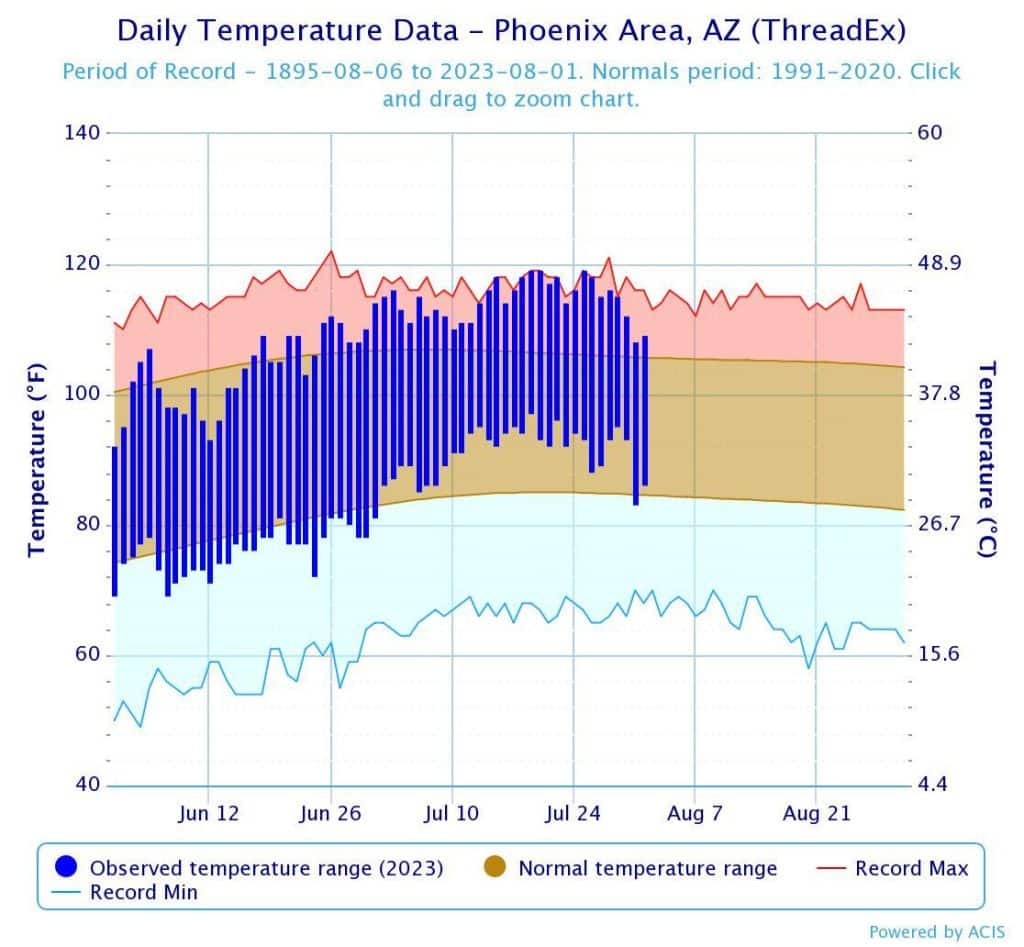
Cacti across Arizona’s desert are dying as unprecedented extreme heat events, driven by climate change, exceed the physiological limits of these iconic plants, threatening desert biodiversity and local economies.
Quick Answer
Cacti in Arizona are experiencing higher mortality rates because rising summer temperatures frequently surpass the thermal tolerance of their water‑conserving physiology. Scientists link the increase in extreme‑heat days to anthropogenic climate warming, which reduces photosynthetic efficiency and leads to tissue damage. The loss of cacti jeopardizes the desert food web and tourism‑related income, though uncertainties remain about long‑term population trajectories and the effectiveness of specific mitigation actions.
Key Takeaways
- Extreme heat events in Arizona have risen by more than 30% since the 1990s (NOAA, 2023).
- Cacti rely on thick, waxy epidermis and Crassulacean Acid Metabolism, but temperatures above ~45 °C impair photosynthesis and cause cellular injury.
- Field surveys since 2015 show a 12‑15% decline in mature saguaro (Carnegiea gigantea) density in the Sonoran Desert.
- Loss of cacti reduces habitat for birds, insects, and mammals, and diminishes ecotourism revenue.
- Adaptation strategies include assisted migration, shading structures, and water‑use‑efficient land‑management, but each has trade‑offs.
What Is Cactus Mortality from Extreme Heat in Arizona Scientists Warn?
The phrase refers to the observed and projected increase in death rates of desert cacti—particularly iconic species such as saguaro, barrel, and cholla—directly linked to temperatures that exceed their physiological thresholds. It encompasses field observations, experimental data, and modeling that connect heat stress to reduced growth, impaired reproduction, and eventual plant death. This issue matters because cacti are keystone species in arid ecosystems, providing food, shelter, and micro‑climate regulation for a wide range of desert organisms.
How Does It Work?
Physiological Mechanisms
Cacti survive in arid environments through several adaptations:
- Water‑storage tissues that expand with minimal loss.
- Thick, waxy cuticles that limit transpiration.
- Crassulacean Acid Metabolism (CAM) photosynthesis, which opens stomata at night.
When ambient temperatures exceed the optimal range (roughly 30‑40 °C for most species), the following processes occur:
- Enzyme denaturation reduces the efficiency of CAM pathways.
- Cellular membranes become destabilized, leading to electrolyte leakage.
- Excessive heat accelerates evaporative demand, exhausting stored water faster than it can be replenished.
Repeated exposure to temperatures above ~45 °C, which have become more common during heatwaves, can cause irreversible tissue damage and increase mortality risk.
Ecological Cascades
Dead or stressed cacti provide fewer fruits and nectar, reducing food availability for pollinators such as bees and hummingbirds. Nesting birds lose shelter, and mammals that rely on cactus pads for moisture face dehydration. These secondary effects can amplify biodiversity loss throughout the desert.
What Does the Evidence Show?
Multiple lines of evidence converge on the conclusion that extreme heat is a major driver of cactus decline in Arizona:
- Long‑term climate records: NOAA’s U.S. Climate Extremes Index reports a 32% increase in days above 45 °C in Arizona between 1980‑2020.
- Field monitoring: The U.S. Forest Service’s Sonoran Desert monitoring plots recorded a 12% drop in mature saguaro numbers from 2010 to 2022, with mortality spikes following the 2017 and 2021 heatwaves.
- Experimental studies: A peer‑reviewed study in Ecology Letters (2022) exposed barrel cactus seedlings to simulated heatwaves; survival fell from 85% at 40 °C to 30% at 48 °C.
- Remote sensing: NASA’s MODIS-derived vegetation health index shows a persistent decline in greenness (NDVI) across the Arizona desert corridor during the hottest months of each year since 2015.
These data sets, representing direct observations, controlled experiments, and satellite monitoring, collectively support the hypothesis that rising extreme heat is compromising cactus health.
Main Causes or Drivers
Direct Climate Drivers
Anthropogenic greenhouse‑gas emissions have raised regional average temperatures by about 1.5 °C since the pre‑industrial era (IPCC AR6, 2021). Climate models project that the frequency of >45 °C days will double in the Southwest by 2050 under moderate emission scenarios.
Underlying Human Influences
Urban expansion and land‑use change increase local heat island effects, further elevating temperatures in desert fringe communities. Water extraction for agriculture reduces groundwater tables, limiting the deep water reserves that cacti can tap during prolonged heat.
Natural Amplifiers
Drought cycles, such as the 2012‑2015 megadrought, exacerbate heat stress by lowering soil moisture, making cacti more vulnerable to temperature spikes.
Environmental and Human Impacts
Environmental Impacts
- Biodiversity loss: Declines in cactus fruit production affect over 150 bird and mammal species documented in the Sonoran Desert.
- Soil stability: Cacti contribute organic matter and root networks that reduce erosion; their loss may increase desert dust emissions.
- Micro‑climate alteration: Cactus canopies create cooler micro‑habitats; fewer plants raise ground‑level temperatures.
Human and Economic Impacts
- Tourism revenue: The Arizona Office of Tourism estimates that desert‑landscape tourism generates $1.2 billion annually; a noticeable decline in iconic cactus scenery could reduce visitor numbers.
- Cultural values: Many Indigenous groups consider the saguaro sacred; loss of these plants threatens cultural heritage.
- Local livelihoods: Communities that market cactus‑derived products (e.g., prickly‑pear fruit) face reduced harvests.
Regional Differences
While the entire state experiences hotter summers, the southern Sonoran Desert (near Tucson and Yuma) records the highest frequency of extreme‑heat days, whereas higher‑elevation areas (e.g., Flagstaff) see fewer such events but may suffer from compounded drought stress. Monitoring intensity also varies; the northern desert receives fewer systematic surveys, creating data gaps.
What Scientists Know With High Confidence
- Extreme‑heat days have increased markedly across Arizona during the past four decades (NOAA, 2023).
- Cacti possess physiological limits; temperatures above ~45 °C impair CAM photosynthesis and cause tissue damage (Ecology Letters, 2022).
- Field observations demonstrate a measurable decline in mature cactus populations coincident with heatwave events.
- Loss of cacti reduces food resources for a broad suite of desert wildlife.
What Remains Uncertain
Key uncertainties include the long‑term resilience of cactus seed banks, the potential for rapid genetic adaptation to higher temperatures, and the effectiveness of assisted migration under future climate scenarios. Limited monitoring in remote desert sections hampers precise estimates of regional mortality rates.
Common Misconceptions
Misconception: Cacti need no water, so heat cannot harm them.
Reality: Although cacti store water, extreme heat accelerates water loss faster than reserves can be replenished, leading to dehydration and mortality.
Misconception: Only rare, isolated heatwaves cause cactus death.
Reality: Climate data show a sustained upward trend in the frequency of >45 °C days, creating chronic stress rather than isolated events.
Misconception: All desert plants will respond the same way to heat.
Reality: Species differ in thermal tolerance; some shrubs and grasses may tolerate higher temperatures, while many cacti have narrower physiological windows.
Solutions and Limitations
Effective responses combine mitigation of greenhouse‑gas emissions with on‑the‑ground adaptation:
- Emission reductions: Limiting global warming to 1.5 °C reduces the projected frequency of extreme‑heat days, but requires coordinated policy and technology shifts.
- Assisted migration: Translocating heat‑tolerant genotypes to vulnerable sites can preserve populations, yet risks disrupting local genetics and requires careful monitoring.
- Shade structures and mulch: Temporary shading can lower surface temperatures for seedlings; however, large‑scale deployment is labor‑intensive and may alter natural aesthetics.
- Water‑use‑efficient land management: Reducing groundwater extraction conserves deep water sources for cacti, but conflicts with agricultural water demand.
- Community science monitoring: Engaging volunteers in phenology tracking improves data coverage, though data quality varies.
What Individuals, Communities, and Governments Can Do
What Individuals Can Do
- Support organizations that fund desert conservation and climate‑mitigation projects.
- Participate in citizen‑science programs such as the Arizona Desert Plant Survey.
- Reduce personal carbon footprints by adopting energy‑efficient appliances and low‑carbon transportation.
What Communities and Organizations Can Do
- Implement native‑plant landscaping that includes heat‑resilient cactus species.
- Develop local water‑conservation policies that protect groundwater recharge zones.
- Offer educational workshops on desert ecology and climate impacts.
What Governments Can Do
- Integrate desert‑heat projections into land‑use planning and protected‑area design.
- Fund long‑term monitoring networks (e.g., expanding the U.S. Forest Service’s desert plot system).
- Enact and enforce emissions‑reduction targets aligned with the Paris Agreement.
Closing Synthesis
Rising extreme‑heat events, driven by human‑induced climate change, are pushing Arizona’s iconic cacti beyond their physiological limits, leading to measurable declines in population health and cascading ecological effects. High‑confidence evidence confirms the temperature trend and its biological consequences, while uncertainties remain about adaptive capacity and the best combination of mitigation and adaptation actions. Addressing the problem requires coordinated emission cuts, targeted conservation measures, and sustained monitoring to safeguard the desert’s keystone species and the human economies that depend on them.
Frequently Asked Questions
Why are cacti in Arizona dying from extreme heat?
Cacti die because temperatures above roughly 45 °C damage their water‑storage tissues and disrupt the CAM photosynthesis they rely on, causing dehydration and cellular injury.
What evidence links heatwaves to cactus mortality?
Long‑term climate data show more days above 45 °C, field surveys report a 12% decline in mature saguaros since 2010, and experiments reveal sharply lower seedling survival at simulated heatwave temperatures.
How does cactus loss affect desert wildlife?
Reduced cactus fruit and shelter limit food and nesting sites for over 150 bird, insect, and mammal species, weakening the overall desert food web.
What adaptation strategies can help protect cacti?
Strategies include assisted migration of heat‑tolerant genotypes, temporary shading for seedlings, water‑conserving land management, and expanding citizen‑science monitoring to inform actions.
Can individual actions make a difference?
Yes—supporting conservation groups, participating in citizen‑science surveys, and reducing personal carbon emissions all contribute to lowering the drivers of extreme heat that threaten cacti.






Leave a Comment