
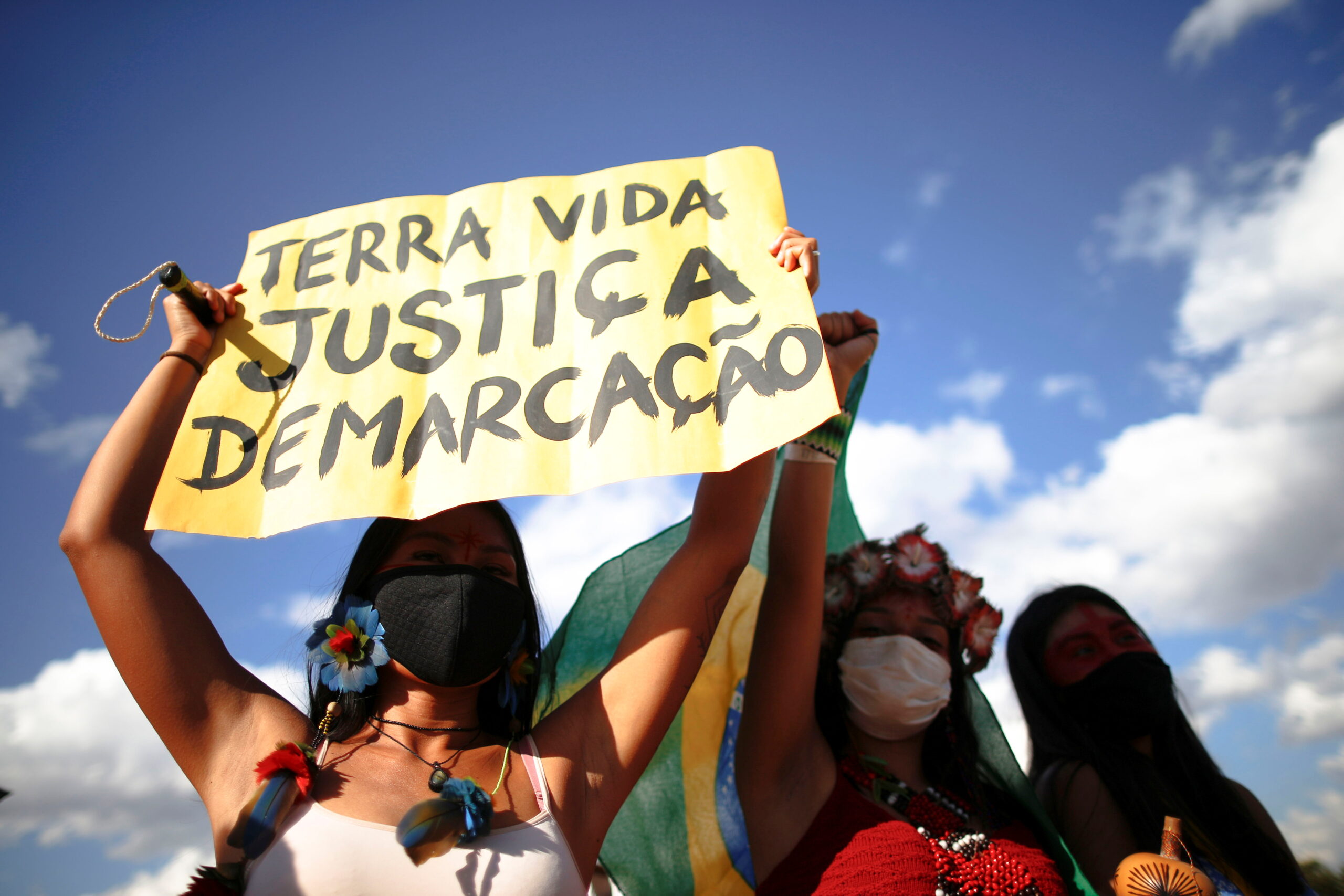
Brazil’s Supreme Court has affirmed the constitutional land rights of Indigenous peoples, reinforcing forest protection, cultural preservation, and legal precedent for sustainable stewardship of the Amazon.
Quick Answer
The Brazilian Supreme Court ruled that Indigenous communities retain inalienable rights to territories they have historically occupied, regardless of formal title. The decision rests on the 1988 Constitution, which recognises Indigenous land as essential to cultural survival and ecosystem integrity. By declaring these lands “protected from exploitation,” the Court creates a legal barrier against illegal logging, mining, and agribusiness encroachment. While the ruling strengthens environmental governance, implementation depends on federal agencies, local enforcement, and political will, introducing uncertainty about the speed and completeness of protection.
Key Takeaways
- Indigenous land claims are now anchored in historical occupation, not just cadastral documents.
- The ruling designates Indigenous territories as off‑limits to deforestation and large‑scale extractive projects.
- Legal certainty can enhance biodiversity conservation across the Amazon basin.
- Effective enforcement requires coordination among courts, environmental agencies, and Indigenous governance.
- Remaining challenges include monitoring compliance and addressing pressures from agribusiness.
What Is Brazil’s Supreme Court Backs Indigenous Land Rights in Landmark Ruling?
The decision is a judicial affirmation that Indigenous peoples in Brazil possess constitutionally guaranteed rights to the lands they have traditionally occupied. Under Article 231 of the 1988 Constitution, these territories are to be demarcated, protected, and respected as collective property. The ruling clarifies that “historical occupancy” is sufficient legal evidence, reducing reliance on formal land titles that many communities lack. This differs from ordinary private property rights because Indigenous lands are deemed inalienable and integral to cultural identity and environmental stewardship.
How Does It Work?
Legal Process
- Indigenous groups submit a claim to the National Indian Foundation (FUNAI), citing historical use, oral traditions, and archeological evidence.
- FUNAI conducts field surveys and prepares a technical report for the Ministry of Justice.
- The Ministry forwards the report to the federal judiciary for review.
- The Supreme Court evaluates the constitutionality of the claim, focusing on Article 231 and international conventions such as ILO Convention 169.
- The Court’s decision creates a binding precedent that lower courts must follow when adjudicating similar disputes.
Enforcement Mechanism
Once a territory is recognised, the Brazilian Institute of Environment and Renewable Natural Resources (IBAMA) and the Federal Police are authorised to prevent illegal activities, while Indigenous councils gain legal standing to sue for violations. Monitoring relies on satellite deforestation alerts (e.g., Brazil’s PRODES system) and community‑based patrols.
What Does the Evidence Show?
Multiple lines of evidence demonstrate that Indigenous stewardship correlates with lower deforestation rates. A 2020 peer‑reviewed analysis by the World Resources Institute found that lands under Indigenous management experienced 70 % less forest loss than adjacent unprotected areas (WRI, 2020). Long‑term monitoring by Brazil’s National Institute for Space Research (INPE) shows that the Amazon’s overall deforestation rate fell from 27,000 km² in 2004 to 4,500 km² in 2020, with Indigenous territories contributing significantly to this decline (INPE, 2021). These observations are supported by systematic reviews linking traditional ecological knowledge to higher biodiversity outcomes (Science Advances, 2022).
Main Causes or Drivers
Direct Causes
- Illegal logging and timber extraction within claimed territories.
- Expansion of soy and cattle ranching driven by global commodity markets.
- Mineral extraction concessions granted without proper consultation.
Underlying Drivers
- Weak land‑title enforcement and fragmented land‑registry systems.
- Political pressure from agribusiness lobby groups seeking economic growth.
- Insufficient funding for Indigenous monitoring and demarcation processes.
Environmental and Human Impacts
Environmental Impacts
Protected Indigenous lands act as carbon sinks, storing an estimated 120 Gt of CO₂ across the Amazon (IPCC, 2021). They also preserve habitat for over 10% of the world’s known species, including iconic taxa such as jaguars, river dolphins, and countless plant species. By limiting deforestation, the ruling supports regional climate regulation, water cycle stability, and soil conservation.
Human Health and Social Impacts
Secure land tenure improves food security for Indigenous households by safeguarding traditional hunting, fishing, and agroforestry practices. It also reduces exposure to pollutants from mining tailings and pesticide‑intensive agriculture, which have been linked to respiratory and water‑borne diseases in nearby communities (Lancet Planetary Health, 2021). Moreover, legal recognition strengthens cultural transmission and community cohesion.
Economic and Infrastructure Impacts
While the decision may limit short‑term expansion of agribusiness, it encourages investment in sustainable supply chains, such as certified timber and shade‑grown cocoa. Infrastructure projects (e.g., roads) that would fragment forests are now subject to stricter environmental licensing, potentially slowing some development but fostering long‑term ecosystem services valued at billions of dollars annually.
Regional Differences
The impact of the ruling varies across Brazil’s vast territory. In the western Amazon (states of Acre and Rondônia), Indigenous territories cover a larger proportion of the landscape, leading to pronounced reductions in deforestation hotspots. In contrast, in the eastern Amazon (Pará and Maranhão), where land‑use pressure is higher, enforcement gaps remain more evident, and illegal incursions continue despite the legal ruling.
What Scientists Know With High Confidence
- Indigenous-managed forests consistently exhibit lower rates of deforestation compared with adjacent non‑protected lands.
- Forest carbon storage in the Amazon is a critical component of global climate regulation.
- Legal recognition of land rights improves socioeconomic outcomes for Indigenous peoples.
- Deforestation contributes significantly to Brazil’s greenhouse gas emissions, accounting for roughly 30 % of national totals (IBGE, 2022).
What Remains Uncertain
Key uncertainties include the speed and completeness of on‑the‑ground enforcement, the potential for political shifts that could weaken environmental agencies, and the long‑term economic responses of agribusiness to reduced access to frontier lands. Data gaps also exist in quantifying how improved land tenure directly influences biodiversity metrics over decades.
Common Misconceptions
Misconception: The ruling bans all economic activity in Indigenous territories.
Reality: The decision blocks activities that threaten forest integrity, such as large‑scale logging and mining, but it does not prohibit sustainable livelihoods like small‑scale agriculture, fishing, or eco‑tourism.
Misconception: Indigenous peoples are opposed to any development.
Reality: Many communities seek balanced development that respects cultural values while allowing controlled, low‑impact economic opportunities.
Misconception: The Supreme Court ruling alone will stop deforestation.
Reality: Legal affirmation is a crucial step, yet effective protection also depends on enforcement, monitoring technology, and political commitment.
Solutions and Limitations
Effective strategies combine legal, technological, and community‑based approaches. Strengthening satellite monitoring (e.g., Brazil’s DETER system) can quickly identify illegal clearings, but it requires rapid response teams, which are often under‑funded. Expanding Indigenous land demarcation reduces ambiguity, yet the process can be delayed by bureaucratic inertia. Market‑based incentives, such as certifications for deforestation‑free products, encourage responsible sourcing but rely on consumer demand and traceability infrastructure. Each solution carries trade‑offs: increased surveillance may raise privacy concerns, while stricter regulations can face resistance from powerful agricultural lobbies.
What Individuals, Communities, and Governments Can Do
What Individuals Can Do
- Choose certified sustainable products (e.g., RSPO‑certified palm oil, FSC timber) to support responsible supply chains.
- Support NGOs that provide legal assistance to Indigenous groups.
- Raise awareness through social media, emphasizing the link between Indigenous rights and climate mitigation.
What Communities and Organizations Can Do
- Partner with Indigenous councils to develop community‑led forest monitoring programs.
- Facilitate capacity‑building workshops on land‑title documentation and environmental law.
- Promote alternative livelihoods such as agroforestry, which maintain forest cover.
What Governments Can Do
- Allocate dedicated budget lines for FUNAI and IBAMA to accelerate demarcation and enforcement.
- Integrate Indigenous land data into national deforestation monitoring platforms.
- Enact stricter penalties for illegal encroachment and ensure judicial independence.
What Businesses Can Do
- Adopt zero‑deforestation commitments that respect Indigenous territories.
- Invest in supply‑chain traceability tools that verify the origin of raw materials.
- Collaborate with Indigenous communities to develop mutually beneficial projects.
Looking Ahead
The Supreme Court’s affirmation of Indigenous land rights marks a pivotal legal foundation for Amazon conservation. By recognising historical occupancy, the ruling aligns Brazil’s constitutional framework with scientific evidence that Indigenous stewardship curtails deforestation and safeguards biodiversity. Ongoing challenges—particularly enforcement capacity and political dynamics—must be addressed through coordinated policy, technology, and community action. When fully implemented, the decision can contribute to climate mitigation, cultural resilience, and sustainable development for generations to come.
Frequently Asked Questions
What did the Brazilian Supreme Court decide about Indigenous land rights?
The Court affirmed that Indigenous peoples retain inalienable rights to territories they have historically occupied, regardless of formal land titles, and ordered that these lands be protected from exploitation.
How does Indigenous land protection affect deforestation rates in the Amazon?
Studies show that forests under Indigenous management experience about 70 % less deforestation than adjacent non‑protected areas, contributing significantly to the overall decline in Amazonian forest loss.
Why is historical occupancy important in the ruling?
The decision recognises historical occupancy as sufficient legal evidence, allowing Indigenous claims to be validated without the need for formal cadastral documents that many communities lack.
What are the main challenges to enforcing the Court’s decision?
Enforcement challenges include limited resources for monitoring agencies, bureaucratic delays in land demarcation, and political pressure from agribusiness interests that may resist strict compliance.
How can consumers support the protection of Indigenous territories?
Consumers can choose certified sustainable products, support NGOs that assist Indigenous legal battles, and raise awareness about the link between Indigenous rights and climate mitigation.






Leave a Comment