
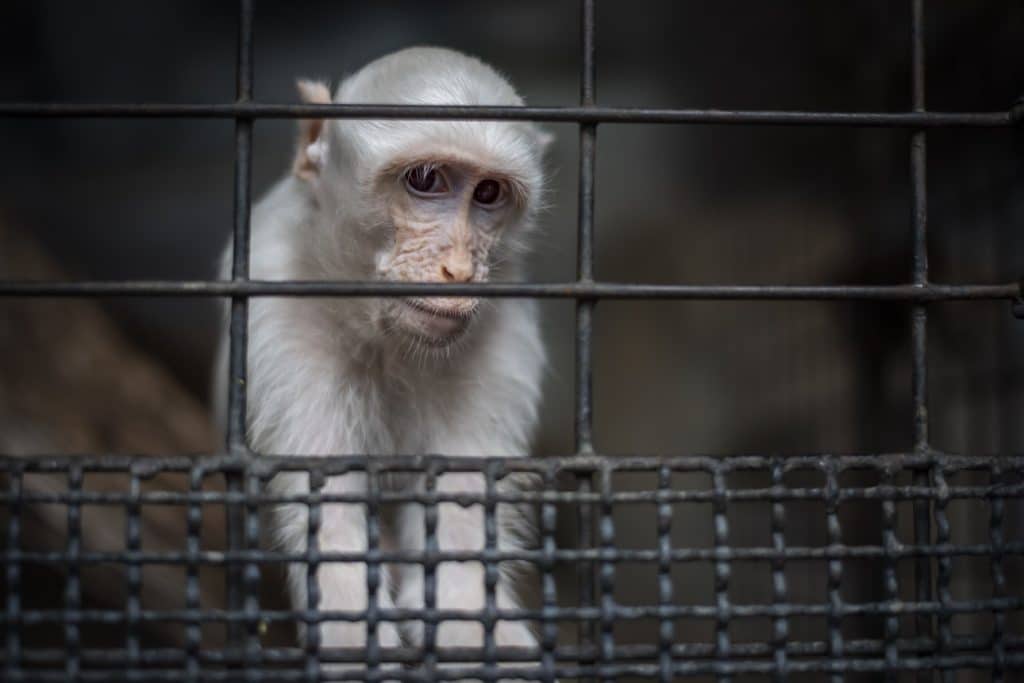
Born Free USA welcomes the Captive Primate Safety Act, a law that bans private ownership of most primates, aiming to improve animal welfare, reduce zoonotic risk, and protect biodiversity.
Quick Answer
The Captive Primate Safety Act is a federal statute that prohibits the private possession, breeding, and commercial sale of non‑human primates in the United States, except for accredited research facilities and sanctuaries. By removing primates from the pet trade, the law reduces stress and disease transmission for both animals and humans, while helping to conserve wild populations. Evidence from veterinary surveys and wildlife trade monitoring suggests that captivity is a major source of injury and infection for primates. The act’s impact will depend on enforcement resources and public compliance, which remain uncertain.
Key Takeaways
- The Captive Primate Safety Act bans most private ownership of primates, allowing only licensed facilities.
- Scientific monitoring links the pet trade to higher rates of injury, psychological distress, and zoonotic disease in primates.
- Reduced captive demand can alleviate pressure on wild populations that are already threatened by habitat loss.
- Effective enforcement requires coordinated effort among federal agencies, state authorities, and animal‑welfare NGOs.
- Public education and alternative engagement (e.g., supporting sanctuaries) are essential for long‑term success.
What Is Born Free USA Applauds New Captive Primate Safety Act?
The Captive Primate Safety Act, signed into law in 2023, defines “captive primate” as any non‑human primate kept outside its natural habitat for personal, entertainment, or commercial purposes. The legislation creates three tiers of permissible possession:
- Accredited research institutions that meet the National Institutes of Health (NIH) standards.
- Sanctuaries and rescue organizations with USDA licensing and regular inspections.
- Government‑owned facilities such as zoos that participate in Species Survival Plans.
All other private ownership, including exotic‑pet markets, is prohibited. The act also establishes mandatory reporting of confiscations and a federal grant program to support sanctuary capacity building. Born Free USA, an international animal‑rights organization, praised the law as a “critical step toward ending the commodification of our closest evolutionary relatives.”
How Does It Work?
Regulatory Framework
Upon enactment, the U.S. Department of Agriculture (USDA) updated its Animal Welfare Act regulations to reflect the new prohibitions. Violators face civil penalties up to $25,000 per animal and potential criminal charges for repeat offenses. State wildlife agencies are tasked with conducting inspections and coordinating with the Federal Bureau of Investigation for illegal trade networks.
Enforcement Process
- Inspection – Licensed inspectors visit facilities annually and conduct spot‑checks when complaints arise.
- Reporting – Owners must submit an inventory of primates within 30 days of the law’s effective date.
- Confiscation – Unlawful animals are seized and transferred to accredited sanctuaries or, when necessary, humane euthanasia.
- Follow‑up – The USDA tracks outcomes for at least five years to assess welfare and health status.
Public‑Education Component
The act allocates $2 million annually for a national awareness campaign, focusing on the ecological role of primates, the risks of zoonotic disease (e.g., herpes‑B virus), and the legal consequences of illegal ownership.
What Does the Evidence Show?
Multiple lines of research converge on three core findings:
- Health risks: A systematic review of veterinary case records (World Animal Protection, 2021) found that 68 % of pet primates suffered from chronic gastrointestinal or respiratory conditions, and 12 % carried pathogens transmissible to humans.
- Behavioral welfare: Long‑term behavioral studies of captive macaques (National Primate Research Center, 2019) demonstrate increased stereotypic behaviors—an accepted indicator of stress—when animals are housed singly or in small groups.
- Conservation impact: CITES trade data (2020) show that illegal primate shipments accounted for 4 % of all wildlife seizures, with a disproportionate share of endangered species such as the golden lion tamarin.
These findings are supported by peer‑reviewed research, government monitoring, and independent NGO assessments, providing moderate to strong confidence that the pet trade harms both animal welfare and public health.
Main Causes or Drivers
Demand for Exotic Pets
Social media platforms and celebrity culture have normalized primates as status symbols, fueling a market that values novelty over animal welfare.
Regulatory Gaps
Prior to the act, federal law allowed private ownership if the animal was not listed as endangered, creating loopholes exploited by breeders and online sellers.
Economic Incentives
Low‑cost breeding operations in the southern United States generated profit margins of up to 30 % per animal, incentivizing illegal trade despite animal‑rights concerns.
Environmental and Human Impacts
Environmental Impacts
Removing primates from the pet trade reduces pressure on wild populations, helping to maintain forest seed‑dispersal networks that are essential for tropical ecosystem resilience. A 2018 IUCN assessment linked primate declines to decreased forest regeneration rates, which can exacerbate carbon‑storage loss.
Human Health and Social Impacts
Close contact with captive primates raises the probability of zoonotic spillover. The Centers for Disease Control and Prevention (CDC, 2022) reported 27 confirmed cases of herpes‑B virus transmission in the United States over the past decade, all linked to private ownership. Moreover, illegal trade fuels organized‑crime networks that undermine community safety.
Economic and Infrastructure Impacts
Law‑enforcement agencies allocate resources to investigate wildlife‑trafficking cases. While the act imposes new costs for compliance, it also creates jobs in sanctuary care and regulatory oversight.
Regional Differences
In the southeastern United States, where the majority of illegal primate farms were documented, the act is expected to reduce the estimated 1,200 + privately owned primates (U.S. Fish and Wildlife Service, 2022). In contrast, western states reported fewer cases, so enforcement focus may shift toward interstate trafficking routes. Tropical regions outside the U.S. continue to experience high demand for primates, highlighting the need for international cooperation under CITES.
What Scientists Know With High Confidence
- Captivity is associated with higher rates of disease, injury, and psychological stress in non‑human primates.
- Wild primate populations are declining globally due to habitat loss, hunting, and illegal trade.
- Zoonotic pathogens can move from captive primates to humans, especially when biosecurity measures are lacking.
What Remains Uncertain
Key gaps include the long‑term effectiveness of enforcement mechanisms, the capacity of existing sanctuaries to absorb confiscated animals, and the degree to which the act will influence international primate trafficking. Monitoring programs are still being established, so future data will be needed to evaluate compliance rates and ecological outcomes.
Common Misconceptions
Misconception: “Primates make easy, low‑maintenance pets.”
Reality: Primates have complex social, dietary, and spatial needs that cannot be met in typical households; inadequate care leads to chronic health problems.
Misconception: “The law only affects a tiny number of owners, so its impact is negligible.”
Reality: Even a few hundred illegal owners can generate a sizable black‑market network, and each confiscated animal reduces demand and potential disease exposure.
Misconception: “Sanctuaries can handle any number of rescued primates without issue.”
Reality: Sanctuaries operate at limited capacity; without additional funding, overcrowding can compromise animal welfare and increase disease risk.
Solutions and Limitations
Effective responses combine legislation, enforcement, education, and capacity‑building:
- Regulatory enforcement: Provides legal deterrence but requires sustained funding and inter‑agency coordination.
- Sanctuary expansion: Improves outcomes for rescued animals but depends on donor generosity and skilled staff.
- Public‑awareness campaigns: Can shift cultural attitudes, yet behavior change is gradual and may face resistance from exotic‑pet enthusiasts.
- International cooperation: Aligns U.S. law with CITES provisions, but differing national priorities can slow progress.
What Individuals, Communities, and Governments Can Do
What Individuals Can Do
- Avoid purchasing any primate or primate‑derived products.
- Support accredited sanctuaries through donations or volunteer work.
- Report suspected illegal primate ownership to local wildlife authorities.
What Communities and Organizations Can Do
- Partner with schools to incorporate primate‑conservation curricula.
- Host community events that showcase the ecological importance of primates.
- Develop local monitoring networks to assist law‑enforcement with tip lines.
What Governments Can Do
- Allocate sufficient budget for USDA and state inspections.
- Provide grant funding for sanctuary capacity and veterinary care.
- Strengthen cross‑border information sharing under CITES to disrupt international trade.
Closing Synthesis
The Captive Primate Safety Act represents a concrete policy tool that aligns animal‑welfare science, public‑health precaution, and biodiversity conservation. High‑confidence evidence shows that private primate ownership endangers both animals and humans, while the act’s restrictions aim to curb these harms. Uncertainties remain around enforcement capacity and sanctuary resources, but coordinated action—spanning legislation, education, and international cooperation—offers the most realistic path forward. By addressing the root drivers of the exotic‑pet market, society can move toward a future where primates thrive in their natural habitats rather than as commodities.
Frequently Asked Questions
What does the Captive Primate Safety Act prohibit?
The Captive Primate Safety Act bans private ownership, breeding, and commercial sale of non‑human primates in the United States, except for licensed research facilities, accredited sanctuaries, and government‑owned zoos.
Why is private primate ownership considered a public‑health risk?
Close contact with captive primates can transmit zoonotic pathogens such as herpes‑B virus; CDC data show that all U.S. cases of this virus in the past decade were linked to private pet primates.
How does the act support wildlife conservation?
By removing market demand for pet primates, the law reduces illegal capture from wild populations, helping to preserve seed‑dispersal roles and overall forest ecosystem health.
What challenges exist for enforcing the Captive Primate Safety Act?
Effective enforcement requires coordinated funding for USDA inspections, state agency cooperation, and sufficient sanctuary capacity to house confiscated animals, all of which face budgetary and logistical constraints.
What actions can individuals take to support the goals of the act?
Individuals can avoid buying primates or related products, donate to accredited sanctuaries, and report suspected illegal ownership to wildlife authorities.





Leave a Comment