
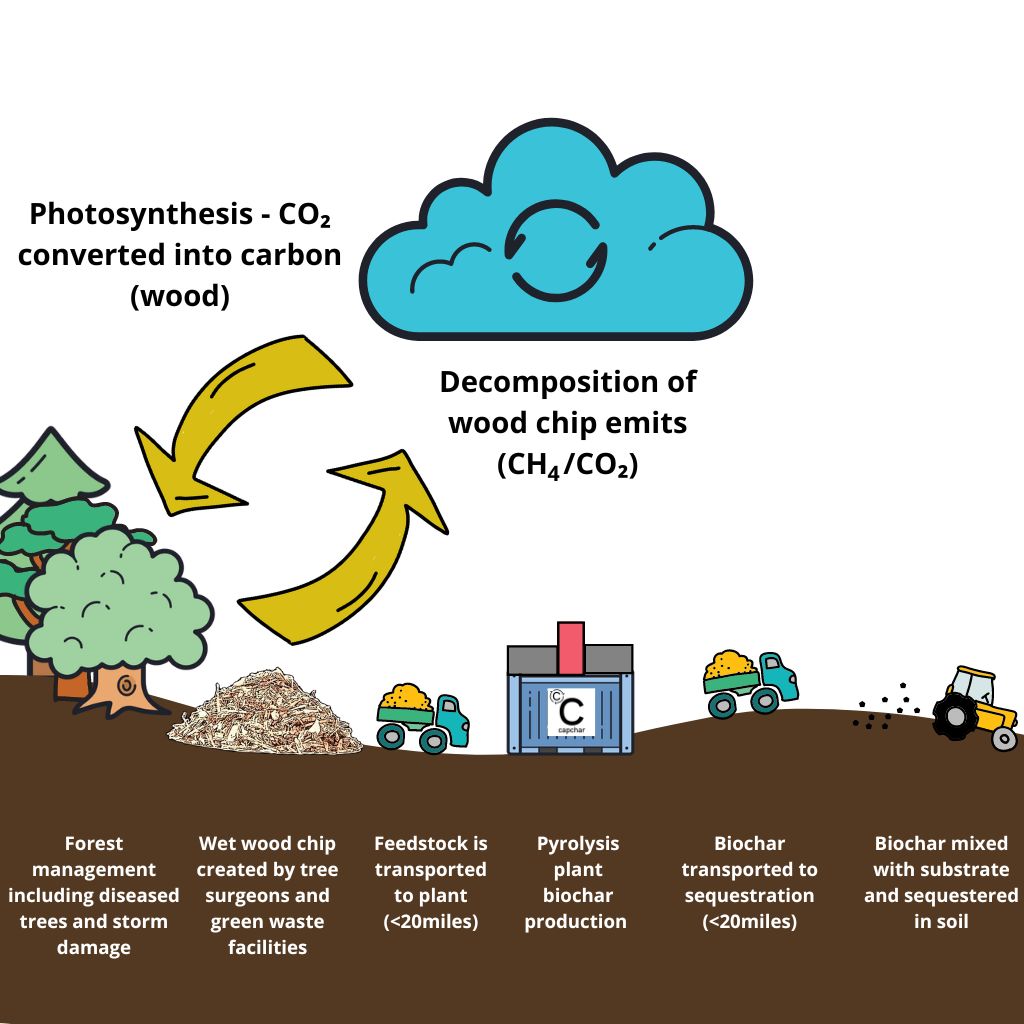
Biochar is a stable, charcoal‑like material produced by pyrolyzing organic waste, and it can lock carbon underground for centuries while improving soil fertility, making it a promising climate‑mitigation and agricultural tool.
Quick Answer
Biochar is a carbon‑rich solid created when biomass such as wood chips, crop residues, or manure is heated in a low‑oxygen environment (pyrolysis). The process transforms the carbon in the feedstock into a chemically stable form that resists decomposition, allowing the carbon to remain sequestered for hundreds to thousands of years. When added to soil, biochar’s porous structure enhances water retention, nutrient availability, and microbial activity, leading to healthier crops. Scientific assessments (e.g., IPCC 2021, FAO 2018) consider biochar a viable negative‑emissions technology, though the magnitude of its climate benefit depends on feedstock choice, production energy source, and application rates.
Key Takeaways
- Biochar stores carbon in a stable form that can persist for centuries, offering a long‑term carbon‑removal pathway.
- Its porous texture improves soil water‑holding capacity, nutrient retention, and microbial habitat.
- Evidence from field trials and meta‑analyses shows yield gains of 5‑20 % on average when biochar is applied appropriately.
- Production must use low‑carbon energy and sustainably sourced feedstocks to avoid offsetting benefits.
- Policy support, standards, and farmer training are essential for scaling biochar responsibly.
What Is Biochar Explained: A Powerful Tool for Carbon Removal and Soil Health?
Biochar is a solid material resembling charcoal that results from the pyrolysis of organic matter—biomass heated to 350‑700 °C in an oxygen‑limited environment. The process drives off volatile compounds, leaving a carbon‑rich carbon matrix with a high surface area. Biochar differs from traditional charcoal in that it is intentionally designed for land application rather than fuel. The term encompasses a range of products that vary by feedstock (e.g., hardwood, rice husk, manure) and pyrolysis conditions, which influence properties such as pH, nutrient content, and pore structure. Its relevance stems from two intertwined environmental functions: long‑term carbon sequestration and soil amendment.
How Does It Work?
1. Carbon Stabilization During Pyrolysis
During pyrolysis, organic carbon is thermally decomposed. A portion is released as gases (CO₂, CO, CH₄) and bio‑oil, while the remaining carbon is restructured into aromatic rings that resist microbial breakdown. Laboratory studies show that the mean residence time of biochar carbon in soils can exceed 1 000 years (Lehmann & Joseph, 2015).
2. Soil Physical Improvements
The resulting material is highly porous. Micropores increase surface area, allowing biochar to retain water and dissolved nutrients. In sandy soils, water‑holding capacity can rise by 10‑30 % (FAO 2018). In heavy clays, biochar can improve aeration and reduce compaction.
3. Chemical and Biological Interactions
Biochar’s alkaline nature (pH 7‑10) can neutralize acidic soils, making nutrients more available. Its surfaces adsorb ammonium, phosphate, and trace metals, reducing leaching. Moreover, the pores serve as refuges for beneficial microbes such as mycorrhizal fungi and nitrogen‑fixing bacteria, enhancing nutrient cycling and plant growth.
4. Carbon Sequestration Pathway
When incorporated into the soil, biochar carbon becomes part of the “stable soil organic carbon pool.” Unlike fresh organic matter, which decomposes within years, biochar resists oxidation, effectively removing atmospheric CO₂ for the lifespan of the material.
What Does the Evidence Show?
Multiple lines of evidence converge on two core findings. First, long‑term field experiments in temperate and tropical regions report net carbon storage increases of 0.2‑1.0 t C ha⁻¹ yr⁻¹ after biochar application (Jeffery et al., 2011 systematic review). Second, meta‑analyses of crop‑yield trials indicate average yield improvements of 5‑20 % when biochar is applied at rates of 5‑20 t ha⁻¹, especially on nutrient‑poor soils (Zhang et al., 2019). The Intergovernmental Panel on Climate Change (IPCC 2021) lists biochar among “nature‑based solutions” with a potential to sequester up to 0.5 Gt C yr⁻¹ globally if deployed sustainably. However, the same assessment notes that uncertainties in life‑cycle emissions and feedstock sourcing can reduce net removal by up to 30 %.
Main Causes or Drivers
Drivers of Biochar Production
- Abundant agricultural residues and forestry waste provide low‑cost feedstocks.
- Policy incentives for carbon credits encourage investment in pyrolysis facilities.
- Rising awareness of soil degradation motivates farmers to seek regenerative amendments.
Drivers of Carbon Emissions that Biochar Can Counteract
- Fossil‑fuel combustion and deforestation elevate atmospheric CO₂.
- Conventional tillage accelerates soil organic carbon loss.
- Intensive fertilizer use can cause nutrient leaching, reducing soil carbon retention.
Environmental and Human Impacts
Environmental Impacts
Biochar improves soil structure, leading to reduced runoff and erosion. Enhanced water retention can mitigate drought stress, supporting plant resilience under climate variability. By adsorbing contaminants, biochar can lower concentrations of heavy metals in groundwater, contributing to water quality protection.
Human Health and Social Impacts
Higher crop yields translate into increased food security for smallholder farmers, particularly in sub‑Saharan Africa and South Asia where soil fertility is often low. Moreover, biochar production can create rural jobs in pyrolysis plant operation and feedstock collection, offering an additional income stream.
Economic and Infrastructure Impacts
When used as a partial replacement for cement, biochar can lower the embodied carbon of concrete by up to 10 % (Lehmann et al., 2020). However, scaling pyrolysis infrastructure requires capital investment and reliable electricity, which may be a barrier in low‑income regions.
Regional Differences
In temperate Europe, biochar is frequently derived from wood chips and applied to improve degraded cropland. In tropical Africa, manure‑based biochar is common, addressing both waste management and acidic soils. Asia’s rice‑husk residues have been converted to biochar to reduce methane emissions from paddy fields. These regional patterns reflect differences in feedstock availability, soil type, and climate‑driven agronomic challenges.
What Scientists Know With High Confidence
- Biochar carbon is chemically stable and can remain in soils for centuries.
- When applied at appropriate rates, biochar improves water retention and nutrient use efficiency.
- Yield benefits are most pronounced on acidic, low‑fertility soils.
- Life‑cycle analyses show that low‑carbon pyrolysis energy sources are essential for net climate benefit.
What Remains Uncertain
Key uncertainties include the long‑term behavior of biochar in diverse soil climates, the net greenhouse‑gas balance when accounting for production energy, and the optimal application rates for different crops. Field data beyond ten years are limited, especially in tropical humid zones, making it difficult to predict carbon permanence under varying moisture regimes. Further research on standardized feedstock certifications and on the interaction between biochar and soil microbes will reduce these gaps.
Common Misconceptions
Misconception: Biochar alone can “solve” climate change.
Reality: Biochar is a complementary mitigation tool; its impact depends on scale, sustainable production, and integration with broader climate strategies.
Misconception: All biochar is the same.
Reality: Properties vary widely with feedstock and pyrolysis temperature, influencing pH, nutrient content, and suitability for specific soils.
Misconception: Adding biochar guarantees higher yields.
Reality: Yield response is context‑dependent; on already fertile soils, benefits may be modest or absent.
Solutions and Limitations
Biochar can be part of a suite of nature‑based solutions. Its strengths lie in carbon sequestration, soil restoration, and waste valorization. Limitations include the energy demand of pyrolysis, the need for sustainable feedstock supply, and the current lack of universal quality standards. Trade‑offs involve potential competition with bioenergy production and the risk of diverting residues from other ecological functions.
What Individuals, Communities, and Governments Can Do
What Individuals Can Do
- Support local farms that use certified biochar through farmer‑direct markets.
- Advocate for community composting programs that integrate small‑scale pyrolysis.
What Communities and Organizations Can Do
- Develop demonstration plots to test biochar on local soils and share results.
- Partner with universities to monitor long‑term carbon storage and soil health.
What Governments Can Do
- Establish standards for biochar quality and feedstock sustainability.
- Provide incentives or carbon‑credit mechanisms that reward verified carbon removal.
- Fund research on region‑specific biochar applications and life‑cycle assessments.
What Businesses and Industries Can Do
- Integrate biochar as a partial aggregate in concrete or as a filler in polymer composites to lower product carbon footprints.
- Use agricultural residues for on‑site pyrolysis, creating a closed‑loop waste‑to‑value system.
Synthesis
Biochar offers a scientifically grounded pathway to lock carbon underground while revitalizing soils, especially where fertility is low. Robust evidence confirms its stability and agronomic benefits, yet uncertainties about long‑term effects and production emissions temper expectations. Realizing its potential requires coordinated action: low‑carbon pyrolysis, transparent standards, and targeted field testing. When embedded in broader climate‑mitigation and sustainable‑agriculture strategies, biochar can contribute meaningfully to carbon removal and food‑security goals.
Frequently Asked Questions
What is biochar and how is it produced?
Biochar is a charcoal‑like solid made by heating organic waste (e.g., wood chips, crop residues, manure) at 350‑700 °C in a low‑oxygen environment. This pyrolysis process removes volatile gases and leaves a carbon‑rich, porous material that resists decomposition.
How does biochar help remove carbon from the atmosphere?
During pyrolysis, the carbon in the original biomass is transformed into a stable aromatic structure that does not readily break down. When the biochar is mixed into soil, that carbon remains stored for centuries, effectively pulling CO₂ out of the atmosphere.
What are the main benefits of adding biochar to soil?
Biochar improves water retention, increases nutrient availability, raises pH in acidic soils, and provides habitat for beneficial microbes. Field studies show average crop‑yield gains of 5‑20 % on low‑fertility soils and long‑term increases in soil carbon stocks.
What are the biggest uncertainties or challenges associated with biochar use?
Key uncertainties include how biochar behaves over decades in different climates, the net greenhouse‑gas balance when production uses fossil‑based energy, and the optimal application rates for various crops. Sustainable feedstock sourcing and standard quality metrics are also ongoing challenges.
How can farmers or communities start using biochar responsibly?
Begin with small, certified biochar applications on test plots, monitor soil health and yields, and use locally sourced waste feedstocks. Communities can partner with research institutions for long‑term monitoring, while governments can provide standards and incentives for verified carbon removal.






Leave a Comment