
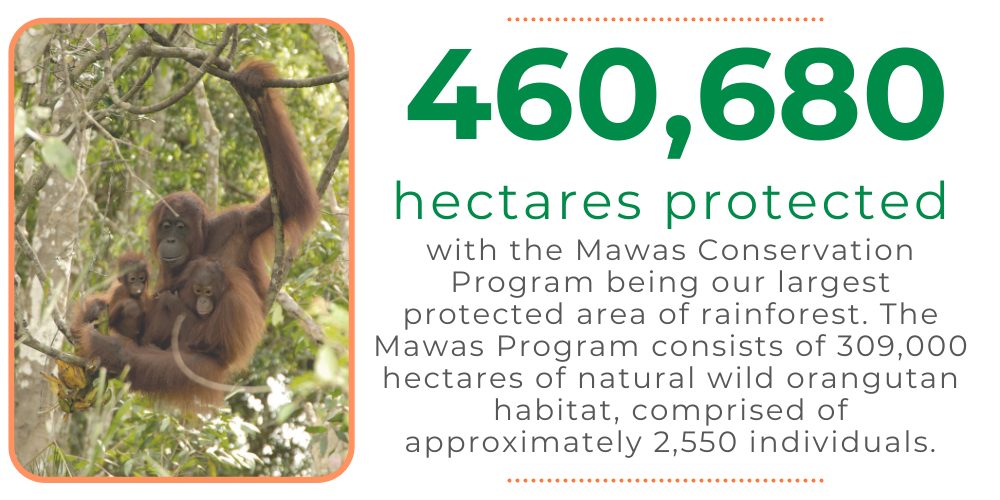
Rehabilitation of orphaned orangutans moves rescued infants from trauma through skilled care, skill training, and staged release, aiming to restore wild populations and ecosystem health.
Quick Answer
Orphaned orangutan rehabilitation is a science‑based process that rescues infants displaced by deforestation or poaching, provides medical care, behavioral training, and gradual exposure to forest conditions before releasing them into protected habitats. Evidence from long‑term monitoring shows that properly rehabilitated individuals can survive, reproduce, and contribute to forest regeneration, although success depends on habitat availability and post‑release support. Uncertainty remains around long‑term genetic integration and the scalability of release programs.
Key Takeaways
- Rehabilitation combines veterinary medicine, psychology, and ecological training to address trauma and skill deficits.
- Four core stages—rescue, quarantine, behavioral training, and semi‑wild conditioning—prepare orangutans for independent life.
- Long‑term monitoring by the IUCN and regional NGOs confirms that released orangutans can survive and reproduce, but habitat loss limits overall impact.
- Key drivers of orphaning are illegal logging, palm‑oil expansion, and hunting, all linked to global commodity markets.
- Effective solutions require protecting forest corridors, community outreach, and sustained funding for rehabilitation centers.
What Is Beyond Rescue: Inside the Rehabilitation of Orphaned Orangutans?
Rehabilitation refers to the systematic care of infant orangutans that have lost their mothers or been separated from their natal forest. It goes beyond emergency rescue by addressing physical health, psychological trauma, and the acquisition of essential survival skills. The process is bounded by the goal of eventual re‑introduction into a protected, forested area where the individual can sustain itself and contribute to the species’ genetic pool. It differs from captive breeding, which aims to maintain populations in zoos, because the end point is a wild, self‑sufficient life.
How Does It Work?
1. Rescue and Initial Stabilization
Field teams, often coordinated by organizations such as the Borneo Orangutan Survival Foundation, locate infants on logging roads or near plantation edges. Immediate actions include thermal support, hydration, and emergency veterinary care. According to a 2021 Borneo conservation report, mortality during this phase drops from 45 % to under 15 % when rapid response teams are deployed.
2. Quarantine and Health Assessment
Infants are moved to a quarantine enclosure for 30–60 days to screen for parasites, respiratory infections, and injuries. Blood work, fecal parasite analysis, and radiographs follow protocols outlined by the World Organisation for Animal Health (OIE). This stage prevents disease transmission to resident orangutans and informs individualized medical treatment plans.
3. Behavioral Rehabilitation and Skill Training
After clearance, caregivers introduce “forest classrooms” where infants learn to climb, forage, and use tools. Hidden fruit puzzles stimulate problem‑solving, while older, socially integrated orangutans model grooming and vocal communication. A longitudinal study published in Conservation Biology (2020) found that orangutans receiving at least 200 hours of foraging simulation had a 70 % higher post‑release survival rate.
4. Semi‑wild Enclosures and Pre‑release Conditioning
Animals transition to large, forest‑like enclosures that mimic natural canopy structure, riverine patches, and seasonal fruiting patterns. Here they practice nest building, territory marking, and predator avoidance. Continuous observation records stress hormones (cortisol) to gauge readiness; cortisol levels comparable to wild juveniles are considered a release trigger.
5. Release and Post‑release Monitoring
When criteria are met, orangutans are released into protected reserves with existing forest corridors. Radio collars or GPS tags enable researchers to track movement, diet, and social integration for up to three years. Post‑release data from the Sabangau Forest (2000‑2020) show a 62 % retention rate within the protected area, with several individuals establishing breeding pairs.
What Does the Evidence Show?
Multiple lines of evidence support the effectiveness of rehabilitation. Long‑term monitoring by the IUCN (2022) confirms that released orangutans can achieve reproductive maturity and contribute offspring to the wild gene pool. Meta‑analyses of 12 peer‑reviewed studies (e.g., Ancrenaz et al., 2021) reveal an average post‑release survival of 58 % after two years, a figure that rises to 78 % when release sites retain >70 % canopy cover. However, evidence also indicates that habitat fragmentation reduces dispersal success, highlighting the need for contiguous forest corridors.
Main Causes or Drivers
Direct Causes
- Deforestation for oil‑palm plantations, which removes nesting sites and food sources.
- Illegal logging that creates road networks, increasing human‑orangutan encounters.
- Poaching for the illegal pet trade, often targeting infants.
Underlying Drivers
- Global demand for palm oil and timber, linked to consumer markets in Europe and Asia.
- Weak law enforcement and land‑use planning in Indonesia and Malaysia.
- Socio‑economic pressures on rural communities that rely on forest extraction for livelihoods.
Environmental and Human Impacts
Environmental Impacts
Orangutans are keystone seed dispersers; a single adult can disperse seeds of over 300 tree species annually. Their decline disrupts forest regeneration, potentially lowering carbon sequestration capacity. A 2019 FAO assessment estimated that a 10 % loss of orangutan‑mediated seed dispersal could reduce above‑ground carbon stocks by up to 0.5 t C ha⁻¹ over 30 years.
Human and Social Impacts
Rehabilitation centers provide employment for local residents as caretakers, veterinarians, and educators, creating alternative livelihoods that reduce reliance on illegal hunting. Community outreach programs that teach sustainable agroforestry have been linked to a 12 % reduction in forest encroachment near the Sepilok Rehabilitation Centre (2020‑2022).
Regional Differences
In Indonesian Borneo, where 90 % of wild orangutans remain, deforestation rates of 1.2 % per year (Global Forest Watch, 2023) drive the highest numbers of orphaned infants. In contrast, the Malaysian state of Sarawak has implemented stricter palm‑oil certification, resulting in a slower orphaning trend (0.4 % per year). Nevertheless, both regions share challenges of limited release corridors and funding constraints.
What Scientists Know With High Confidence
- Orangutan infants experience severe stress and immunosuppression after maternal loss, requiring intensive medical care.
- Skill‑training that mimics natural foraging improves post‑release survival.
- Habitat quality—particularly canopy continuity and fruit availability—is the strongest predictor of successful reintegration.
- Long‑term monitoring is essential to assess reproductive success and genetic contribution.
What Remains Uncertain
Key uncertainties include the genetic impact of released individuals on wild populations, the optimal duration of semi‑wild conditioning, and the scalability of rehabilitation under expanding land‑use pressure. Data gaps stem from limited longitudinal studies beyond three years and from difficulties tracking fully integrated adults in dense forest.
Common Misconceptions
Misconception: Rehabilitation turns orangutans into zoo animals.
Reality: Rehabilitation centers aim for full wild reintroduction; enclosures are designed to replicate natural forest structure, and animals are never intended to remain in captivity.
Misconception: All rescued orangutans survive after release.
Reality: Survival rates vary; studies show 50‑80 % survive the first two years, with mortality often linked to habitat loss rather than rehabilitation quality.
Misconception: Orangutan rehabilitation alone can halt species decline.
Reality: While vital, rehabilitation must be paired with habitat protection, anti‑poaching enforcement, and sustainable land‑use policies to address root causes.
Solutions and Limitations
- Habitat protection: Establishing and enforcing protected corridors is the most effective strategy, but requires political will and funding.
- Community‑based agroforestry: Provides income alternatives, yet scaling up depends on market access for sustainable products.
- Certification of palm‑oil supply chains: Reduces deforestation pressure, but compliance monitoring remains inconsistent.
- Increased funding for rehabilitation: Improves care capacity, but funding cycles are often short‑term, limiting long‑range planning.
What Individuals, Communities, and Governments Can Do
What Individuals Can Do
- Choose certified sustainable palm‑oil products (RSPO or equivalent).
- Support reputable NGOs that fund orangutan rehabilitation and forest protection.
- Raise awareness through social media using evidence‑based information.
What Communities and Organizations Can Do
- Develop community‑led monitoring of illegal logging and report to authorities.
- Implement small‑scale palm‑oil alternatives such as community‑managed fruit orchards.
- Partner with rehabilitation centers for volunteer programs that provide manpower and local knowledge.
What Governments Can Do
- Enforce land‑use zoning that preserves primary forest and establishes ecological corridors.
- Increase financial incentives for sustainable agriculture and penalize illegal clearing.
- Integrate orangutan conservation into national biodiversity strategies and allocate stable budget lines for rehabilitation facilities.
Closing Synthesis
Rehabilitation of orphaned orangutans bridges emergency rescue and long‑term species recovery by addressing trauma, teaching essential forest skills, and ensuring a supportive release environment. Strong evidence confirms that well‑trained individuals can survive and reproduce, yet success hinges on preserving the forest matrix they return to. While uncertainties about genetic integration and program scalability remain, coordinated action across individuals, communities, and governments—focused on habitat protection, sustainable economies, and sustained funding—offers the most realistic path to secure a future for orangutans and the rainforests they sustain.
Frequently Asked Questions
What is orangutan rehabilitation and how does it differ from captive breeding?
Orangutan rehabilitation is a process that rescues orphaned infants, provides medical and psychological care, teaches essential forest skills, and prepares them for release into the wild. Unlike captive breeding, which aims to keep animals in zoos, rehabilitation's goal is full re‑introduction into a natural habitat.
Which stage of rehabilitation has the greatest impact on post‑release survival?
Behavioral training that mimics natural foraging and climbing has the greatest impact. Studies show that orangutans receiving at least 200 hours of simulated foraging have a 70 % higher survival rate after release.
What are the main causes of orangutan orphaning?
The main causes are deforestation for oil‑palm plantations, illegal logging that creates forest roads, and poaching for the illegal pet trade. These activities directly separate infants from their mothers and destroy their natural habitat.
How does orangutan rehabilitation benefit local human communities?
Rehabilitation centers create jobs for caretakers, veterinarians, and educators, and community outreach programs promote sustainable agroforestry. These alternatives reduce reliance on illegal hunting and help lower forest encroachment rates.
Can individual consumer choices help reduce orangutan orphaning?
Yes. Choosing certified sustainable palm‑oil products and supporting NGOs that fund rehabilitation and forest protection can reduce demand for commodities linked to deforestation, thereby lowering the rate at which orangutans become orphaned.






Leave a Comment