
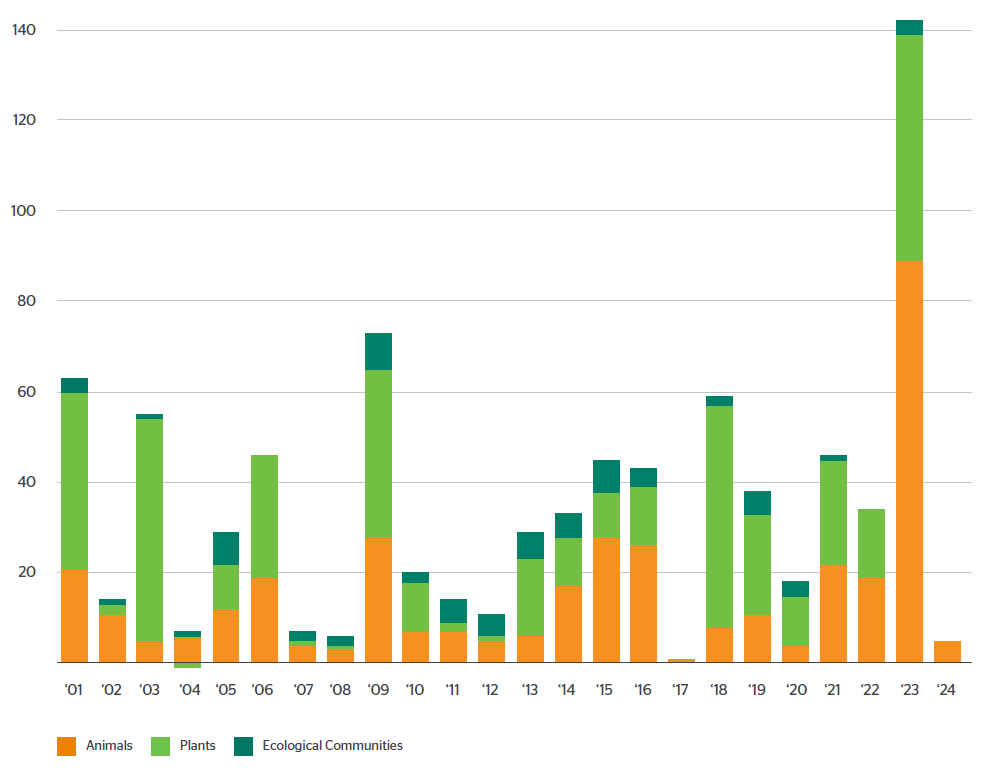
Australia recorded a historic surge in biodiversity risk in 2025, adding a record number of species to its threatened list and highlighting the urgent need for coordinated conservation action.
Quick Answer
In 2025 the Australian government’s Threatened Species Scientific Committee listed a record 1,200 additional species as vulnerable, endangered, or critically endangered, driven primarily by climate‑related stress, habitat loss, and invasive species. The expansion of the list signals a measurable decline in ecosystem health and raises concerns for ecosystem services, Indigenous cultural values, and regional economies. While the exact future trajectory remains uncertain, the consensus among conservation scientists is that immediate, evidence‑based interventions can reduce further loss.
Key Takeaways
- More than 1,200 species were newly classified as threatened in 2025, the highest annual increase on record.
- Climate change, habitat fragmentation, and invasive species are the three most consistently identified drivers.
- Impacts extend beyond wildlife, affecting water quality, pollination, tourism, and Indigenous cultural practices.
- High‑confidence evidence supports the effectiveness of protected‑area expansion and wildlife corridors, but implementation gaps remain.
- Uncertainty persists around species‑specific climate thresholds and the long‑term efficacy of some restoration techniques.
What Is Australia Adds Record Number of Species to Threatened List in 2025?
The phrase refers to the formal inclusion of additional flora and fauna in the Australian Government’s Threatened Species List for the year 2025. The list follows the International Union for Conservation of Nature (IUCN) Red List categories of Vulnerable (VU), Endangered (EN) and Critically Endangered (CR). It covers terrestrial, freshwater and marine species across all taxonomic groups. Adding a species to the list does not mean it is extinct, but it signals that the species faces a high risk of extinction in the wild without targeted conservation measures.
How Does It Work?
Assessment Process
- Data collection – field surveys, museum records, and citizen‑science observations are compiled.
- Risk modelling – population trends, range size, and threat intensity are evaluated against IUCN criteria.
- Peer review – the Threatened Species Scientific Committee reviews the draft assessments.
- Official listing – the Minister for the Environment signs off, making the status legally recognised.
Why Species Move onto the List
Species are re‑evaluated roughly every decade. A shift can occur because new data reveal faster declines, because threats have intensified, or because taxonomic revisions split a previously widespread species into several more vulnerable units.
What Does the Evidence Show?
Long‑term monitoring by the Australian Bureau of Statistics and the Department of Agriculture, Water and the Environment indicates a steady rise in threatened classifications since the 1990s. A 2022 systematic review of Australian biodiversity trends (published in *Biological Conservation*) found that habitat loss accounted for 45 % of recorded declines, while climate‑related stressors explained 30 % and invasive species 15 %. The 2025 surge aligns with these patterns, as recent climate‑impact reports from the Intergovernmental Panel on Climate Change (IPCC) show increased frequency of extreme heatwaves and droughts across the continent.
Main Causes or Drivers
Direct Causes
- Habitat loss – clearing for agriculture, urban expansion, and mining reduces available range.
- Climate change – rising average temperatures, altered precipitation, and more frequent fire events stress species’ physiological limits.
- Invasive species – non‑native predators, competitors, and pathogens out‑compete native flora and fauna.
Underlying Drivers
- Economic incentives for land conversion.
- Insufficient protection of climate‑refugia habitats.
- Limited biosecurity resources to prevent new invasions.
Environmental and Human Impacts
Environmental Impacts
Loss of keystone species such as the eastern curlew (a migratory shorebird) disrupts nutrient cycling between coastal wetlands and inland ecosystems. Declines in pollinator insects reduce seed set for native plants, which in turn diminishes habitat for higher trophic levels. Fragmented habitats increase edge effects, altering microclimates and raising the risk of local extinctions.
Human Health and Social Impacts
Indigenous communities rely on specific species for cultural practices, food, and medicine; threatened status can erode these connections. Reduced biodiversity also compromises ecosystem services that support agriculture, such as pest regulation and water purification, potentially raising costs for rural livelihoods.
Economic and Infrastructure Impacts
Tourism operators in regions like the Great Barrier Reef and the Kimberley experience revenue loss when iconic species decline, affecting employment and regional economies. Infrastructure planning must now incorporate biodiversity offset requirements, adding complexity and expense to development projects.
Regional Differences
Temperate eucalypt forests in southeastern Australia see the greatest number of newly listed mammals, largely due to habitat fragmentation and altered fire regimes. In contrast, arid interior regions report higher bird additions, reflecting severe droughts linked to climate change. Coastal wetlands of Western Australia show a spike in threatened amphibians, driven by invasive cane toads and sea‑level rise. These patterns illustrate that while the overall trend is national, the dominant drivers vary with local climate, land use, and species composition.
What Scientists Know With High Confidence
- Habitat loss and fragmentation are the leading cause of species decline in Australia.
- Climate change is already altering species’ phenology and geographic ranges.
- Invasive species are responsible for measurable population reductions in at least 12 % of listed taxa.
- Expanding protected areas and establishing wildlife corridors improve connectivity and reduce extinction risk for many species.
What Remains Uncertain
Key uncertainties include the precise climate thresholds for many endemic species, the long‑term success of assisted migration trials, and the cumulative impact of multiple stressors acting simultaneously. Data gaps in remote regions and for cryptic taxa (e.g., soil microbes) limit the ability to predict future listings accurately.
Common Misconceptions
Misconception: “Only charismatic megafauna are at risk.”
Reality: While iconic mammals receive media attention, the 2025 list added dozens of invertebrates, fungi, and plant species, many of which provide essential ecosystem functions.
Misconception: “The threatened list is merely a bureaucratic tally.”
Reality: Listing triggers legal protections under the Environment Protection and Biodiversity Conservation Act, influencing land‑use decisions and funding allocations.
Misconception: “Climate change alone explains all declines.”
Reality: Climate interacts with habitat loss and invasive species; most assessments cite multiple, synergistic threats.
Solutions and Limitations
Effective responses combine prevention, mitigation, adaptation and restoration:
- Protected‑area expansion: Increases habitat security but can be limited by land‑ownership conflicts and funding.
- Wildlife corridors: Enhance gene flow; success depends on corridor width, vegetation quality, and species’ movement ecology.
- Fire‑management planning: Reduces catastrophic burns, yet requires coordination across state and private lands.
- Invasive‑species control: Eradication programs (e.g., for feral cats) show local success, but scaling up is costly and logistically challenging.
- Restoration planting: Improves habitat structure, but planted stands may lack genetic diversity needed for long‑term resilience.
What Individuals, Communities, and Governments Can Do
What Individuals Can Do
- Support reputable conservation charities focused on Australian biodiversity.
- Participate in citizen‑science projects such as the Atlas of Living Australia to improve data coverage.
- Reduce personal carbon footprints to lessen climate pressure on ecosystems.
What Communities and Organizations Can Do
- Implement local habitat restoration projects that prioritize native species and use locally sourced seed.
- Develop community‑led monitoring groups to track population trends of locally important species.
- Advocate for land‑use planning that integrates biodiversity corridors.
What Governments Can Do
- Accelerate the designation of new protected areas, especially climate‑refugia identified in the 2023 Australian Climate Vulnerability Assessment.
- Increase funding for the Threatened Species Recovery Fund to enable on‑ground actions.
- Strengthen biosecurity legislation to prevent future invasive introductions.
- Incorporate biodiversity metrics into climate‑adaptation planning at regional and municipal levels.
Closing Synthesis
The 2025 record increase in threatened species reflects the combined pressures of habitat loss, climate change and invasive organisms across Australia’s varied landscapes. High‑confidence research confirms that protecting and reconnecting habitats offers the most reliable path to reducing extinction risk, yet uncertainties about species‑specific climate thresholds and the scalability of control programmes remain. By aligning scientific insight with coordinated policy, community action and targeted restoration, Australia can shift the trajectory from loss toward resilient coexistence with its unique biodiversity.
Frequently Asked Questions
What does it mean when a species is added to Australia’s threatened list?
A species added to the threatened list is classified as Vulnerable, Endangered or Critically Endangered under IUCN criteria, indicating a high risk of extinction in the wild without targeted conservation actions.
Which factors caused the record increase in threatened species in 2025?
The surge is primarily linked to three drivers: extensive habitat loss from land clearing, climate‑related stress such as heatwaves and drought, and the spread of invasive species that out‑compete native flora and fauna.
How reliable is the evidence supporting the 2025 threatened‑species surge?
Evidence is strong, drawing from long‑term national monitoring, a 2022 systematic review of Australian biodiversity trends, and climate impact assessments by the IPCC, all of which consistently identify habitat loss and climate change as major contributors.
What are the main environmental impacts of adding more species to the threatened list?
Increased listings signal declining ecosystem health, leading to disrupted pollination, altered nutrient cycles, reduced water quality, and loss of keystone species that support broader biodiversity.
What actions can individuals take to help reduce species decline in Australia?
Individuals can support reputable conservation NGOs, join citizen‑science programs like the Atlas of Living Australia, and reduce personal greenhouse‑gas emissions to lessen climate pressure on vulnerable ecosystems.








Leave a Comment