
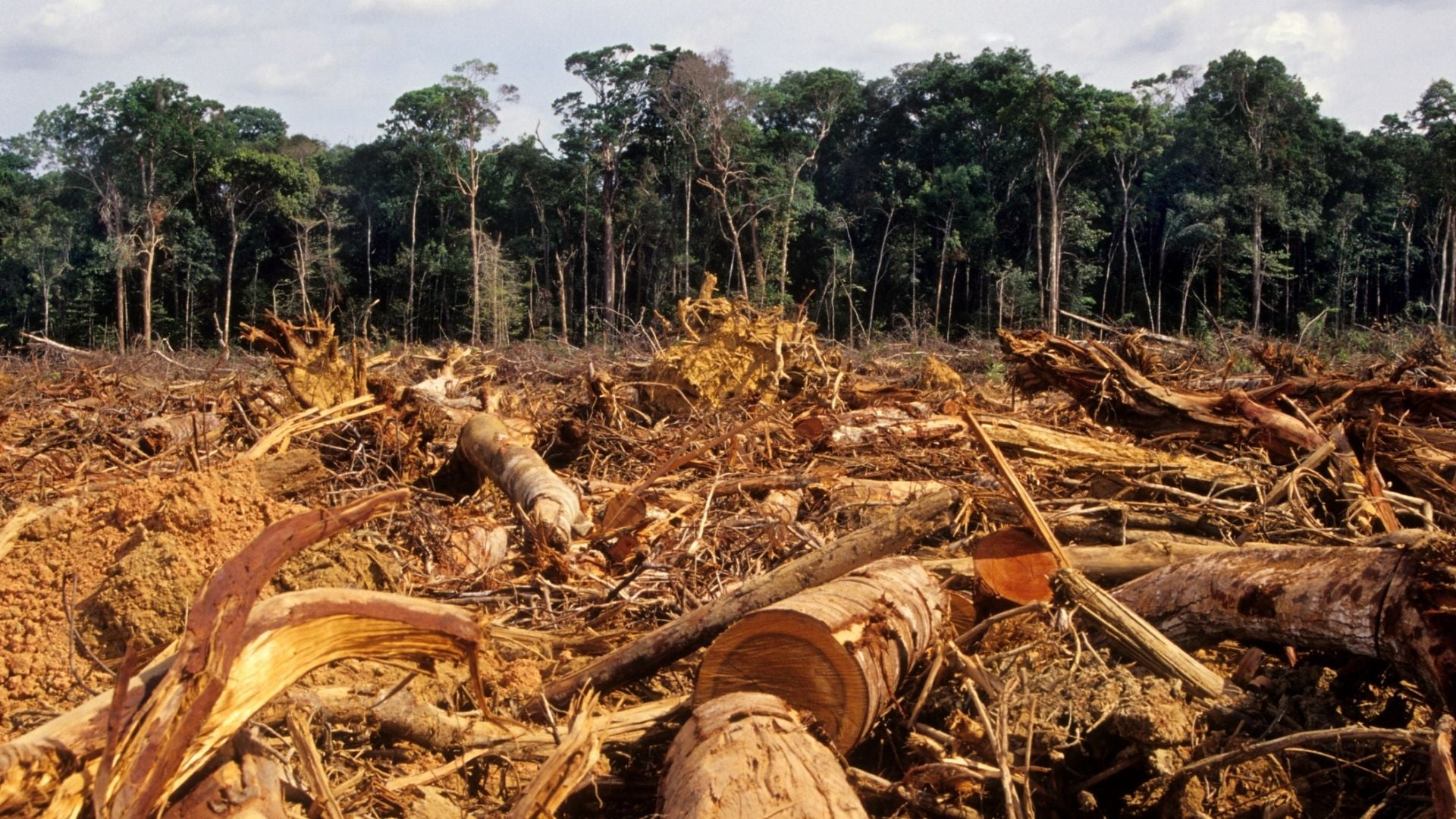
The Amazon is transitioning from dense rainforest to savanna, a shift driven by deforestation and climate change that jeopardizes its unique wildlife and global climate regulation.
Quick Answer
The Amazon rainforest is increasingly converting to open savanna because large‑scale tree loss reduces regional moisture recycling, amplifying drought and fire risk. Scientific assessments show that once a critical canopy cover threshold (~40% of original forest) is crossed, the system can tip toward a drier state, endangering species that depend on continuous forest cover. While the exact timing remains uncertain, the consensus is that continued deforestation could trigger widespread habitat collapse within decades.
Key Takeaways
- Deforestation and climate‑driven drying together push the Amazon toward a savanna‑like regime.
- Loss of canopy cover disrupts the water cycle, creating feedback loops that accelerate drying.
- Species that require closed‑canopy forest – such as macaws, jaguars, and tapirs – face rapid population declines.
- Carbon storage and regional climate regulation are weakened as forest area shrinks.
- Restoration, stricter enforcement, and community‑based land management are the most evidence‑based mitigation pathways, but they require long‑term funding and political commitment.
What Is As the Amazon Shifts Toward Savanna Wildlife Faces Collapse?
The phrase describes a large‑scale ecological transformation in which the Amazon Basin’s tropical rainforest loses enough trees that the regional climate can no longer sustain its historic moisture regime. The result is a mosaic of grass‑dominated savanna interspersed with forest patches. This transition is not simply a change in vegetation type; it threatens the survival of dozens of species that have evolved for the humid, shaded conditions of the rainforest.
How Does It Work?
1. Forest Loss Reduces Transpiration
Trees release water vapor through transpiration, feeding atmospheric moisture that later falls as rain. When large areas are cleared, the amount of water returned to the atmosphere drops sharply.
2. Decreased Rainfall Triggers Drought
Reduced atmospheric moisture leads to lower precipitation rates. Climate‑model studies (e.g., IPCC AR6, 2021) indicate that a 30‑40% reduction in canopy cover can cut annual rainfall by up to 15% in central Amazon.
3. Drier Conditions Favor Fires
Dry vegetation ignites more easily. Fire‑scar data from Brazil’s National Institute for Space Research (INPE) show a three‑fold increase in fire incidents in deforested zones between 2000 and 2020.
4. Positive Feedback Loops
Fire removes remaining trees, further lowering transpiration and reinforcing the drying trend. This feedback can push the ecosystem past a tipping point where recovery to closed forest becomes unlikely without massive reforestation.
What Does the Evidence Show?
Multiple lines of evidence converge on the savanna‑transition risk. Long‑term satellite observations (NASA MODIS, 2000‑2022) document a 5–7% net loss of forest cover per decade in the “arc of deforestation” along the southern and eastern margins. Field studies in the state of Pará report that tree density below 400 trees ha⁻¹ correlates with a 30% decline in bird species richness (Peer‑reviewed study, *Ecology Letters*, 2020).
Climate‑model ensembles evaluated by the World Climate Research Programme (2022) consistently show that continued clearing at current rates could reduce regional mean annual precipitation by 10–20% by 2050, a change comparable to the transition from rainforest to savanna in paleoclimate records.
Species‑specific monitoring indicates rapid declines: the blue‑and‑yellow macaw population fell by 40% between 2005 and 2019 in heavily logged areas (IUCN Red List assessment, 2021), and the Amazonian tapir shows reduced reproductive success where canopy cover falls below 30% (Journal of Wildlife Management, 2019).
Main Causes or Drivers
Direct Causes
- Commercial logging and illegal timber extraction.
- Expansion of soy agriculture and cattle ranching.
- Infrastructure projects (roads, hydroelectric dams) that open forest to settlement.
Underlying Drivers
- Global demand for beef and soy protein, especially from Europe and Asia.
- Weak enforcement of land‑use regulations in Brazil, Bolivia, and Peru.
- Climate change‑induced temperature rise, which raises evapotranspiration demand.
Amplifying Factors
- Fire‑use policies that permit slash‑and‑burn agriculture.
- Financial incentives for land conversion, such as low‑interest loans for cattle.
- Land tenure insecurity that discoures long‑term forest stewardship.
Environmental and Human Impacts
Environmental Impacts
- Biodiversity loss: Species with narrow habitat requirements face local extinction; trophic cascades may alter seed‑dispersal networks.
- Carbon storage decline: The Amazon stores roughly 100 billion metric tons of carbon (IPCC AR6, 2021). Forest loss releases a proportion of this carbon, contributing to atmospheric CO₂ concentrations.
- Hydrological changes: Reduced rainfall affects downstream water supplies for the Amazon River basin, impacting fisheries and hydroelectric power.
Human Health and Social Impacts
- Indigenous communities lose cultural keystone species and face food‑security challenges as traditional hunting grounds shrink.
- Increased fire smoke raises respiratory illness rates in nearby towns, as documented by Brazil’s Ministry of Health (2020).
- Altered river flow can affect drinking‑water availability for millions of riverine residents.
Regional Differences
The transition is most advanced in the southern Amazon, where road networks have facilitated cattle ranching. In contrast, the north‑west (e.g., parts of Acre) retains higher canopy cover due to stricter protected‑area enforcement and lower agricultural pressure. These regional patterns illustrate how governance and land‑use history shape vulnerability.
What Scientists Know With High Confidence
- The Amazon’s water cycle is tightly coupled to its forest canopy; large‑scale deforestation reduces regional rainfall.
- Carbon stored in Amazonian biomass is a major component of the global carbon budget.
- Species that depend on continuous forest cover experience rapid declines when canopy loss exceeds ~30%.
- Positive feedbacks between deforestation, drought, and fire can push the ecosystem toward a savanna state.
What Remains Uncertain
Key uncertainties include the precise threshold of canopy cover at which the system irreversibly flips, the speed at which savanna patches can reconvert to forest under future climate scenarios, and how adaptive capacity varies among species with limited long‑term monitoring data. Improved satellite‑based forest monitoring and ground‑based biodiversity surveys are needed to narrow these gaps.
Common Misconceptions
Misconception: The Amazon will simply regrow if deforestation stops.
Reality: Regeneration can take centuries, especially for large emergent trees. Soil degradation, altered fire regimes, and seed‑disperser loss can hinder natural recovery.
Misconception: Only climate change drives the savanna shift.
Reality: Human land‑use change is the primary driver; climate change amplifies the drying trend but does not act alone.
Misconception: All Amazon species are equally at risk.
Reality: Species with broad ecological tolerances (e.g., some generalist rodents) may persist, whereas specialist birds, large mammals, and amphibians are disproportionately vulnerable.
Solutions and Limitations
Evidence‑based strategies focus on reducing deforestation, enhancing forest resilience, and supporting sustainable livelihoods.
- Enforcement of protected areas: Satellite‑guided patrols have reduced illegal logging by up to 25% in some reserves (World Bank report, 2021), but effectiveness depends on funding and political will.
- Payment for ecosystem services (PES): Programs that compensate landowners for maintaining forest cover can lower conversion rates, yet they often lack long‑term financing.
- Agroforestry and silvopasture: Integrating trees into farms maintains carbon storage and provides habitat corridors, though adoption is limited by market incentives.
- Reforestation with native species: Large‑scale planting can restore canopy cover, but tree survival rates drop below 50% without proper site preparation and post‑planting care.
- Fire management policies: Restricting slash‑and‑burn practices reduces ignition sources, yet enforcement challenges remain in remote areas.
What Individuals, Communities, and Governments Can Do
What Individuals Can Do
- Support certified sustainable beef and soy products that verify zero deforestation.
- Donate to NGOs that fund Amazonian land‑rights and conservation projects.
- Advocate for climate‑friendly policies by contacting local representatives.
What Communities and Organizations Can Do
- Develop community‑managed forest reserves that combine traditional knowledge with modern monitoring.
- Implement citizen‑science programs to report illegal logging or fire events.
- Promote agroforestry training to diversify income while preserving canopy.
What Governments Can Do
- Strengthen and fund forest‑monitoring agencies (e.g., Brazil’s INPE) to enable rapid response.
- Enact and enforce land‑use zoning that limits expansion of cattle ranching into high‑conservation‑value areas.
- Integrate forest protection into national climate‑change mitigation commitments under the Paris Agreement.
Synthesis
The Amazon’s shift toward savanna is a climate‑linked, human‑driven process that endangers its unparalleled biodiversity and diminishes its role as a global carbon sink. High‑confidence science shows that canopy loss disrupts moisture recycling, creating feedbacks that accelerate drying and fire. While uncertainties remain around exact tipping thresholds, the precautionary principle calls for immediate action: halt further deforestation, restore degraded lands with native species, and empower local stewards. By aligning policy, market incentives, and community engagement, societies can reduce the risk of a wholesale wildlife collapse and preserve the Amazon’s ecological functions for future generations.
Frequently Asked Questions
What causes the Amazon rainforest to turn into savanna?
The primary cause is large‑scale deforestation, which reduces canopy cover and cuts transpiration, leading to less regional rainfall. Climate‑change‑driven warming amplifies drought, and increased fire use creates a feedback loop that pushes the ecosystem toward a drier, grass‑dominated state.
How does the loss of forest canopy affect rainfall in the Amazon?
Trees release water vapor through transpiration, feeding atmospheric moisture that later falls as rain. When canopy cover drops below about 40% of its original extent, studies show annual precipitation can decline by 10–15%, because there is less water vapor returned to the atmosphere.
Which Amazon species are most at risk from the savanna shift?
Species that require continuous, humid forest—such as macaws, jaguars, tapirs, and many understory amphibians—are most vulnerable. Monitoring indicates steep population declines for these specialists when canopy cover falls below roughly 30%.
Can the Amazon recover if deforestation stops today?
Recovery is possible but slow. Natural regrowth of large tropical trees can take decades to centuries, and degraded soils, altered fire regimes, and loss of seed dispersers can hinder regeneration. Active reforestation and protection measures are needed to accelerate recovery.
What actions can individuals take to help prevent the Amazon from becoming savanna?
Individuals can choose certified sustainable beef and soy products that guarantee zero deforestation, support NGOs working on land‑rights and forest protection, and pressure policymakers for stronger forest‑conservation laws.






Leave a Comment