
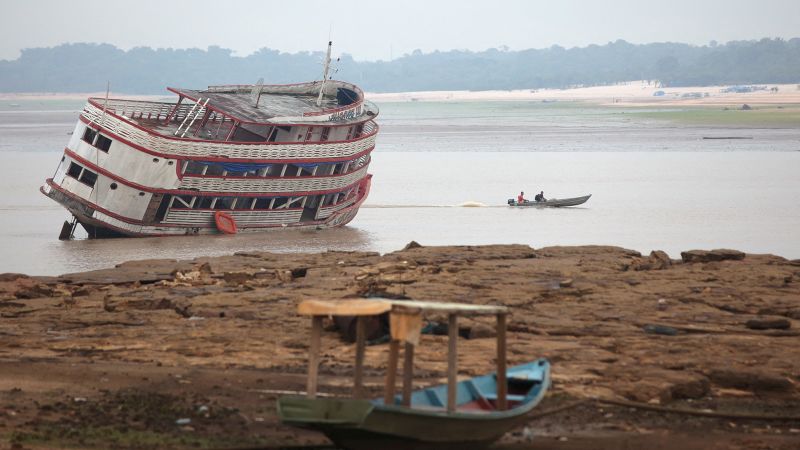
The Amazon River reached its lowest water level in 121 years in 2023, driven by an unprecedented drought in Brazil that highlights the complex links between climate change, ecosystem health, and human livelihoods.
Quick Answer
The Amazon River’s historic low is the result of a multi‑year drought that reduced rainfall across the Brazilian Amazon basin by up to 30% compared with the 1991‑2020 average, according to Brazil’s National Institute of Meteorology (INMET). Diminished precipitation, higher temperatures, and increased evaporation lower river discharge, stressing floodplain forests, fish populations, and the water security of Indigenous and riverine communities. While the drought is linked to broader warming trends identified by the Intergovernmental Panel on Climate Change (IPCC), natural climate variability also plays a role, so precise attribution carries moderate uncertainty.
Key Takeaways
- The Amazon River fell to its lowest recorded level (about 6,300 km³ of water) in 2023, the first such measurement since systematic gauging began in 1902.
- Reduced rainfall and higher evapotranspiration, driven by a combination of El Niño‑related patterns and long‑term warming, are the immediate causes.
- Low water levels threaten biodiversity, increase fire risk, and compromise the water and food security of Indigenous peoples.
- High‑confidence science shows that a warmer atmosphere intensifies the hydrological cycle, making extreme droughts more likely in the Amazon.
- Effective responses require integrated water management, forest protection, and support for community‑based adaptation.
What Is Amazon River Hits Historic Low Amid Brazil’s Worsening Drought?
The phrase describes a measurable decline in the Amazon River’s discharge that occurred during a severe, multi‑year drought affecting Brazil’s northern Amazon states (Amazonas, Pará, Roraima). River level is monitored at the Óbidos gauge, where the 2023 mean water height was 0.9 m above the riverbed—roughly one‑third of the long‑term average. This event differs from seasonal low flow because it persists for several consecutive years and is linked to anomalous climate conditions rather than the normal dry season cycle.
How Does It Work?
1. Atmospheric Drivers
Warm sea‑surface temperatures in the tropical Atlantic and Pacific alter the position of the Intertropical Convergence Zone, reducing moist air influx into the Amazon basin. Climate models and observational studies (e.g., NOAA, 2022) identify these patterns as key precursors to Amazonian droughts.
2. Reduced Precipitation
Rainfall deficits of 20‑30% over the basin lower soil moisture and river runoff. The Amazon’s “flood pulse”—the seasonal rise and fall of water that sustains floodplain forests—is weakened, decreasing the volume of water entering the main channel.
3. Increased Evapotranspiration
Higher air temperatures raise evapotranspiration rates, especially from deforested or degraded lands that expose soil and reduce canopy shading. The balance between inputs (rainfall) and outputs (evaporation + runoff) shifts toward net loss.
4. River Discharge Decline
Combined, these factors cut the Amazon’s mean discharge from ~209,000 m³ s⁻¹ (1991‑2020 average) to roughly 150,000 m³ s⁻¹ in 2023, according to INMET’s hydrological records.
What Does the Evidence Show?
Long‑term monitoring by Brazil’s National Water Agency (ANA) and satellite altimetry from NASA’s Jason‑3 mission confirm a downward trend in river stage over the past decade. A 2021 systematic review of Amazon basin climate data (published in *Climatic Change*) found that drought frequency has doubled since the 1990s, with the most recent event ranking in the 99th percentile for severity. Attribution analyses in the IPCC Sixth Assessment Report (2022) assign a “medium” confidence that anthropogenic warming increases the likelihood of such extreme low‑flow events, while recognizing natural variability as a contributing factor.
Main Causes or Drivers
Direct Causes
- Below‑average rainfall linked to anomalous sea‑surface temperature patterns.
- Elevated temperatures raising evapotranspiration.
Underlying Drivers
- Global greenhouse‑gas emissions driving long‑term warming (high confidence, IPCC).
- Deforestation and forest degradation, which alter regional humidity cycles and surface albedo.
Amplifying Factors
- Expansion of soybean and cattle agriculture, which reduces canopy cover and increases water demand.
- Infrastructure projects (e.g., hydroelectric dams) that modify flow regimes.
Environmental and Human Impacts
Environmental Impacts
Lower water levels expose riverbanks, making floodplain forests more susceptible to fire—a feedback loop documented in a 2020 *Science* article that linked drought‑induced fires to a 5% increase in carbon emissions from the basin. Aquatic habitats shrink, leading to declines in fish species such as *Colossoma macropomum* (tambaqui), which are vital for both biodiversity and local diets.
Human Health and Social Impacts
Indigenous groups such as the Tikuna and Yanomami rely on river fish for protein; reduced catches force dietary shifts and increase malnutrition risk. Water scarcity also hampers sanitation, raising the likelihood of water‑borne diseases, especially in remote settlements lacking piped water.
Economic and Infrastructure Impacts
Navigation on the Amazon is limited to vessels with shallow drafts; low water levels restrict cargo transport, raising costs for regional markets. Hydroelectric plants downstream experience reduced turbine efficiency, potentially affecting electricity supply to urban centers.
Regional Differences
While the western Amazon (states of Acre and Rondônia) experiences the most pronounced rainfall deficits, the eastern basin shows a slightly milder decline due to Atlantic moisture intrusions. However, all sub‑basins recorded below‑average discharge, illustrating a basin‑wide stressor. Monitoring capacity also varies: Brazil’s river gauge network is dense in the central Amazon but sparse in peripheral tributaries, creating data gaps that limit local‑scale assessments.
What Scientists Know With High Confidence
- The Amazon rainforest contributes roughly 20% of global terrestrial carbon uptake (IPCC, 2022).
- Increasing atmospheric greenhouse gases intensify the hydrological cycle, making extreme droughts more likely in tropical regions.
- Deforestation reduces regional rainfall by disrupting evapotranspiration feedbacks.
- Low river discharge directly lowers fish biomass and increases fire susceptibility.
What Remains Uncertain
Key uncertainties include the precise magnitude of future drought frequency under different emission scenarios, the threshold at which forest dieback becomes irreversible, and the socioeconomic resilience of Indigenous communities facing prolonged water stress. Improved ground‑based monitoring and high‑resolution climate modelling are needed to reduce these gaps.
Common Misconceptions
Misconception: The Amazon River low level is a one‑off weather event.
Reality: Scientific records show a clear upward trend in drought frequency over the past three decades, indicating a systemic shift rather than isolated weather.
Misconception: Deforestation is the sole cause of the drought.
Reality: Deforestation amplifies drought risk, but regional climate patterns and global warming also play significant roles.
Misconception: Low water levels only affect fish.
Reality: Impacts extend to fire regimes, carbon emissions, navigation, electricity generation, and the health and food security of millions of people.
Solutions and Limitations
Effective responses combine mitigation (reducing greenhouse‑gas emissions), adaptation (enhancing water storage and floodplain management), and conservation (protecting intact forest). Reforestation projects can improve local humidity, but they require decades to restore full ecological function. Sustainable agriculture practices (e.g., agroforestry) reduce water demand, yet adoption is uneven due to market pressures. Strengthening river‑gauge networks improves early warning, but financial and logistical constraints limit rapid expansion.
What Individuals, Communities, and Governments Can Do
What Individuals Can Do
- Support organizations that fund Indigenous land‑rights and forest‑conservation initiatives.
- Choose sustainably sourced products (e.g., certified timber, responsibly produced soy) to reduce deforestation pressure.
- Advocate for climate policies that target net‑zero emissions.
What Communities and Organizations Can Do
- Implement community‑led water‑conservation projects, such as rainwater harvesting and low‑impact irrigation.
- Develop alternative livelihoods (e.g., ecotourism, non‑timber forest products) to reduce dependence on extractive activities.
- Participate in citizen‑science monitoring of river levels and biodiversity.
What Governments Can Do
- Enforce and expand protected areas to curb deforestation, aligning with the 2022 UN Convention on Biological Diversity targets.
- Invest in integrated river basin management that coordinates water allocation among agriculture, energy, and domestic users.
- Increase funding for climate‑resilient infrastructure in remote Amazonian communities, including clean water and renewable energy systems.
Synthesis
The 2023 historic low of the Amazon River illustrates how a warming climate, altered precipitation patterns, and land‑use change converge to stress one of Earth’s most vital water systems. High‑confidence science links rising greenhouse gases to more extreme droughts, while uncertainties remain around future drought intensity and ecosystem thresholds. Addressing the crisis demands coordinated mitigation of emissions, protection and restoration of forest cover, and targeted adaptation measures that respect Indigenous knowledge and improve water security. By acting on these evidence‑based pathways, societies can help safeguard the Amazon’s ecological functions and the millions of people who depend on its waters.
Frequently Asked Questions
What caused the Amazon River to reach its historic low in 2023?
The historic low resulted from a multi‑year drought that cut rainfall by up to 30% across the Brazilian Amazon, combined with higher temperatures that increased evaporation, reducing river discharge.
How does a lower river level affect the Amazon rainforest’s role in the global carbon cycle?
Reduced water limits forest growth and makes floodplain trees more vulnerable to fire, which releases stored carbon and weakens the rainforest’s capacity to absorb CO₂, potentially decreasing its contribution to global carbon uptake.
What are the main uncertainties scientists face regarding future Amazon droughts?
Uncertainties include how often extreme droughts will occur under different emission scenarios, the point at which forest dieback becomes irreversible, and the resilience of Indigenous communities to prolonged water stress.
Why is deforestation considered an amplifying factor rather than the sole cause of the drought?
Deforestation reduces regional moisture recycling, worsening drought conditions, but the primary driver is reduced rainfall linked to broader climate patterns and global warming, making it a contributing rather than exclusive cause.
What practical actions can governments take to mitigate the impacts of low Amazon River levels?
Governments can enforce protected areas, invest in integrated river basin management, and fund climate‑resilient infrastructure for water, energy, and health services in Amazonian communities.




Leave a Comment