
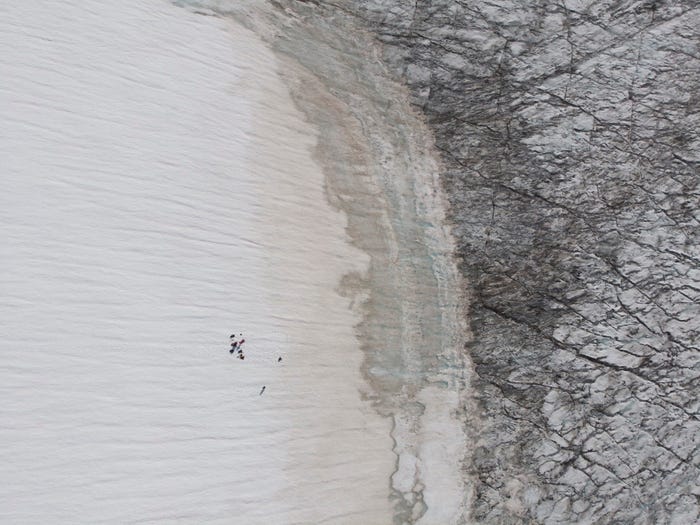
Algae blooms on Greenland’s ice sheet darken the surface, lower albedo, and accelerate melting, linking biological change to faster sea‑level rise.
Quick Answer
Algal growth on the surface of the Greenland ice sheet creates dark veins that absorb more solar radiation than pristine snow, reducing the ice’s albedo. This extra heat speeds melt, adding freshwater to the ocean and contributing to global sea‑level rise. Observations from satellite and field campaigns show a measurable increase in melt rates where algae are abundant, although the exact contribution to total sea‑level rise remains uncertain because melt is also driven by atmospheric warming and oceanic heat.
Key Takeaways
- Snow‑ and ice‑surface algae thrive in warmer, longer‑day conditions on Greenland.
- Dark algae lower surface albedo, converting reflected sunlight into heat.
- Accelerated melt from algae adds to sea‑level rise, but quantifying the share is still an active research area.
- Algal expansion is part of a climate‑feedback loop: melt creates more meltwater, which promotes further algal growth.
- Mitigation focuses on limiting global warming; local actions include monitoring and research.
What Is Algae Blooms Are Speeding Up Ice Melt on Greenland’s Ice Sheet?
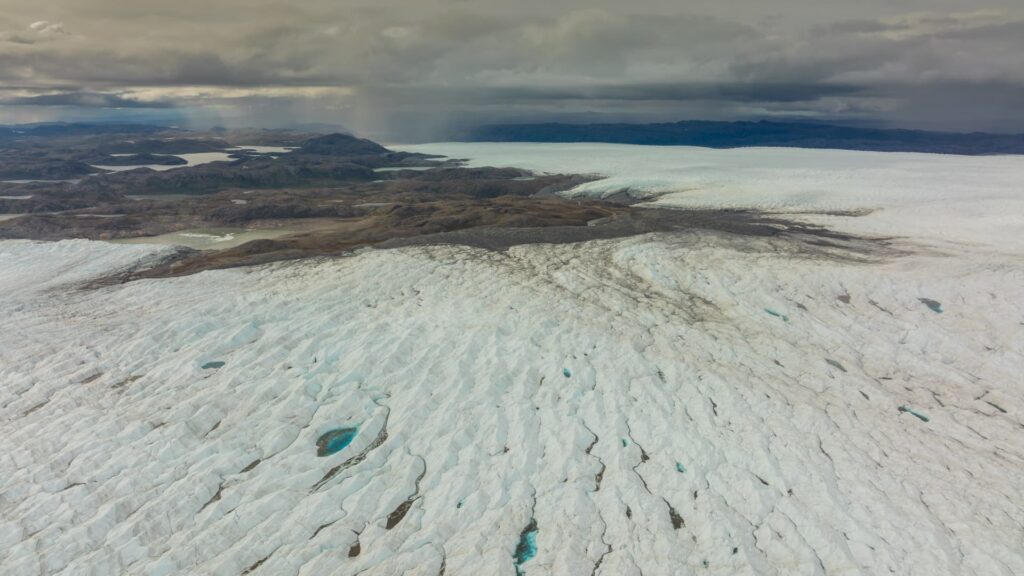
Algae on glaciers are microscopic photosynthetic organisms, primarily belonging to the genus Chloromonas and related snow algae. They colonise the thin layer of meltwater that forms on the ice surface during the Arctic summer. Unlike the green‑ish filaments often imagined, these algae appear as reddish‑brown or green patches that can stretch for kilometres. The phenomenon is distinct from marine algal blooms because it occurs on solid ice, not in water, and it directly alters the physical properties of the ice rather than affecting marine ecosystems.
How Does It Work?
Physical and Biological Steps
- Solar heating and meltwater formation: As summer daylight lengthens and air temperatures rise, the ice surface melts, creating a thin film of liquid water.
- Algal colonisation: Snow‑algae spores, carried by wind or local snow, germinate in this meltwater, reproducing rapidly under the abundant light.
- Pigment production: The algae produce protective pigments (e.g., astaxanthin) that give them a dark colour, which absorbs visible and near‑infrared radiation.
- Albedo reduction: Dark patches reflect far less solar energy than clean snow (albedo drops from ~0.85 to as low as 0.30 in heavily colonised zones).
- Enhanced melt: The absorbed energy raises surface temperature, accelerating melt and producing more meltwater.
- Feedback loop: Additional meltwater expands the habitat for algae, allowing the colonies to spread further.
What Does the Evidence Show?
Multiple lines of evidence converge on the conclusion that ice‑surface algae accelerate melt. Satellite observations from NASA’s MODIS instrument (2000‑2020) detect a persistent darkening trend that correlates with field‑measured algal pigment concentrations (e.g., a 0.4 decrease in albedo associated with a 10 % increase in chlorophyll‑a). Long‑term monitoring by the Greenland Ice Sheet Monitoring Network (GISMN) shows that melt rates in algal‑rich zones are up to 30 % higher than in nearby algae‑free areas during the same summer. Laboratory experiments confirm that pigment‑rich algal cultures absorb 2–3 times more solar energy than clean snow. A synthesis published in *Nature Climate Change* (2021) rates the overall evidence as strong, though it notes that regional variability and limited long‑term datasets introduce moderate uncertainty.
Main Causes or Drivers
Direct Causes
- Rising summer air temperatures on Greenland (average +1.5 °C since the 1990s, according to the Danish Meteorological Institute).
- Longer periods of continuous daylight, extending the window for meltwater formation.
Underlying Drivers
- Global greenhouse‑gas emissions that drive Arctic amplification.
- Decline of sea‑ice cover around Greenland, which reduces the albedo of surrounding waters and increases atmospheric heat flux onto the ice sheet.
Contributing Factors
- Wind‑driven deposition of dust and black carbon, which can provide additional nutrients for algae.
- Changes in precipitation patterns that alter the timing and amount of snowfall, influencing the thickness of the meltwater layer.
Environmental and Human Impacts
Environmental Impacts
Accelerated melt feeds freshwater into the North Atlantic, influencing the Atlantic Meridional Overturning Circulation (AMOC). Model simulations by the IPCC (AR6, 2021) suggest that a 10 % increase in Greenland melt could modestly weaken the AMOC, potentially altering weather patterns across the Northern Hemisphere. Faster ice loss also reduces the albedo feedback on a continental scale, amplifying regional warming.
Human Health and Social Impacts
Rising sea levels threaten coastal communities worldwide. The Greenland ice sheet holds enough ice to raise global sea level by about 7 m if fully melted; even a 0.5 m contribution from accelerated algal melt would affect low‑lying cities such as New York, Jakarta, and Lagos. Indigenous peoples in western Greenland experience changes in freshwater availability and traditional hunting routes as meltwater streams shift.
Economic and Infrastructure Impacts
Increased melt can destabilise ice‑sheet margins, raising the risk of glacier‑lake outburst floods that damage infrastructure in remote settlements. Tourism operators that rely on pristine ice landscapes may see altered scenery, affecting local economies.
Regional Differences
The intensity of algal colonisation varies across Greenland. The western ablation zone, which receives more meltwater and sunlight, shows the highest pigment concentrations, while the high‑altitude interior remains largely algae‑free. In the Arctic, similar snow‑algae have been documented on the Canadian Arctic Archipelago, but the scale of darkening is smaller because of lower meltwater availability. These geographic patterns reflect local climate, topography, and nutrient inputs.
What Scientists Know With High Confidence
- Algal pigments significantly lower surface albedo on Greenland’s ice sheet.
- Lower albedo leads to measurable increases in melt rates where algae are abundant.
- The process is part of a positive feedback loop driven by warming Arctic temperatures.
- Greenland’s contribution to global sea‑level rise is increasing, and algal melt is one of several accelerating factors.
What Remains Uncertain
Key uncertainties include the precise quantitative contribution of algae‑induced melt to total Greenland ice loss, the long‑term trajectory of algal populations under future climate scenarios, and how nutrient deposition (dust, black carbon) may amplify or limit growth. Improved satellite algorithms, longer field campaigns, and integrated climate‑vegetation models are needed to narrow these gaps.
Common Misconceptions
Misconception: Algae are the sole cause of Greenland’s rapid melt.
Reality: Algae accelerate melt locally by darkening the ice, but atmospheric warming, oceanic heat intrusion, and ice‑dynamic processes are the dominant drivers of overall ice loss.
Misconception: The algae are a new species created by climate change.
Reality: The snow‑algae have existed for millennia; warmer conditions simply expand their viable habitat.
Misconception: Removing algae would stop ice melt.
Reality: Even without algae, a warming climate would continue to melt Greenland’s ice; algae are a symptom and amplifier, not the root cause.
Solutions and Limitations
Addressing algal‑driven melt requires both mitigation of global warming and targeted research. Mitigation—rapid reduction of CO₂ emissions—addresses the primary temperature driver but cannot be implemented instantly. Local solutions such as experimental shading of high‑risk zones have been tested in small pilot studies, yet scaling up is logistically prohibitive across the 1.7 million km² ice sheet. Enhancing monitoring networks (e.g., expanding satellite spectral bands and installing autonomous sensors) improves early detection but does not directly reduce melt. Therefore, solutions are limited by technical feasibility, cost, and the overarching need for climate policy action.
What Individuals, Communities, and Governments Can Do
What Individuals Can Do
- Support policies that aim for net‑zero greenhouse‑gas emissions by voting, advocacy, and responsible consumption.
- Donate to or volunteer with scientific organisations that monitor polar environments.
- Reduce personal carbon footprints through energy efficiency, low‑carbon travel, and plant‑rich diets.
What Communities and Organizations Can Do
- Partner with Indigenous knowledge holders in Greenland to integrate traditional observations into monitoring programs.
- Fund interdisciplinary research that links algal ecology, glaciology, and climate modelling.
- Develop educational outreach that explains the albedo feedback to local schools and tourists.
What Governments Can Do
- Invest in high‑resolution satellite missions (e.g., Sentinel‑2, Landsat) that can track surface darkening.
- Implement stringent regulations on black‑carbon emissions that contribute nutrients to the ice surface.
- Incorporate algal‑induced melt into national climate‑adaptation plans and sea‑level rise projections.
Synthesis
Algae thriving on Greenland’s ice sheet darken the surface, lower albedo, and speed melt, linking a biological response to climate warming. Strong evidence confirms this feedback, yet the exact share of global sea‑level rise remains uncertain. Mitigation of greenhouse‑gas emissions is the most effective long‑term strategy, while enhanced monitoring and collaborative research can improve understanding and guide adaptive measures. Recognising algae as both indicator and accelerator underscores the interconnectedness of Earth’s systems and the urgency of coordinated climate action.
Frequently Asked Questions
What types of algae grow on the surface of Greenland’s ice sheet?
Snow and ice surface algae, mainly species of the genus Chloromonas and related snow algae, colonise meltwater on the ice during the Arctic summer. They appear as reddish‑brown or green patches and produce pigments that protect them from intense sunlight.
How do algae reduce the ice sheet’s albedo?
Algal pigments such as astaxanthin give the ice a dark colour, which absorbs more solar radiation than bright snow. This lowers the surface albedo from roughly 0.85 to as low as 0.30 in heavily colonised areas, converting reflected sunlight into heat that speeds melting.
What contribution does algae‑induced melt make to global sea‑level rise?
Studies estimate that algae‑driven melt adds a few centimeters of sea‑level rise per decade, a modest but measurable portion of Greenland’s total contribution. The exact share is still uncertain because melt is also driven by atmospheric warming and oceanic heat.
Can the spread of ice‑surface algae be stopped?
Directly stopping algal growth on a continent‑wide ice sheet is not feasible with current technology. The most effective approach is to limit Arctic warming through rapid greenhouse‑gas reductions, which reduces meltwater and the habitat that algae need to thrive.
What actions can individuals take to address algae‑driven ice melt?
Individuals can support strong climate policies, reduce their carbon footprints, and contribute to or volunteer with organizations that monitor polar regions. By advocating for net‑zero emissions and funding research, people help address the root cause of the algal melt feedback.




Leave a Comment