
Air pollution remains a leading global health risk, and the most recent estimates for 2025 suggest that millions of premature deaths could be linked to poor air quality, highlighting urgent gaps in policy, monitoring, and equity.
Quick Answer
Air‑pollution‑related deaths in 2025 are projected to exceed 7 million worldwide, based on the World Health Organization’s 2021 Global Health Estimates and subsequent updates from the Institute for Health Metrics and Evaluation. The deaths arise mainly from fine particulate matter (PM2.5) and ground‑level ozone, which aggravate cardiovascular disease, chronic obstructive pulmonary disease, lung cancer, and stroke. While high‑income nations have reduced per‑capita mortality through stricter standards, low‑ and middle‑income regions still experience the highest burden. Uncertainty stems from uneven monitoring networks and the evolving composition of emissions, meaning the exact figure may shift as new data become available.
Key Takeaways
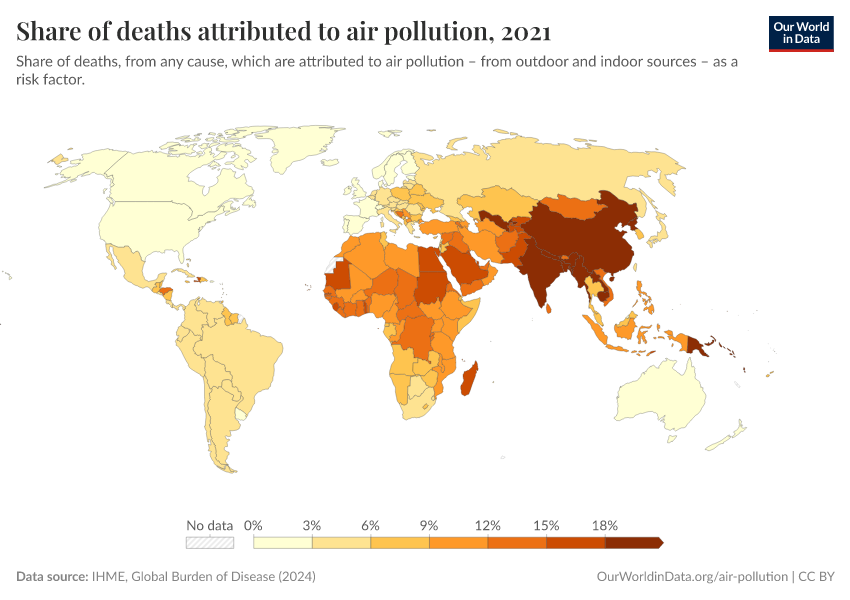
- Globally, more than 7 million premature deaths in 2025 are attributed to ambient air pollution, with >90% occurring in low‑ and middle‑income countries.
- Fine particulate matter (PM2.5) accounts for roughly 60% of the mortality burden, followed by ozone‑related impacts.
- Urban centers with dense traffic and coal‑fired power generation show the highest concentrations, but indoor pollution adds a substantial share in rural households.
- Evidence is strongest for cardiovascular and respiratory outcomes; links to neuro‑developmental disorders are emerging but less certain.
- Policy actions—clean‑energy transitions, stricter vehicle standards, and expanded monitoring—can cut deaths by up to 30% by 2030 if fully implemented.
What Is Air Pollution Deaths in 2025: What the Latest Data Reveals?
Air‑pollution‑related mortality refers to premature deaths that epidemiological studies attribute, either wholly or partially, to exposure to ambient air contaminants such as PM2.5, PM10, nitrogen dioxide (NO₂), sulfur dioxide (SO₂), and ozone (O₃). The 2025 estimate aggregates country‑level burden of disease calculations, converting exposure‑response functions into years of life lost and then into death counts. It excludes deaths from indoor biomass burning unless the exposure is explicitly measured as ambient. The term differs from “climate‑change mortality” because it focuses on direct inhalation pathways rather than indirect climate‑driven effects.
How Does It Work?
1. Emission Sources Release Pollutants
Combustion of coal, oil, and gasoline emits fine particles and gaseous precursors. Industrial processes, agricultural burning, and natural sources (e.g., dust storms, wildfires) add to the atmospheric mix.
2. Atmospheric Transformation
Solar radiation drives photochemical reactions that convert NOₓ and volatile organic compounds into ground‑level ozone. Sulfur compounds form sulfate aerosols, while nitrogen oxides form nitrate particles.
3. Transport and Dilution
Wind patterns disperse pollutants regionally; mountainous terrain can trap them, creating pollution “hot spots.”
4. Human Exposure
People inhale polluted air through everyday activities. Exposure intensity depends on time spent outdoors, indoor infiltration rates, and socioeconomic factors that influence housing quality.
5. Biological Response
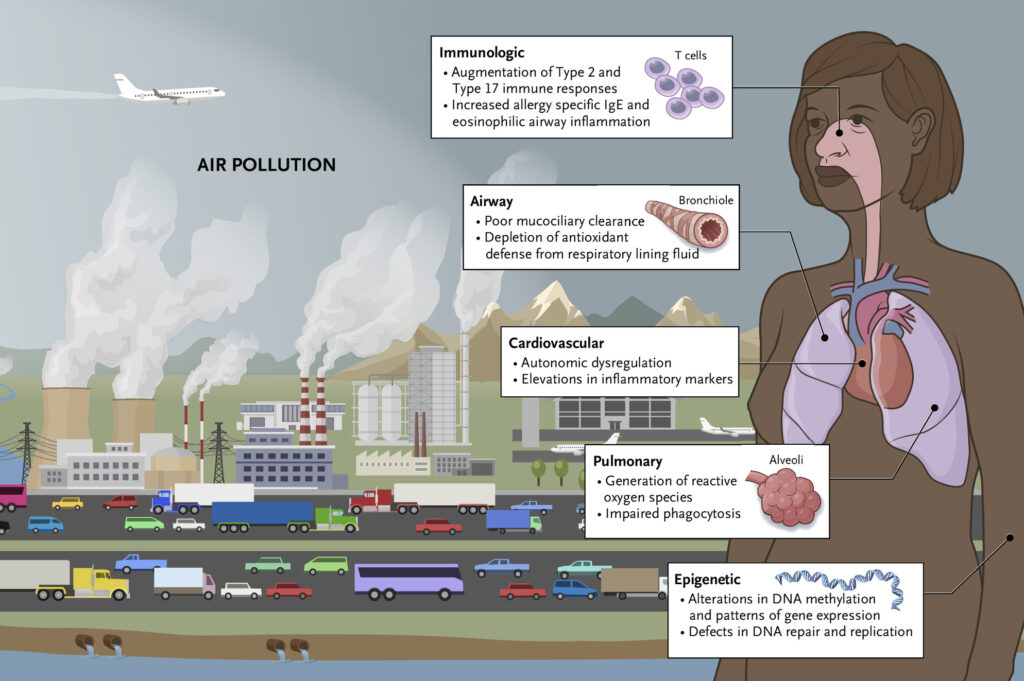
Fine particles penetrate deep into the lungs, entering the bloodstream and triggering systemic inflammation, oxidative stress, and endothelial dysfunction. Chronic exposure elevates risks of heart attacks, strokes, lung cancer, and chronic respiratory disease.
6. Mortality Estimation
Researchers combine measured or modelled concentration fields with concentration‑response curves derived from cohort studies (e.g., the Global Burden of Disease project). The curves translate incremental exposure into relative risk, which is applied to baseline mortality rates to estimate excess deaths.
What Does the Evidence Show?
Long‑term monitoring by the World Health Organization (WHO) and national agencies shows that average global PM2.5 concentrations remain above the WHO guideline of 5 µg m⁻³, with many megacities exceeding 35 µg m⁻³. A systematic review published in *The Lancet Planetary Health* (2022) synthesised over 1,200 cohort studies and confirmed a near‑linear increase in all‑cause mortality for PM2.5 levels between 5 and 100 µg m⁻³. The Institute for Health Metrics and Evaluation (IHME) modelled 2025 deaths using updated satellite‑derived exposure maps and reported a 7.1 million global death toll, with a 95% confidence interval of 6.5–7.8 million. These figures align with WHO’s 2021 Global Health Estimates, which attribute 4.2 million deaths to indoor air pollution and 4.9 million to ambient air pollution; overlapping categories suggest the combined burden exceeds 7 million.
Main Causes or Drivers
Direct Causes
- Combustion of coal for electricity and heat (especially in China, India, and parts of Africa).
- Road traffic emissions, notably diesel‑powered vehicles.
- Industrial processes releasing SO₂, NOₓ, and particulate matter.
- Biomass burning for cooking and heating in low‑income households.
Underlying Drivers
- Rapid urbanisation that concentrates sources and populations.
- Economic reliance on fossil‑fuel industries.
- Insufficient air‑quality monitoring, leading to under‑reporting.
- Lack of stringent emission standards or weak enforcement.
Environmental and Human Impacts
Environmental Impacts
Particulate matter deposits on soils and water bodies, reducing photosynthetic efficiency and altering nutrient cycles. Ozone contributes to crop yield losses of 5–10% globally, according to the Food and Agriculture Organization’s 2020 assessment.
Human Health and Social Impacts
Cardiovascular disease accounts for roughly 40% of air‑pollution deaths, while chronic obstructive pulmonary disease and lung cancer together represent another 30%. Children under five experience a 15% higher risk of lower‑respiratory infections in highly polluted regions. Socio‑economically disadvantaged groups face higher exposure because of proximity to highways, industrial zones, and substandard housing.
Economic and Infrastructure Impacts
The World Bank estimates that premature mortality from air pollution imposes a global economic loss of US$5 trillion per year in lost labour productivity and healthcare costs. Urban congestion exacerbates pollution, creating a feedback loop that strains public transport and road infrastructure.
Regional Differences
South‑East Asia records the highest average PM2.5 concentrations (≈45 µg m⁻³) and the largest share of deaths, driven by coal power and dense traffic. Sub‑Saharan Africa’s burden is rising as urbanisation outpaces clean‑energy adoption; however, limited monitoring introduces uncertainty. In contrast, Western Europe and North America have seen per‑capita mortality decline by 30–40% since 2000, thanks to stricter vehicle emissions standards and the phase‑out of high‑sulfur coal.
What Scientists Know With High Confidence
- Exposure to PM2.5 and ground‑level ozone increases the risk of cardiovascular and respiratory mortality.
- The concentration‑response relationship for PM2.5 is approximately linear across a wide exposure range.
- Policy interventions that reduce emissions (e.g., vehicle standards, clean‑energy subsidies) lead to measurable declines in ambient concentrations and associated deaths.
- Children, the elderly, and people with pre‑existing heart or lung conditions are the most vulnerable groups.
What Remains Uncertain
Key uncertainties include the health effects of ultrafine particles (<0.1 µg m⁻³), the long‑term neurological impacts of chronic ozone exposure, and the accuracy of exposure estimates in regions with sparse monitoring networks. Additionally, future emission trajectories depend heavily on policy choices, making scenario‑based mortality projections inherently uncertain.
Common Misconceptions
Misconception: Only smog‑filled cities cause air‑pollution deaths.
Reality: Rural areas can experience high pollution from biomass burning, agricultural activities, and transboundary transport, contributing significantly to the global burden.
Misconception: Air‑quality improvements automatically eliminate health risks.
Reality: Even concentrations below current WHO guidelines still show measurable health effects; no threshold of zero risk has been identified for fine particles.
Misconception: Personal masks can fully protect against air‑pollution mortality.
Reality: While high‑efficiency masks reduce inhaled dose, they do not address systemic exposure pathways such as indoor infiltration and do not replace the need for ambient air‑quality improvements.
Solutions and Limitations
Effective responses fall into three categories:
- Prevention: Accelerating the shift to renewable electricity, phasing out coal, and adopting zero‑emission vehicles. Limitations include high upfront capital costs and the need for grid upgrades.
- Mitigation: Implementing stricter emission caps, expanding low‑emission zones, and retrofitting industrial plants with scrubbers. Trade‑offs involve potential economic disruption for communities dependent on fossil‑fuel jobs.
- Adaptation: Enhancing public‑health surveillance, providing clean‑air shelters, and issuing real‑time air‑quality alerts. These measures mitigate impacts but do not reduce underlying emissions.
What Individuals, Communities, and Governments Can Do
What Individuals Can Do
- Use certified high‑efficiency particulate air (HEPA) filters at home, especially in rooms where vulnerable members spend time.
- Choose public transport, cycling, or walking over private car trips whenever feasible.
- Support local clean‑energy initiatives and advocate for stricter vehicle emissions standards.
What Communities and Organizations Can Do
- Establish community‑based air‑quality monitoring networks using low‑cost sensors to fill data gaps.
- Partner with schools to implement indoor‑air‑quality improvement projects, such as upgraded ventilation.
- Organise tree‑planting campaigns in urban corridors, recognizing that vegetation provides modest particulate removal but also offers co‑benefits for heat mitigation.
What Governments Can Do
- Adopt WHO‑aligned ambient air‑quality standards and enforce compliance through transparent reporting.
- Invest in clean‑energy infrastructure, including grid‑scale storage, to enable rapid retirement of coal plants.
- Provide subsidies or tax incentives for low‑emission vehicles and for households to upgrade heating systems away from solid fuels.
- Integrate air‑quality considerations into urban planning, limiting new high‑traffic developments near schools and hospitals.
Synthesis of Findings
The 2025 estimate of over 7 million premature deaths underscores that air pollution remains a dominant, preventable health hazard. Robust evidence links fine particulate matter and ozone to cardiovascular and respiratory mortality, especially in low‑ and middle‑income regions where monitoring and regulation lag. While uncertainties persist around emerging pollutants and future emission pathways, the core message is clear: decisive policy, technology, and community actions can cut the mortality burden by a substantial margin. Prioritising clean energy, strengthening standards, and expanding monitoring will create the most reliable route to healthier air for all.
Frequently Asked Questions
How many deaths are attributed to air pollution in the 2025 estimate?
Around 7 million premature deaths worldwide are attributed to ambient air pollution in 2025, according to the World Health Organization and IHME projections.
Which pollutants cause the most mortality?
Fine particulate matter (PM2.5) is responsible for roughly 60% of the mortality burden, with ground‑level ozone accounting for most of the remaining deaths.
Why do low‑ and middle‑income countries bear the highest burden?
These regions often rely on coal power, have dense traffic, limited emission controls, and lack extensive monitoring, leading to higher concentrations and greater exposure.
What are the most effective policy actions to reduce air‑pollution deaths?
Accelerating renewable energy adoption, enforcing stricter vehicle emission standards, and expanding real‑time air‑quality monitoring are the most impactful strategies identified by scientific assessments.
Can individuals protect themselves from air‑pollution‑related health risks?
Individuals can reduce personal exposure by using HEPA filters, choosing low‑emission transport, and supporting local clean‑air initiatives, though systemic policy changes remain essential.








Leave a Comment