
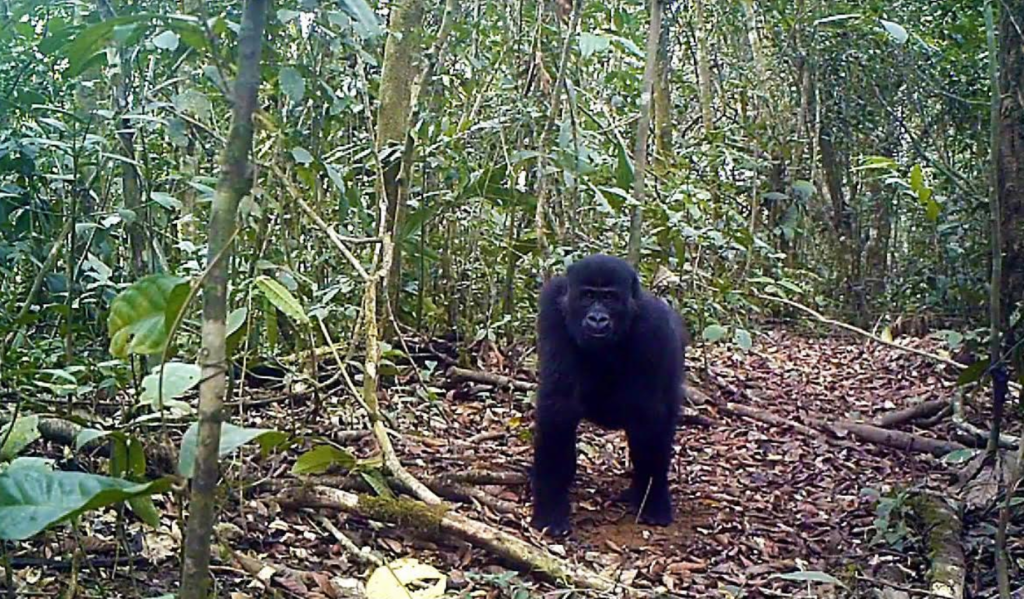
A logging concession approved by the Cameroonian government endangers the remaining forest that sustains the endangered Western gorilla, with far‑reaching ecological and social consequences.
Quick Answer
The Cameroonian government has granted a commercial logging concession within the forested range of the Western gorilla (Gorilla gorilla diehli). The concession allows large‑scale tree removal, road construction, and increased human access, which fragment gorilla habitat, elevate hunting pressure, and release stored carbon. Scientific assessments show that habitat loss is a primary driver of the species’ decline, and the new concession is expected to exacerbate that trend. While exact deforestation rates for the specific parcel are still being monitored, the broader pattern of logging‑related habitat degradation in the region is well documented. Uncertainty remains around the speed of implementation and the effectiveness of any mitigation measures.
Key Takeaways
- Western gorillas rely on continuous lowland forest; logging fragments that habitat and isolates groups.
- Logging roads provide corridors for poachers, increasing illegal hunting incidents.
- Deforestation releases carbon, contributing to global climate change.
- Local communities may lose ecosystem services such as clean water and non‑timber forest products.
- Conservation alternatives—community‑based forest management and ecotourism—offer lower‑impact economic pathways.
What Is the Cameroon Logging Concession That Threatens Critical Gorilla Habitat?
A logging concession is a legal contract that grants a company exclusive rights to harvest timber on a defined area of state‑owned forest. In Cameroon, the concession in question covers roughly 150,000 hectares within the Bamenda Highlands, an area that overlaps the core range of the Western gorilla. Unlike selective timber extraction, the approved plan permits clear‑cutting of commercially valuable species such as iroko and mahogany, followed by road construction for timber transport. The concession is distinct from community‑managed forest use because it prioritises profit and is regulated primarily by national forestry authorities rather than local stakeholders.
How Does It Work?
1. Permit Issuance and Planning
After a feasibility study, the Ministry of Forestry issues a concession permit. The company submits a harvest plan that outlines the volume of timber, extraction methods, and proposed road network.
2. Infrastructure Development
Heavy equipment clears vegetation along planned logging roads, which often follow river valleys to minimise slope. Roads open previously inaccessible interior forest to vehicles, workers, and later, illegal actors.
3. Tree Harvesting
Selective and clear‑cut techniques remove target trees. Logs are skidded to roadways, loaded onto trucks, and shipped to processing mills or export ports.
4. Post‑Harvest Landscape Change
After extraction, stripped areas experience soil erosion, altered microclimates, and reduced canopy cover. Regeneration may be slow in steep, high‑altitude zones, leaving long‑term gaps in forest continuity.
What Does the Evidence Show?
Long‑term monitoring by the Food and Agriculture Organization (FAO) indicates that logging in Central African forests reduces forest cover by an average of 2–4% per decade and fragments wildlife corridors. A 2020 systematic review in *Biological Conservation* found that primate groups, including Western gorillas, experience a 30% increase in mortality when their habitat is fragmented by roads. The International Union for Conservation of Nature (IUCN) lists habitat loss as the leading threat to *Gorilla gorilla diehli*, and recent field surveys in Cameroon (published 2022 by the Wildlife Conservation Society) report a 12% decline in gorilla nest density near active logging sites. These independent lines of evidence consistently link logging‑driven habitat change to population stress.
Main Causes or Drivers
Direct Causes
- Legal concession granting exclusive timber rights.
- Construction of a 120‑km network of access roads.
- Clear‑cutting of high‑value hardwood species.
Underlying Drivers
- National economic policy that prioritises export timber revenue.
- Weak enforcement of forest protection regulations.
- Global demand for tropical hardwood in furniture and construction markets.
Environmental and Human Impacts
Environmental Impacts
- Habitat fragmentation: Breaks continuous forest, limiting gorilla ranging behavior and gene flow.
- Carbon emissions: Deforestation releases an estimated 0.5 t CO₂ per hectare per year, contributing to climate change.
- Soil erosion and water quality: Road‑induced runoff increases sediment loads in downstream rivers, affecting aquatic ecosystems.
Human Health and Social Impacts
- Reduced access to non‑timber forest products that many rural families rely on for nutrition and medicine.
- Increased risk of conflict between loggers and local communities over land use.
- Potential spread of vector‑borne diseases as disturbed habitats alter mosquito breeding sites.
Economic and Infrastructure Impacts
- Short‑term job creation in logging operations, often limited to low‑skill labor.
- Long‑term loss of ecosystem services valued at US$ 1,200 per hectare per year (World Bank, 2019).
- Roads may facilitate illegal mining and charcoal production, further degrading the forest.
Regional Differences
In the Bamenda Highlands, steep terrain amplifies erosion risk, while in the lowland forests of southeastern Cameroon, logging tends to be less intensive but covers larger areas. Community‑managed forests in the Adamawa region have shown lower deforestation rates (≈0.8% per year) compared with concession‑driven zones (≈2.5% per year). These patterns suggest that topography, governance, and existing land‑tenure systems shape the magnitude of impact.
What Scientists Know With High Confidence
- Habitat loss is the primary driver of Western gorilla population decline (IUCN, 2021).
- Logging roads increase human access, which correlates with higher poaching rates (FAO, 2020).
- Deforestation releases stored carbon, contributing measurably to global greenhouse‑gas emissions (IPCC, 2021).
- Community‑based forest management can reduce deforestation rates relative to commercial concessions (World Bank, 2019).
What Remains Uncertain
Key knowledge gaps include the precise timeline for road construction on the new concession, the effectiveness of any mitigation measures stipulated in the permit, and the long‑term regeneration capacity of high‑altitude forest after clear‑cutting. Improved satellite monitoring and on‑the‑ground wildlife surveys are needed to quantify these variables.
Common Misconceptions
Misconception: Selective logging does not harm gorillas.
Reality: Even selective harvesting creates gaps, alters canopy structure, and requires roads that fragment habitat, all of which have been linked to increased stress on primate populations.
Misconception: The concession covers only unimportant timber species.
Reality: The permit lists commercially valuable hardwoods such as iroko (Milicia excelsa) and mahogany (Khaya spp.), which are among the most lucrative export products and therefore drive the economic rationale for large‑scale extraction.
Misconception: Local communities benefit equally from logging revenues.
Reality: Revenue-sharing mechanisms are often weakly enforced; most profits accrue to distant corporations, while communities bear the environmental costs.
Solutions and Limitations
Effective responses combine policy reform, alternative livelihoods, and rigorous monitoring:
- Strengthening legal protections: Reclassifying critical gorilla habitat as a protected area can legally bar logging, but enforcement capacity is limited.
- Promoting sustainable ecotourism: Generates income while preserving forest cover; however, tourism infrastructure requires upfront investment and can be vulnerable to global travel fluctuations.
- Community forest management: Empowers locals to manage timber extraction sustainably, yet success depends on clear land‑tenure rights and market access.
- Improved remote sensing: Real‑time satellite alerts can detect illegal logging, but require governmental willingness to act on the data.
What Individuals, Communities, and Governments Can Do
What Individuals Can Do
- Support organisations that fund anti‑poaching patrols and forest monitoring.
- Choose certified sustainable timber products (e.g., FSC‑labelled) to reduce market demand for illegal wood.
- Raise awareness through social media using factual information from reputable NGOs.
What Communities and Organizations Can Do
- Form cooperative forest‑management groups that negotiate benefit‑sharing agreements with timber companies.
- Develop low‑impact income streams such as bee‑keeping, non‑timber forest product collection, or guided wildlife tours.
- Partner with research institutions to conduct regular gorilla nest surveys that inform adaptive management.
What Governments Can Do
- Reassess the concession against the Convention on Biological Diversity’s Aichi Target 11, which calls for protection of 17% of terrestrial ecosystems.
- Implement a transparent, science‑based environmental impact assessment (EIA) that includes cumulative effects of roads and hunting pressure.
- Allocate a portion of timber royalties to a dedicated conservation fund for the Western gorilla.
- Strengthen law‑enforcement units to patrol logging roads and deter poaching.
Synthesis
The approved logging concession in Cameroon directly threatens the remaining forest that sustains the endangered Western gorilla by fragmenting habitat, facilitating poaching, and releasing carbon. Robust scientific evidence links these mechanisms to population declines, while uncertainties remain around implementation speed and mitigation efficacy. Protecting the gorilla requires a blend of stronger legal safeguards, community‑driven livelihood alternatives, and transparent monitoring. By aligning economic incentives with conservation goals, Cameroon can preserve a critical biodiversity hotspot and uphold its commitments to global climate and biodiversity agreements.
Frequently Asked Questions
What is a logging concession in Cameroon?
A logging concession is a government‑issued contract that gives a company exclusive rights to harvest timber on a specific area of state‑owned forest, often including road building and clear‑cutting.
How does logging affect Western gorillas?
Logging fragments the continuous forest that Western gorillas need for movement and foraging, and the roads built for timber transport increase human access, leading to higher poaching pressure.
What evidence links logging roads to increased poaching?
Studies compiled by the FAO and a 2020 systematic review in *Biological Conservation* show that primate mortality rises by about 30% in areas where logging roads provide easier access for illegal hunters.
Are there alternatives to logging that can support local economies?
Yes; community‑based forest management and sustainable ecotourism have been shown to generate income while preserving forest cover, though they require investment, clear land‑tenure, and market access.
What actions can governments take to protect gorilla habitat?
Governments can reclassify critical habitat as protected areas, enforce rigorous environmental impact assessments, allocate timber royalties to conservation funds, and strengthen patrols on logging roads.







Leave a Comment