
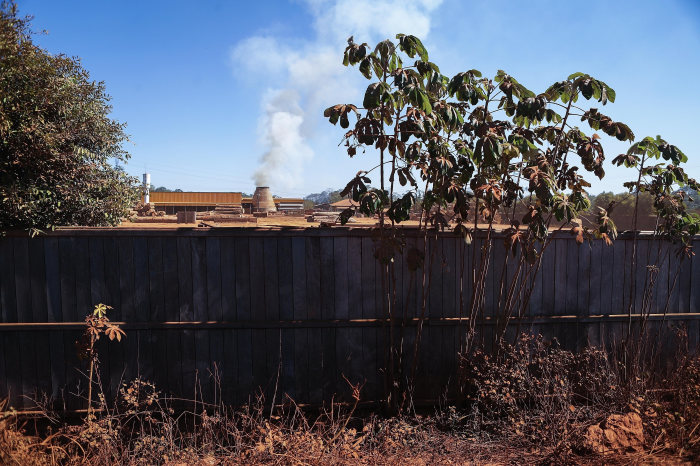
Brazil’s Environment Minister is being investigated for alleged illegal timber sales, a case that highlights challenges in forest governance, the scale of illegal logging in the Amazon, and the broader implications for climate and biodiversity.
Quick Answer
The investigation concerns accusations that the current Environment Minister facilitated the sale of timber sourced from illegal logging operations in the Amazon, thereby violating Brazil’s forest code and international conservation commitments. Illegal timber undermines carbon storage, threatens species habitat, and erodes public trust in environmental institutions. While the probe is ongoing, evidence from Brazil’s Institute of Environment and Renewable Natural Resources (IBAMA) and independent watchdogs suggests systemic gaps in monitoring and enforcement. Uncertainty remains about the full financial scope of the alleged sales and the extent of direct ministerial involvement.
Key Takeaways
- Illegal logging in the Amazon contributes to global carbon emissions and biodiversity loss.
- The ministerial investigation reveals weaknesses in Brazil’s forest‑law enforcement and oversight mechanisms.
- High‑confidence scientific findings confirm that each hectare of forest loss reduces carbon sequestration and disrupts ecosystem services.
- Solutions require stronger legal frameworks, transparent monitoring, and community‑based forest management.
- Individual and collective actions can support demand‑side reductions and pressure for policy reform.
What Is Brazil’s Environment Minister Investigated Over Alleged Illegal Timber Sales?
The allegation centers on the alleged participation of Brazil’s Environment Minister in the authorization or concealment of timber harvested without legal permits. In Brazil, timber extraction must comply with the Forest Code, which mandates land‑use plans, licensing, and sustainable harvest limits. Illegal timber sales bypass these requirements, often feeding domestic markets and international supply chains. The investigation, launched by the Federal Police and overseen by the Public Prosecutor’s Office, seeks to determine whether the minister used his authority to facilitate or ignore illicit transactions.
How Does It Work?
Step‑by‑step of Illegal Timber Supply Chains
- Unauthorized Harvest: Loggers cut trees in protected or restricted areas without permits.
- Transport and Laundering: Wood is moved to processing centers where documentation is falsified or omitted.
- Market Entry: Finished timber enters legal markets, often mixed with certified wood, making detection difficult.
- Political Facilitation: Alleged involvement of officials may include granting export licenses, ignoring inspection reports, or influencing judicial processes.
Why the Amazon Is Vulnerable
The Amazon spans 5.5 million km², with remote frontiers that limit state presence. High demand for hardwood, combined with weak land‑tenure clarity, creates incentives for illegal extraction. Satellite monitoring by Brazil’s National Institute for Space Research (INPE) shows persistent forest‑cover loss despite periodic enforcement spikes.
What Does the Evidence Show?
Long‑term remote‑sensing analyses by INPE and the Brazilian Institute of Geography and Statistics (IBGE) confirm that illegal logging accounts for a measurable share of Amazon deforestation, estimated at several hundred thousand cubic meters per year (FAO, 2022). Independent audits by Transparency International Brazil have identified patterns of irregular timber permits linked to political actors. Peer‑reviewed research in *Forest Policy and Economics* (2021) finds that corruption risk is higher in regions with overlapping jurisdiction among federal, state, and municipal agencies. Together, these lines of evidence suggest that governance gaps, rather than isolated misconduct, enable illicit timber flows.
Main Causes or Drivers
Direct Causes
- Weak enforcement of the Forest Code in remote municipalities.
- Inadequate capacity of IBAMA to conduct on‑ground inspections.
Underlying Drivers
- Economic incentives: high market prices for hardwood motivate illegal harvest.
- Land‑use pressure from agriculture and cattle ranching, which often clear forest for pasture.
- Political patronage networks that provide protection to logging operators.
Environmental and Human Impacts
Environmental Impacts
Each hectare of removed forest eliminates an estimated 150 t of carbon stored in biomass (IPCC, 2021). Loss of canopy cover reduces regional rainfall recycling, contributing to drought cycles documented in the Amazon basin. Habitat fragmentation threatens over 2,200 species listed by the International Union for Conservation of Nature (IUCN) as vulnerable or endangered.
Human Health and Social Impacts
Indigenous and riverine communities depend on forest resources for food, medicine, and cultural practices. Illegal logging degrades water quality through increased sedimentation and disrupts traditional livelihoods. Moreover, corruption erodes public confidence in environmental institutions, limiting community participation in forest management.
Economic and Infrastructure Impacts
While illegal timber generates short‑term profit for a few actors, it undermines Brazil’s reputation in sustainable timber markets, potentially reducing export opportunities for legally sourced wood. Infrastructure projects, such as roads built to access logging sites, open previously isolated areas to further deforestation.
Regional Differences
Deforestation rates vary across Amazon states. In Pará, satellite data shows higher illegal‑logging hotspots linked to large‑scale soy expansion, whereas in Amazonas, smaller‑scale artisanal extraction dominates. The legal‑enforcement capacity of state environmental agencies also differs, with some states operating specialized anti‑deforestation units (e.g., *Operação Lei da Floresta* in Mato Grosso) and others lacking such resources.
What Scientists Know With High Confidence
- Forests act as major carbon sinks; loss directly reduces global carbon sequestration capacity.
- Illegal logging is a leading driver of Amazon deforestation after agricultural conversion.
- Corruption and weak governance correlate with higher rates of illegal timber extraction.
- Satellite monitoring reliably detects forest‑cover change at a 30‑meter resolution across Brazil.
What Remains Uncertain
The precise monetary value of the alleged illegal timber sales involving the minister remains unverified, as official records are incomplete and supply‑chain tracing is limited. Additionally, the extent to which ministerial actions directly accelerated deforestation versus reflecting broader systemic failures is still under legal examination. Improved traceability systems and transparent procurement data could reduce these uncertainties.
Common Misconceptions
Misconception: Illegal logging is a minor problem compared with agriculture.
Reality: Although agriculture accounts for the largest share of forest loss, illegal logging contributes a significant proportion of carbon emissions and biodiversity damage, especially in regions where enforcement is weakest.
Misconception: All timber from Brazil is illegal.
Reality: Brazil has a robust legal timber sector certified by the Brazilian Forest Certification Program (CERFLOR) and the Forest Stewardship Council; the issue lies in the illicit segment that evades regulation.
Misconception: Corruption only involves low‑level officials.
Reality: Investigations show that high‑ranking officials can also be implicated, indicating that corruption can permeate multiple levels of governance.
Solutions and Limitations
Effective responses combine enforcement, market mechanisms, and community empowerment. Strengthening IBAMA’s inspection capacity can reduce on‑the‑ground illegal harvest, but budget constraints limit rapid scale‑up. Certification schemes (e.g., FSC) improve market transparency, yet they cover only a fraction of total exports. Satellite‑based early warning systems provide real‑time alerts, but require coordinated response teams to act on the data. Each approach offers benefits but also faces trade‑offs such as cost, political resistance, or limited geographic reach.
What Individuals, Communities, and Governments Can Do
What Individuals Can Do
- Prefer certified wood products and verify labels before purchase.
- Support NGOs that monitor supply chains and advocate for transparent timber legislation.
- Engage in citizen‑science platforms that report illegal logging sightings.
What Communities and Organizations Can Do
- Develop community‑managed forest concessions that combine sustainable harvest with conservation incentives.
- Partner with academic institutions to use drones or satellite imagery for local monitoring.
- Lobby local governments for stricter permit reviews and public reporting of timber licenses.
What Governments Can Do
- Increase funding for IBAMA and state environmental agencies to expand field inspections.
- Implement mandatory electronic traceability for all timber exports, linked to customs databases.
- Strengthen legal penalties for officials found complicit in illegal logging, ensuring judicial independence.
- Promote alternative livelihoods for frontier communities, such as agroforestry or ecotourism, to reduce pressure on forests.
Closing Synthesis
The investigation of Brazil’s Environment Minister underscores how governance failures can amplify the environmental harms of illegal logging. Robust scientific evidence confirms that forest loss impairs carbon storage, biodiversity, and the well‑being of forest‑dependent peoples. While uncertainties persist about the full scale of the alleged misconduct, the case highlights the need for stronger legal enforcement, transparent supply‑chain tracking, and inclusive forest‑management models. By aligning policy action with evidence‑based solutions, Brazil can reinforce its role as a steward of the Amazon and mitigate the global climate impacts of forest degradation.
Frequently Asked Questions
What is the main allegation against Brazil’s Environment Minister?
The minister is accused of facilitating or overlooking the sale of timber harvested without legal permits, which violates Brazil’s Forest Code and international conservation rules.
How does illegal timber affect the Amazon’s climate role?
Each hectare of forest loss reduces carbon storage by roughly 150 tons, weakening the Amazon’s ability to absorb greenhouse gases and contributing to global warming.
Why is illegal logging harder to control in the Amazon?
The Amazon’s vast, remote terrain limits state presence, while high market demand, weak permit enforcement, and overlapping jurisdiction create opportunities for illicit extraction.
What high‑confidence scientific findings relate to this issue?
Scientists are confident that forests are major carbon sinks, illegal logging drives significant deforestation, and corruption correlates with higher rates of illegal timber extraction.
What actions can individuals take to help reduce illegal timber trade?
Individuals can choose certified wood products, support NGOs that monitor supply chains, and participate in citizen‑science reporting of illegal logging activities.






Leave a Comment