
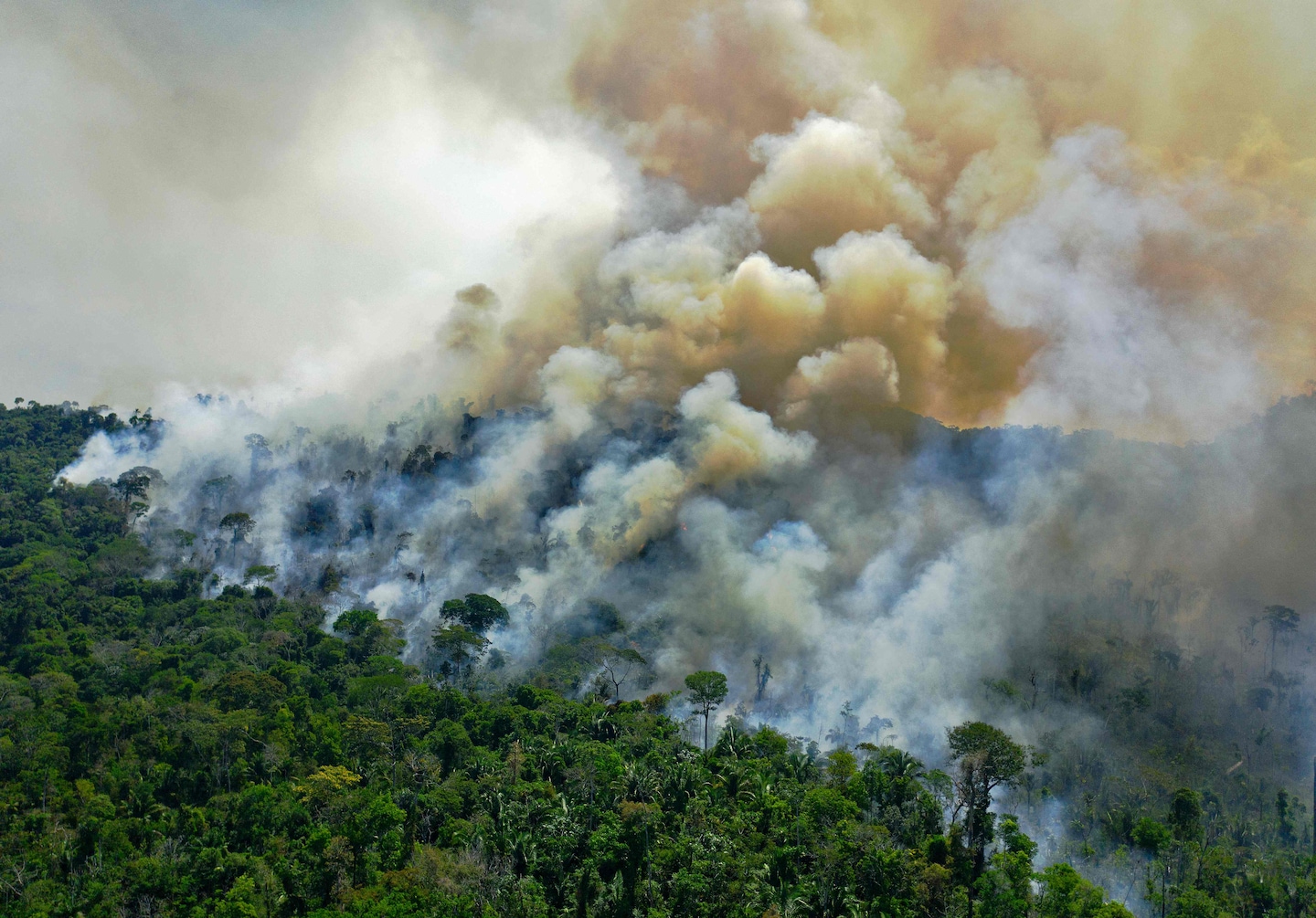
Parts of the Amazon rainforest have shifted from a carbon sink to a net CO₂ source, a change that threatens global climate stability, biodiversity, and human livelihoods.
Quick Answer
The Amazon is now emitting more carbon dioxide than it absorbs because large‑scale deforestation, climate‑driven drought, and intensified fires release stored carbon and weaken forest regeneration. Scientific assessments (e.g., IPCC 2021, INPE monitoring) indicate that this net source status is emerging in several regions, especially in Brazil’s southern and eastern Amazon. The global consequence is an added pressure on atmospheric CO₂ concentrations, which can accelerate warming and disrupt climate feedbacks. Uncertainty remains about the exact magnitude and how quickly the trend may spread.
Key Takeaways
- The Amazon has transitioned from a net carbon sink to a net CO₂ source in parts of its basin.
- Deforestation, drought‑induced fire, and forest degradation are the primary drivers.
- Net emissions add to global warming, jeopardizing climate targets set by the Paris Agreement.
- High‑confidence findings include the role of forest loss in carbon release; major uncertainties involve future fire regimes and ecosystem resilience.
- Effective solutions require a mix of protection, restoration, sustainable land‑use policies, and support for Indigenous stewardship.
What Is Amazon Rainforest Now a Net CO₂ Source—Why This Matters Globally?
In scientific terms, a net CO₂ source is an ecosystem that releases more carbon dioxide to the atmosphere than it captures through photosynthesis. For the Amazon, this means that the combined effects of tree removal, biomass burning, and reduced growth outweigh the carbon sequestration capacity of the remaining forest. The shift matters because the Amazon historically accounted for roughly 10 % of global terrestrial carbon uptake, acting as a buffer against anthropogenic emissions. When that buffer erodes, the world loses a critical lever for limiting temperature rise.
How Does It Work?
1. Carbon Uptake vs. Release
Healthy tropical trees photosynthesize, converting CO₂ into wood, leaves, and roots while releasing O₂. Simultaneously, respiration by plants, soil microbes, and decomposing material returns a portion of that carbon back to the air. The net balance is normally negative (more uptake than release).
2. Deforestation Removes the Sink
When a tree is cut, its stored carbon is instantly exposed. If the wood is burned or decays, the carbon returns to the atmosphere as CO₂ or methane. The land‑use change also eliminates future photosynthetic capacity.
3. Drought Weakens Trees
Prolonged dry periods reduce stomatal conductance, limiting photosynthesis, while increasing tree mortality. Stressed trees also emit more volatile organic compounds that can accelerate atmospheric oxidation processes.
4. Fire Accelerates Carbon Loss
Wildfires consume living biomass and peat, releasing large carbon pulses. Smoke also deposits black carbon on snow and ice elsewhere, reducing albedo and enhancing warming.
5. Feedback Loops
Higher atmospheric CO₂ raises temperatures, which can lengthen droughts, making fires more likely—a positive feedback that can push the system toward a new, carbon‑positive equilibrium.
What Does the Evidence Show?
Multiple lines of evidence converge on the net‑source conclusion:
- Satellite monitoring by Brazil’s National Institute for Space Research (INPE) indicates a net loss of ~2.3 % of forest cover per decade from 2000‑2020, with corresponding carbon emissions of ~0.5 Gt C yr⁻¹.
- Ground‑based flux towers in the southern Amazon recorded positive net ecosystem exchange (NEE) during the severe drought years of 2015‑2016, meaning the forest emitted more CO₂ than it absorbed (Science Advances, 2018).
- IPCC 2021 assessment cites regional studies that show a shift from a sink of –0.4 Pg C yr⁻¹ to a source of +0.1 Pg C yr⁻¹ in the most deforested sub‑basins.
- Long‑term fire records from the MODIS satellite series reveal a 30 % increase in fire frequency from 2000‑2022 in the eastern Amazon, correlating with higher CO₂ emissions.
These observations are reinforced by ecosystem models that simulate carbon dynamics under observed land‑use change and climate trends, all pointing to a net‑source trend in the last decade.
Main Causes or Drivers
Direct Causes
- Commercial agriculture expansion (soy, cattle) leading to clear‑cutting.
- Illegal logging that removes high‑biomass trees.
- Fire set for land preparation that escapes control.
Underlying Drivers
- Global commodity demand creating economic incentives for forest conversion.
- Weak enforcement of land‑use regulations in Brazil, Peru, and Colombia.
- Climate change‑induced droughts that increase forest vulnerability.
Amplifying Factors
- Road construction that fragments habitats and provides fire access.
- Shifts in indigenous land tenure that reduce traditional fire‑management practices.
Environmental and Human Impacts
Environmental Impacts
- Elevated atmospheric CO₂ accelerates global warming, affecting temperature‑sensitive ecosystems worldwide.
- Loss of biodiversity: more than 10 % of known species are endemic to the Amazon; habitat loss threatens their survival.
- Altered hydrological cycles: reduced evapotranspiration can diminish rainfall both locally and in downstream regions, affecting agriculture in South America.
Human Health and Social Impacts
- Increased smoke exposure raises respiratory illness risk for nearby communities.
- Food security concerns arise as climate‑induced rainfall changes affect staple crop yields in Brazil’s Cerrado and neighboring Brazil.
- Indigenous peoples lose cultural sites and livelihood resources when forest cover declines.
Regional Differences
The net‑source trend is not uniform across the basin. The southern and eastern Amazon, where agricultural frontiers are most advanced, show the strongest positive carbon fluxes. In contrast, the western Amazon, with higher precipitation and lower deforestation rates, still functions largely as a carbon sink. Monitoring gaps in remote parts of Peru and Bolivia mean uncertainties remain about local dynamics, but satellite data suggest the overall pattern is consistent with a spatial gradient of pressure.
What Scientists Know With High Confidence
- Deforestation directly releases stored carbon and reduces future uptake.
- Droughts increase tree mortality and fire susceptibility, amplifying emissions.
- Satellite and flux‑tower observations consistently record positive net carbon exchange in the most disturbed regions.
- The Amazon’s contribution to global carbon balance is large enough that a shift to a net source materially affects atmospheric CO₂ growth rates.
What Remains Uncertain
Key uncertainties include the long‑term resilience of regrowing forest patches, the potential for a large‑scale die‑back under future climate scenarios, and the exact magnitude of carbon released by peat fires in the Amazon’s marginal wetlands. Improved ground‑based monitoring and higher‑resolution remote sensing are needed to narrow these gaps.
Common Misconceptions
Misconception: The Amazon still absorbs more CO₂ than it emits overall.
Reality: While large untouched sections remain a sink, recent peer‑reviewed studies show that the basin‑average carbon balance has become neutral or slightly positive in the past decade, meaning emissions now rival or exceed uptake in many sub‑regions.
Misconception: Fires are only a natural part of the Amazon’s cycle.
Reality: Natural lightning‑induced fires are rare in the humid Amazon. Most recent large‑scale fires are anthropogenic, linked to land‑clearing and exacerbated by drought.
Misconception: Reducing global emissions will instantly restore the Amazon’s sink function.
Reality: Even with rapid emissions cuts, forest recovery can take decades; active restoration and protection policies are required to rebuild carbon stocks.
Solutions and Limitations
Addressing the net‑source shift demands coordinated actions across several domains:
- Prevention: Strengthen enforcement against illegal logging and land‑clearance fires. Limitation: Requires political will and resources that are unevenly distributed.
- Mitigation through Restoration: Large‑scale reforestation and assisted natural regeneration can rebuild carbon stocks. Limitation: Restored forests take decades to match the carbon density of primary forest and may not fully replace biodiversity.
- Adaptation: Support fire‑resilient land‑use practices for smallholder farmers, such as agroforestry. Limitation: Adoption depends on market incentives and training.
- Conservation Incentives: Payments for ecosystem services (PES) that reward communities for preserving forest cover. Limitation: Funding sustainability and verification challenges.
- Monitoring and Governance: Expand satellite‑based early‑warning systems and integrate Indigenous knowledge into fire management. Limitation: Data gaps in remote regions and limited integration into policy.
What Individuals, Communities, and Governments Can Do
What Individuals Can Do
- Choose products certified as deforestation‑free (e.g., soy, beef, timber).
- Support NGOs that fund Amazon conservation and Indigenous land rights.
- Advocate for climate policies that fund forest protection.
What Communities and Organizations Can Do
- Implement community‑based fire monitoring and rapid response teams.
- Develop agroforestry schemes that provide income while maintaining canopy cover.
- Partner with research institutions to share local climate data.
What Governments Can Do
- Enforce and expand protected area networks, aiming for at least 30 % of the basin under strict protection.
- Allocate budget for satellite monitoring and on‑the‑ground verification.
- Integrate Indigenous land tenure into national land‑use planning, recognizing traditional stewardship as a climate mitigation tool.
Closing Synthesis
The Amazon’s emergence as a net CO₂ source reflects a convergence of deforestation, climate‑driven drought, and fire, all of which weaken the forest’s natural carbon‑sequestering function. High‑confidence evidence confirms that these drivers are releasing stored carbon at a scale that matters for global climate targets. Uncertainties remain around the speed of future degradation and the effectiveness of large‑scale restoration. Nonetheless, a portfolio of solutions—strict protection, sustainable land‑use, Indigenous stewardship, and robust monitoring—offers a realistic pathway to halt and eventually reverse the net‑source trend. Collective action, rather than isolated individual choices, will determine whether the Amazon can regain its role as a vital carbon sink for generations to come.
Frequently Asked Questions
What does it mean that the Amazon is a net CO₂ source?
It means that, in certain regions, the Amazon releases more carbon dioxide to the atmosphere than it absorbs through photosynthesis, resulting in a positive carbon balance that adds to global greenhouse gas levels.
Which activities are the main drivers of the Amazon becoming a net carbon source?
The primary drivers are large‑scale deforestation for agriculture and cattle, climate‑induced droughts that stress trees, and the increased frequency of human‑ignited wildfires that burn stored biomass.
How confident are scientists that the Amazon’s carbon balance has shifted?
Scientists have high confidence that deforestation and fire directly release carbon and that recent satellite and flux‑tower data show positive net emissions in the most disturbed parts of the basin.
What are the biggest uncertainties about the Amazon’s future carbon role?
Uncertainties involve how quickly regrowing forests can regain carbon density, the potential for large‑scale die‑back under future climate scenarios, and the exact contribution of peat fires in marginal wetlands.
What actions can governments take to reverse the net‑source trend?
Governments can strengthen enforcement against illegal clearing, expand protected areas, fund satellite monitoring, recognize Indigenous land rights, and support sustainable agroforestry and restoration programs.






Leave a Comment