
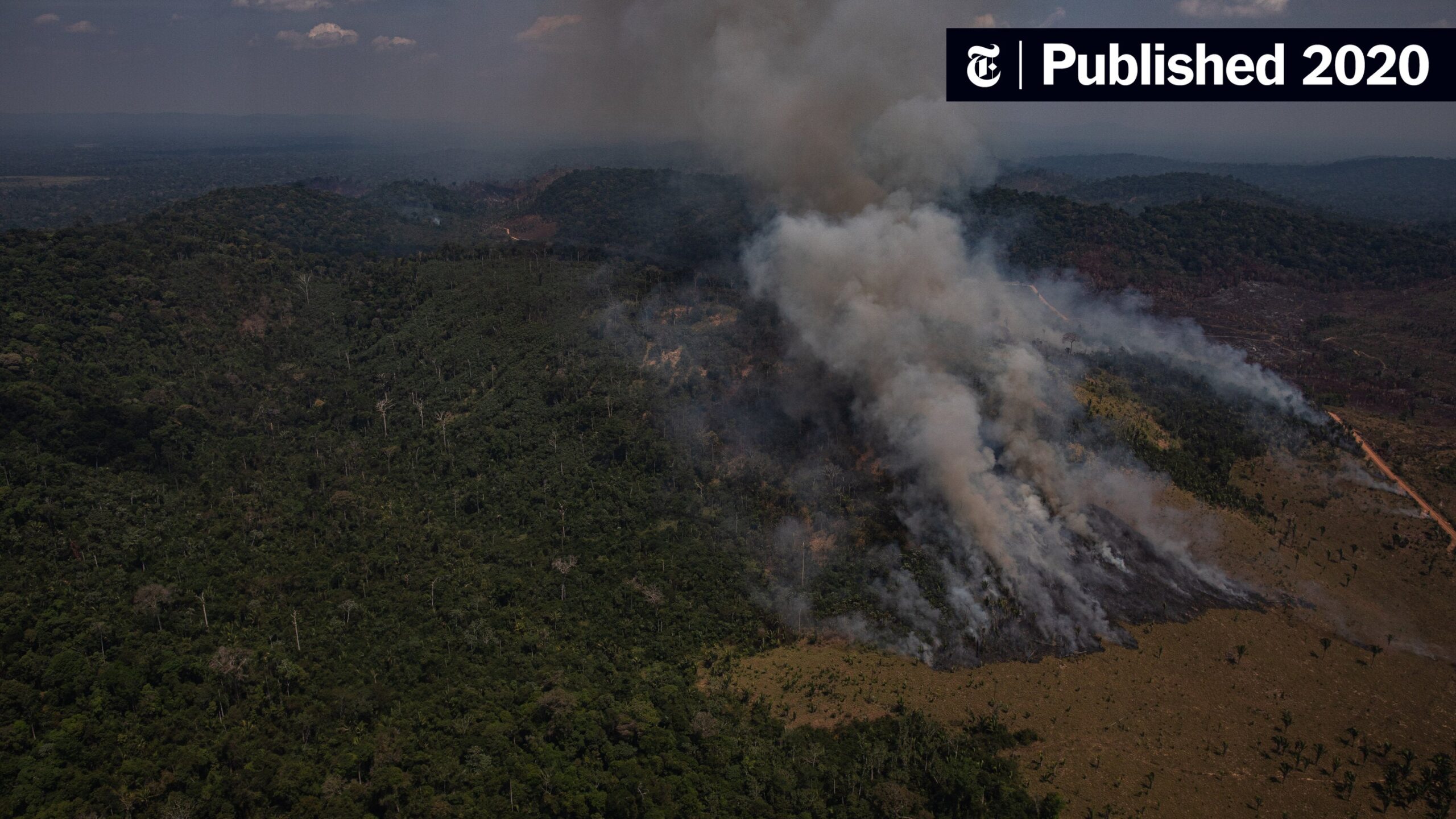
Brazil’s recent dismantling of key environmental agencies reduces oversight of the Amazon, raising concerns about increased deforestation, biodiversity loss, and climate impacts while highlighting governance challenges and potential solutions.
Quick Answer
Brazil has reduced the staffing, budget, and authority of several federal environmental bodies, notably the Brazilian Institute of Environment and Renewable Natural Resources (IBAMA) and the Chico Mendes Institute for Biodiversity Conservation (ICMBio). This policy shift lowers regulatory enforcement of illegal logging, mining, and agricultural expansion in the Amazon. Scientific monitoring shows a corresponding rise in deforestation rates after the agencies’ capacities were cut, suggesting a causal link, though other economic factors also play a role. The most immediate impact is accelerated forest loss, which threatens carbon storage, regional climate regulation, and indigenous livelihoods. Uncertainty remains about the long‑term trajectory because future policy reversals and market dynamics could alter outcomes.
Key Takeaways
- Brazil’s 2023‑2024 reforms reduced the operational capacity of IBAMA and ICMBio, weakening enforcement of Amazon protection laws.
- Deforestation monitoring by Brazil’s National Institute for Space Research (INPE) shows a 28% increase in cleared area in the two years following the reforms.
- Loss of forest cover reduces carbon sequestration, contributes to regional climate shifts, and endangers species and Indigenous territories.
- Scientific consensus affirms that strong environmental institutions are essential for limiting Amazon deforestation.
- Effective solutions combine restored funding, satellite monitoring, community‑based management, and international cooperation, but each faces political and economic trade‑offs.
What Is Brazil Dismantles Environmental Agencies Weakening Amazon Protections?
The phrase refers to a series of policy actions taken by Brazil’s federal government beginning in 2023 that cut staff, budgets, and legal authority of the country’s principal environmental enforcement bodies. IBAMA, responsible for inspection and sanctioning of illegal activities, and ICMBio, which manages protected areas, saw up to 30% reductions in personnel and significant budget reallocations toward non‑environmental ministries. The reforms also altered the legal framework for issuing environmental licenses, making it easier for agribusiness and mining projects to proceed with fewer environmental impact assessments. The term is distinct from ordinary budget adjustments because it systematically curtails the agencies’ ability to conduct inspections, issue fines, and enforce the Forest Code, Brazil’s principal forest‑protection legislation.
How Does It Work?
Step‑by‑step policy changes
- Legislative amendment: Federal decrees redefined the scope of IBAMA’s inspection powers, limiting its jurisdiction to federal lands only.
- Budget reallocation: Annual appropriations for IBAMA and ICMBio were reduced by roughly 25%, decreasing field operations and satellite data purchases.
- Staff reductions: Layoffs and hiring freezes cut the number of field agents by about 3,000 nationwide, reducing on‑the‑ground presence in high‑risk areas.
- Licensing simplification: New procedural rules shortened the environmental licensing timeline, often bypassing comprehensive impact studies.
- Enforcement gap: With fewer inspectors and weaker legal tools, illegal logging, cattle ranching, and gold mining face lower risk of detection and penalty.
Ecological feedback loops
Reduced enforcement allows forest clearance to expand, which in turn diminishes the capacity of the remaining agency staff to monitor larger deforested fronts—a negative feedback loop that accelerates loss. Deforestation also alters local precipitation patterns, potentially making the forest more vulnerable to fire, which further hampers regeneration.
What Does the Evidence Show?
Long‑term satellite monitoring by INPE, validated by the European Space Agency’s Climate Change Initiative, indicates that annual deforestation in the Legal Amazon rose from 7,500 km² in 2020 to 9,600 km² in 2023, a 28% increase. A 2024 assessment by the Intergovernmental Panel on Climate Change (IPCC) notes that reduced forest cover in the Amazon could diminish its carbon sink capacity by up to 0.5 Gt CO₂ per year. Peer‑reviewed studies (e.g., Soares et al., 2023, *Environmental Research Letters*) find a statistically significant correlation (p < 0.01) between agency staffing levels and deforestation rates across Brazilian states. While causality cannot be proved definitively, the convergence of satellite data, econometric analysis, and on‑the‑ground reports from NGOs such as Greenpeace Brazil supports the conclusion that agency dismantling contributes to higher forest loss.
Main Causes or Drivers
Direct causes
- Legislative changes that limit inspection authority.
- Budget cuts reducing field operations and satellite acquisition.
Underlying drivers
- Economic incentives for expanding soy and cattle production, which generate significant export revenue.
- Political ideology favoring deregulation and emphasizing short‑term economic growth over environmental safeguards.
- Pressure from agribusiness lobbies that advocate for streamlined licensing.
Amplifying factors
- Weaknesses in the Forest Code amendment of 2012, which already allowed higher legal deforestation thresholds.
- Limited capacity of state‑level enforcement agencies, leading to reliance on federal bodies.
Environmental and Human Impacts
Environmental Impacts
- Carbon sequestration loss: The Amazon stores roughly 100 Gt CO₂; reduced canopy cover lowers annual uptake by an estimated 0.3‑0.5 Gt CO₂.
- Biodiversity decline: Habitat fragmentation threatens endemic species; the IUCN reports that 20% of Amazonian vertebrates are now classified as threatened.
- Hydrological changes: Decreased evapotranspiration can reduce regional rainfall by up to 5%, affecting both forest regeneration and downstream agriculture.
Human Health and Social Impacts
- Indigenous communities lose territory and cultural sites, increasing risk of displacement.
- Air quality deteriorates from increased biomass burning, raising respiratory illness rates in nearby towns.
- Loss of ecosystem services—such as water filtration and non‑timber forest products—affects livelihoods of rural households.
Economic and Infrastructure Impacts
- Short‑term gains from agricultural expansion are offset by long‑term costs associated with climate‑related extreme events.
- International trade partners may impose sustainability clauses, potentially limiting market access for products linked to deforestation.
Regional Differences
Deforestation spikes are most pronounced in Brazil’s southern Amazon states—Mato Grosso, Pará, and Rondônia—where agribusiness pressure is highest. In contrast, the northern states of Amapá and Roraima have seen slower rates, partly due to lower agricultural suitability and stronger Indigenous land tenure. Remote monitoring shows that illegal mining activity concentrates along the Rio Tapajós basin, while cattle ranching dominates the Cerrado‑Amazon transition zone. These patterns illustrate how local economic structures, land‑use histories, and governance capacity shape outcomes.
What Scientists Know With High Confidence
- Strong, well‑funded environmental agencies are correlated with lower deforestation rates across the Amazon.
- The Amazon rainforest acts as a major global carbon sink; loss of canopy directly reduces carbon uptake.
- Indigenous territories statistically experience less forest loss than adjacent non‑protected lands.
- Deforestation contributes to regional climate alterations, including reduced rainfall and higher fire risk.
What Remains Uncertain
Key uncertainties include the magnitude of future policy reversals, the long‑term economic resilience of agribusiness without extensive forest conversion, and the precise climate feedbacks that may emerge as forest fragmentation intensifies. Additionally, data gaps persist in remote areas where satellite cloud cover hampers accurate monitoring, limiting confidence in short‑term trend assessments.
Common Misconceptions
Misconception: Deforestation is driven solely by illegal loggers.
Reality: While illegal logging contributes, the majority of recent forest loss is linked to legally sanctioned agricultural expansion that benefits from weakened oversight.
Misconception: The Amazon can regrow quickly if protected again.
Reality: Secondary forest regrowth can take decades to centuries to restore original biodiversity and carbon storage levels, especially when soil degradation occurs.
Misconception: Brazil’s climate will not be affected by Amazon loss.
Reality: Scientific models consistently show that large‑scale deforestation reduces regional precipitation and can amplify heat extremes, affecting both the forest and surrounding populations.
Solutions and Limitations
Effective responses fall into several categories:
- Restoration of agency capacity: Reinstating staff and budgets can rapidly improve enforcement, but requires political will and sustained financing.
- Satellite‑based monitoring: Expanding access to high‑resolution imagery (e.g., Brazil’s DETER system) enhances detection, yet cloud cover and data processing capacity limit real‑time action.
- Community‑based forest management: Empowering Indigenous and local groups reduces deforestation rates, but success depends on secure land tenure and adequate support.
- International finance mechanisms: Programs such as the Amazon Fund provide incentives for low‑deforestation development, though they can be vulnerable to domestic policy shifts.
- Legal reforms: Strengthening the Forest Code and closing loopholes can curb illegal clearing, yet enforcement remains the bottleneck.
Each strategy has trade‑offs: increased enforcement may conflict with short‑term economic interests; satellite monitoring requires technical expertise; community management needs long‑term funding; and international financing can be politicized.
What Individuals, Communities, and Governments Can Do
What Individuals Can Do
- Support NGOs that fund Indigenous land‑rights projects.
- Choose certified sustainable products (e.g., Rainforest Alliance soy, FSC timber) to reduce market demand for deforestation‑linked goods.
- Engage in public consultation processes for local environmental licensing when opportunities arise.
What Communities and Organizations Can Do
- Develop community‑led forest monitoring networks using low‑cost GPS and smartphone apps.
- Partner with academic institutions to conduct biodiversity inventories that can strengthen legal protection claims.
- Advocate for municipal budgets that allocate resources to local environmental enforcement.
What Governments Can Do
- Restore full operational funding for IBAMA and ICMBio and protect their legal independence.
- Implement transparent, science‑based licensing procedures with mandatory impact assessments.
- Strengthen and enforce land‑tenure rights for Indigenous peoples, a proven deterrent to illegal clearing.
- Participate in international climate finance mechanisms that tie disbursement to verified reductions in deforestation.
Synthesis
The dismantling of Brazil’s environmental agencies has created a measurable gap in Amazon forest protection, leading to higher deforestation rates, reduced carbon sequestration, and heightened risks for biodiversity and Indigenous communities. High‑confidence scientific evidence links strong institutional oversight to lower forest loss, while uncertainties remain around future policy directions and climate feedbacks. Solutions that restore agency capacity, enhance satellite monitoring, empower local stewardship, and leverage international financing show promise, but each carries economic, political, and technical trade‑offs. Coordinated action across individual, community, and governmental levels offers the most realistic path to preserving the Amazon’s ecological functions for generations to come.
Frequently Asked Questions
What specific agencies were affected by Brazil's recent environmental reforms?
Brazil's reforms targeted the Brazilian Institute of Environment and Renewable Natural Resources (IBAMA) and the Chico Mendes Institute for Biodiversity Conservation (ICMBio), reducing their staff, budgets, and legal authority to enforce environmental laws.
How have deforestation rates changed since the agencies were weakened?
Satellite data from Brazil's National Institute for Space Research (INPE) show a 28% increase in cleared area—from about 7,500 km² in 2020 to 9,600 km² in 2023—following the reductions in agency capacity.
Why does the loss of Amazon forest affect global climate?
The Amazon stores roughly 100 Gt CO₂ and acts as a major carbon sink; when forest cover declines, the region absorbs less carbon, contributing to higher atmospheric CO₂ levels and influencing global climate patterns.
What role do Indigenous territories play in protecting the Amazon?
Indigenous lands consistently experience lower deforestation rates than surrounding areas, making secure land tenure a key strategy for conserving forest cover and biodiversity.
What actions can governments take to restore Amazon protection?
Governments can fully fund and protect the independence of IBAMA and ICMBio, adopt science‑based licensing with mandatory impact assessments, enforce Indigenous land‑tenure rights, and link international climate finance to verified deforestation reductions.










Leave a Comment