
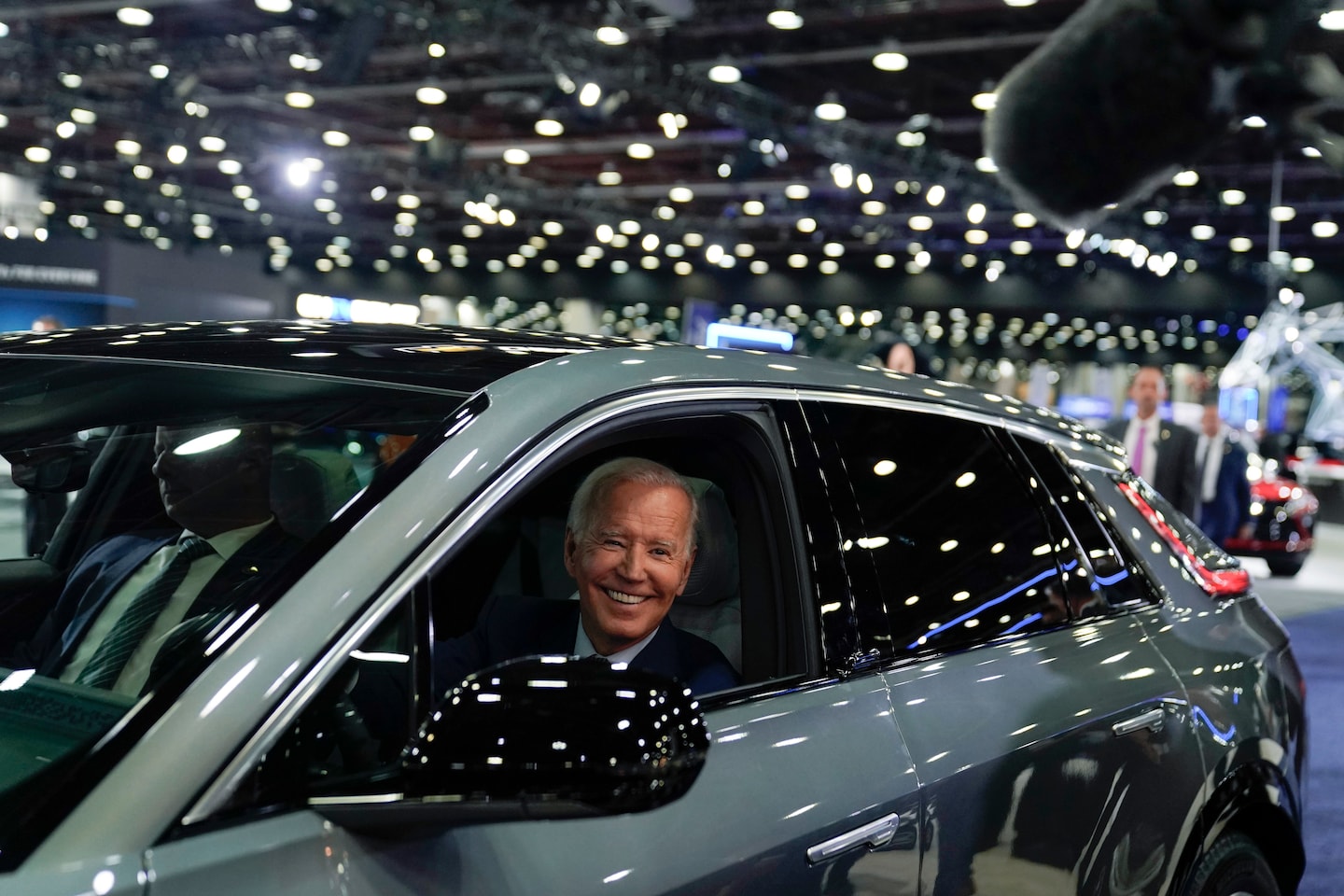
The Biden administration aims for half of all new cars sold in the United States to be electric by 2030, a target that could cut transportation emissions, reshape the auto industry, and require massive infrastructure and policy shifts.
Quick Answer
The 2030 target means that, out of every 100 new vehicles sold in the United States, 50 must be powered by electricity rather than gasoline or diesel. The policy relies on a mix of federal tax credits, stricter fuel‑economy standards, and a national rollout of public charging stations. Scientific assessments, such as the Intergovernmental Panel on Climate Change (IPCC) reports, identify road transport as responsible for roughly one‑third of U.S. greenhouse‑gas emissions, so electrifying half of new sales could reduce national emissions by 0.5‑1 gigatonne CO₂‑equivalent per year under optimistic scenarios. Uncertainty remains around battery material supply chains, consumer adoption rates, and the speed of charging‑network deployment.
Key Takeaways
- By 2030 the U.S. aims for 50 % of new vehicle sales to be electric.
- Transportation accounts for about 33 % of U.S. greenhouse‑gas emissions (U.S. EPA, 2022).
- Federal incentives, fuel‑economy rules, and a national charging network are the main policy levers.
- Achieving the goal could cut annual CO₂ emissions by up to 1 Gt CO₂e, but depends on battery material sourcing and grid decarbonisation.
- Equity concerns include upfront vehicle cost, rural charging access, and workforce transitions.
What Is Biden Targets 50% Electric Vehicles in New U.S. Car Sales by 2030?
The target is a federal policy objective announced in 2023 that sets a quantitative benchmark: half of all newly purchased light‑duty vehicles sold in the United States must be electric (battery‑electric or plug‑in hybrid) by the year 2030. It does not mandate that existing vehicles be replaced, nor does it prescribe a specific mix of vehicle types; rather, it establishes a market‑share goal that will be enforced through a combination of regulations, incentives, and infrastructure programs. The initiative is part of a broader climate strategy to bring U.S. emissions in line with the Paris Agreement’s 1.5 °C pathway.
How Does It Work?
Policy Mechanisms
The administration leverages three primary tools:
- Fuel‑economy standards. Revised Corporate Average Fuel Economy (CAFE) rules increase the required average efficiency of new vehicles, effectively rewarding electric drivetrains.
- Financial incentives. The Inflation Reduction Act provides a federal tax credit of up to US$7,500 for qualifying EVs, phased out as manufacturers exceed sales caps.
- Infrastructure funding. The Bipartisan Infrastructure Law earmarks billions for a nationwide public‑charging network, including rural corridors.
Charging‑Network Expansion
Charging stations are classified as Level 2 (AC, up to 19 kW) for everyday use and DC fast chargers (50‑350 kW) for long‑distance travel. The Department of Energy’s “National Electric Vehicle Infrastructure” roadmap projects 500 000 public chargers by 2030, up from roughly 140 000 in 2022 (DOE, 2023). Public‑private partnerships, utility‑led programs, and state grant schemes are expected to fill gaps in underserved areas.
Market Dynamics
Automakers respond to the target by expanding EV line‑ups, investing in battery‑plant capacity, and announcing phase‑outs of internal‑combustion models. Consumer demand is stimulated by lower operating costs: electricity is typically 2‑3 times cheaper per mile than gasoline, and EVs have fewer moving parts, reducing maintenance expenses.
What Does the Evidence Show?
Multiple lines of evidence support the climate benefit of widespread EV adoption. A 2022 systematic review by the International Energy Agency (IEA) found that, under a scenario where EVs reach 50 % of new sales by 2030, global CO₂ emissions from road transport could fall by 0.7 Gt CO₂e per year, provided the electricity grid decarbonises at a comparable rate. U.S. specific modelling by the National Renewable Energy Laboratory (NREL) indicates that replacing 50 % of new gasoline cars with EVs would reduce national tailpipe emissions by roughly 0.5 Gt CO₂e annually, equivalent to removing about 100 million passenger‑vehicle miles of travel per day. Monitoring data from California’s Air Resources Board show that EVs already emit 40‑60 % less greenhouse gases on a life‑cycle basis when charged with the current grid mix.
Main Causes or Drivers
Direct Causes
The immediate cause of the 50 % target is federal climate policy aimed at meeting the United Nations’ emission reduction commitments.
Underlying Drivers
- Rising awareness of climate risk among voters and investors.
- Technological progress that has lowered battery costs from US$156/kWh in 2019 to below US$120/kWh in 2023 (BloombergNEF, 2023).
- Economic incentives that make total‑ownership cost of EVs competitive with gasoline cars over a 5‑year horizon.
Contributing Factors
State‑level zero‑emission vehicle (ZEV) mandates, corporate sustainability pledges, and the growing availability of renewable electricity all reinforce the federal target.
Environmental and Human Impacts
Environmental Impacts
Electrification reduces tailpipe CO₂, nitrogen oxides (NOx), and particulate matter (PM₂.₅). A 2021 EPA assessment estimates that a full shift to EVs could cut U.S. transportation‑related NOx emissions by 30 % and PM₂.₅ by 20 %, improving air quality especially in urban corridors. Indirect impacts include increased demand for lithium, nickel, and cobalt. Life‑cycle analyses show that, even with current mining practices, EVs emit 15‑20 % less CO₂ over 150,000 km than comparable gasoline cars when charged with the 2022 U.S. grid mix.
Human Health and Social Impacts
Reduced tailpipe pollutants translate into fewer respiratory and cardiovascular incidents, particularly for children and the elderly in high‑traffic neighborhoods. The American Lung Association links a 10 µg/m³ reduction in PM₂.₅ to 2‑3 % fewer premature deaths, suggesting measurable health benefits as EV market share grows.
Economic and Infrastructure Impacts
The transition creates jobs in battery manufacturing, charging‑station installation, and software development. The Department of Labor estimates up to 500 000 new jobs could arise by 2030, though many will require retraining of workers from traditional auto supply chains.
Regional Differences
Adoption rates vary across the United States. In California, EVs accounted for 12 % of new sales in 2022, driven by strong ZEV mandates and dense charging networks. In contrast, the Midwest averaged 2 % in the same year, reflecting fewer incentives and longer average commute distances that heighten range‑anxiety. Rural Appalachia faces the greatest infrastructure gap, with only 1 public charger per 10 000 residents, compared with 1 per 1 200 in the Pacific Northwest. These disparities underscore the need for region‑specific deployment strategies.
What Scientists Know With High Confidence
- Transportation is the largest source of U.S. greenhouse‑gas emissions after electricity generation (U.S. EPA, 2022).
- EVs produce lower lifecycle CO₂ emissions than gasoline cars when the electricity grid is at least 30 % renewable.
- Battery‑cost reductions have been the primary driver of recent EV price competitiveness.
- Air‑quality benefits from reduced tailpipe emissions are well documented in epidemiological studies.
What Remains Uncertain
Key uncertainties include the speed of grid decarbonisation, which determines the net CO₂ benefit of EV charging; the long‑term availability and environmental impact of lithium‑ion battery minerals; and consumer behaviour regarding vehicle ownership versus shared‑mobility models. Data gaps also exist for charging‑station utilisation patterns in low‑density areas, making precise infrastructure planning challenging.
Common Misconceptions
Misconception: EVs are always more expensive than gasoline cars.
Reality: While purchase price can be higher, total‑ownership cost over five years is often lower because electricity is cheaper per mile and maintenance costs are reduced. Federal tax credits further narrow the price gap for qualifying models.
Misconception: EVs do not work in cold climates.
Reality: Cold temperatures reduce battery efficiency, but modern thermal‑management systems limit range loss to 10‑20 % in typical winter conditions, comparable to gasoline‑engine efficiency losses.
Misconception: All emissions from EVs come from the power plant.
Reality: Emissions are split between electricity generation and vehicle manufacturing. As the grid becomes greener, the share from power plants declines, while manufacturing emissions are mitigated through recycling and cleaner supply chains.
Solutions and Limitations
Effective responses combine policy, technology, and equity considerations:
- Policy incentives (tax credits, ZEV mandates) accelerate adoption but can be costly to the treasury and may create market distortions if not phased out gradually.
- Charging infrastructure expands accessibility, yet high‑cost installation in rural areas may require subsidies or utility‑rate redesigns.
- Battery recycling reduces raw‑material demand, but current recycling rates in the U.S. are below 5 %, limiting near‑term impact.
- Grid decarbonisation magnifies EV benefits, but relies on separate investments in renewable generation and storage.
What Individuals, Communities, and Governments Can Do
What Individuals Can Do
- Consider an EV for the next vehicle purchase, especially if eligible for federal or state incentives.
- Install a Level 2 home charger where possible to reduce reliance on public stations.
- Participate in local EV‑awareness events to broaden community knowledge.
What Communities and Organizations Can Do
- Partner with utilities to host workplace or multi‑unit‑dwelling chargers.
- Apply for state or federal grants that fund public‑charging stations in underserved neighborhoods.
- Integrate EV‑friendly policies into municipal procurement (e.g., electric fleet vehicles).
What Governments Can Do
- Maintain and expand tax‑credit eligibility, ensuring it targets mid‑income buyers to promote equity.
- Set clear timelines for charging‑network milestones, with performance‑based funding.
- Invest in domestic battery recycling facilities and sustainable mining standards.
- Coordinate with the electricity sector to align EV growth with renewable‑energy targets.
Closing Synthesis
The Biden administration’s 50 % EV sales target by 2030 is a concrete, policy‑driven pathway to cut a substantial share of U.S. transportation emissions. Strong scientific evidence confirms that electrifying half of new vehicles could lower national CO₂ output by up to one gigatonne per year, improve air quality, and generate new jobs. Success hinges on expanding charging infrastructure, ensuring equitable access, and synchronising vehicle adoption with a cleaner electricity grid. While uncertainties around battery material supply and consumer behaviour remain, the combined weight of existing data supports the conclusion that an accelerated EV transition is a pivotal component of U.S. climate mitigation strategies.
Frequently Asked Questions
What does the 50% electric vehicle target mean for new car sales?
It means that by 2030, half of every 100 new light‑duty vehicles sold in the United States must be powered by electricity, either as battery‑electric or plug‑in hybrids.
How will the target reduce greenhouse‑gas emissions?
Replacing gasoline cars with electric ones cuts tailpipe CO₂, NOx, and particulate emissions; modelling shows up to 0.5‑1 Gt CO₂e could be avoided annually if the grid also decarbonises.
What policies support the EV sales goal?
Key policies include stricter fuel‑economy (CAFE) standards, a federal tax credit of up to $7,500 per qualifying EV, and billions of dollars for a nationwide public‑charging network.
What are the biggest challenges to reaching the 2030 target?
Challenges include building enough charging stations, securing sustainable supplies of lithium‑ion battery minerals, ensuring the electricity grid is clean enough, and addressing cost and equity barriers for low‑income buyers.
Can individuals help achieve the 50% EV goal?
Yes—by choosing an EV for their next vehicle, installing home chargers, and supporting local initiatives that expand public charging and raise community awareness.







Leave a Comment