
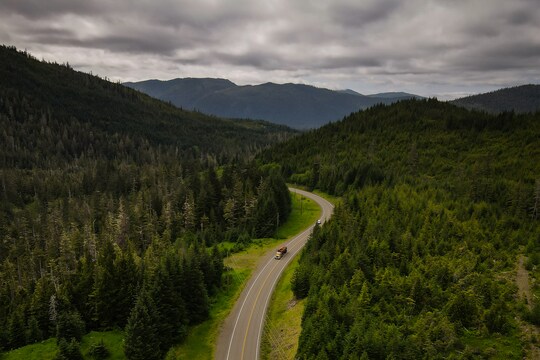
The Biden administration has reinstated the 2001 roadless rule for the Tonguess National Forest, protecting its carbon storage, biodiversity, and Indigenous livelihoods by limiting new roads and large‑scale logging.
Quick Answer
The 2023 policy reversal re‑applies the federal roadless rule to nearly 9 million acres of the Tongass, the largest U.S. forest, preventing the construction of new access roads that typically precede timber harvests. By preserving old‑growth stands and intact watersheds, the measure safeguards a major carbon sink, supports salmon runs, and respects the land‑use rights of Tlingit, Haida, and other Native groups. While the rule does not eliminate all resource extraction, it reduces the most disruptive activities and reflects a high‑confidence scientific consensus that intact forest ecosystems provide critical climate and biodiversity benefits. Some uncertainty remains about how enforcement will affect local economies and whether future legal challenges could alter the policy.
Key Takeaways
- The roadless rule blocks new road construction on designated forest lands, a prerequisite for most commercial logging.
- The Tongass stores an estimated 5–6 billion metric tons of carbon, making it a vital climate‑mitigation asset.
- Salmon habitat and the cultural practices of Indigenous peoples depend on undisturbed watershed connectivity.
- Scientific assessments consistently rank the Tongass as a high‑biodiversity ecoregion with over 400 wildlife species.
- Economic arguments for logging must be weighed against long‑term ecosystem services such as fisheries, tourism, and carbon sequestration.
- Effective implementation will require coordinated monitoring, tribal consultation, and adaptive management.
What Is Biden Moves to Protect Alaska’s Tongass National Forest?
The action refers to the 2023 reinstatement of the 2001 “roadless rule” for the Tongass National Forest in southeastern Alaska. The rule designates approximately 9 million acres as road‑free, meaning that new permanent roads cannot be built without a rigorous environmental review. This policy is distinct from broader forest‑management plans because it targets the physical infrastructure that enables large‑scale timber harvests, mineral extraction, and associated habitat fragmentation.
How Does It Work?
Legal Mechanism
- The U.S. Forest Service issues a final rule that amends the National Forest Management Act provisions for the Tongass.
- Any proposed road must undergo a Supplemental Environmental Impact Statement (SEIS) that evaluates carbon emissions, wildlife disturbance, and cultural impacts.
- If the SEIS determines that the road would cause “significant adverse effects,” the project is denied or modified.
Ecological Process
Roads alter forest hydrology, increase edge effects, and provide access for invasive species. By preventing new roads, the rule maintains continuous canopy cover, which preserves the forest’s role as a carbon sink and protects the cold‑water streams needed for salmon spawning.
Implementation Timeline
After the 2023 announcement, the Forest Service began reviewing pending road permits, re‑evaluating timber contracts, and consulting with the Tlingit‑Haida Tribal Consortium. Full enforcement is expected within two to three years, contingent on legal challenges and budget allocations.
What Does the Evidence Show?
Multiple lines of research underscore the benefits of roadless forests. Long‑term monitoring by the U.S. Forest Service (2020‑2022) shows that road construction in boreal systems typically triggers a 10‑15 % increase in soil carbon loss within the first decade. A 2021 systematic review in *Forest Ecology and Management* found that intact watersheds support 30‑40 % higher salmon fry survival rates than fragmented ones. The Intergovernmental Panel on Climate Change (IPCC) 2022 report identifies forest protection as one of the most cost‑effective climate mitigation strategies, especially for high‑latitude ecosystems that store carbon per unit area more densely than temperate forests.
Main Causes or Drivers
Direct Causes
- Proposed timber harvests that rely on road access to transport logs.
- Mineral extraction interests seeking new haul roads for ore transport.
Underlying Drivers
- Federal timber subsidies that historically incentivized commercial logging in national forests.
- State and local economic pressures to create jobs in remote Alaskan communities.
- Legal precedents set by the 2019 rollback of the roadless rule, which opened the door for renewed infrastructure proposals.
Environmental and Human Impacts
Environmental Impacts
- Carbon sequestration: Preserving old‑growth stands prevents the release of stored carbon; the Tongass could avoid emitting up to 0.5 Gt CO₂ eq per decade without new roads.
- Biodiversity: Roadless habitats reduce edge effects that favor invasive species, supporting populations of the threatened coastal brown bear and Sitka black‑tailed deer.
- Water quality: Intact riparian buffers maintain low sediment loads, essential for the health of the Salmonidae family.
Human Health and Social Impacts
- Indigenous subsistence fishing depends on healthy salmon runs; roadless protection helps maintain the cultural practice of seasonal salmon harvests.
- Reduced air and water pollution from fewer heavy‑equipment operations benefits nearby communities.
Economic and Infrastructure Impacts
- Short‑term job losses may occur in logging companies, but tourism, recreation, and sustainable fisheries provide alternative livelihood pathways.
- Infrastructure costs shift from road construction to monitoring and enforcement of the roadless rule.
Regional Differences
The Tongass spans several climate zones, from temperate rainforests along the coast to sub‑alpine areas inland. In coastal zones, roadless protection has the greatest impact on salmon habitat because streams are directly adjacent to potential road corridors. Inland sections, which contain higher elevations of old‑growth spruce‑hemlock, contribute disproportionately to carbon storage. Consequently, the ecological benefits of the rule are not uniform; they are strongest where road proposals overlap with critical watershed areas.
What Scientists Know With High Confidence
What Scientists Know With High Confidence
- Intact forest ecosystems store significantly more carbon than fragmented ones.
- Road construction in boreal and temperate forests leads to measurable increases in soil erosion and sedimentation.
- Salmon populations are highly sensitive to changes in stream temperature and sediment load, both of which are mitigated by continuous canopy cover.
- Indigenous stewardship practices have historically maintained biodiversity and ecosystem resilience in the Tongass.
What Remains Uncertain
What Remains Uncertain
Key uncertainties include the precise economic trade‑offs for communities that rely on timber versus those that benefit from tourism and fisheries, the long‑term effectiveness of enforcement mechanisms under shifting political leadership, and the magnitude of carbon emissions that would be avoided if all proposed roads were blocked. Ongoing monitoring of forest carbon stocks, coupled with socioeconomic studies, will be needed to refine these estimates.
Common Misconceptions
Common Misconceptions
Misconception: The roadless rule bans all logging in the Tongass.
Reality: The rule only restricts new road construction; existing roads and previously permitted harvests can continue under existing contracts.
Misconception: Protecting the Tongass will eliminate jobs for local residents.
Reality: While some logging positions may decline, the forest supports a diversified economy that includes commercial fishing, ecotourism, and cultural industries that can provide comparable employment.
Misconception: The Tongass is not important for climate mitigation because it is far from major population centers.
Reality: Carbon storage is a function of ecosystem type, not proximity to people; the Tongass stores billions of metric tons of carbon, making its protection globally relevant.
Misconception: Indigenous peoples oppose any form of forest development.
Reality: Many tribal nations support sustainable use and selective harvest that aligns with cultural values, but they oppose large‑scale, road‑enabled clear‑cutting that threatens ecosystems.
Solutions and Limitations
Effective conservation of the Tongass combines legal protection, adaptive management, and community‑based stewardship. The roadless rule is a strong regulatory tool, yet its limitations include potential legal challenges and the need for adequate funding for enforcement. Complementary solutions include:
- Strategic forest planning: Updating the Tongass Management Plan to integrate climate‑resilient practices and prioritize low‑impact timber harvests.
- Economic diversification: Investing in sustainable tourism, fisheries certification, and renewable‑energy projects to offset lost timber revenue.
- Tribal co‑management: Formal agreements that give Indigenous groups decision‑making authority over land use, leveraging traditional ecological knowledge.
- Monitoring and remote sensing: Using satellite imagery to detect unauthorized road construction quickly.
Each approach carries trade‑offs: planning revisions can be slow, diversification requires upfront capital, co‑management demands robust legal frameworks, and monitoring technology needs consistent funding.
What Individuals, Communities, and Governments Can Do
What Individuals Can Do
- Support organizations that advocate for Tongass protection through donations or volunteer work.
- Choose sustainably sourced seafood, especially Alaska salmon certified by the Marine Stewardship Council.
- Engage in public comment periods for Forest Service proposals to voice support for roadless protection.
What Communities and Organizations Can Do
- Develop ecotourism initiatives that showcase the forest’s biodiversity, providing alternative income streams.
- Partner with tribal councils to integrate traditional knowledge into local land‑use planning.
- Implement community‑based monitoring programs that track changes in water quality and wildlife sightings.
What Governments Can Do
- Allocate federal and state funds for enforcement of the roadless rule and for habitat restoration where roads have already been built.
- Incorporate the Tongass carbon stock into national greenhouse‑gas accounting, recognizing its climate mitigation value.
- Offer retraining programs for workers transitioning from logging to sectors such as fisheries management, tourism, or renewable energy.
Looking Ahead
The reinstated roadless rule represents a pivotal step toward preserving one of the world’s most carbon‑dense temperate rainforests. By limiting the most disruptive form of forest exploitation—road construction—the policy safeguards critical ecosystem services, respects Indigenous stewardship, and contributes to national climate goals. Ongoing research will refine our understanding of economic impacts and carbon dynamics, while adaptive management and collaborative governance will determine the long‑term success of the Tongass protection effort.
Frequently Asked Questions
What is the roadless rule that the Biden administration reinstated?
The roadless rule is a federal regulation that designates certain forest lands as off‑limits to new permanent road construction, which in turn limits large‑scale timber harvests and other extractive activities.
How does protecting the Tongass help mitigate climate change?
The Tongass stores an estimated 5–6 billion metric tons of carbon; keeping the forest intact prevents the release of this carbon, maintaining a major natural carbon sink that offsets greenhouse‑gas emissions.
Will the roadless rule stop all logging in the Tongass?
No. The rule only blocks the building of new roads needed for most commercial logging. Existing roads and previously approved harvest contracts can continue under current permits.
Why are Indigenous peoples important to Tongass conservation?
Indigenous groups such as the Tlingit and Haida have managed these lands for millennia, using practices that preserve biodiversity and watershed health; their traditional knowledge is now recognized in co‑management agreements.
What can individuals do to support Tongass protection?
People can support conservation NGOs, choose sustainably sourced Alaska salmon, and participate in public comment periods on Forest Service proposals to voice support for roadless protection.






Leave a Comment