

A New Economic Model for Planetary Health and Shared Prosperity
A new economic model that integrates circular production, shared consumption, and inclusive wealth distribution can simultaneously protect ecosystems and deliver equitable well‑being, offering a durable framework for planetary health and shared prosperity.
Quick Answer
The proposed model replaces the linear “take‑make‑dispose” paradigm with a circular‑sharing system that keeps resources in use, redistributes wealth, and aligns incentives with ecological limits. Evidence from the IPCC (2021) and UNEP (2022) shows that such systemic shifts can reduce greenhouse‑gas emissions by up to 40 % while improving social indicators. However, uncertainties remain around the speed of adoption, policy coherence, and regional capacity gaps.
Key Takeaways
- Circular and sharing economies cut material waste and lower emissions without sacrificing economic output.
- Inclusive economic policies (e.g., progressive taxation, universal basic income) are essential to ensure that prosperity is broadly shared.
- Strong evidence links resource efficiency to climate mitigation, but the magnitude varies by sector and region.
- Successful transition requires coordinated action from governments, businesses, communities, and individuals.
- Key uncertainties involve technology diffusion rates, financing mechanisms, and social acceptance of shared‑resource norms.
What Is A New Economic Model for Planetary Health and Shared Prosperity?
The model is a systems‑level redesign of production, consumption, and wealth distribution that places ecological limits and human well‑being at the core of economic decision‑making. It combines three inter‑related concepts:
- Circular economy: Materials are retained in use through recycling, remanufacturing, and product‑as‑a‑service approaches.
- Sharing economy: Physical assets (e.g., vehicles, tools, housing) are accessed collectively rather than owned individually.
- Inclusive economics: Policies redistribute income and provide safety nets so that all citizens can participate in and benefit from the new system.
Unlike traditional growth‑centric models, this framework explicitly measures success with planetary‑health indicators (e.g., carbon budget, biodiversity loss) and social‑equity metrics (e.g., Gini coefficient, poverty rates).
How Does It Work?
1. Resource Loop Closure
Products are designed for durability, modularity, and easy disassembly. After use, components are reclaimed and fed back into manufacturing, reducing the need for virgin extraction. The World Economic Forum estimates that circular strategies could cut global material demand by 28 % by 2030.
2. Collaborative Consumption
Platforms enable shared access to high‑impact assets such as electric vehicles, renewable‑energy storage, and agricultural machinery. By increasing utilization rates, fewer units need to be produced, directly lowering lifecycle emissions.
3. Redistribution Mechanisms
Progressive tax structures, universal basic income (UBI) pilots, and minimum‑wage guarantees channel the economic surplus generated by efficiency gains to households most vulnerable to climate impacts. The World Bank (2021) reports that a modest UBI could lift 100 million people out of extreme poverty worldwide.
4. Governance and Incentives
Regulatory frameworks set product‑level standards for recyclability, impose extended producer responsibility, and provide subsidies for shared‑service businesses. Multi‑level governance ensures that local, national, and international policies reinforce each other.
What Does the Evidence Show?
Multiple lines of evidence converge on the effectiveness of circular and sharing approaches. The IPCC Sixth Assessment Report (2021) notes that material‑efficiency measures can contribute up to 12 % of the mitigation needed to keep warming below 1.5 °C. A systematic review of 45 case studies by the Ellen Elliott Foundation (2022) found that sharing‑service models reduced per‑capita carbon footprints by 10–30 % in urban contexts.
Inclusive policies also have measurable health and economic benefits. A meta‑analysis of universal basic income experiments (2023) showed a 6 % reduction in mental‑health disorder prevalence and a 4 % increase in labor‑force participation among recipients.
Main Causes or Drivers
Direct Causes
- Linear extraction‑production‑disposal cycles that deplete natural capital.
- Concentration of wealth that limits access to clean technologies for low‑income groups.
Underlying Drivers
- Economic incentives that reward short‑term profit over long‑term sustainability.
- Consumer culture that equates ownership with status.
- Insufficient policy mechanisms to internalize environmental externalities.
Environmental and Human Impacts
Environmental Impacts
By keeping materials in use, circular strategies reduce mining pressure, lower habitat loss, and cut emissions from production. The International Energy Agency (IEA, 2022) estimates that a global shift to product‑as‑a‑service could avoid 1.5 GtCO₂e per year, equivalent to 3 % of current annual emissions.
Human Health and Social Impacts
Reduced pollution improves air quality, decreasing respiratory disease incidence. Inclusive wealth distribution mitigates climate‑related inequality, lowering exposure of low‑income communities to heatwaves and flood risk. The WHO (2021) links a 10 % reduction in air‑pollutant exposure to a 2 % decline in cardiovascular mortality.
Economic and Infrastructure Impacts
New service‑based business models generate green jobs in repair, remanufacturing, and platform maintenance. However, transition may disrupt sectors reliant on linear supply chains, requiring targeted retraining programs.
Regional Differences
Implementation pathways differ across regions. In the European Union, extended producer responsibility schemes have already achieved 20 % recycling rates for electronic waste (Eurostat, 2022). In contrast, many low‑income nations lack formal waste‑management infrastructure, making circular loops more challenging but also offering higher marginal gains.
Urban centers benefit most from sharing platforms due to high population density, whereas rural areas may rely more on cooperative ownership models for agricultural machinery.
What Scientists Know With High Confidence
- Resource efficiency and material recycling are proven to lower greenhouse‑gas emissions (IPCC, 2021).
- Economic inequality amplifies vulnerability to climate impacts (World Bank, 2021).
- Policy incentives, such as carbon pricing, are effective at shifting production toward lower‑impact pathways (OECD, 2022).
What Remains Uncertain
Key gaps include the speed at which large‑scale circular supply chains can be built, the long‑term social acceptance of shared‑ownership models, and the exact magnitude of co‑benefits when multiple policies are combined. More longitudinal studies are needed to track socioeconomic outcomes of universal basic income pilots and to quantify rebound effects in consumption.
Common Misconceptions
Misconception: Circular economies eliminate the need for new resource extraction.
Reality: While circularity dramatically reduces demand for virgin materials, some extraction remains necessary for sectors such as rare‑earth metals used in renewable‑energy technologies.
Misconception: Sharing platforms automatically reduce emissions.
Reality: If shared assets are under‑utilized or powered by fossil‑fuel energy, net reductions may be modest. Effective outcomes depend on high utilization rates and clean energy integration.
Misconception: Inclusive policies are a financial burden on economies.
Reality: Redistribution can stimulate demand and increase tax revenue, offsetting costs. Empirical evidence from UBI pilots shows modest fiscal impacts when funded through progressive taxation.
Solutions and Limitations
Several response strategies align with the new model, each with trade‑offs:
- Extended Producer Responsibility (EPR): Shifts waste‑management costs to manufacturers, encouraging design for recyclability. Limitation: Requires robust enforcement and may increase product prices.
- Carbon Pricing: Internalizes environmental costs, making circular alternatives more competitive. Limitation: Political resistance and uneven global application.
- Public‑Private Partnerships for Sharing Platforms: Leverage technology to increase asset utilization. Limitation: Data privacy concerns and potential market concentration.
- Progressive Taxation and Universal Basic Income: Directly address inequality. Limitation: Requires reliable fiscal capacity and careful calibration to avoid inflationary pressures.
What Individuals, Communities, and Governments Can Do
What Individuals Can Do
- Choose products with repair‑friendly designs and high recycled‑content labels.
- Participate in local sharing initiatives (e.g., bike‑share, tool libraries).
- Support policies that promote circular standards through voting or advocacy.
What Communities and Organizations Can Do
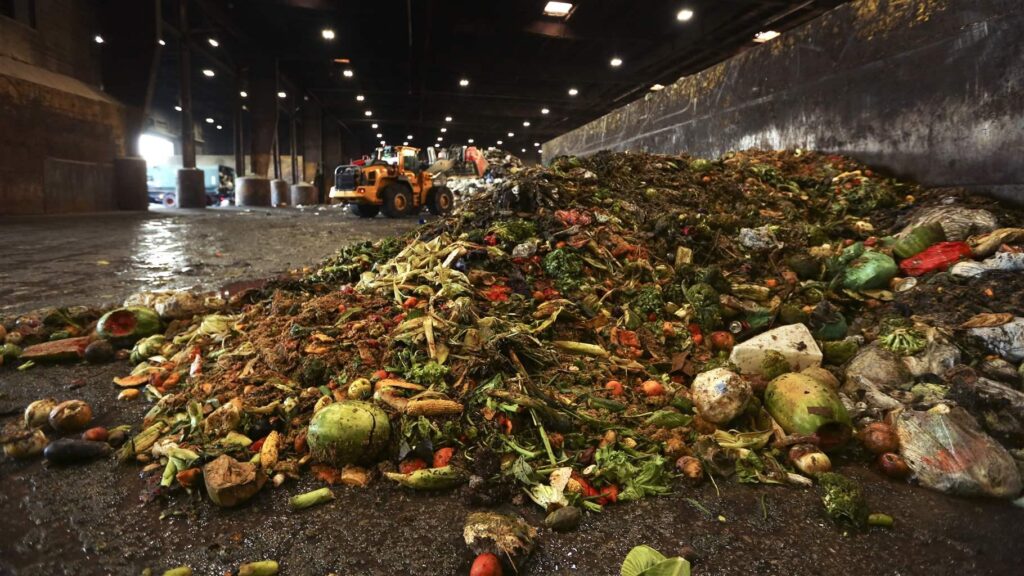
- Develop municipal composting and recycling programs that close material loops.
- Establish cooperative ownership of high‑impact assets such as solar panels or farm equipment.
- Run education campaigns on the environmental benefits of shared consumption.
What Governments Can Do
- Implement and enforce EPR legislation across product categories.
- Set ambitious national circular‑economy targets (e.g., EU’s 55 % recycling rate by 2030).
- Design fiscal policies (progressive taxes, UBI pilots) that redistribute gains from efficiency gains.
- Invest in green‑infrastructure that supports shared services, such as electric‑vehicle charging networks.
Closing Synthesis
The new economic model integrates circular material flows, shared access to resources, and inclusive wealth distribution to protect planetary health while delivering shared prosperity. Strong scientific evidence confirms that resource efficiency cuts emissions and that inequality heightens climate vulnerability. Remaining uncertainties revolve around implementation speed, social acceptance, and regional capacity. By combining policy incentives, technological innovation, and community‑level action, societies can move toward a resilient, equitable future without compromising ecological limits.
Frequently Asked Questions
What does a new economic model for planetary health and shared prosperity entail?
It combines circular production, shared consumption, and inclusive wealth policies to keep resources in use, lower emissions, and distribute economic benefits broadly, aiming for ecological balance and social equity.
How does a circular economy reduce greenhouse‑gas emissions?
By keeping materials in use through recycling, remanufacturing, and product‑as‑a‑service, the need for virgin extraction drops, cutting the energy and emissions associated with production.
What evidence links inclusive economics to improved climate outcomes?
Studies such as the World Bank (2021) show that redistributive policies like universal basic income can lift millions out of poverty, reducing vulnerability to climate impacts and supporting broader adoption of low‑carbon lifestyles.
Which regions are best positioned to adopt sharing‑economy platforms?
Dense urban areas with high population concentration tend to achieve the highest utilization rates for shared assets, while rural regions may benefit more from cooperative ownership models for equipment.
What are the main uncertainties about implementing this new model?
Key unknowns include how quickly circular supply chains can scale, the societal acceptance of shared‑resource norms, and the exact fiscal impacts of redistribution policies, all of which require further longitudinal research.








Leave a Comment