
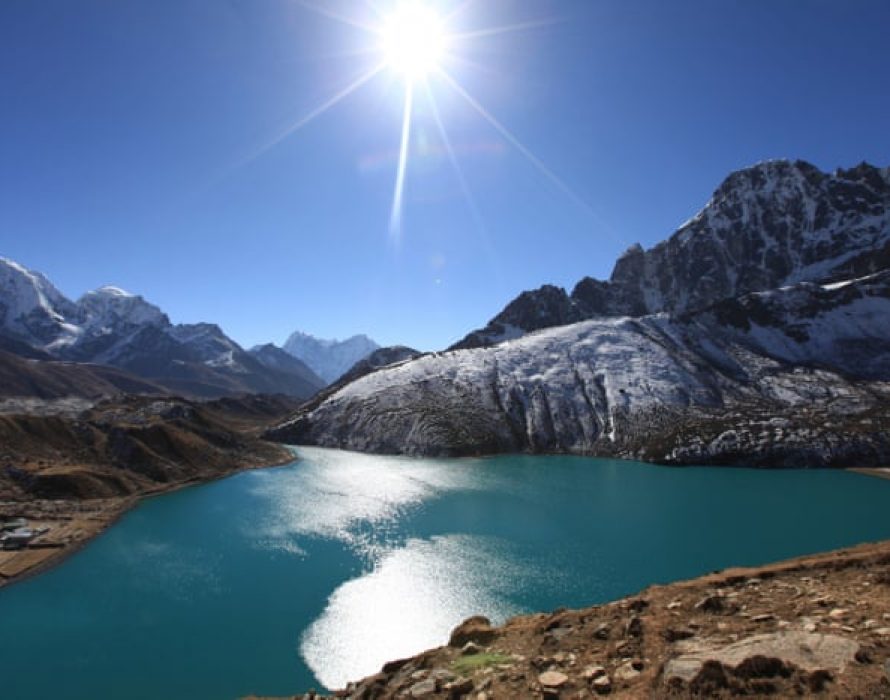
Rapid melting of the Himalayan glaciers—often called the ‘Third Pole’—is reshaping water supplies, ecosystems, and livelihoods for over a billion people, and its drivers, impacts, and possible responses are now well documented.
Quick Answer
The Himalayan mountain range contains thousands of glaciers that store fresh water for South‑Asian rivers. Rising atmospheric temperatures, altered precipitation patterns, and human activities are accelerating glacier retreat at roughly twice the rate observed in the late 20th century. Scientific assessments (IPCC 2021, WGMS 2022) show that the region has already lost about 10–15 % of glacier volume since the 1970s, and continued warming could remove up to 40 % by 2100 under high‑emission scenarios. The most immediate impact is reduced dry‑season river flow, increasing water‑security risks, while the formation of unstable glacial lakes raises the likelihood of destructive outburst floods. Uncertainty remains around exact future loss rates because of limited long‑term monitoring and model differences, but the trend of accelerated melt is clear.
Key Takeaways
- Himalayan glaciers have lost roughly 10–15 % of their volume since the 1970s, and melt rates have doubled compared with the previous century.
- Glacier retreat threatens water availability for more than 1.5 billion people who depend on meltwater for agriculture, drinking water, and hydropower.
- Glacial lake outburst floods (GLOFs) are increasing; over 30 major events have been recorded since 2000.
- High‑confidence evidence links accelerated melt to global warming, while uncertainties focus on regional climate projections and glacier‑specific responses.
- Effective responses combine emission reductions, improved monitoring, community‑based adaptation, and sustainable water‑management policies.
What Is Himalayan Glaciers Melting Fast: Alarm Bells for the ‘Third Pole’?
The term refers to the observed rapid retreat of the thousands of glaciers that blanket the Himalayan‑Karakoram‑Hindu Kush (HKH) region, often dubbed the “Third Pole” because its ice stores represent the world’s largest reserve of frozen water outside the polar caps. These glaciers feed the Indus, Ganges, Brahmaputra, and Yangtze basins, making them critical to regional water security, agriculture, and biodiversity. The phenomenon is distinct from seasonal snow melt; it involves long‑term loss of glacier mass, reduction in glacier length, and the emergence of proglacial lakes.
How Does It Work?
Physical Drivers
- Increased air temperature raises the melt‑water production at the glacier surface. The IPCC reports that the average temperature in the HKH has risen about 0.6 °C per decade since the 1970s.
- Changes in precipitation shift the balance between snowfall (which adds mass) and rain (which accelerates melt). Models show a trend toward more winter rain in the central Himalaya.
- Albedo reduction: Darker surface debris and exposed ice absorb more solar radiation, creating a positive feedback loop that speeds melt.
Hydrological Feedbacks
As glaciers shrink, meltwater initially increases river discharge, but the long‑term trend is a decline in dry‑season flow because the ice reservoir that buffers seasonal variability diminishes. The formation of supraglacial lakes and downstream glacial lakes also alters flow timing.
Glacial Lake Outburst Floods (GLOFs)
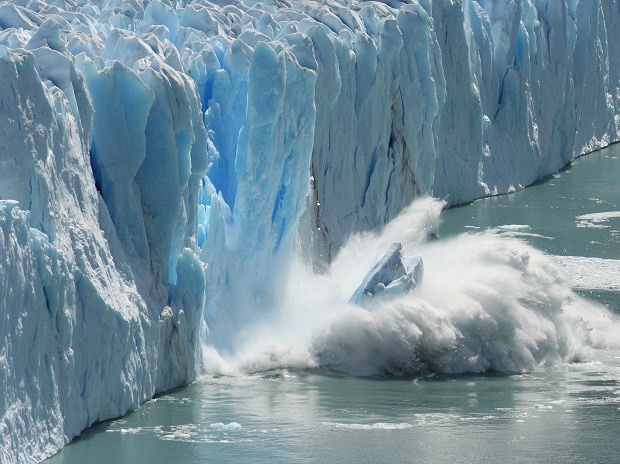
When meltwater accumulates behind unstable moraine dams, the lakes can fail abruptly, releasing torrents of water, sediment, and debris. The sudden release can devastate downstream communities, as documented in the 2021 Nanga Parbat GLOF.
What Does the Evidence Show?
Long‑term satellite observations (Landsat series) combined with ground‑based mass‑balance measurements from the World Glacier Monitoring Service indicate an average glacier retreat rate of 15–20 m yr⁻¹ in the central Himalaya, compared with 7–9 m yr⁻¹ in the 1970s–1990s. A systematic review published in *Nature Climate Change* (2020) synthesised 30 regional studies and concluded that glacier area loss in the HKH is about 2 % per decade, with higher rates (>3 % per decade) in the Karakoram “anomalous” sector. Climate‑model ensembles (CMIP6) attribute >80 % of the observed melt to anthropogenic greenhouse‑gas forcing, giving this attribution a high confidence rating.
Projected losses vary by emission scenario. Under the high‑emissions SSP5‑8.5 pathway, model ensembles suggest a 30–45 % reduction in glacier volume by 2100; under the low‑emissions SSP1‑2.6 pathway, the loss is limited to 15–20 % (IPCC 2021, Chapter 4). These projections are based on ensemble averages and carry moderate uncertainty because of limited glacier‑specific climate data.
Main Causes or Drivers
Direct Causes
- Global temperature rise: The primary driver of enhanced melt, driven by increased CO₂ concentrations.
- Altered precipitation: A shift from snow to rain reduces accumulation and speeds runoff.
- Black carbon deposition: Soot from biomass burning settles on glacier surfaces, lowering albedo.
Underlying Drivers
- Industrialisation and fossil‑fuel combustion worldwide.
- Land‑use change in the Indo‑Gangetic Plain that modifies regional atmospheric circulation.
- Rapid population growth and tourism in high‑altitude valleys, increasing local heat sources.
Environmental and Human Impacts
Environmental Impacts
- Reduced glacier mass diminishes downstream cold‑water habitats, threatening endemic fish such as the Himalayan snow trout.
- Loss of perennial ice contributes to lower albedo of the mountain region, potentially amplifying regional warming.
- Glacial lake expansion increases the risk of slope instability and landslides.
Human Health and Social Impacts
- Declining dry‑season river flow jeopardises irrigation for staple crops (rice, wheat, maize) across Nepal, India, and Pakistan, raising food‑security concerns.
- GLOFs have displaced more than 10 000 people in the past two decades, creating temporary settlements with limited access to clean water and health services.
- Water scarcity can intensify competition among agricultural, domestic, and hydropower users, potentially fueling social tension.
Economic and Infrastructure Impacts
- Hydropower projects that rely on steady glacier meltwater face reduced generation capacity, affecting regional energy security.
- Infrastructure built in glacial valleys (roads, bridges) is increasingly vulnerable to flood‑induced damage.
Regional Differences
Glacier behaviour is not uniform across the HKH. The western Karakoram exhibits a “Karakoram anomaly,” where some glaciers have been stable or even advancing, likely due to higher winter precipitation and colder temperatures. In contrast, the central and eastern Himalaya (e.g., Nepal’s Langtang, India’s Sikkim) show the most rapid retreat. These differences underscore the need for region‑specific monitoring and adaptation strategies.
What Scientists Know With High Confidence
- Atmospheric warming driven by anthropogenic greenhouse gases is the dominant factor behind accelerated Himalayan glacier melt.
- Glacier mass loss is already measurable and exceeds natural variability observed in the 20th century.
- Reduced dry‑season river flow will affect water availability for billions of downstream users.
- Glacial lake outburst floods are a growing hazard linked directly to glacier retreat.
What Remains Uncertain
Key uncertainties include the precise magnitude of future melt under different regional climate pathways, the long‑term stability of moraine‑dammed lakes, and how socio‑economic development will interact with water‑resource stress. Limited high‑altitude meteorological stations and sparse glacier‑mass‑balance networks hinder precise model validation. Improved remote‑sensing techniques and expanded in‑situ observations are needed to narrow these gaps.
Common Misconceptions
Misconception: All Himalayan glaciers are disappearing at the same speed.
Reality: Melt rates vary widely; the Karakoram range shows relative stability, while central Himalaya glaciers retreat rapidly. Local climate, topography, and debris cover all influence speed.
Misconception: Glacial melt only affects high‑altitude communities.
Reality: Meltwater feeds major rivers that support agriculture, industry, and urban water supplies across the Indian subcontinent, so impacts cascade far downstream.
Misconception: Reducing local pollution alone can stop glacier loss.
Reality: While reducing black‑carbon emissions helps, the primary driver is global CO₂‑induced warming, requiring coordinated international mitigation.
Solutions and Limitations
Responses fall into three broad categories: mitigation, adaptation, and risk reduction.
- Mitigation: Rapid decarbonisation of energy systems (e.g., renewable electricity) reduces the long‑term temperature trajectory. Limitations include political inertia, financing gaps, and uneven implementation across countries.
- Adaptation: Enhancing water‑storage capacity (reservoirs, groundwater recharge) and adopting climate‑smart agriculture can buffer reduced meltwater. Trade‑offs involve ecological impacts of large dams and the need for substantial investment.
- Risk Reduction: Systematic mapping of glacial lakes, early‑warning systems, and community‑based evacuation plans lower GLOF casualties. Effectiveness depends on local governance, technical capacity, and sustained funding.
What Individuals, Communities, and Governments Can Do
What Individuals Can Do
- Support policies and political candidates that commit to net‑zero emissions.
- Reduce personal carbon footprints through energy efficiency, low‑carbon travel, and plant‑rich diets.
- Participate in local watershed‑protection projects, such as reforestation of upstream catchments.
What Communities and Organizations Can Do
- Develop and maintain community‑based early‑warning systems for GLOFs, using low‑cost sensors and mobile alerts.
- Promote water‑conservation practices in agriculture (drip irrigation, rainwater harvesting) to stretch limited meltwater supplies.
- Engage in citizen‑science programs that record glacier changes via GPS or smartphone imagery, feeding data to national monitoring agencies.
What Governments Can Do
- Invest in high‑resolution climate and glaciological monitoring networks (e.g., satellite altimetry, automatic weather stations).
- Integrate glacier‑melt projections into national water‑resource planning and transboundary river‑basin agreements.
- Enforce stricter air‑quality standards to limit black‑carbon deposition on glaciers.
- Allocate disaster‑risk‑reduction funds for GLOF mitigation, including lake‑drainage engineering where feasible.
Closing Synthesis
The rapid melting of Himalayan glaciers is a clear indicator of a warming climate and a direct threat to water security for billions of people. High‑confidence science links the acceleration to global greenhouse‑gas emissions, while regional variations and data gaps create uncertainty about exact future outcomes. Mitigation of climate change, coupled with targeted adaptation and risk‑reduction measures, offers the most robust pathway to safeguard both ecosystems and human societies. Continued monitoring, international cooperation, and locally appropriate actions are essential to keep the ‘Third Pole’ from becoming a future “lost pole.”
Frequently Asked Questions
What defines the ‘Third Pole’ in the context of Himalayan glaciers?
The ‘Third Pole’ refers to the Himalayan‑Karakoram‑Hindu Kush region, which holds the world’s largest store of ice outside the polar caps, feeding major rivers such as the Indus, Ganges, and Brahmaputra.
How much glacier mass has the Himalayas lost since the 1970s?
Monitoring by the World Glacier Monitoring Service and satellite data indicate a loss of about 10–15 % of total glacier volume in the Himalayas since the 1970s, with melt rates now roughly twice those of the late 20th century.
What are the main hazards linked to glacier retreat in the Himalayas?
The primary hazards are reduced dry‑season river flow, which threatens water and food security, and the formation of unstable glacial lakes that can trigger glacial lake outburst floods (GLOFs), endangering downstream communities.
Why do glacier melt rates differ between the Karakoram and central Himalaya?
The Karakoram experiences higher winter precipitation and colder temperatures, creating the ‘Karakoram anomaly’ where some glaciers are stable or advancing, whereas central Himalaya glaciers face warmer conditions and less snow, leading to faster retreat.
What actions can governments take to reduce the risk of GLOFs?
Governments can map glacial lakes, install early‑warning systems, fund engineering projects to safely drain high‑risk lakes, and strengthen disaster‑response plans, all supported by robust monitoring networks and cross‑border cooperation.



Leave a Comment