
Air pollution in France, driven by traffic, industry, and climate‑related factors, harms public health and interacts with warming trends, creating a persistent environmental challenge.
Quick Answer
Air pollution in France consists mainly of nitrogen dioxide (NO₂) and fine particulate matter (PM₂.₅ and PM₁₀) released from road traffic, energy production, and agriculture. These pollutants form through combustion and chemical reactions in the lower atmosphere, and their concentrations rise during heat‑waves and stagnant weather, which are becoming more common because of climate change. Robust monitoring and epidemiological studies show that long‑term exposure increases the risk of respiratory disease, cardiovascular events, and premature death, while also contributing to regional climate feedbacks. Uncertainty remains around the exact future trajectory of emissions under different policy scenarios.
Key Takeaways
- NO₂ and PM₂.₅ are the primary pollutants exceeding health‑based limits in French cities and many rural areas.
- Heat‑waves and the urban heat‑island effect trap pollutants near the surface, amplifying health risks.
- National monitoring indicates thousands of premature deaths each year are linked to air pollution.
- Policy actions such as low‑emission zones, electric‑vehicle incentives, and renewable‑energy expansion have measurable but limited impact without broader systemic change.
- Vulnerable groups—children, older adults, and low‑income communities—experience disproportionate exposure and health effects.
What Is Air Pollution in France: Health Impacts and Climate Drivers?
Air pollution refers to the presence of substances in the atmosphere that are harmful to humans or ecosystems when their concentrations exceed natural background levels. In France, the most critical components are nitrogen dioxide (NO₂), produced primarily by combustion engines, and particulate matter (PM) of diameters less than 10 µm (PM₁₀) and 2.5 µm (PM₂.₅), which arise from traffic, industrial processes, residential heating, and agricultural activities. These pollutants differ from greenhouse gases such as CO₂; however, they interact with climate processes by influencing atmospheric chemistry and radiative balance.
How Does It Work?
1. Emission Sources
- Road traffic: Diesel and gasoline engines emit NOₓ (precursor to NO₂) and ultrafine particles.
- Energy production: Coal‑fired power plants and residential heating contribute both NOₓ and PM.
- Agriculture: Ammonia from livestock combines with NOₓ to form secondary PM.
- Industrial activities: Steel, cement, and chemical factories release a mix of gases and particles.
2. Atmospheric Chemistry
NOₓ reacts with volatile organic compounds (VOCs) under sunlight to create ozone (O₃), a secondary pollutant that further damages lung tissue. Simultaneously, ammonia and sulfur dioxide (SO₂) undergo reactions that generate secondary PM₂.₅, which can travel long distances.
3. Climate‑Related Amplification
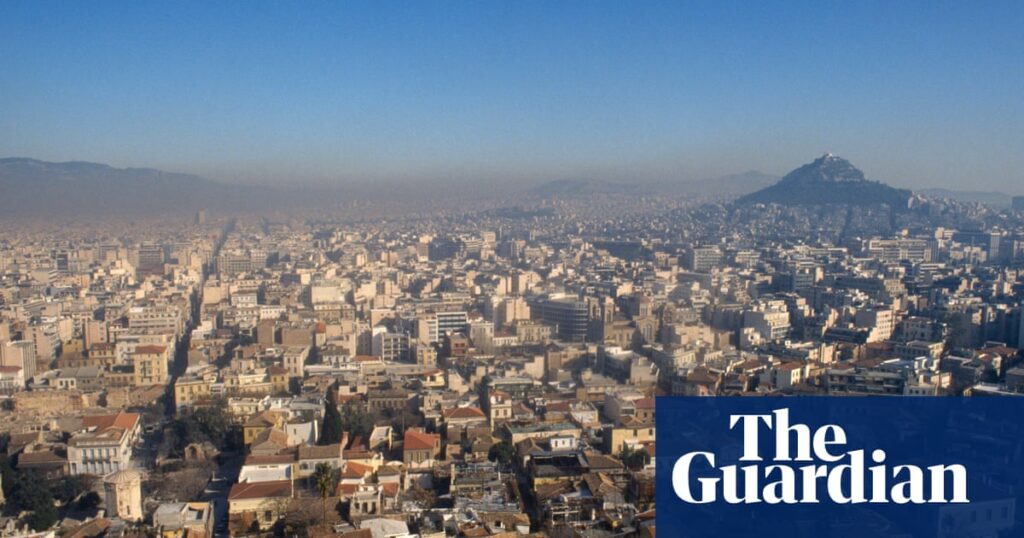
During heat‑waves, high‑pressure systems suppress vertical mixing, keeping pollutants close to the ground. Warmer temperatures also accelerate photochemical reactions that increase ozone and secondary PM formation. The urban heat‑island effect, especially in dense cities like Paris and Lyon, creates localized warming that intensifies these processes.
What Does the Evidence Show?
Long‑term monitoring by the French Air Quality Monitoring Network (Atmo‑France) recorded an average annual PM₂.₅ concentration of 13 µg m⁻³ in 2021, above the World Health Organization (WHO) guideline of 10 µg m⁻³ (European Environment Agency, 2022). Epidemiological analyses spanning 2005‑2019 link each 5 µg m⁻³ increase in PM₂.₅ to a 6 % rise in all‑cause mortality (French National Institute of Health, 2020). A systematic review of European cohort studies concluded that NO₂ exposure is consistently associated with higher rates of asthma incidence in children (European Respiratory Journal, 2021). Climate attribution studies indicate that the frequency of summer stagnation events in the Paris basin has risen by 15 % since the 1990s, correlating with higher peak ozone levels (IPCC AR6, 2021). Together, these lines of evidence confirm a clear, though complex, link between air pollution, health outcomes, and climate dynamics in France.
Main Causes or Drivers
Direct Causes
- Combustion of fossil fuels in transport and power generation.
- Industrial emissions of NOₓ, SO₂, and primary particles.
- Agricultural ammonia emissions that form secondary PM.
Underlying Drivers
- Urbanization and the resulting heat‑island effect.
- Increasing frequency of heat‑waves linked to climate change.
- Socio‑economic patterns that concentrate traffic and industry in densely populated regions.
Environmental and Human Impacts
Environmental Impacts
Elevated ozone and particulate matter accelerate the degradation of historic stone facades and vegetation, reducing biodiversity in peri‑urban green spaces. Acidic particles contribute to soil acidification, affecting agricultural productivity.
Human Health and Social Impacts
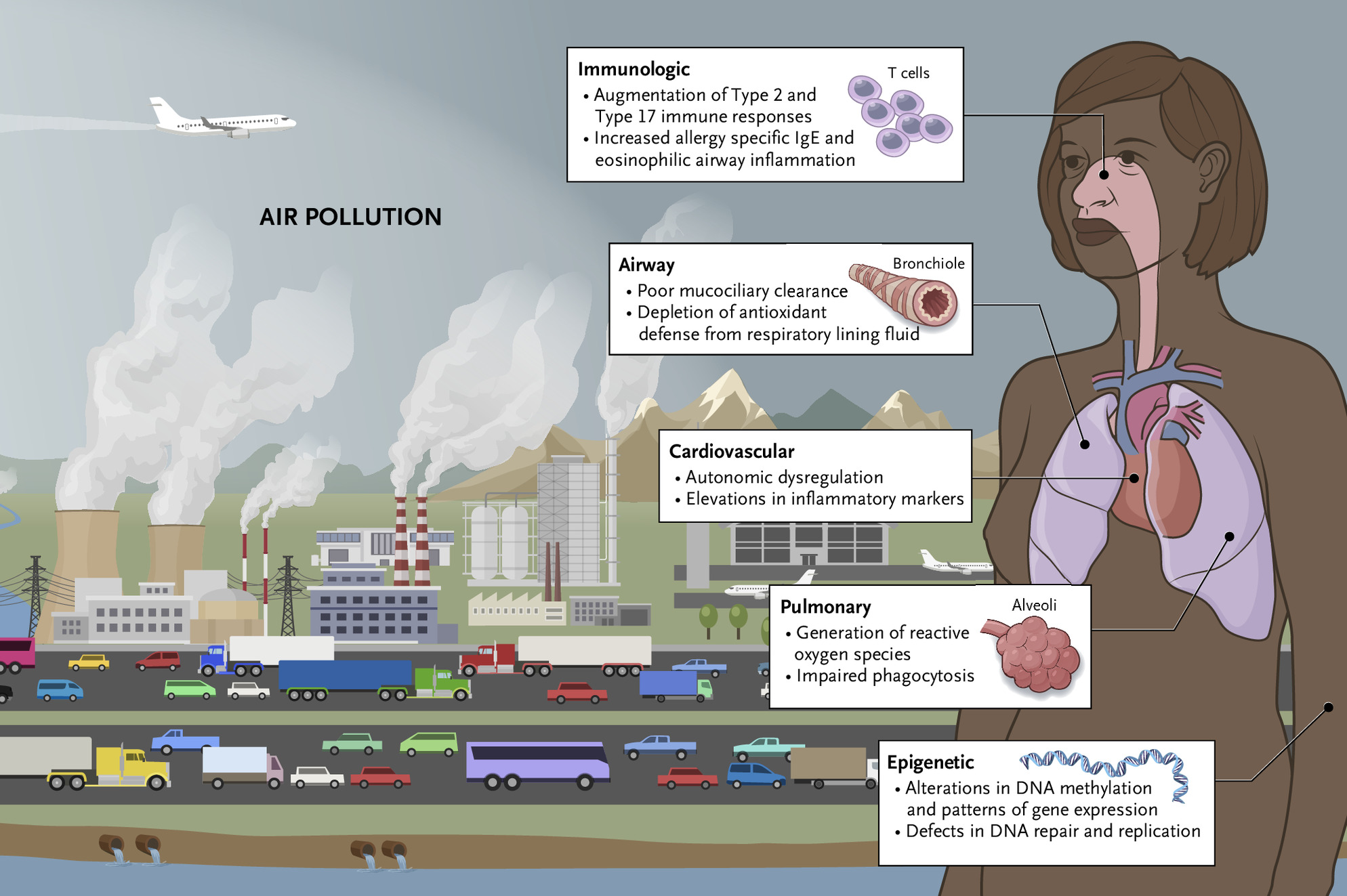
According to the French Ministry of Health, air pollution is estimated to cause roughly 45,000 premature deaths each year (2022 estimate). Chronic exposure increases the incidence of chronic obstructive pulmonary disease (COPD), lung cancer, and ischemic heart disease. Children under 12 experience higher rates of asthma attacks, while older adults show elevated hospital admissions for cardiovascular events during high‑pollution episodes. Psychological research links sustained exposure to poor air quality with increased anxiety and reduced cognitive performance.
Economic and Infrastructure Impacts
Health‑related costs, including hospital stays and lost productivity, amount to an estimated €12 billion annually (French Economic Institute, 2021). Pollution also contributes to reduced tourism appeal in affected regions and accelerates wear on building materials, raising maintenance expenses.
Regional Differences
Pollution levels vary markedly across France. The Île‑de‑France region records the highest NO₂ concentrations, often exceeding 40 µg m⁻³ during rush hour, while mountainous areas such as the Alps experience lower traffic‑related emissions but can suffer from winter inversion events that trap PM. Rural zones with intensive livestock farming show elevated ammonia‑driven secondary PM. These patterns reflect differences in population density, topography, and dominant economic activities.
What Scientists Know With High Confidence
- NO₂ and PM₂.₅ concentrations in many French urban areas regularly exceed WHO health guidelines.
- Long‑term exposure to fine particles increases all‑cause and cardiovascular mortality.
- Heat‑waves and stagnant atmospheric conditions amplify pollutant concentrations.
- Policy measures that reduce traffic emissions (e.g., low‑emission zones) produce measurable short‑term improvements in air quality.
What Remains Uncertain
Key uncertainties include the magnitude of future emissions under varying socioeconomic pathways, the health impact of emerging pollutants such as ultrafine particles and black carbon, and the precise feedbacks between air‑quality improvements and regional climate patterns. Improved high‑resolution monitoring and long‑term cohort studies are needed to narrow these gaps.
Common Misconceptions
Misconception: “Air quality in France is already safe because the country has many green spaces.”
Reality: While forests and parks provide local benefits, monitoring data show that many cities still exceed health‑based limits for NO₂ and PM₂.₅, especially during summer stagnation events.
Misconception: “Switching to electric vehicles will instantly solve air‑pollution problems.”
Reality: EVs eliminate tailpipe NOₓ and primary PM, but if the electricity grid relies on fossil fuels, indirect emissions and secondary pollutants can persist. A simultaneous shift to renewable electricity is required for maximal benefit.
Misconception: “Air pollution only affects the lungs.”
Reality: Fine particles can enter the bloodstream, influencing cardiovascular health, cognitive function, and even mental well‑being, as demonstrated by multiple epidemiological studies.
Solutions and Limitations
Effective responses combine source‑reduction, technological upgrades, and adaptation measures. Low‑emission zones and congestion pricing reduce traffic‑related NO₂, but they may shift traffic to surrounding suburbs unless paired with robust public‑transport alternatives. Expanding renewable‑energy capacity cuts emissions from power generation, yet the transition requires substantial investment and grid modernization. Agricultural reforms that lower ammonia emissions (e.g., precision fertilisation) can reduce secondary PM, but adoption depends on farmer incentives and market structures. Nature‑based solutions such as urban tree planting improve local air filtration, yet trees also emit volatile organic compounds that can contribute to ozone formation under certain conditions.
What Individuals, Communities, and Governments Can Do
What Individuals Can Do
- Use public transport, cycle, or walk for short trips to cut personal NOₓ emissions.
- Choose low‑emission or electric vehicles only when the electricity mix includes a substantial renewable share.
- Support energy‑efficient home heating (e.g., heat pumps) to lower residential PM sources.
- Participate in local air‑quality monitoring initiatives that provide real‑time data.
What Communities and Organizations Can Do
- Advocate for expanded low‑emission zones and greener public‑transport networks.
- Implement school‑yard greening projects that both reduce exposure for children and increase local cooling.
- Encourage workplaces to adopt telecommuting policies that reduce commuter traffic.
What Governments Can Do
- Strengthen and enforce EU‑wide limit values for NO₂ and PM₂.₅, updating national standards accordingly.
- Invest in renewable‑energy infrastructure and modernise the electricity grid to ensure low‑carbon power for EVs.
- Provide targeted subsidies for farmers adopting ammonia‑reduction technologies.
- Expand high‑resolution monitoring networks to identify hotspots and guide localized interventions.
Closing Synthesis
Air pollution in France is a persistent, climate‑linked health challenge driven mainly by traffic, energy production, and agriculture. Robust monitoring and decades‑long epidemiological research give high confidence that NO₂ and fine particles elevate mortality and morbidity, especially for vulnerable groups. Climate‑change‑induced heat‑waves intensify these exposures, creating a feedback loop that demands coordinated action. While solutions such as low‑emission zones, renewable‑energy expansion, and agricultural reforms show promise, each carries technical, economic, and social trade‑offs that must be managed. Continued research, transparent monitoring, and policies that integrate health, climate, and equity considerations will be essential to safeguard the well‑being of French citizens and the environment for generations to come.
Frequently Asked Questions
What are the main pollutants that affect air quality in France?
The primary pollutants exceeding health limits in France are nitrogen dioxide (NO₂) from traffic and industry, and fine particulate matter (PM₂.₅ and PM₁₀) from combustion, agriculture, and secondary chemical reactions.
How does climate change influence air pollution levels in France?
Climate change increases the frequency of heat‑waves and stagnant high‑pressure systems, which trap pollutants near the ground and accelerate photochemical reactions that raise ozone and secondary particulate concentrations.
What health effects are linked to long‑term exposure to air pollution in France?
Long‑term exposure is associated with higher rates of respiratory diseases, cardiovascular events, premature mortality, asthma in children, and even mental‑health impacts such as increased anxiety.
Which regions in France experience the highest air‑quality problems?
Urban areas like the Île‑de‑France (Paris region) show the highest NO₂ levels, while mountainous regions have lower traffic pollution but can suffer winter inversion‑driven PM spikes, and agricultural zones see elevated ammonia‑derived PM.
What actions can individuals take to reduce their exposure to air pollution?
Individuals can use public transport, cycle or walk, choose low‑emission vehicles powered by renewable electricity, improve home heating efficiency, and engage with local air‑quality monitoring programs.








Leave a Comment