
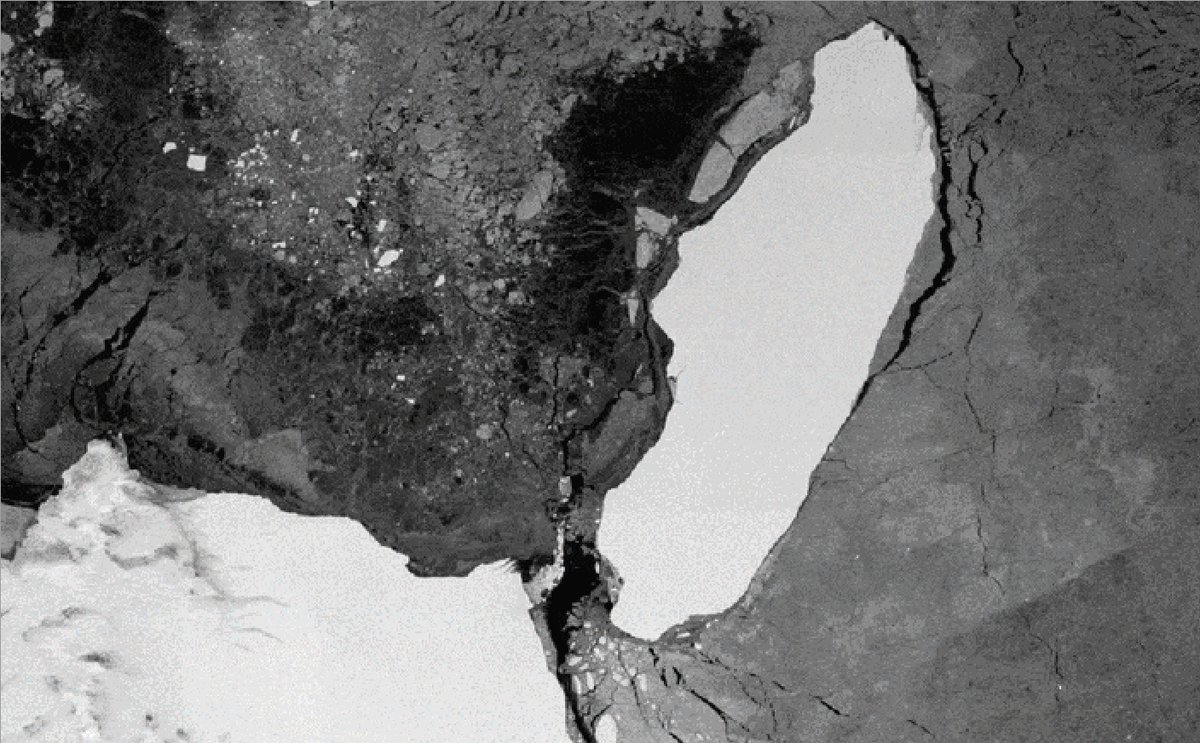
The A68 iceberg, which broke off the Larsen C ice shelf in 2017 and has now fully melted, illustrates how Antarctic ice loss contributes to sea‑level rise and reinforces the accelerating impact of global warming on the planet’s climate system.
Quick Answer
A68 was a 5,800‑square‑kilometre iceberg that calved from the Larsen C Ice Shelf in July 2017; over the subsequent six years it fragmented and melted completely in the Southern Ocean. The melt was driven by warmer ocean waters and atmospheric warming that have been documented across the Antarctic Peninsula. Scientists interpret the disappearance of A68 as clear evidence that Antarctic ice shelves are becoming increasingly vulnerable, a process that adds freshwater to the ocean, reduces the Earth’s albedo, and contributes modestly but measurably to global sea‑level rise. While the exact contribution of A68 to sea level is small, its fate exemplifies broader trends that carry higher uncertainty over longer timescales.
Key Takeaways
- A68 calved in 2017, was the size of the U.S. state of Delaware, and fully melted by early 2024.
- Warmer ocean currents and rising air temperatures accelerated its breakup, reflecting a regional warming trend of up to 4 °C above historic averages.
- The loss of large icebergs reduces the Earth’s reflective surface (albedo) and adds freshwater, influencing ocean circulation and sea‑level rise.
- Scientific observations from satellite imagery, hydrographic surveys, and climate models provide strong, converging evidence of accelerating Antarctic ice loss.
- Mitigation of greenhouse‑gas emissions, enhanced monitoring, and adaptive coastal planning are essential responses.
What Is A68 Iceberg That Broke From Antarctica Has Melted—Why It Matters for Climate?
A68 was a tabular iceberg that originated when a 1,300‑kilometre‑long section of the Larsen C Ice Shelf collapsed in July 2017. Measuring roughly 5,800 km² (about the size of Delaware), it drifted northward into the Southern Ocean, where it gradually fragmented and melted. The term “A68 iceberg” refers specifically to this single mass of ice, not to all Antarctic icebergs. Its significance lies in its size, its origin from a major ice shelf, and the insight it provides into how warming oceans and atmosphere affect polar ice dynamics.
How Does It Work?
1. Calving from the Ice Shelf
When stresses from meltwater infiltration and oceanic erosion exceed the structural strength of an ice shelf, a fracture propagates, causing a large piece to break away—a process known as calving. In the case of Larsen C, a deep rift widened over months until the 2017 event released A68.
2. Drift and Oceanic Interaction
After calving, wind and ocean currents transport icebergs. A68 entered the circumpolar deep water (CDW) system, where relatively warm water (1–2 °C) erodes the iceberg’s underside through basal melting.
3. Fragmentation and Surface Melt
Solar radiation, warm air, and wave action cause surface melt and cracking. As cracks propagate, the iceberg breaks into smaller floes, increasing the surface‑area‑to‑volume ratio and accelerating melt.
4. Complete Disintegration
Within six years, repeated melt cycles reduced A68 to fragments that eventually melted entirely, releasing freshwater into the Southern Ocean.
What Does the Evidence Show?
Multiple lines of evidence converge on the conclusion that A68’s rapid melt is consistent with a warming Antarctic climate:
- Satellite observations from NASA’s MODIS and ESA’s Sentinel missions recorded the iceberg’s size, trajectory, and fragmentation over time, providing high‑resolution, continuous data.
- In‑situ oceanographic measurements by the British Antarctic Survey documented rising temperatures in the CDW near the iceberg’s path, with anomalies of up to 1.5 °C above the 1981‑2010 mean during the melt period.
- Climate assessments such as the Intergovernmental Panel on Climate Change (IPCC) Sixth Assessment Report (2021) note that the Antarctic Peninsula has warmed faster than the global average, a trend that aligns with the observed melt rates.
- Glaciological modelling using the Ice Sheet System Model (ISSM) reproduces A68’s observed decay when forced with measured ocean temperature trends, indicating that basal melt driven by warm water is the dominant mechanism.
These independent data sets—remote sensing, oceanography, and modelling—support a coherent picture of accelerated ice loss driven by climate warming.
Main Causes or Drivers
Direct Physical Drivers
Warm circumpolar deep water intruding onto the continental shelf and increased surface air temperatures directly increase basal and surface melt rates.
Underlying Climate Drivers
Anthropogenic greenhouse‑gas emissions have raised global mean temperatures by about 1.1 °C since pre‑industrial times (IPCC, 2021). This warming amplifies ocean heat content, especially in the Southern Ocean, which stores a large fraction of excess heat.
Amplifying Feedbacks
Loss of ice shelves reduces buttressing of inland glaciers, potentially accelerating glacier flow into the ocean—a process known as the “marine ice sheet instability.” While A68 itself was a floating iceberg, its parent ice shelf’s weakening contributed to broader instability.
Environmental and Human Impacts
Environmental Impacts
The melt released an estimated 1.5 km³ of freshwater, slightly lowering local salinity and influencing stratification. Reduced albedo from the disappearance of a bright, reflective surface contributes to regional warming. Moreover, the loss of a large ice mass can alter habitat availability for krill, which depend on ice‑associated algae, potentially cascading through the food web to penguins, seals, and whales.
Human Health and Social Impacts
Although the direct health effects of A68’s melt are limited to the immediate region, the broader contribution to sea‑level rise poses long‑term risks for coastal communities worldwide. Even a few centimeters of additional rise increase flood frequency in low‑lying areas, affecting housing, infrastructure, and livelihoods.
Economic and Infrastructure Impacts
Global sea‑level rise driven by cumulative Antarctic melt adds to the cost of coastal protection. The World Bank estimates that each centimeter of sea‑level rise could cost coastal nations billions of dollars in adaptation measures over the next century.
Regional Differences
Antarctic warming is most pronounced on the Antarctic Peninsula, where temperature anomalies exceed 4 °C in some summer months (British Antarctic Survey, 2022). In contrast, East Antarctica has shown slower warming, though recent studies suggest emerging melt hotspots near the Amundsen Sea. Consequently, iceberg calving and melt rates vary regionally, with the Southern Ocean around the Peninsula experiencing the most rapid changes.
What Scientists Know With High Confidence
What Scientists Know With High Confidence
- Global temperatures have risen above pre‑industrial levels, and the Southern Ocean has absorbed a substantial portion of that heat.
- Warmer ocean waters increase basal melt rates of Antarctic ice shelves and floating icebergs.
- Loss of ice shelves reduces buttressing of grounded glaciers, potentially accelerating ice discharge.
- Satellite and in‑situ observations provide reliable, high‑resolution records of iceberg size, motion, and melt.
What Remains Uncertain
What Remains Uncertain
Key uncertainties include the precise contribution of individual iceberg melt events to global sea‑level rise, the future penetration depth of warm circumpolar deep water under changing wind patterns, and the threshold at which ice‑shelf loss will trigger irreversible glacier acceleration in West Antarctica. Continued monitoring and higher‑resolution modelling are needed to narrow these gaps.
Common Misconceptions
Common Misconceptions
Misconception: A68’s melt caused a sudden, dramatic rise in sea level.
Reality: The direct contribution of a single iceberg is modest—on the order of millimetres globally—but it exemplifies a larger, accelerating trend of Antarctic ice loss that cumulatively raises sea level.
Misconception: Icebergs melt only because of sunshine.
Reality: While solar radiation affects surface melt, the dominant driver for A68’s rapid disappearance was basal melting from contact with unusually warm ocean water.
Misconception: All Antarctic ice is melting at the same rate.
Reality: Regional variability is strong; the Antarctic Peninsula is warming faster than East Antarctica, leading to higher calving and melt rates in the west.
Solutions and Limitations
Addressing iceberg melt requires both mitigation of global warming and adaptation to its effects. Mitigation strategies—such as rapid decarbonisation of energy systems, protection of carbon sinks, and international climate agreements—directly limit future ocean warming. However, these measures face political, economic, and technological challenges and cannot reverse melt already underway. Adaptation includes improving sea‑level rise projections, investing in coastal defenses, and enhancing Antarctic monitoring networks. Limitations involve high costs, long implementation timelines, and uncertainties about future climate pathways.
What Individuals, Communities, and Governments Can Do
What Individuals Can Do
- Reduce personal carbon footprints by using energy‑efficient appliances, limiting air travel, and supporting renewable‑energy providers.
- Advocate for climate‑policy action through voting, community organizing, and public education.
What Communities and Organizations Can Do
- Implement local climate‑resilience plans that account for sea‑level rise, such as managed retreat or flood‑proof infrastructure.
- Support citizen‑science projects that monitor coastal and polar changes, contributing data to global databases.
What Governments Can Do
- Enforce and strengthen commitments under the Paris Agreement to limit global warming to well below 2 °C.
- Fund sustained Antarctic research programs, including satellite missions and autonomous underwater vehicles, to improve understanding of ice‑ocean interactions.
- Develop and finance coastal adaptation strategies for vulnerable populations, prioritizing equity and social justice.
Synthesis
The complete melt of the A68 iceberg provides a concrete illustration of how warming oceans and atmosphere accelerate Antarctic ice loss, reduce planetary albedo, and add freshwater to the seas. High‑confidence evidence links these processes to human‑driven greenhouse‑gas emissions, while uncertainties remain about the precise magnitude of future sea‑level contributions. Effective responses combine rapid mitigation of emissions, robust scientific monitoring, and equitable adaptation measures that protect both ecosystems and human societies.
Frequently Asked Questions
What was the A68 iceberg and where did it originate?
A68 was a massive iceberg that calved from the Larsen C Ice Shelf on the Antarctic Peninsula in July 2017. It measured about 5,800 km²—roughly the size of the U.S. state of Delaware—before drifting northward and eventually melting completely.
How did scientists monitor the breakup and melt of A68?
Researchers used satellite imagery from NASA’s MODIS and ESA’s Sentinel missions to track A68’s size and movement, combined with oceanographic measurements from research vessels that recorded warming water temperatures along its path. Numerical ice‑sheet models were also run to simulate its observed decay.
What impact does the melt of A68 have on global sea level?
The direct contribution of A68’s melt to global sea level is small—on the order of a few millimetres—but it exemplifies a broader pattern of Antarctic ice loss that, when summed across many events, adds measurable centimeters to sea level over decades.
Why does the disappearance of A68 matter for understanding climate change?
A68’s rapid melt provides clear, observable evidence that warmer ocean waters and rising air temperatures are accelerating ice loss in Antarctica. This supports high‑confidence scientific findings that human‑driven warming is affecting polar ice dynamics and, consequently, the global climate system.
What actions can help reduce future Antarctic ice loss like that of A68?
Reducing greenhouse‑gas emissions through clean energy transitions, protecting carbon sinks, and strengthening international climate agreements can limit ocean warming. Additionally, expanding Antarctic monitoring and investing in coastal adaptation help societies prepare for the sea‑level rise already set in motion.



Leave a Comment