
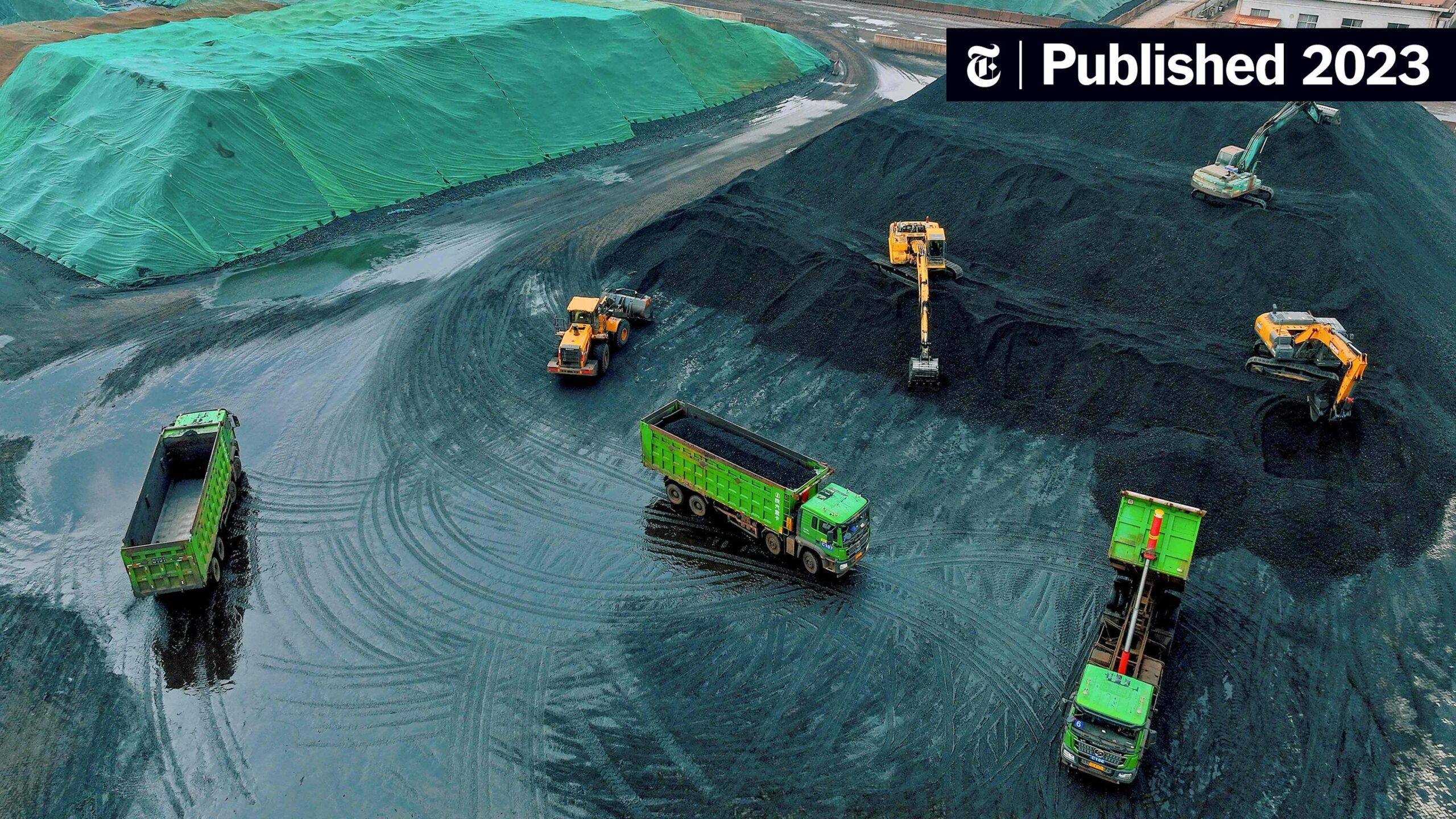
A 2022 analysis found that just 36 fossil‑fuel corporations—spanning oil, gas and coal—are responsible for roughly half of all carbon dioxide emissions linked to energy production since 1988, highlighting the outsized role of a small corporate elite in driving climate change.
\n
Quick Answer
The Climate Accountability Institute’s 2022 “Carbon Majors” report identified 36 fossil‑fuel companies that together emitted about 50 % of the total CO₂ released from the extraction and combustion of fossil fuels between 1988 and 2019. These emissions arise from the physical processes of extracting, refining, and burning hydrocarbons, which add greenhouse gases to the atmosphere and accelerate global warming. The concentration of emissions in a few firms means that corporate policies and investment decisions have a disproportionate influence on the trajectory of climate change, although uncertainties remain around future emission pathways and the exact share of emissions attributable to each company.
\n
Key Takeaways
- Thirty‑six fossil‑fuel corporations accounted for roughly 50 % of cumulative CO₂ emissions from 1988‑2019.
- The emissions stem from oil, natural‑gas and coal extraction, processing, and end‑use combustion.
- High‑confidence scientific assessments link these emissions to observed warming, sea‑level rise, and increased extreme weather.
- Vulnerable communities near extraction sites face disproportionate health and livelihood impacts.
- Transitioning to renewable energy, tightening emissions regulations, and divesting from fossil‑fuel assets are among the most effective mitigation pathways.
\n
What Is 36 Fossil Fuel Giants Responsible for Half of Global CO₂ Emissions Report Finds?
\n
The phrase refers to a quantitative analysis published by the Climate Accountability Institute in 2022 that ranked fossil‑fuel producers by the amount of carbon dioxide emitted as a result of their extracted hydrocarbons. The study examined 165 major oil, gas and coal companies, calculated the carbon content of the fuels each extracted, and attributed the resulting CO₂ to the producer. The “36‑company” subset represents the top emitters whose combined share reaches about one‑half of the total emissions from the sector over the 31‑year period. This metric differs from annual emission reports that focus on current output; it captures historical cumulative impact.
\n
How Does It Work?
\n
Step‑by‑step carbon accounting
\n
- \n
- Data collection – Production volumes for oil, gas and coal are gathered from company reports, industry databases and national statistics.
- Carbon content conversion – Each barrel of oil, cubic metre of natural gas or tonne of coal is multiplied by an emission factor (e.g., 3.15 t CO₂ per barrel of oil) to estimate the CO₂ that will be released when the fuel is burned.
- Attribution – The resulting CO₂ quantity is assigned to the extracting company, irrespective of where the fuel is later sold or used.
- Aggregation – Emissions from all assets of a company are summed, and the totals are ranked to identify the largest contributors.
\n
\n
\n
\n
\n
The physical basis of the calculation relies on well‑established combustion chemistry: hydrocarbon molecules combine with oxygen, producing CO₂ and water while releasing heat. The more carbon atoms in the fuel, the larger the CO₂ emissions per unit of energy.
\n
What Does the Evidence Show?
\n
Multiple lines of evidence converge on the conclusion that a small group of producers dominates global emissions. Long‑term monitoring by the Global Carbon Project shows that fossil‑fuel combustion contributed about 35 % of total anthropogenic CO₂ increase from 1950 to 2020. Independent peer‑reviewed studies, such as a 2020 systematic review in *Nature Climate Change*, confirm that the carbon intensity of extracted fuels varies little across companies, meaning that cumulative production is the primary driver of differences in emissions. The Climate Accountability Institute’s methodology is transparent and has been reproduced in academic analyses, reinforcing the robustness of the 36‑company finding.
\n
Main Causes or Drivers
\n
Direct causes
\n
- \n
- Extraction of large hydrocarbon reserves – expanding oil fields, deep‑water drilling, and coal mining increase the total carbon pool available for combustion.
- Refining and processing – energy‑intensive steps add additional CO₂ before the fuel reaches the market.
\n
\n
\n
Underlying drivers
\n
- \n
- Global demand for inexpensive energy – economic growth in emerging markets fuels higher consumption of oil, gas and coal.
- Policy environments that subsidize fossil‑fuel development – tax breaks, royalty structures, and lack of carbon pricing keep extraction profitable.
- Corporate investment strategies that prioritize short‑term returns over climate risk mitigation.
\n
\n
\n
\n
Environmental and Human Impacts
\n
Environmental Impacts
\n
When burned, the extracted hydrocarbons release CO₂, a long‑lived greenhouse gas that traps infrared radiation. The Intergovernmental Panel on Climate Change (IPCC) attributes the majority of observed global‑average temperature rise since the mid‑20th century to anthropogenic CO₂, which in turn drives sea‑level rise, ocean acidification, and shifts in precipitation patterns. High‑confidence assessments also link fossil‑fuel emissions to increased frequency of heatwaves, intense storms, and wildfires.
\n
Human Health and Social Impacts
\n
Communities located near extraction sites experience higher rates of respiratory illness, cardiovascular disease, and cancer due to particulate matter, volatile organic compounds and hazardous waste. A 2021 WHO review found that air pollution from fossil‑fuel activities contributes to an estimated 4.2 million premature deaths globally each year. Moreover, climate‑related impacts such as flooding and drought disproportionately affect low‑income and Indigenous populations, amplifying existing social inequities.
\n
Economic and Infrastructure Impacts
\n
Infrastructure built for fossil‑fuel transport—pipelines, ports, and power plants—creates stranded‑asset risk as societies shift toward low‑carbon energy. The International Energy Agency (IEA) estimates that without policy change, up to $7 trillion of fossil‑fuel‑related capital could become stranded by 2050, threatening financial stability.
\n
Regional Differences
\n
Emission shares differ by region because of the geographic distribution of reserves and market demand. The United States and Saudi Arabia host several of the top‑emitting firms (e.g., ExxonMobil, Chevron, Saudi Aramco), accounting for a large portion of North American and Middle‑Eastern emissions. In contrast, coal‑focused companies such as China Coal and Coal India dominate emissions in Asia, where coal still supplies about 57 % of electricity. Low‑income coastal nations experience heightened climate risks (sea‑level rise, storm surges) despite contributing minimally to the 36‑company emissions tally.
\n
What Scientists Know With High Confidence
- Burning fossil fuels releases CO₂, the primary driver of recent global warming (IPCC, 2021).
- The 36‑company group contributed roughly 50 % of cumulative CO₂ emissions from 1988‑2019 (Climate Accountability Institute, 2022).
- Higher atmospheric CO₂ concentrations correlate with rising global average temperatures, sea‑level rise, and increased extreme weather events (multiple IPCC assessment reports).
- Air pollutants from extraction and combustion cause measurable adverse health outcomes (WHO, 2021).
\n
What Remains Uncertain
Key uncertainties include the exact future emission trajectories of the 36 companies under varying policy scenarios, the carbon accounting for unconventional resources such as oil sands, and the magnitude of indirect emissions from supply‑chain activities. Additionally, the effectiveness of corporate net‑zero pledges remains unclear because many plans rely on unproven carbon‑removal technologies. Improved transparency in corporate reporting and expanded satellite‑based monitoring could reduce these uncertainties.
\n
Common Misconceptions
\n
Misconception: Only new fossil‑fuel projects add to climate change.
\n
Reality: Existing reserves that have already been extracted continue to emit CO₂ when burned; the cumulative impact of past extraction is a major part of the 36‑company share.
\n
Misconception: Renewable energy can replace fossil fuels without any trade‑offs.
\n
Reality: While renewables reduce CO₂ emissions, large‑scale deployment requires materials (e.g., lithium, rare earths) that have their own environmental footprints and supply‑chain challenges.
\n
Misconception: Individual lifestyle changes alone can offset the emissions of these corporations.
\n
Reality: Personal actions (energy efficiency, low‑carbon travel) are important but cannot counterbalance the gigatonne‑scale emissions generated by the 36 firms without systemic policy and market reforms.
\n
\n
Solutions and Limitations
\n
Effective mitigation combines several strategies:
\n
- \n
- Policy regulation: Carbon pricing, phase‑out schedules for coal, and stricter emission standards directly limit the amount of CO₂ that can be released. However, political resistance and enforcement challenges can slow implementation.
- Corporate accountability: Mandatory disclosure of Scope 1‑3 emissions and independent verification increase transparency. Yet, voluntary net‑zero targets often lack clear timelines or credible offset strategies.
- Energy system transition: Scaling solar, wind, and storage technologies can replace fossil‑fuel generation. Intermittency, grid integration costs, and the need for supportive infrastructure are notable constraints.
- Financial realignment: Divestment campaigns and climate‑risk‑adjusted lending pressure companies to shift investments. Financial markets may react slowly, and some investors argue that engagement rather than divestment yields better outcomes.
- Nature‑based solutions: Restoring forests and wetlands sequesters CO₂, but the amount that can be stored is limited relative to the emissions from the 36 firms and may be vulnerable to future climate impacts.
\n
\n
\n
\n
\n
\n
What Individuals, Communities, and Governments Can Do
\n
What Individuals Can Do
\n
- \n
- Choose electricity plans that source power from renewable utilities where available.
- Reduce personal travel emissions by using public transit, car‑pooling, or low‑carbon vehicles.
- Support organizations that advocate for strong climate policies and corporate transparency.
\n
\n
\n
\n
What Communities and Organizations Can Do
\n
- \n
- Develop local renewable‑energy projects (community solar, wind co‑ops) to lower reliance on grid‑supplied fossil fuel electricity.
- Implement community monitoring of air quality near extraction sites and share data with regulators.
- Adopt climate‑resilient land‑use planning that protects vulnerable neighborhoods from flood and heat risks.
\n
\n
\n
\n
What Governments Can Do
\n
- \n
- Enact and enforce carbon pricing mechanisms that reflect the social cost of carbon.
- Phase out subsidies for coal and reduce tax incentives for new oil and gas drilling.
- Set legally binding emissions reduction targets aligned with the Paris Agreement’s 1.5 °C pathway and hold the identified 36 companies accountable through reporting requirements.
- Invest in just‑transition programs that retrain workers from fossil‑fuel sectors into renewable‑energy jobs.
\n
\n
\n
\n
\n
Closing Synthesis
\n
The 2022 Carbon Majors analysis makes clear that a handful of fossil‑fuel corporations are responsible for a disproportionate share of historic CO₂ emissions, amplifying their influence over the climate trajectory. High‑confidence science links these emissions to warming, sea‑level rise and health impacts, while uncertainties persist around future corporate behavior and the effectiveness of mitigation pledges. Evidence‑based solutions—strong policy, transparent corporate accounting, rapid renewable‑energy deployment, and equitable transition measures—offer the most credible path to limiting further climate harm. Addressing the emissions of the 36 giants therefore remains a central priority for achieving global climate goals.
Frequently Asked Questions
What defines the “36 fossil fuel giants” mentioned in the report?
The term refers to the 36 oil, gas and coal companies identified by the Climate Accountability Institute’s 2022 “Carbon Majors” report as responsible for roughly half of cumulative CO₂ emissions from fossil‑fuel extraction and use between 1988 and 2019.
How does the report calculate each company’s emissions?
The report multiplies the volume of oil, natural gas or coal each company extracted with standard emission factors that represent the amount of CO₂ released when the fuel is burned, then attributes the total to the producer, regardless of where the fuel is later sold.
Why are the emissions of these 36 companies considered a major climate risk?
Because they represent about 50 % of the sector’s historic CO₂ output, their production decisions have a disproportionate impact on atmospheric greenhouse‑gas concentrations, which the IPCC links to rising temperatures, sea‑level rise and more extreme weather.
What are the most effective ways to reduce emissions from these corporations?
The most effective approaches combine strong carbon pricing, mandatory emissions disclosure, phasing out coal subsidies, rapid scaling of renewable energy, and financial strategies that shift investment away from fossil‑fuel projects toward low‑carbon alternatives.
Can individual actions offset the emissions of the 36 companies?
Individual actions such as energy‑saving habits and choosing renewable electricity can lower personal footprints, but they cannot offset the gigatonne‑scale emissions generated by the 36 firms without broader systemic policy and market changes.








Leave a Comment