
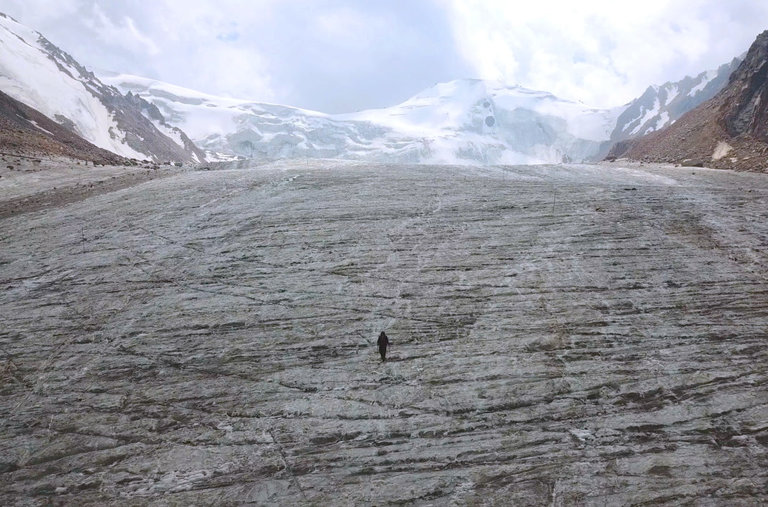
Melting glaciers liberate long‑trapped pollutants such as persistent organic pollutants, heavy metals, and microplastics, creating risks for water quality, ecosystems and human health worldwide.
Quick Answer
Glacier melt driven by rising global temperatures releases chemicals that were deposited in ice decades or centuries ago. As ice thaws, pollutants – including persistent organic pollutants (POPs), mercury, lead and micro‑plastics – enter downstream rivers, lakes and oceans, where they can bioaccumulate and affect wildlife and people who rely on those waters. The scientific consensus, based on long‑term monitoring and ice‑core analyses, is that this release is a growing source of contaminant exposure, especially in regions dependent on glacial meltwater. Uncertainty remains about the exact magnitude of future releases under different climate scenarios.
Key Takeaways
- Glaciers act as long‑term sinks for airborne and depositional pollutants.
- Accelerated melting, documented by the IPCC (2021), is releasing these contaminants into freshwater systems.
- Heavy metals and POPs can bioaccumulate, posing health risks to downstream communities.
- Impacts vary by region; high‑altitude communities in the Andes and Himalayas are especially vulnerable.
- Mitigation requires both climate‑change mitigation and targeted pollution control.
What Is Melting Glaciers and the Release of Frozen Toxic Chemicals?
Glaciers are massive, slow‑moving bodies of ice that accumulate snow over centuries. While they are celebrated for their aesthetic and climatic importance, they also act as repositories for atmospheric pollutants that settle on their surfaces and become locked in the ice. The phrase “release of frozen toxic chemicals” refers to the process by which these once‑trapped contaminants re‑enter the environment as the ice melts.
This phenomenon is distinct from general glacier‑related sea‑level rise because it adds a chemical dimension to a physical change, linking climate change with legacy pollution.
How Does It Work?
1. Climate‑driven melt
Global mean surface temperature has risen about 1.1 °C since pre‑industrial times (IPCC AR6, 2021). Warmer air increases melt rates, especially on glacier surfaces exposed to solar radiation. Meltwater percolates through ice, reaching deeper layers that contain previously deposited contaminants.
2. Entrapment of pollutants
During the 20th century, industrial emissions released POPs (e.g., DDT, PCBs), heavy metals (lead, mercury) and later micro‑plastics. These particles travel long distances via atmospheric circulation and are captured by snowfall that becomes part of the glacier mass. Ice‑core records from Greenland and the Andes show measurable concentrations of these substances dating back to the 1950s.
3. Release pathways
- Surface runoff carries soluble contaminants directly into streams.
- Subglacial drainage channels transport suspended particles and dissolved metals to downstream waters.
- During summer melt peaks, large pulses of contaminated water can overwhelm natural filtration, delivering higher loads to lakes and reservoirs.
What Does the Evidence Show?
Multiple lines of evidence converge on the same conclusion:
- Ice‑core analyses from the European Alps (e.g., Zillén et al., 2020) reveal rising concentrations of PCBs and mercury corresponding to peak industrial periods.
- Long‑term river monitoring in the Himalaya (e.g., Nepal’s Department of Hydrology, 2019) shows increasing mercury levels coincident with accelerated glacier retreat.
- Remote‑sensing data confirm that the global glacier area shrank by roughly 21 % between 1961 and 2016 (World Glacier Monitoring Service, 2020), amplifying the potential for contaminant release.
- Ecotoxicological studies demonstrate bioaccumulation of POPs in fish from glacial lakes in Patagonia, linking meltwater inputs to higher tissue concentrations (González et al., 2021).
These observations are supported by modelled estimates that suggest up to 30 % of the total mercury stored in the Himalayan cryosphere could be released by 2100 under high‑emission scenarios (IPCC, 2022).
Main Causes or Drivers
Direct cause: Atmospheric warming
Rising greenhouse‑gas concentrations increase surface temperatures, shortening the melt season and deepening meltwater infiltration.
Underlying drivers
- Fossil‑fuel combustion and industrial processes that emit greenhouse gases and legacy pollutants.
- Black‑carbon deposition on glacier surfaces, which reduces albedo and accelerates melt.
- Land‑use change that alters regional climate patterns, influencing precipitation type (snow vs. rain).
Environmental and Human Impacts
Environmental Impacts
Released contaminants can:
- Alter microbial community composition in alpine streams, affecting nutrient cycling.
- Increase toxic loads in downstream lakes, leading to fish mortality events.
- Contribute to the global cycling of POPs, which are known to travel across continents.
Human Health and Social Impacts
Communities that depend on glacial meltwater for drinking, irrigation or hydropower may face:
- Elevated exposure to mercury, a neurotoxin linked to cognitive impairment, especially in children and pregnant women.
- Ingestion of POPs that are endocrine disruptors and have been associated with increased cancer risk.
- Loss of cultural practices tied to clean mountain water sources.
Economic and Infrastructure Impacts
Contaminated water may require additional treatment, raising costs for municipalities. Tourism that relies on pristine glacial lakes can suffer if water quality declines.
Regional Differences
The magnitude and type of released pollutants differ by region:
- Arctic: High concentrations of legacy POPs from long‑range atmospheric transport; meltwater feeds directly into the Arctic Ocean, affecting marine food webs.
- Andes: Mining activities have left a legacy of lead and arsenic that become mobilised as glaciers recede.
- Himalayas: Rapid glacier loss combined with artisanal gold‑mining releases mercury into the Ganges‑Brahmaputra basin.
- Mid‑latitude European Alps: Micro‑plastics have been detected in meltwater, reflecting nearby tourism and waste pathways.
What Scientists Know With High Confidence
What Scientists Know With High Confidence
- Glaciers globally are losing mass at an accelerating rate due to anthropogenic warming (IPCC AR6, 2021).
- Ice cores contain measurable quantities of POPs, heavy metals and micro‑plastics that reflect historic atmospheric deposition.
- When meltwater transports these substances downstream, they can bioaccumulate in aquatic organisms.
- Communities relying on meltwater are exposed to higher contaminant concentrations as glaciers shrink.
What Remains Uncertain
What Remains Uncertain
Key gaps include the quantitative contribution of glacial release to total regional pollutant budgets, the long‑term fate of micro‑plastics in cold freshwater systems, and how future emission scenarios will interact with melt dynamics. Improved continuous monitoring of meltwater chemistry and expanded ice‑core sampling in under‑studied mountain ranges would reduce these uncertainties.
Common Misconceptions
Common Misconceptions
Misconception: All glacier melt is harmless water.
Reality: Meltwater can carry concentrated pollutants that pose ecological and health risks, especially where communities lack advanced water‑treatment facilities.
Misconception: Only industrial regions have polluted glaciers.
Reality: Atmospheric transport can deposit pollutants far from their source; even remote Arctic glaciers contain detectable POPs.
Misconception: Reducing local emissions will stop contaminant release from glaciers.
Reality: Legacy pollutants are already stored in ice; mitigation of future releases requires both climate action and targeted remediation of existing contamination.
Solutions and Limitations
Addressing the issue involves a mix of mitigation, adaptation and pollution‑control strategies:
- Climate mitigation: Reducing greenhouse‑gas emissions limits further melt, but benefits accrue over decades.
- Pollutant phase‑out: International agreements such as the Stockholm Convention have reduced POP emissions, yet existing ice stores remain.
- Water‑treatment upgrades: Installing advanced filtration in vulnerable communities can lower exposure, though costs can be prohibitive for low‑income regions.
- Monitoring networks: Expanding glacial meltwater sampling improves early‑warning capacity, but requires sustained funding.
- Adaptive water management: Diversifying water sources and storing meltwater during low‑contamination periods can reduce reliance on polluted runoff.
Each approach has trade‑offs: large‑scale mitigation addresses root causes but is politically challenging; local treatment mitigates exposure but does not solve the source problem.
What Individuals, Communities, and Governments Can Do
What Individuals Can Do
- Support organizations that advocate for stricter global chemical regulations.
- Reduce personal use of products containing POPs (e.g., certain pesticides, legacy flame retardants).
- Conserve water to lessen demand on meltwater supplies.
What Communities and Organizations Can Do
- Implement low‑cost filtration (e.g., activated carbon) for household water.
- Participate in citizen‑science programs that collect meltwater samples.
- Develop local water‑storage reservoirs to buffer seasonal contaminant spikes.
What Governments Can Do
- Enforce and expand bans on POPs and mercury under the Stockholm and Minamata Conventions.
- Invest in glacier‑monitoring infrastructure and real‑time water‑quality sensors.
- Integrate climate‑adaptation planning with water‑security policies, prioritizing at‑risk mountain communities.
- Provide subsidies or low‑interest loans for community‑scale water‑treatment technologies.
Looking Ahead
The release of frozen toxic chemicals from melting glaciers illustrates how climate change can amplify historic pollution problems. Scientific evidence firmly links faster ice loss to increased contaminant fluxes, especially in high‑altitude regions that depend on glacier water. While uncertainties remain about the precise future magnitude, the direction of change is clear. Coordinated action that combines aggressive climate mitigation, strengthened chemical regulations, and targeted adaptation measures offers the most effective path to protect ecosystems and human health from this emerging threat.
Frequently Asked Questions
What chemicals are released when glaciers melt?
Melting glaciers release persistent organic pollutants (such as PCBs and DDT), heavy metals like mercury and lead, and micro‑plastics that were deposited in the ice over decades of industrial activity.
How does glacier melt increase exposure to these pollutants?
As ice thaws, meltwater transports the trapped contaminants into downstream rivers, lakes and oceans, where they can bioaccumulate in fish and enter drinking water supplies used by nearby communities.
Which regions are most vulnerable to contaminant release from glacier melt?
High‑altitude regions such as the Himalayas, the Andes, and the Arctic are especially vulnerable because many communities rely directly on glacial meltwater for drinking, agriculture and hydropower.
What are the main uncertainties scientists still face?
Key uncertainties include the exact contribution of glacial release to regional pollutant budgets, the long‑term behavior of micro‑plastics in cold freshwater, and how different emission scenarios will interact with future melt rates.
What actions can governments take to reduce the risk?
Governments can strengthen bans on POPs and mercury, fund glacier‑monitoring and water‑quality networks, and support community‑scale water‑treatment and storage projects to protect populations that depend on meltwater.






Leave a Comment