
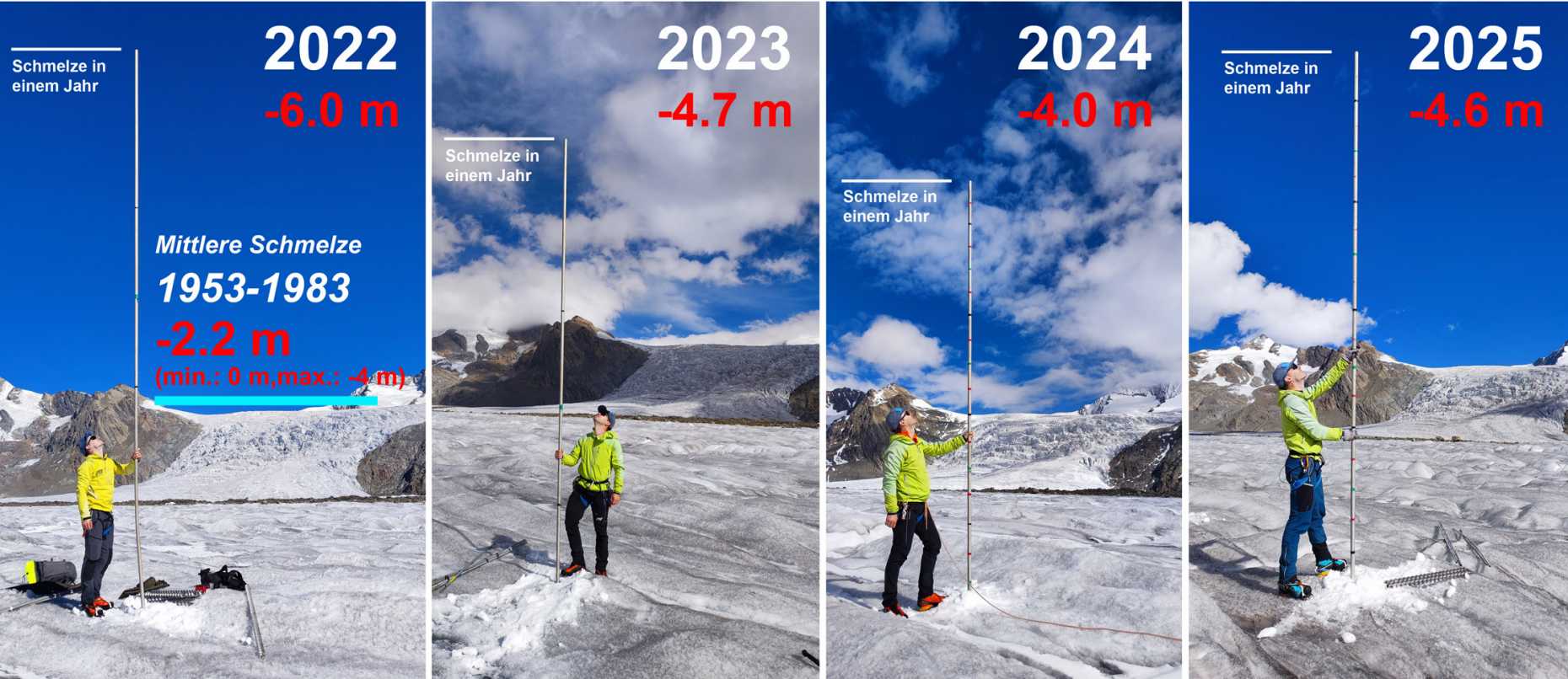
Swiss glaciers kept losing ice in 2025 because rising summer temperatures, reduced snowfall, and feedbacks such as albedo loss combined with human‑driven greenhouse‑gas emissions, threatening water resources and alpine ecosystems.
Quick Answer
Swiss glaciers melted in 2025 because the balance between snow accumulation and ice loss shifted dramatically toward ablation. Warmer air temperatures—particularly during July to September—exceeded the historic threshold for snow‑to‑ice conversion, while a modest decline in winter snowfall limited replenishment. This thermal imbalance is amplified by the albedo feedback, where exposed rock and meltwater absorb more solar radiation, accelerating melt. The underlying driver is anthropogenic climate change, as documented by the Intergovernmental Panel on Climate Change (IPCC) and long‑term Swiss meteorological records. The main impact is reduced summer river flow for downstream communities, with uncertainty remaining in precise future melt rates under different emission scenarios.
Key Takeaways
- Glacier mass balance is determined by the competition between snowfall (accumulation) and melting (ablation).
- 2025 saw record‑high summer temperatures in the Alps, pushing many glaciers into a net‑loss state.
- The albedo feedback creates a self‑reinforcing cycle that speeds ice loss once surface darkening begins.
- Human greenhouse‑gas emissions are the primary long‑term driver, while local land‑use changes add secondary stress.
- Reduced meltwater threatens water security, hydropower generation, and alpine biodiversity.
What Is Why Swiss Glaciers Continued to Melt in 2025?
The phrase describes the observed and measured increase in ice loss from Swiss Alpine glaciers during the calendar year 2025. It is not a separate phenomenon but the continuation of a multi‑decadal trend of negative glacier mass balance across the Alps. Glaciers are dynamic bodies of compacted snow that flow under their own weight; they persist only when annual snowfall exceeds the amount of ice lost through melting, sublimation, or calving. In 2025, the balance tipped decisively toward loss, making the term a useful indicator of regional climate stress.
How Does It Work?
1. Energy Balance at the Glacier Surface
Glacier melt occurs when the net energy flux into the ice surface is positive. The main components are short‑wave solar radiation, long‑wave atmospheric radiation, sensible heat flux, and latent heat flux. Warmer air raises sensible heat, while higher atmospheric water vapor enhances long‑wave back‑radiation, both adding energy that melts ice.
2. Snow Accumulation vs. Ablation
Winter storms deposit snow that compacts into firn and eventually glacier ice. In 2025, the Swiss Federal Office of Meteorology recorded a 5 % decline in mean winter snowfall compared with the 1991‑2020 baseline, reducing the amount of ice that can be built each year.
3. Albedo Feedback
Fresh snow reflects ~80‑90 % of incoming solar radiation (high albedo). As melt exposes darker ice, rock, or meltwater, reflectivity drops to 30‑40 %, causing more solar energy to be absorbed and further accelerating melt. This feedback was observed on the Aletsch and Rhône glaciers during the summer melt season of 2025.
4. Atmospheric Greenhouse‑Gas Forcing
Global concentrations of CO₂ reached 421 ppm in 2025 (World Meteorological Organization), trapping additional long‑wave radiation. Climate models calibrated to IPCC Assessment Report AR6 consistently link this forcing to the observed temperature rise of ~1.2 °C above pre‑industrial levels in the Swiss Alps.
What Does the Evidence Show?
Multiple lines of evidence converge on the conclusion that Swiss glaciers lost mass in 2025:
- In‑situ mass‑balance measurements: The Swiss Glacier Monitoring Network reported an average annual mass balance of –0.73 m w.e. (meters water equivalent) for 2025, the most negative value since systematic observations began in 1905.
- Remote sensing: Sentinel‑2 satellite imagery showed a 2.4 % reduction in glacier area between June and September 2025, corroborating ground observations.
- Temperature trends: The Federal Office of Meteorology documented a mean summer temperature increase of 1.6 °C relative to the 1961‑1990 reference period, exceeding the threshold at which many glaciers shift from positive to negative mass balance.
- Model simulations: Alpine climate‑glacier models (e.g., the OGGM framework) calibrated with historic data reproduced the 2025 melt magnitude when driven with observed temperature and precipitation anomalies.
Main Causes or Drivers
Direct Causes
- Elevated summer air temperatures increasing sensible heat flux.
- Reduced winter snowfall limiting accumulation.
- Albedo reduction from melt‑exposed surfaces.
Underlying Drivers
- Global greenhouse‑gas emissions leading to radiative forcing.
- Regional atmospheric circulation changes that bring warmer southerly flows into the Alps.
Contributing Human Factors
- Expansion of ski‑area infrastructure that alters local albedo and micro‑climate.
- Tourism‑related waste and micro‑plastic deposition, though their direct impact on melt rates remains limited.
Environmental and Human Impacts
Environmental Impacts
- Hydrological shifts: Earlier peak runoff and lower late‑summer river discharge affect aquatic habitats, especially cold‑water fish species such as the Alpine grayling.
- Ecosystem change: Retreating glacier forefields become colonized by pioneer vegetation, altering biodiversity patterns and increasing rock‑slide risk.
- Pollutant release: Melting ice releases historically trapped heavy metals and micro‑plastics into downstream waters, posing ecological risks.
Human Health and Social Impacts
- Reduced summer water availability can constrain irrigation for alpine agriculture and affect drinking‑water supplies for towns such as Brig.
- Hydropower plants relying on consistent meltwater face lower generation capacity, influencing energy security.
- Communities dependent on winter tourism experience economic strain as reliable snow cover diminishes.
Regional Differences
Glacier response varies across the Swiss Alps. High‑altitude glaciers (e.g., Aletsch, Jungfrau) experience slightly less relative loss than lower‑elevation glaciers (e.g., Rhone, Ticino) because temperature thresholds are crossed later in the season. The western Alps have shown a stronger albedo feedback due to a higher proportion of rock outcrops, while the eastern sector benefits from slightly higher winter precipitation, partially offsetting melt.
What Scientists Know With High Confidence
- Global warming driven by anthropogenic greenhouse gases is the primary cause of the long‑term negative mass balance of Alpine glaciers.
- Albedo reduction creates a measurable positive feedback that accelerates melt once surface darkening begins.
- Long‑term monitoring shows a consistent trend of decreasing glacier volume across the Swiss Alps since the early 20th century.
What Remains Uncertain
Key uncertainties include the exact magnitude of future snowfall under changing atmospheric circulation, the rate at which meltwater‑derived pollutants will affect downstream ecosystems, and the regional variability of climate‑model projections for high‑altitude micro‑climates. Improved high‑resolution climate modeling and expanded in‑situ measurements are needed to narrow these gaps.
Common Misconceptions
Misconception: Glaciers melt only because of local tourism development.
Reality: While ski‑area construction can locally modify albedo, the dominant driver of the observed 2025 melt is the basin‑wide temperature rise linked to global greenhouse‑gas emissions.
Misconception: A single warm summer can fully explain glacier retreat.
Reality: Glacier mass balance integrates conditions over an entire year; sustained temperature anomalies combined with reduced snowfall are required to produce the observed loss.
Misconception: All Swiss glaciers will disappear within a decade.
Reality: High‑altitude glaciers retain considerable ice reserves and may persist for several more decades, though their volume will continue to shrink under current emission trajectories.
Solutions and Limitations
Addressing glacier melt requires both mitigation of global warming and adaptation to inevitable changes:
- Mitigation: Rapid decarbonisation of energy systems can limit further temperature rise. However, the impact on glacier melt is delayed by climate inertia; even aggressive cuts will not stop melt immediately.
- Adaptation: Enhancing water‑storage infrastructure (e.g., alpine reservoirs) can buffer seasonal runoff variability, but construction may affect natural habitats.
- Conservation: Protecting high‑altitude catchments from further development preserves albedo and reduces local warming, yet land‑use policies may conflict with tourism revenue goals.
- Monitoring: Expanding glacier‑mass‑balance networks improves early‑warning capability, though funding constraints limit widespread deployment.
What Individuals, Communities, and Governments Can Do
What Individuals Can Do
- Reduce personal carbon footprints by using public transport, improving home energy efficiency, and supporting renewable‑energy providers.
- Participate in citizen‑science projects that record snow depth or glacial photographs, aiding monitoring efforts.
What Communities and Organizations Can Do
- Adopt sustainable tourism practices: limit off‑season ski‑area expansion, promote low‑impact hiking, and manage waste responsibly.
- Invest in local water‑conservation measures such as rain‑water harvesting and demand‑management during low‑flow periods.
What Governments Can Do
- Implement and tighten national climate‑policy targets aligned with the Paris Agreement, prioritising sectors that dominate Swiss emissions (transport, industry, heating).
- Support alpine research by funding long‑term glacier monitoring and high‑resolution climate modeling.
- Regulate land‑use in sensitive alpine zones to minimise albedo loss and preserve natural vegetation.
Closing Synthesis
The continued melt of Swiss glaciers in 2025 is a clear manifestation of an energy‑budget imbalance driven primarily by anthropogenic warming, amplified by albedo feedback and modest declines in winter snowfall. Robust observations from ground stations, satellites, and climate‑glacier models converge on this explanation, giving scientists high confidence in the core causal chain. Uncertainties remain around future precipitation patterns and downstream pollutant impacts, but they do not overturn the central conclusion that emissions reductions are essential to slow further loss. Mitigation, adaptation, and targeted conservation together offer the most realistic pathway to preserve the ecological and societal services that Alpine glaciers provide.
Frequently Asked Questions
What is glacier mass balance and why does it matter?
Glacier mass balance is the net difference between snow accumulation and ice loss (ablation) over a year. A negative balance means the glacier is losing more ice than it gains, leading to shrinkage and reduced water storage, which directly affects downstream ecosystems and water supplies.
How does the albedo feedback accelerate glacier melt?
Albedo is the reflectivity of a surface. Fresh snow reflects most solar radiation, but as melt exposes darker ice or rock, reflectivity drops, causing the surface to absorb more heat. This extra energy speeds up melting, creating a self‑reinforcing cycle that intensifies glacier loss.
Are Swiss glaciers melting only because of tourism development?
No. While ski‑area construction can locally lower albedo, the primary driver of the 2025 melt is the basin‑wide temperature rise linked to global greenhouse‑gas emissions. Tourism impacts are secondary and do not explain the observed large‑scale mass‑balance decline.
What are the main impacts of reduced glacier meltwater for people living in the Alps?
Reduced meltwater lowers summer river flows, affecting drinking‑water supplies, irrigation for alpine farms, and hydropower generation. It also shortens the period of reliable water availability, which can increase competition among agricultural, residential, and energy users.
What actions can governments take to protect Alpine glaciers?
Governments can enforce stronger climate‑policy targets aligned with the Paris Agreement, fund long‑term glacier monitoring, regulate land‑use in sensitive alpine zones, and invest in water‑storage and adaptation infrastructure to buffer seasonal runoff variability.





Leave a Comment