
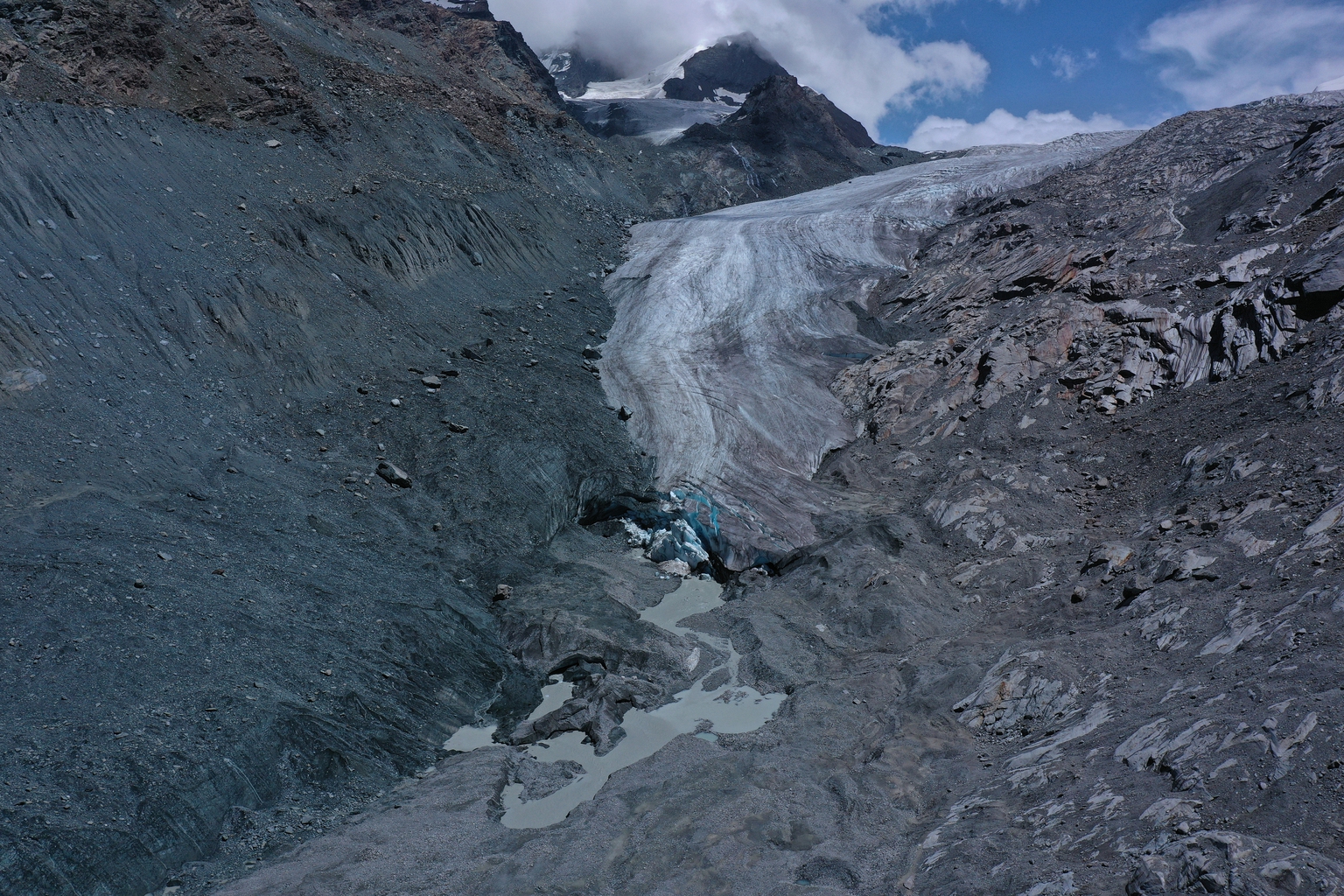
Swiss glaciers are rapidly losing ice because rising summer temperatures and reduced snowfall, driven by global greenhouse‑gas emissions, disrupt their natural mass‑balance, threatening water supplies, ecosystems, and tourism in the Alps.
Quick Answer
Swiss glaciers shrink when the amount of melt in the warm season exceeds the amount of snow that accumulates in winter. A warming climate—primarily caused by anthropogenic greenhouse‑gas emissions—raises summer temperatures, shortens the snow‑cover period, and lowers surface albedo, all of which accelerate melt. The loss reduces the alpine water tower that feeds rivers, hydroelectric plants, and ecosystems, creating seasonal water‑security challenges. While the overall trend is clear, precise future rates depend on how quickly global emissions are reduced.
Key Takeaways
- Glacier mass balance is negative when melt exceeds winter snowfall.
- Average summer temperatures in the Swiss Alps have risen about 1.5 °C since the mid‑20th century (IPCC, 2021).
- Between 2000 and 2020, the monitored Swiss glacier volume declined by roughly 30 % (World Glacier Monitoring Service, 2022).
- Reduced glacier meltwater threatens summer river flows, hydroelectric generation, and alpine biodiversity.
- Mitigation of CO₂ emissions and adaptive water‑management are the most effective long‑term strategies.
What Is Why Swiss Glaciers Keep Shrinking Year After Year?
The phrase describes the ongoing, measurable reduction in ice volume and area of Switzerland’s mountain glaciers. It encompasses all glaciers within the Alpine region of the country, from the Aletsch Glacier—the largest in the Alps—to smaller tributary ice bodies. Unlike static ice fields, glaciers are dynamic systems that gain mass from snowfall (accumulation) and lose mass through melt, sublimation, and iceberg calving (ablation). When ablation consistently outpaces accumulation, the glacier retreats. Understanding this process matters because Swiss glaciers act as natural reservoirs that regulate water availability, support tourism, and influence regional climate feedbacks.
How Does It Work?
1. Temperature‑Driven Melt
Warmer air temperatures increase surface melt rates during the melt season (June–September). The energy balance at the glacier surface is dominated by short‑wave solar radiation and long‑wave radiation from the atmosphere. As summer temperatures rise, the latent heat flux required to melt ice is supplied more readily, leading to faster ice loss.
2. Changes in Snowfall and Accumulation
Higher elevations are experiencing a shift from snowfall to rain because the freezing level is moving upward. This reduces the amount of fresh snow that can replenish the glacier’s mass balance. Long‑term records from the Swiss Federal Office of Meteorology (MeteoSwiss) show a decline in winter precipitation falling as snow by about 20 % over the past three decades.
3. Albedo Feedback
Fresh snow reflects up to 90 % of incoming solar radiation (high albedo). When snow cover diminishes, darker ice or exposed rock absorbs more energy, accelerating melt. Deposition of light‑absorbing impurities such as black carbon from combustion further lowers albedo.
4. Ice Dynamics and Flow
Glaciers transport ice from the accumulation zone to the terminus. Thinner ice reduces the driving stress, slowing flow, but also lowers the glacier’s ability to buffer meltwater, making the surface more responsive to temperature spikes.
5. Feedbacks with Regional Climate
Reduced glacier size modifies local atmospheric circulation by altering moisture fluxes, which can, in turn, affect precipitation patterns—a complex feedback still under active research.
What Does the Evidence Show?
Multiple independent lines of evidence confirm the retreat:
- In‑situ mass‑balance measurements from the Swiss Glacier Monitoring Network indicate a cumulative loss of about 0.6 m water‑equivalent per year on average since the 1970s.
- Satellite altimetry (e.g., CryoSat‑2) shows surface lowering across most Swiss glaciers, confirming thinning trends observed on the ground.
- Historical photographs and cartographic records reveal that the Aletsch Glacier has retreated more than 3 km since the Little Ice Age maximum around 1850.
- Climate‑glacier modelling (e.g., the Open Global Glacier Model) reproduces observed volume loss only when atmospheric temperature trends from the IPCC’s Representative Concentration Pathways are included.
These observations are consistent across decades and are corroborated by peer‑reviewed assessments such as the IPCC Sixth Assessment Report (2021) and the European Environment Agency’s Alpine report (2020).
Main Causes or Drivers
Direct Causes
- Rising summer air temperatures (+1.5 °C since 1950, IPCC 2021).
- Decrease in winter snowfall proportion (MeteoSwiss, 2020).
Underlying Drivers
- Global increase in atmospheric CO₂ and other greenhouse gases.
- Regional climate change amplified by the Alps’ elevation‑dependent warming.
Contributing Human Factors
- Tourism infrastructure that darkens ice surfaces (e.g., ski‑run grooming, artificial snowmaking).
- Air‑pollution transport of black carbon from Europe and Asia, which lowers surface albedo.
Environmental and Human Impacts
Environmental Impacts
- Hydrological changes: Glaciers act as a natural “water tower,” releasing meltwater during dry summer months. Their shrinkage reduces late‑summer streamflow, affecting aquatic habitats.
- Biodiversity loss: Cold‑adapted species such as the Alpine salamander rely on meltwater streams; reduced flow threatens their populations.
- Sediment transport: Faster melt can increase glacial outburst floods and downstream sediment load, reshaping river valleys.
Human Impacts
- Water security: Approximately 60 % of Switzerland’s drinking water originates from alpine catchments; reduced glacier contribution heightens reliance on reservoirs.
- Hydropower: The Swiss electricity mix depends on glacier‑fed rivers for peak generation; lower melt diminishes capacity during summer peaks.
- Tourism economy: Iconic glacier landscapes attract visitors; retreat reduces aesthetic value and may shorten ski‑season viability.
Regional Differences
Glacier response varies across the Alps:
- Western Alps (e.g., Mont Blanc massif) have experienced slightly slower retreat than the Eastern Alps, partly because of higher precipitation rates.
- High‑altitude, north‑facing glaciers retain more snow cover and show smaller mass‑balance deficits than lower‑altitude, south‑facing ice bodies.
- Local microclimates—such as wind‑driven snow redistribution—can create pockets of relative stability, but these are exceptions rather than the rule.
What Scientists Know With High Confidence
What Scientists Know With High Confidence
- Glacier mass balance in the Swiss Alps has been negative for more than five decades.
- Summer temperature rise is the dominant driver of accelerated melt.
- Reduced snowfall and albedo loss amplify the melt signal.
- Glacier loss directly reduces summer river discharge in downstream basins.
What Remains Uncertain
What Remains Uncertain
Key uncertainties include the magnitude of future black‑carbon deposition, the precise threshold at which some small glaciers may disappear entirely, and how extreme weather events (e.g., heatwaves) will interact with long‑term warming to affect melt rates. Improved high‑resolution monitoring and coupled climate‑glacier models are needed to narrow these gaps.
Common Misconceptions
Common Misconceptions
Misconception: Glaciers only melt because of natural climate cycles.
Reality: While natural variability plays a role, the persistent negative mass balance since the mid‑20th century aligns closely with the anthropogenic warming signal documented by the IPCC.
Misconception: One cold winter can “reset” glacier loss.
Reality: A single cold season can temporarily reduce melt but cannot compensate for decades of cumulative ice loss; the mass‑balance system integrates over many years.
Misconception: Artificial snowmaking stops glacier retreat.
Reality: Artificial snow can increase local albedo for a short period, yet the energy required to produce it often comes from fossil‑fuel power, offsetting any modest cooling benefit.
Solutions and Limitations
Effective responses fall into three categories:
- Mitigation: Global CO₂ emission reductions are essential. Even with aggressive pathways (e.g., SSP1‑1.9), some glacier loss is inevitable because of thermal inertia.
- Adaptation: Integrated water‑resource management—such as expanding reservoir capacity and improving demand‑side efficiency—can buffer reduced summer flows.
- Conservation: Protecting glacier catchments from development limits additional albedo‑reducing disturbances; however, conservation alone cannot halt climate‑driven melt.
Each strategy faces trade‑offs: mitigation requires coordinated international policy; adaptation may involve costly infrastructure; conservation can conflict with tourism revenue.
What Individuals, Communities, and Governments Can Do
What Individuals Can Do
- Reduce personal carbon footprints by opting for low‑carbon transport, energy‑efficient homes, and plant‑based diets.
- Support organizations that fund glacier monitoring and climate research.
- Choose tourism operators that practice low‑impact alpine activities.
What Communities and Organizations Can Do
- Implement local water‑conservation programs that account for seasonal glacier melt reductions.
- Develop early‑warning systems for glacial lake outburst floods.
- Promote eco‑tourism guidelines that limit footprint on glacier surfaces.
What Governments Can Do
- Adopt and enforce ambitious national climate‑neutral targets consistent with the Paris Agreement.
- Invest in high‑resolution climate‑glacier monitoring networks (e.g., expanding the Swiss Glacier Monitoring Network).
- Integrate glacier‑derived water forecasts into regional water‑management plans.
Synthesis
Swiss glaciers shrink because a warming climate drives higher summer melt and reduces winter snowfall, upsetting the delicate mass‑balance that sustains them. Robust observations—from ground stations, satellite altimetry, and long‑term photographs—confirm a clear, decades‑long negative trend. The consequences ripple through water resources, ecosystems, and the alpine economy, while regional variations highlight the importance of altitude and aspect. Scientists are confident about the primary role of temperature rise, yet uncertainties remain regarding impurity deposition and the fate of the smallest glaciers. Mitigation of greenhouse‑gas emissions, coupled with adaptive water management and protected catchments, offers the most viable path forward, though each approach carries economic and social trade‑offs. Collective action at individual, community, and policy levels is essential to preserve the Alpine water tower for future generations.
Frequently Asked Questions
What is glacier mass balance and why does it matter?
Glacier mass balance is the difference between ice gained through snowfall (accumulation) and ice lost through melt, sublimation, or calving (ablation) over a year. A negative balance means the glacier shrinks, affecting downstream water supply, ecosystems, and sea‑level contributions.
How fast are Swiss glaciers losing ice?
Monitoring by the Swiss Glacier Network shows that, on average, Swiss glaciers have lost about 0.6 meters water‑equivalent of ice per year since the 1970s, amounting to roughly a 30 % volume reduction between 2000 and 2020.
Why are summer temperatures more critical than winter snowfall for glacier loss?
Summer heat directly drives melt by providing the energy needed to convert ice to water, while winter snowfall only adds mass if it accumulates. Warmer summers increase melt duration and intensity, often outweighing the protective effect of additional snow.
How does glacier retreat affect Switzerland’s water supply?
Glaciers act as natural reservoirs that release meltwater in summer. Their retreat reduces late‑summer river flow, lowering water availability for drinking, agriculture, and hydroelectric power, especially during drought periods.
What actions can help slow the shrinkage of Swiss glaciers?
The most effective actions are reducing greenhouse‑gas emissions globally and improving alpine water management. Locally, protecting glacier catchments, limiting albedo‑reducing activities, and supporting high‑resolution monitoring can mitigate additional stress.





Leave a Comment