
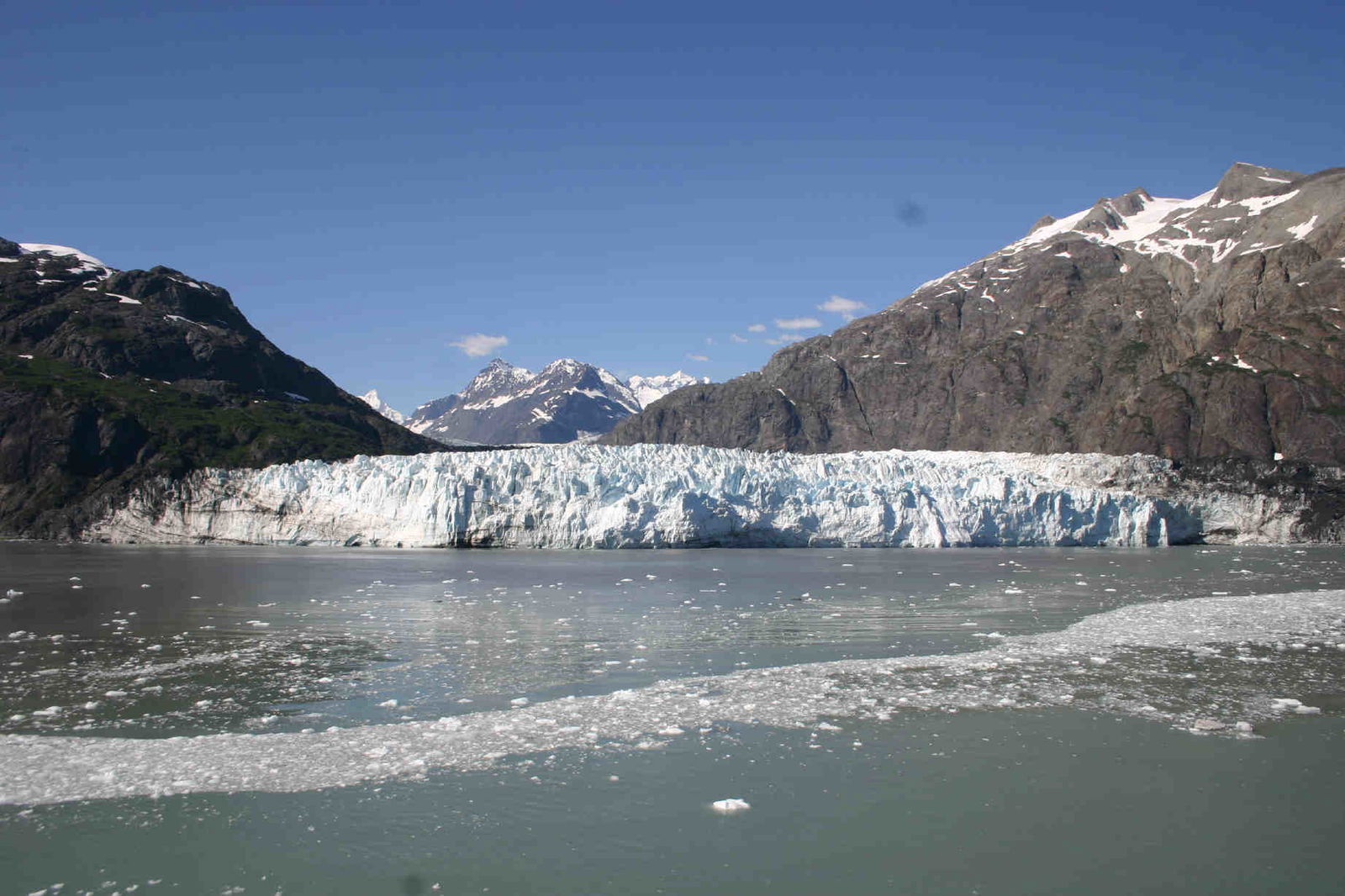
Global climate change drives the accelerated melting of glaciers, reshaping freshwater supplies, sea levels, and ecosystems worldwide.
Quick Answer
Global climate change, primarily caused by human emissions of greenhouse gases, raises atmospheric and surface temperatures, which increase the energy balance of glacier systems. As a result, ice mass is lost faster than it is replenished, leading to glacier retreat, reduced seasonal meltwater, and contributions to sea‑level rise. Scientists are highly confident that this trend will continue under current emission pathways, though the exact timing of regional impacts carries moderate uncertainty.
Key Takeaways
- Glaciers act as natural water reservoirs and reflectivity (albedo) regulators for the planet.
- Warming temperatures from anthropogenic greenhouse gases accelerate glacier melt worldwide.
- Melting glaciers contribute roughly 0.27 mm per year to global sea‑level rise and threaten water security for billions of people.
- High‑confidence findings include the link between global warming and glacier mass loss, while uncertainties remain around regional melt rates and future socioeconomic impacts.
- Effective responses combine mitigation of emissions with adaptation measures such as water‑resource management and ecosystem protection.
What Is Global Climate Change and Melting Glaciers Explained?
Global climate change refers to long‑term shifts in temperature, precipitation, and atmospheric composition driven largely by the accumulation of carbon dioxide, methane, and other greenhouse gases from fossil‑fuel use, deforestation, and industrial processes. Melting glaciers are one of the most visible indicators of this change: glaciers are large, persistent bodies of ice formed from compacted snow that flow slowly under their own weight. When average temperatures rise, the balance between snowfall (accumulation) and melt (ablation) shifts toward net loss, causing glaciers to retreat.
Glaciers differ from seasonal snowpack because they persist for decades to millennia, storing freshwater that would otherwise flow directly to the oceans. Their retreat not only records climatic history but also alters the hydrological cycle, sea level, and regional ecosystems.
How Does It Work?
Physical Process of Glacier Melt
- Increased atmospheric greenhouse gases trap more long‑wave radiation, raising surface temperatures.
- Higher temperatures raise the melt rate on glacier surfaces during the melt season.
- Warmer air also reduces snowfall in many high‑altitude regions, decreasing the accumulation that offsets melt.
- Reduced albedo: as ice melts, exposed darker ice or debris absorbs more solar energy, creating a positive feedback that accelerates further melt.
- Eventually, the glacier’s mass balance becomes negative, leading to retreat of the glacier terminus and thinning of the ice body.
Link to Sea‑Level Rise and Water Resources
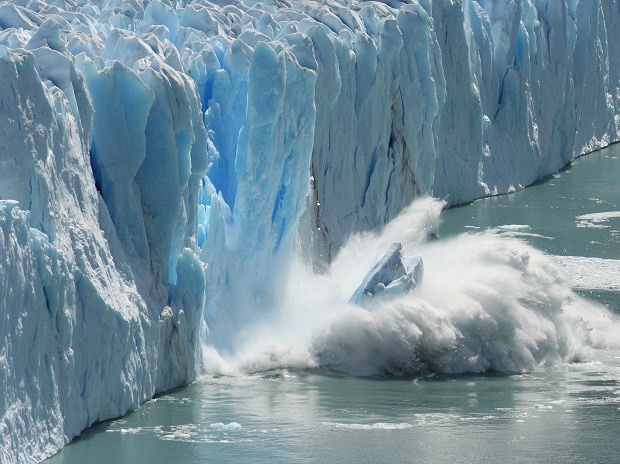
When glacier ice reaches the ocean, it adds freshwater directly to sea level. In addition, meltwater that feeds rivers can alter seasonal flow patterns, affecting agriculture, hydropower, and drinking water supplies.
What Does the Evidence Show?
Long‑term monitoring by the World Glacier Monitoring Service (WGMS) records that worldwide glacier mass has declined by about 21 % since the 1960s (WGMS, 2022). Satellite gravimetry from the Gravity Recovery and Climate Experiment (GRACE) indicates that glacier melt contributed an average of 0.27 mm per year to global sea‑level rise between 2003 and 2019 (NASA, 2020). The Intergovernmental Panel on Climate Change (IPCC) Sixth Assessment Report (2021) attributes >95 % of observed glacier retreat since the mid‑20th century to anthropogenic warming.
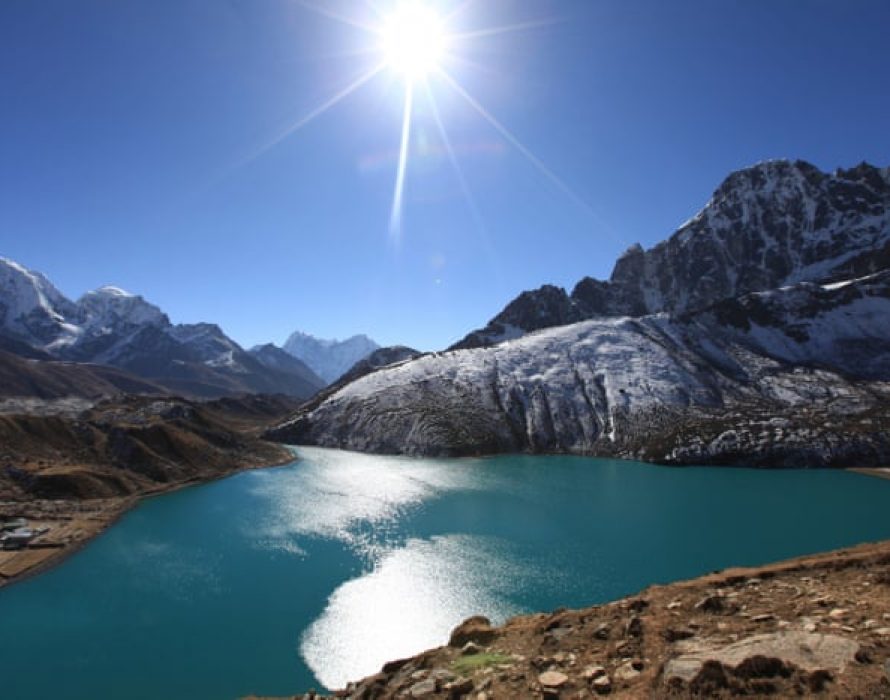
Field studies in the Himalayas, Andes, and Karakoram show heterogeneous responses: some glaciers are losing mass rapidly, while others (e.g., Karakoram “grey‑zone” glaciers) exhibit temporary stability due to localized precipitation increases. This regional variation underscores the moderate uncertainty in projecting future melt rates.
Main Causes or Drivers
Direct Causes
- Rising atmospheric concentrations of CO₂, CH₄, and N₂O.
- Increased surface air temperature and longer melt seasons.
Underlying Drivers
- Fossil‑fuel combustion and industrial processes.
- Land‑use change that reduces carbon sinks.
- Feedback mechanisms such as albedo loss and water‑vapor feedback.
Environmental and Human Impacts
Environmental Impacts
- Sea‑level rise threatens low‑lying coastal ecosystems and accelerates shoreline erosion.
- Loss of glacier‑fed cold‑water habitats endangers species such as the Alpine salamander and cold‑water fish.
- Reduced albedo contributes to regional warming, creating a feedback loop.
Human Health and Social Impacts
- Communities that depend on glacier melt for drinking water—estimated at 300 million people in the Andes, Himalayas, and Central Asia—face increasing water insecurity.
- Altered river flow can heighten flood risk during peak melt, endangering lives and infrastructure.
- Loss of iconic glacier landscapes can affect cultural identity and tourism revenue.
Economic and Infrastructure Impacts
- Reduced seasonal runoff undermines hydropower generation, affecting electricity supply in regions such as the European Alps.
- Sea‑level rise driven by glacier melt adds to coastal property loss, with global economic exposure estimated in the trillions of dollars (IPCC, 2021).
Regional Differences
Glacier response varies by latitude, altitude, and local climate. In the Arctic, Greenland’s ice sheet lost an average of 279 Gt per year between 2002 and 2020 (NASA, 2021), driving a measurable sea‑level contribution. In contrast, parts of the Karakoram range have shown modest mass gains, likely linked to increased winter precipitation (Kaser & Osmaston, 2020). The Andes have experienced a 30 % volume loss in many basins since the 1990s, directly impacting water supplies for cities such as La Paz, Bolivia.
What Scientists Know With High Confidence
What Scientists Know With High Confidence
- Human‑induced greenhouse‑gas emissions are the dominant driver of global warming since the mid‑20th century.
- Global average temperatures have risen by about 1.1 °C above pre‑industrial levels (IPCC, 2021).
- Glacier mass balance is strongly correlated with temperature rise; most glaciers worldwide are retreating.
- Glacier melt contributes measurably to sea‑level rise and to seasonal freshwater availability for downstream populations.
What Remains Uncertain
What Remains Uncertain
Key uncertainties include the precise timing and magnitude of melt in poorly monitored regions such as the high Himalayas, the potential for rapid dynamical ice‑sheet discharge events, and how socioeconomic adaptations will offset water‑security risks. Improved in‑situ measurements and higher‑resolution satellite observations are needed to narrow these gaps.
Common Misconceptions
Common Misconceptions
Misconception: Glaciers only melt during hot summers.
Reality: While summer melt is the most visible, rising winter temperatures reduce snowfall, limiting the replenishment that balances melt throughout the year.
Misconception: All glaciers are disappearing at the same rate.
Reality: Regional climate patterns, altitude, and local precipitation cause considerable variability; some glaciers are stable or even gaining mass temporarily.
Misconception: Glacier melt is a negligible part of sea‑level rise.
Reality: Glaciers and ice caps account for roughly one‑quarter of observed sea‑level rise since 1993, a contribution comparable to thermal expansion of seawater.
Misconception: Individual actions alone can stop glacier melt.
Reality: Personal carbon‑footprint reductions are valuable but must be coupled with systemic policy and energy‑system transformations to curb global warming.
Solutions and Limitations
Addressing glacier loss requires both mitigation—reducing greenhouse‑gas emissions—and adaptation—managing water resources and protecting vulnerable ecosystems. Mitigation strategies such as rapid decarbonisation of electricity and transport are technically feasible and have the greatest long‑term impact, yet they face political and economic barriers. Adaptation measures like glacier‑runoff forecasting, water‑storage infrastructure, and ecosystem‑based management can reduce exposure, but they cannot reverse the loss of ice mass and may entail high capital costs.
What Individuals, Communities, and Governments Can Do
What Individuals Can Do
- Reduce personal carbon emissions by using public transit, improving home energy efficiency, and supporting renewable‑energy providers.
- Advocate for strong climate policies through voting, community organizing, and public comment on environmental regulations.
- Support water‑conservation initiatives in regions dependent on glacier melt.
What Communities and Organizations Can Do
- Implement integrated watershed management plans that account for declining glacier contributions.
- Invest in early‑warning systems for glacial‑lake outburst floods (GLOFs) and seasonal flow forecasting.
- Promote ecotourism that funds glacier monitoring and conservation projects.
What Governments Can Do
- Set and enforce ambitious net‑zero emission targets aligned with the IPCC 1.5 °C pathway.
- Fund long‑term glacier monitoring networks and climate‑resilient infrastructure in affected basins.
- Develop transboundary water‑sharing agreements that anticipate reduced glacial runoff.
Synthesis
Melting glaciers are a clear, measurable signal of global climate change, driven primarily by human greenhouse‑gas emissions. Robust observations confirm rapid mass loss, sea‑level contributions, and threats to freshwater security. While scientists are highly confident about the link between warming and glacier retreat, uncertainties remain regarding regional melt dynamics and future socioeconomic impacts. Effective responses must combine deep emissions cuts with targeted adaptation strategies that protect water resources, ecosystems, and vulnerable communities.
Frequently Asked Questions
What causes glaciers to melt faster now than in the past?
Glaciers melt faster primarily because human emissions of carbon dioxide and other greenhouse gases have warmed the atmosphere, raising surface temperatures and extending melt seasons worldwide.
How much does glacier melt contribute to global sea‑level rise?
Glaciers and ice caps add about 0.27 mm per year to global sea‑level rise, accounting for roughly 25 % of the total observed increase since the early 1990s.
Which regions rely most on glacier melt for freshwater?
Around 300 million people in the Andes, Himalayas, and Central Asian mountain ranges depend on glacier runoff for drinking water, irrigation, and hydropower.
What are the main uncertainties about future glacier melt?
Key uncertainties involve the timing and magnitude of melt in poorly monitored high‑altitude areas, potential rapid ice‑sheet discharge events, and how societies will adapt to changing water availability.
Can individual actions help stop glacier retreat?
Individual actions like reducing carbon footprints are beneficial, but stopping glacier retreat requires large‑scale emission reductions and coordinated policy measures.




Leave a Comment