
Glacier melting, driven by rising global temperatures, directly illustrates how climate change reshapes water resources, sea levels, and ecosystems worldwide.
Quick Answer
Glacier melting is the net loss of ice mass when melt and iceberg calving exceed snowfall accumulation. Higher atmospheric and ocean temperatures—largely caused by anthropogenic greenhouse‑gas emissions—accelerate surface and basal melt, while exposing darker surfaces that further warm the region (albedo feedback). The process contributes roughly 20% of observed sea‑level rise and threatens freshwater supplies for millions of people, although the precise timing of regional impacts remains uncertain.
Key Takeaways
- Glaciers lose mass when melt outpaces snow accumulation, a balance tipped by rising temperatures.
- Global glacier volume has declined by about 30% since the 1960s (IPCC AR6, 2021).
- Glacier melt contributes roughly 0.5 mm yr⁻¹ to the 3.3 mm yr⁻¹ of sea‑level rise observed since 1993.
- Albedo feedback—darker rock or water absorbing more solar energy—amplifies regional warming.
- Both mitigation (emission cuts) and adaptation (water‑resource planning) are essential to manage impacts.
What Is Glacier Melting Explained: Its Direct Link to Climate Change?
Glacier melting refers to the net reduction in ice mass of mountain and polar glaciers. It encompasses three linked processes: surface melt driven by warm air, basal melt caused by warm ocean water or geothermal heat, and the calving of icebergs where glaciers terminate in the sea. Scientists express glacier change as a mass‑balance measurement—the difference between annual snow accumulation and ice loss—usually reported in gigatonnes per year (Gt yr⁻¹). Unlike seasonal snowpack, glaciers persist for centuries and flow under their own weight, making them key reservoirs of fresh water and contributors to global sea level.
How Does It Work?
Energy Balance Shift
Warmer air and ocean water increase the net energy reaching a glacier’s surface. When incoming solar radiation and long‑wave heat exceed the energy lost through radiation and sublimation, surface temperatures rise above 0 °C, initiating melt.
Surface Melt
Snow and ice absorb heat, melt into water, and often percolate downward, forming a lubricating layer that can speed glacier flow.
Basal Melt
In tide‑water glaciers, relatively warm ocean currents erode the ice base, thinning the glacier from below. Geothermal heat can also contribute, especially in volcanic regions.
Calving
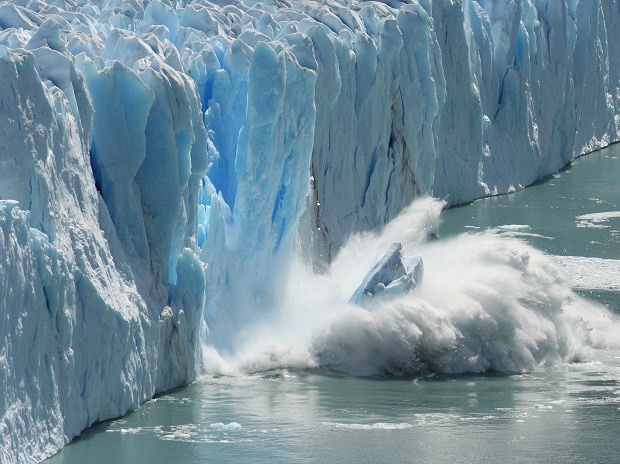
Where glaciers end in the ocean, meltwater weakens the ice front, causing large chunks to break off as icebergs. Calving removes mass directly and can destabilize the remaining ice.
Feedback Loops
Retreat exposes darker rock or open water, reducing surface albedo. The lower reflectivity absorbs more solar energy, accelerating further melt. Meltwater that reaches the glacier bed can act as a lubricant, increasing flow speed and enhancing mass loss.
What Does the Evidence Show?
Long‑term monitoring by the World Glacier Monitoring Service (WGMS) records an average mass loss of about 0.5 m water‑equivalent per year worldwide between 2000 and 2020. Satellite gravimetry from the GRACE mission (2002‑2016) confirms a net loss of roughly 267 Gt yr⁻¹, consistent with in‑situ observations. A 2020 meta‑analysis of Alpine glaciers found that a 1 °C rise in mean annual temperature raises melt rates by 10‑15%. The IPCC AR6 attribution analysis attributes more than 90% of observed glacier retreat to human‑induced warming, with natural variability playing a minor role.
Main Causes or Drivers
Direct Causes
- Higher atmospheric temperatures from increased concentrations of CO₂, CH₄, and N₂O.
- Warmer ocean waters that erode tide‑water glacier fronts.
Underlying Drivers
- Fossil‑fuel combustion and land‑use change that raise greenhouse‑gas levels.
- Feedback mechanisms such as reduced albedo and increased atmospheric water vapor.
Contributing Factors
- Black‑carbon deposition on snow, which darkens the surface and speeds melt.
- Glacier thinning that lowers elevation, exposing ice to warmer air.
Environmental and Human Impacts
Environmental Impacts
- Glacier melt adds about 0.5 mm yr⁻¹ to global sea‑level rise, amplifying coastal erosion and flood risk.
- Loss of cold, nutrient‑rich meltwater reduces habitat quality for cold‑water species such as salmon.
- Reduced seasonal “glacier buffer” alters river sediment loads, increasing landslide susceptibility in mountainous catchments.
Human Health and Social Impacts
- Communities that rely on glacier‑fed rivers for drinking water, irrigation, and hydropower—particularly in the Himalaya, Andes, and Central Asia—face growing water insecurity as melt peaks and then declines.
- Seasonal water shortages can intensify competition over allocation, potentially sparking conflict.
Economic and Infrastructure Impacts
- Reduced meltwater flow lowers hydroelectric generation capacity in countries such as Nepal and Bhutan.
- Sea‑level rise, even the modest contribution from glacier melt, adds to cumulative risk for coastal infrastructure worldwide.
Regional Differences
Glacier response varies with latitude, altitude, and local climate. In the Himalayas, glaciers supply up to 80% of dry‑season flow for major rivers like the Ganges and Indus, making the region highly sensitive to melt‑rate changes. The Antarctic Ice Sheet dominates global sea‑level contributions, yet its interior glaciers melt slowly, while West Antarctic glaciers in contact with warm circumpolar currents retreat rapidly. Tropical Andes glaciers have lost more than 40% of their area since the 1970s, whereas higher‑latitude Patagonian glaciers show a slower, more heterogeneous retreat. These patterns illustrate how local conditions modulate the global signal.
What Scientists Know With High Confidence
What Scientists Know With High Confidence
- Global mean surface temperature has risen about 1.1 °C above pre‑industrial levels (IPCC AR6, 2021).
- Glacier mass balance is negative worldwide; the majority of glaciers are retreating.
- Anthropogenic greenhouse‑gas emissions are the primary driver of observed warming.
- Albedo feedback from ice loss amplifies regional warming.
What Remains Uncertain
What Remains Uncertain
Key uncertainties include the timing of water‑resource decline for small, debris‑covered glaciers, and the sensitivity of Antarctic basal melt to future ocean‑temperature pathways. Models differ in representing sub‑glacial hydrology and ice‑sheet dynamics, leading to a range of sea‑level rise projections. Improved satellite gravimetry, expanded ground‑based monitoring, and high‑resolution modeling are needed to narrow these gaps.
Common Misconceptions
Common Misconceptions
Misconception: Glacier melt is caused only by natural climate cycles.
Reality: While natural variability influences short‑term fluctuations, the long‑term acceleration of melt aligns with rising anthropogenic greenhouse gases, as shown by IPCC attribution studies.
Misconception: All glaciers melt at the same rate.
Reality: Melt rates differ widely due to altitude, latitude, debris cover, and oceanic influences; tropical Himalaya glaciers are retreating faster than many polar glaciers.
Misconception: Glacial meltwater is an unlimited resource.
Reality: Glaciers act as a temporary buffer; once ice volume declines, meltwater contributions decrease, potentially leading to long‑term water scarcity.
Solutions and Limitations
Response strategies fall into mitigation and adaptation. Mitigation—rapid cuts in CO₂ emissions through renewable energy, energy efficiency, and carbon pricing—addresses the root cause but influences glacier melt only over decades. Adaptation includes diversifying water‑supply systems (e.g., reservoirs, rainwater harvesting), improving glacier‑monitoring networks, and revising flood‑risk maps for glacial‑lake outburst floods (GLOFs). Nature‑based approaches such as protecting upstream forest cover can moderate runoff but cannot stop ice loss. Each strategy carries trade‑offs: large‑scale renewable deployment requires substantial capital; water‑storage projects may affect downstream ecosystems; monitoring investments need sustained funding.
What Individuals, Communities, and Governments Can Do
What Individuals Can Do
- Support policies that accelerate decarbonisation by voting, advocacy, or contacting representatives.
- Reduce personal carbon footprints through energy‑efficient home upgrades and low‑carbon travel.
- Participate in citizen‑science glacier monitoring programs where available.
What Communities and Organizations Can Do
- Invest in diversified water‑supply infrastructure to lessen reliance on glacier melt.
- Implement early‑warning systems for GLOFs and update hazard maps regularly.
- Promote sustainable tourism that funds glacier research and conservation.
What Governments Can Do
- Set and enforce ambitious net‑zero emission targets aligned with the Paris Agreement.
- Fund long‑term glacier monitoring, including satellite missions and ground stations.
- Integrate glacier‑change scenarios into national water‑resource planning and disaster‑risk reduction strategies.
Closing Synthesis
Glacier melting provides a clear, measurable signal of a warming climate, linking greenhouse‑gas emissions to sea‑level rise, freshwater availability, and ecosystem health. Strong, converging evidence confirms that human‑driven warming is the dominant driver, while uncertainties remain about the timing of regional water‑resource impacts and complex ice‑sheet dynamics. Effective action requires rapid mitigation of emissions combined with targeted adaptation measures to protect water security and vulnerable communities. Continued scientific observation and coordinated policy action are essential to manage the evolving risks of a world with shrinking glaciers.
Frequently Asked Questions
What is glacier melting and how is it measured?
Glacier melting is the net loss of ice mass when melt and iceberg calving exceed snowfall accumulation. Scientists quantify it as a mass‑balance, expressed in gigatonnes per year (Gt yr⁻¹) or as water‑equivalent meters per year, using field observations and satellite gravimetry.
How does rising temperature cause glaciers to lose mass?
Higher air and ocean temperatures increase the energy reaching a glacier’s surface and base. This accelerates surface melt, basal melt, and calving. Warmer conditions also lower surface albedo, causing darker rock or water to absorb more sunlight, which further speeds melt.
What proportion of recent sea‑level rise comes from glacier melt?
According to the IPCC AR6 (2021), glacier melt contributes about 0.5 mm yr⁻¹, roughly 20% of the 3.3 mm yr⁻¹ of global sea‑level rise observed since the early 1990s.
Which regions are most vulnerable to reduced glacier runoff?
Mountainous regions that depend on glacier‑fed rivers—such as the Himalaya, the Andes, and parts of Central Asia—are most vulnerable. In the Himalaya, up to 80% of dry‑season flow for major rivers comes from glacier melt, making water security highly sensitive to glacier retreat.
What actions can individuals take to help reduce glacier melting?
Individuals can support strong climate policies, lower personal carbon footprints through energy‑efficient homes and low‑carbon travel, and join citizen‑science programs that monitor glacier change. While personal actions alone cannot stop melting, they contribute to the broader mitigation effort.








Leave a Comment