
National Power Consumption Day is an annual awareness event that encourages individuals, businesses, and governments to evaluate and reduce electricity use, highlighting the link between power demand, climate change, and resource sustainability.
Quick Answer
National Power Consumption Day is a designated day—often organized by environmental NGOs and utility partners—dedicated to measuring, publicizing, and lowering electricity consumption for a 24‑hour period. The event leverages data from smart meters, utility reports, and voluntary household audits to illustrate how collective demand drives greenhouse‑gas emissions from fossil‑fuel power plants. The primary implication is that even modest, coordinated reductions can lower national carbon footprints, though the exact magnitude depends on regional generation mixes and participation rates. Uncertainty remains around long‑term behavioral change after the day.
Key Takeaways
- National Power Consumption Day spotlights the scale of electricity use and its climate impact.
- Evidence shows that short‑term demand reductions translate into measurable emissions cuts when fossil fuels dominate the grid.
- Key drivers include population growth, electrification of transport, and reliance on coal‑heavy generation in many regions.
- Effective actions combine personal efficiency, community audits, and supportive policies such as time‑of‑use pricing.
- Uncertainties involve how lasting the day’s behavioral changes are and how quickly grids can replace fossil generation with renewables.
What Is National Power Consumption Day and Why It Exists?
National Power Consumption Day is an organized awareness‑raising event that occurs once each year in various countries. It is not a statutory holiday, but a coordinated effort by environmental groups, utilities, and sometimes government agencies to encourage a focused assessment of electricity use. The day typically features public dashboards that display real‑time consumption, educational webinars, and community challenges such as home energy audits. Its purpose is twofold: first, to make the abstract concept of national electricity demand tangible for citizens; second, to create a catalyst for longer‑term energy‑efficiency policies and consumer habits.
The observance differs from general “Energy Awareness Week” by concentrating on a single 24‑hour snapshot, which makes the data easier to compare across years and regions. By limiting the timeframe, organizers can highlight the immediate impact of collective action, such as turning off non‑essential lighting or postponing high‑energy activities like electric‑vehicle charging.
How Does It Work?
Data Collection and Public Reporting
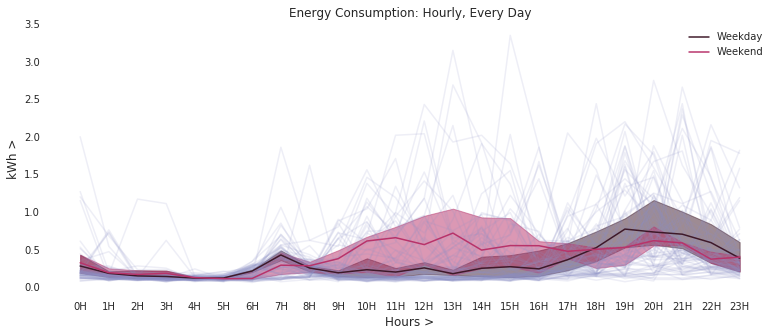
Participating utilities share anonymized, interval‑meter data with a central platform. Smart‑meter networks provide half‑hourly or hourly readings, allowing analysts to calculate total demand, peak loads, and regional variations. The platform then publishes a live dashboard that the public can view on the day of the event.
Behavioral Interventions
Organizers promote simple actions—turning off lights, reducing thermostat settings, postponing appliance use—to lower demand. Many campaigns also partner with schools or workplaces to conduct quick energy audits, identifying “energy vampires” such as standby electronics.
Policy and Market Signals
Some utilities offer time‑of‑use (TOU) rate discounts for participants who shift consumption to off‑peak periods on the day. In regions with high renewable penetration, reduced demand can increase the share of wind or solar in the generation mix, because lower overall load makes it easier to accommodate variable output.
What Does the Evidence Show?
Long‑term monitoring by the International Energy Agency (IEA) and national statistical agencies indicates that electricity consumption accounts for roughly 40 % of global CO₂ emissions from energy use (IEA, 2022). Short‑term demand‑reduction events, such as the United Kingdom’s “Power Day” trials in 2019, demonstrated a 2–4 % drop in hourly demand, equating to an estimated 0.5 % reduction in daily emissions when the grid was coal‑heavy (UK Department for Business, Energy & Industrial Strategy, 2020). A systematic review of demand‑response programs across 12 countries found that voluntary participation yields average reductions of 1–3 % per event, with stronger effects in regions where electricity prices are higher during peak periods (Energy Policy, 2021). These findings suggest that coordinated days of reduced consumption can produce measurable, albeit modest, emissions benefits.
Main Causes or Drivers
Direct Causes
- Residential lighting, heating, and cooling systems.
- Electronic devices left in standby mode.
- Electric vehicle (EV) charging during peak hours.
Underlying Drivers
- Population growth and urbanization increase total demand.
- Electrification of transport and heating shifts energy use from oil or gas to electricity.
- Reliance on fossil‑fuel power plants in many grids amplifies the climate impact of each kilowatt‑hour used.
Environmental and Human Impacts
Environmental Impacts
When electricity is generated from coal or natural gas, each kilowatt‑hour emits roughly 0.9 kg CO₂ (IEA, 2022). Reducing demand therefore directly lowers greenhouse‑gas emissions, mitigating climate change, air‑quality degradation, and associated ecosystem stress. In regions where the grid is dominated by renewables, demand reductions primarily improve system flexibility and reduce the need for fossil‑fuel backup generation.
Human Health and Social Impacts
Fossil‑fuel power plants emit particulate matter (PM₂.₅) and nitrogen oxides (NOₓ), pollutants linked to respiratory illness and premature mortality (World Health Organization, 2021). Lowering electricity demand can reduce these emissions, providing immediate public‑health benefits, especially in densely populated areas near power plants. Moreover, community participation in energy‑saving challenges fosters social cohesion and raises climate literacy.
Economic and Infrastructure Impacts
Demand spikes often force utilities to activate expensive peaking generators, raising electricity prices for all consumers. By flattening the demand curve on a national scale, the day can lower short‑term wholesale prices and defer costly infrastructure upgrades, delivering economic savings.
Regional Differences
In North America and Western Europe, high‑penetration renewable portfolios mean that demand reductions modestly increase the share of wind and solar in the generation mix. In contrast, many developing nations—such as India, South Africa, and parts of Southeast Asia—still rely heavily on coal; there, a 3 % demand cut can translate into a proportionally larger emissions reduction. Rural households with limited access to smart‑meter technology may find it harder to participate, whereas urban districts with advanced grid monitoring can provide real‑time feedback, enhancing engagement.
What Scientists Know With High Confidence
- Electricity generation from fossil fuels is a major source of global CO₂ emissions.
- Short‑term demand‑reduction events can produce measurable decreases in emissions and air‑pollutant output.
- Behavioral interventions combined with price signals are more effective than information alone.
- Long‑term decarbonisation of the grid requires both demand‑side efficiency and supply‑side renewable expansion.
What Remains Uncertain
The durability of behavioral changes after National Power Consumption Day is not well quantified; few longitudinal studies track whether participants maintain lower consumption habits months later. Additionally, the magnitude of emissions avoided depends on the instantaneous generation mix, which can vary hour‑by‑hour and is often under‑reported in real time. Finally, the scalability of voluntary demand‑response in low‑income communities remains an open research question, as financial incentives may be less effective where energy costs represent a larger share of household budgets.
Common Misconceptions
Misconception: One day of lower electricity use can solve climate change.
Reality: A single day raises awareness and yields modest emissions cuts, but systemic decarbonisation of the power sector requires sustained policy, technology, and behavior changes over decades.
Misconception: Only households need to act.
Reality: Commercial buildings, industrial processes, and transportation electrification also contribute significantly to national demand; coordinated action across sectors magnifies impact.
Misconception: Renewable energy makes demand reductions unnecessary.
Reality: Even with high renewable shares, over‑generation can lead to curtailment and waste; managing demand helps integrate variable resources efficiently.
Solutions and Limitations
Effective responses blend three pillars:
- Energy Efficiency: Upgrading insulation, LED lighting, and high‑efficiency appliances reduces baseline demand. The limitation is upfront cost and the need for financing mechanisms.
- Demand‑Response Programs: Time‑of‑use pricing and automated load‑shifting technologies can shave peaks, but they rely on consumer willingness and robust smart‑grid infrastructure.
- Renewable Energy Expansion: Increasing wind, solar, and hydropower capacity lowers the carbon intensity of any remaining demand. However, variability and land‑use concerns require complementary storage or grid upgrades.
Each solution carries trade‑offs: efficiency retrofits may be less accessible in low‑income housing; demand‑response can raise equity concerns if price signals disproportionately affect vulnerable households; renewable deployment may face permitting delays.
What Individuals, Communities, and Governments Can Do
What Individuals Can Do
- Conduct a simple home energy audit on National Power Consumption Day—turn off lights, unplug chargers, and delay non‑essential appliance use.
- Install programmable thermostats and set them a few degrees lower in winter or higher in summer.
- Choose renewable‑energy tariffs where available.
What Communities and Organizations Can Do
- Host neighborhood energy‑audit workshops and share aggregate consumption data to foster friendly competition.
- Partner with local utilities to offer temporary TOU discounts for participants.
- Develop community solar projects that allow residents without rooftop space to benefit from clean electricity.
What Governments Can Do
- Mandate regular public reporting of real‑time electricity demand during the observance.
- Provide rebates or low‑interest loans for residential efficiency upgrades, targeting low‑income households.
- Incorporate demand‑response incentives into national energy‑policy frameworks, ensuring equitable access.
Looking Ahead
National Power Consumption Day serves as a practical reminder that electricity use is a controllable lever in the fight against climate change. While the day itself cannot replace comprehensive decarbonisation strategies, it builds the social and political momentum needed for lasting reforms. High‑confidence science confirms that reducing demand lowers emissions, especially where fossil fuels dominate generation. Uncertainties about long‑term behavior change highlight the need for continued monitoring and supportive policies. By combining personal efficiency, community engagement, and government incentives, societies can turn a single day of awareness into a catalyst for a more sustainable energy future.
Frequently Asked Questions
What is National Power Consumption Day?
National Power Consumption Day is an annual, coordinated event organized by environmental groups and utilities that encourages people to measure and reduce electricity use for a 24‑hour period, showcasing how collective demand influences emissions.
How can individuals reduce power use on National Power Consumption Day?
Individuals can turn off non‑essential lights, unplug devices, delay appliance use such as laundry or EV charging, and adjust thermostats. Conducting a quick home energy audit on the day helps identify the biggest savings.
Why is tracking electricity consumption important for climate goals?
Tracking reveals how much electricity is generated from fossil fuels, which emit about 0.9 kg CO₂ per kilowatt‑hour. Reducing demand during peak times cuts emissions, improves air quality, and lessens the need for carbon‑intensive peaking power plants.
What evidence links power consumption to environmental impacts?
Studies by the IEA and national agencies show that electricity accounts for roughly 40 % of global energy‑related CO₂ emissions. Short‑term demand‑reduction events have demonstrated 2–4 % drops in hourly demand, translating into measurable emission reductions when fossil fuels dominate the grid.
How do policies support National Power Consumption Day initiatives?
Governments can require public reporting of real‑time demand, provide rebates for efficiency upgrades, and create time‑of‑use pricing incentives that reward participants for shifting or lowering consumption during the observance.










Leave a Comment