
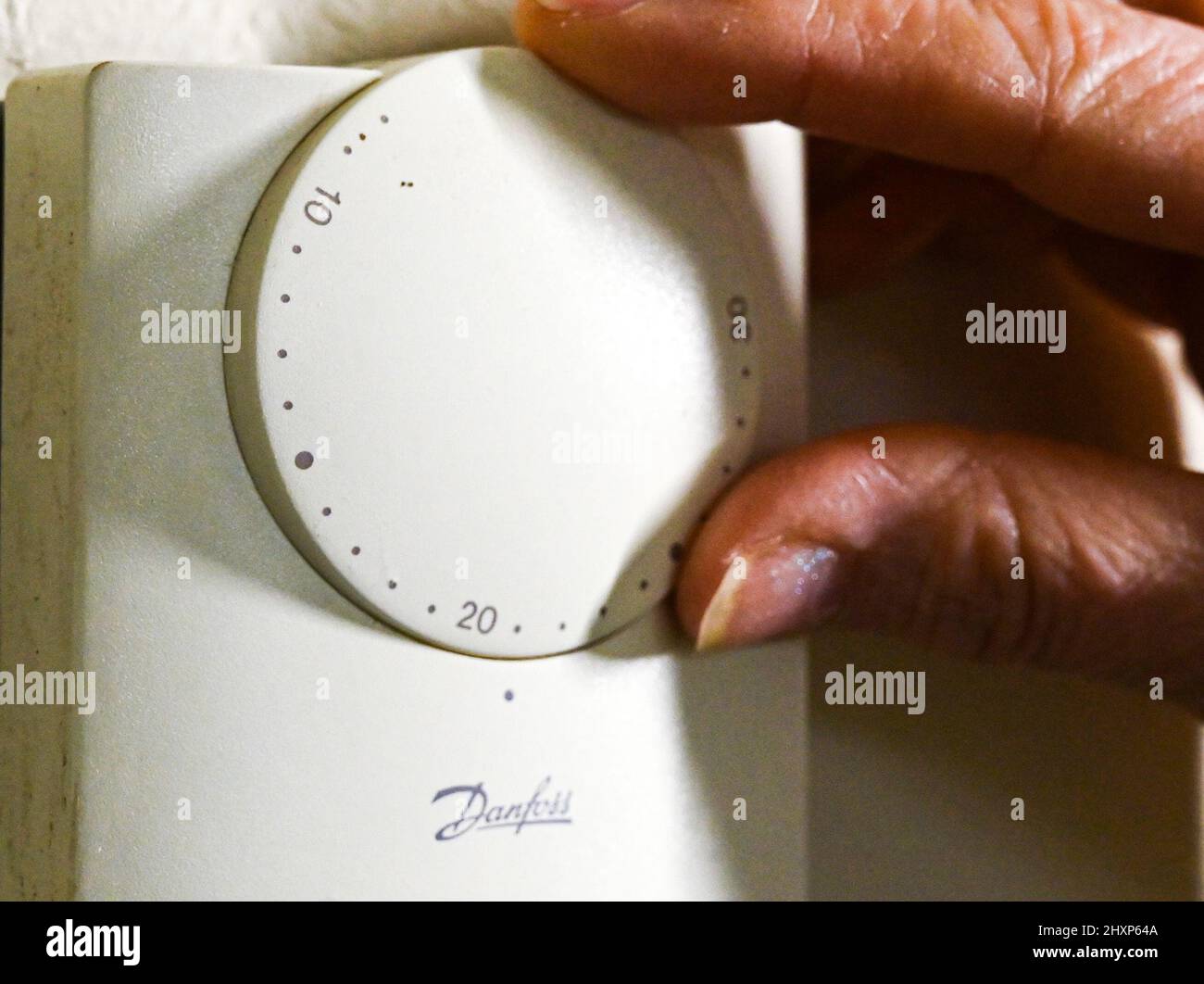
Adjusting your thermostat by just one degree can cut home heating and cooling energy use, lower utility bills, and reduce greenhouse‑gas emissions, making a measurable contribution to climate mitigation.
Quick Answer
Thermostat adjustment means setting the heating thermostat a few degrees lower in winter or the cooling thermostat a few degrees higher in summer. Because most residential heating and cooling systems account for about 40 % of household electricity use (U.S. Energy Information Administration, 2022), a one‑degree change typically reduces energy consumption by 3–4 %. This modest shift translates into lower bills and a proportional drop in carbon emissions, though exact savings depend on climate zone, building insulation, and the fuel source for heating.
Key Takeaways
- Lowering winter heating by 1 °C can save roughly 3 % of heating energy; raising summer cooling by 1 °C yields similar savings.
- Across the United States, residential heating and cooling represent about 40 % of total electricity demand, so thermostat tweaks have outsized impact.
- Smart thermostats automate optimal set‑points, increasing savings by 10–15 % compared with manual adjustments.
- Energy savings also reduce CO₂ emissions, with an estimated 0.5 kg of CO₂ avoided per kWh saved in fossil‑fuel‑dominant grids.
What Is How Adjusting Your Thermostat Can Dramatically Conserve Energy?
Thermostat adjustment refers to deliberately changing the temperature set‑point on a home’s heating, ventilation, and air‑conditioning (HVAC) system. The practice is simple, requires no equipment beyond the thermostat itself, and can be applied in any dwelling that uses centralized heating or cooling. It differs from broader energy‑efficiency measures such as insulation upgrades because it directly modifies the demand side of the energy equation without structural changes.
How Does It Work?
Physical Principle
Heating and cooling systems move heat against a temperature gradient, which consumes electricity or fuel. The amount of heat transferred (Q) is proportional to the temperature difference (ΔT) between indoor set‑point and outdoor conditions (Q ∝ ΔT). Reducing ΔT by a few degrees lowers the compressor or furnace workload, thereby cutting energy use.
Control Loop
- Occupant changes thermostat set‑point.
- Thermostat sends a signal to the HVAC controller.
- The system modulates burner output, compressor speed, or fan operation to reach the new set‑point.
- Once the indoor temperature stabilizes, the system cycles off more frequently, saving energy.
Feedback and Learning
Smart thermostats incorporate occupancy sensors and learning algorithms that predict when heating or cooling is needed, automatically adjusting set‑points during unoccupied periods and further reducing unnecessary operation.
What Does the Evidence Show?
Multiple lines of evidence support the energy‑saving potential of thermostat adjustments. Long‑term monitoring by the U.S. Department of Energy shows that a 1 °C reduction in winter set‑point yields a 3–4 % drop in heating fuel use. A 2019 meta‑analysis of field experiments in Europe and North America found average savings of 2.5 % per degree change, with higher percentages in colder climates where heating demand dominates. The International Energy Agency (IEA, 2021) estimates that nationwide adoption of modest thermostat setbacks could cut residential energy demand by up to 5 % globally.
Main Causes or Drivers
Human Comfort Preferences
People often set thermostats higher in winter or lower in summer out of a desire for immediate comfort, overlooking the adaptive capacity of the human body.
Building Thermal Characteristics
Poor insulation, air leaks, and high‑capacity HVAC equipment amplify the energy required to maintain a set‑point, making thermostat adjustments especially effective in older or less efficient homes.
Energy Pricing and Incentives
Time‑of‑use rates and utility rebates for smart thermostats encourage users to shift set‑points during peak demand periods, aligning economic incentives with energy savings.
Environmental and Human Impacts
Environmental Impacts
Reducing electricity demand lessens the amount of fossil fuel burned for power generation. In regions where coal or natural gas dominate the grid, each kilowatt‑hour saved avoids approximately 0.5 kg of CO₂ (IEA, 2021). Cumulatively, millions of households adjusting thermostats could avert millions of tonnes of CO₂ annually, contributing to the emissions reductions needed to stay within the Paris Agreement’s 1.5 °C target.
Human Health and Social Impacts
Maintaining indoor temperatures within a moderate range (around 20–22 °C in winter) can reduce respiratory irritation caused by overly dry air from excessive heating. Moreover, lower energy bills improve household financial stability, especially for low‑income families that spend a higher share of income on utilities.
Economic and Infrastructure Impacts
Lower peak demand eases stress on the electricity grid, reducing the need for costly peaking power plants and decreasing the risk of blackouts during extreme weather events.
Regional Differences
Thermostat‑adjustment savings vary by climate zone. In cold, continental climates (e.g., the Upper Midwest of the United States), heating accounts for over 60 % of home energy use, so a 1 °C setback yields larger absolute savings than in milder, maritime regions where cooling dominates. Conversely, in hot, humid climates (e.g., the Gulf Coast), raising the cooling set‑point by one degree can reduce air‑conditioner electricity use by 2–3 % because compressors operate at lower pressures.
What Scientists Know With High Confidence
- Heating and cooling together represent roughly 40 % of residential energy consumption in most developed countries.
- Energy use of HVAC systems scales roughly linearly with the temperature difference between indoor set‑point and outdoor conditions.
- Smart thermostats that automate setbacks achieve additional savings of 10–15 % over manual adjustments.
- Reducing household electricity demand directly lowers CO₂ emissions in grids reliant on fossil fuels.
What Remains Uncertain
Key uncertainties include the exact magnitude of behavioral rebound—whether occupants compensate for lower heating by using space heaters or blankets. Additionally, the long‑term durability of savings from smart‑thermostat algorithms depends on user engagement and firmware updates, which are not yet fully quantified across diverse housing stocks.
Common Misconceptions
Misconception: Comfort is lost if the thermostat is set lower.
Reality: Humans adapt to a few degrees of temperature change; wearing appropriate clothing and using programmable setbacks can maintain perceived comfort while saving energy.
Misconception: Only new homes benefit from thermostat adjustments.
Reality: Even older, poorly insulated houses see energy reductions because the HVAC system works less frequently, though retrofits amplify the effect.
Misconception: The savings are too small to matter.
Reality: A 3 % reduction per household, multiplied across millions of homes, translates into gigawatts of avoided electricity generation and substantial emissions cuts.
Solutions and Limitations
Thermostat adjustment is a low‑cost, high‑impact measure, but it must be paired with other efficiency actions. Insulation upgrades, sealing air leaks, and high‑efficiency HVAC equipment can increase the baseline efficiency, making each degree of setback more effective. Smart thermostats automate the process but require reliable internet connectivity and may raise privacy concerns. Moreover, in regions where heating relies on electric resistance (e.g., electric baseboard heaters), the carbon reduction depends on the grid’s generation mix; in low‑carbon grids, the climate benefit is smaller.
What Individuals, Communities, and Governments Can Do
What Individuals Can Do
- Set heating to 19–20 °C (66–68 °F) in winter and cooling to 26 °C (78 °F) in summer.
- Use programmable or smart thermostats to lower set‑points automatically during unoccupied hours.
- Dress appropriately for indoor temperatures and use fans or blankets to maintain comfort.
- Combine thermostat setbacks with home weather‑stripping and insulation improvements.
What Communities and Organizations Can Do
- Offer rebates for smart‑thermostat installation.
- Conduct outreach workshops that demonstrate optimal set‑points and adaptive comfort strategies.
- Integrate thermostat data into demand‑response programs that reward reduced peak load.
What Governments Can Do
- Adopt building codes that require programmable thermostats in new construction.
- Provide low‑interest loans for comprehensive home‑energy retrofits that include thermostat controls.
- Set utility rate structures that incentivize off‑peak heating and cooling.
Closing Synthesis
Adjusting your thermostat is a scientifically supported, readily implementable action that lowers heating and cooling energy demand, cuts utility costs, and reduces greenhouse‑gas emissions. High‑confidence evidence confirms the linear relationship between temperature set‑point and energy use, while uncertainties focus on behavioral rebound and long‑term technology performance. By combining thermostat setbacks with broader efficiency measures and supportive policies, households, communities, and governments can achieve meaningful climate benefits without sacrificing comfort.
Frequently Asked Questions
What temperature settings are recommended for winter and summer to save energy?
Energy experts suggest keeping heating set at 19–20 °C (66–68 °F) in winter and cooling at about 26 °C (78 °F) in summer. These modest set‑points balance comfort with up to 3 % energy savings per degree.
How much energy can be saved by changing the thermostat by one degree?
A one‑degree (≈1 °C) adjustment typically reduces heating or cooling energy use by 3–4 %. This figure is supported by U.S. DOE monitoring and European field studies, though exact savings vary with climate and insulation.
Do smart thermostats provide additional savings compared to manual adjustments?
Yes. Smart thermostats that learn occupancy patterns and automate setbacks can deliver an extra 10–15 % reduction beyond manual degree changes, according to the International Energy Agency’s 2021 assessment.
How does thermostat adjustment affect carbon emissions?
Reducing electricity demand lowers the amount of fossil fuel burned for power. In grids dominated by coal or natural gas, each kilowatt‑hour saved avoids roughly 0.5 kg of CO₂, so household thermostat tweaks can collectively cut millions of tonnes of emissions.
What are common barriers to implementing thermostat setbacks?
Common obstacles include perceived loss of comfort, behavioral rebound (using extra heaters or blankets), lack of awareness, and limited access to programmable or smart thermostats, especially in low‑income households.










Leave a Comment