

A 15‑foot sea level rise, driven by accelerated ice melt and thermal expansion, would reshape coastlines, displace hundreds of millions of people, and trigger profound ecological, economic, and social challenges worldwide.
Quick Answer
A 15‑foot (approximately 4.6 m) rise in global mean sea level would inundate low‑lying coastal zones, erase large parts of major cities, force massive population displacement, and alter ecosystems from mangroves to coral reefs. The primary drivers are rapid melting of the Greenland and Antarctic ice sheets combined with thermal expansion of seawater as the planet warms. Scientists are confident that such a rise is possible within this century under high‑emissions scenarios, though the exact timing carries uncertainty.
Key Takeaways
- Sea level rise of 15 ft would submerge about 280 million people living within one meter of today’s coastlines.
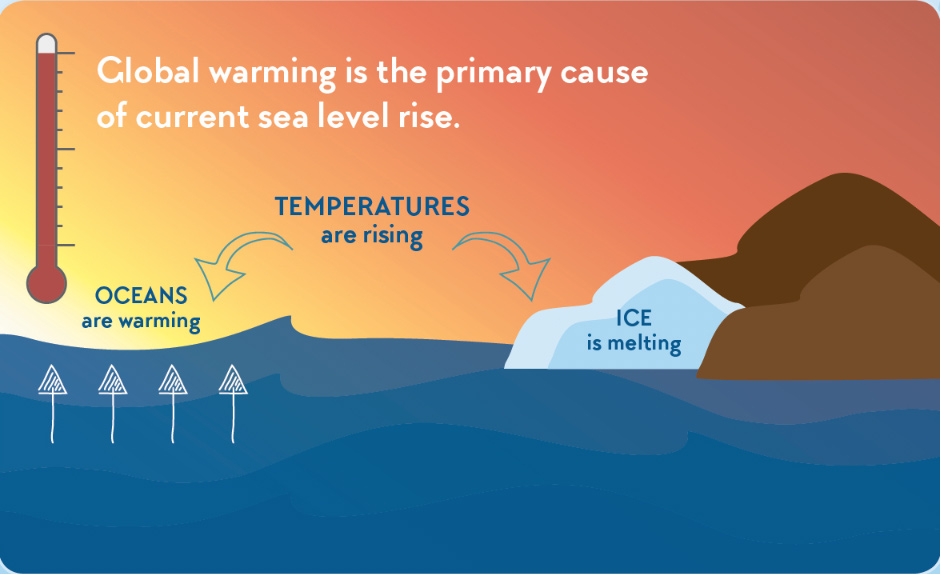
- Thermal expansion and ice‑sheet melt are the dominant physical mechanisms.
- Coastal ecosystems—mangroves, salt marshes, and coral reefs—would experience irreversible loss.
- Economic losses could exceed several trillion dollars in infrastructure, insurance, and lost productivity.
- Adaptation options exist but require massive investment, equitable planning, and international cooperation.
What Is a 15‑Foot Sea Level Rise?
A 15‑foot sea level rise refers to an increase of roughly 4.6 meters in the global average height of the ocean relative to the land surface. It is measured relative to a standardized reference, typically the 1995‑2014 mean sea level used by the Intergovernmental Panel on Climate Change (IPCC). The term does not describe a uniform rise everywhere; local factors such as land subsidence, ocean currents, and gravitational effects cause regional variations.
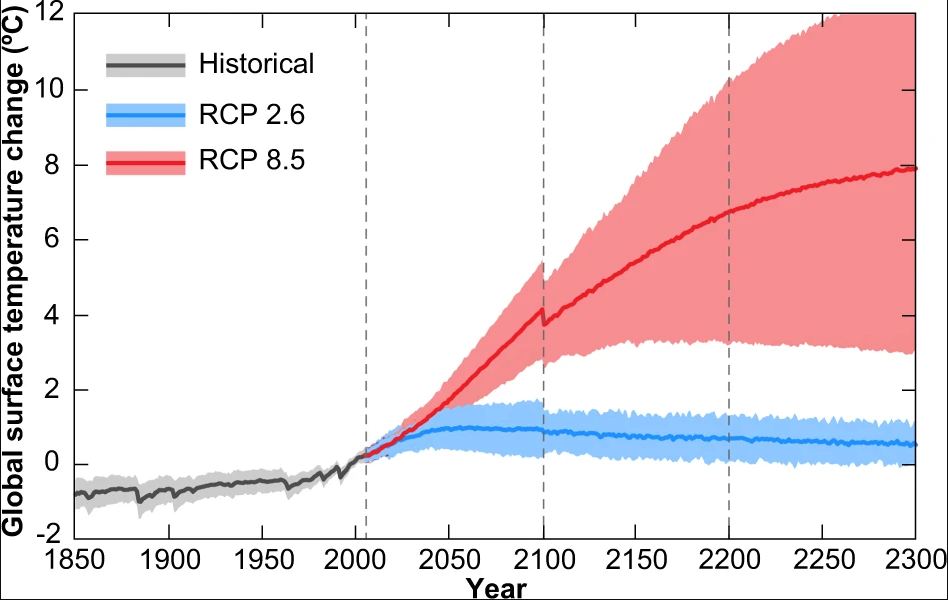
This magnitude is far larger than the 8‑inch (0.2 m) rise observed since the early 20th century, yet it falls within the range of plausible outcomes in the IPCC’s “high‑emissions” (RCP8.5) scenario for the year 2100. Understanding the processes behind such a rise is essential for planning resilient societies.
How Does It Work?
Physical Mechanisms
- Thermal Expansion: As ocean water warms, it expands. Climate models estimate that a 2 °C increase in global average temperature could add about 0.5 m to sea level through this process alone.
- Ice‑Sheet Melt: The Greenland Ice Sheet and parts of the West Antarctic Ice Sheet contain enough water to raise sea level by several meters if they were to melt completely. Satellite gravimetry (e.g., GRACE) shows accelerating mass loss, currently contributing roughly 0.7 mm yr⁻¹.
- Glacial Melt: Mountain glaciers worldwide add a smaller but still significant amount, roughly 0.2 mm yr⁻¹.
Feedback Loops
Ice‑sheet dynamics involve feedbacks such as surface melt lowering albedo (making ice absorb more sunlight) and ice‑flow acceleration due to lubrication from meltwater. These processes can hasten the rate of sea‑level contribution beyond linear projections.
What Does the Evidence Show?
Multiple lines of evidence converge on the reality of rising seas:
- Historical Tide‑Gauge Records: The Permanent Service for Mean Sea Level (PSMSL) reports a global average rise of 1.7 mm yr⁻¹ from 1901 to 2018, with acceleration to about 3.6 mm yr⁻¹ in the last two decades.
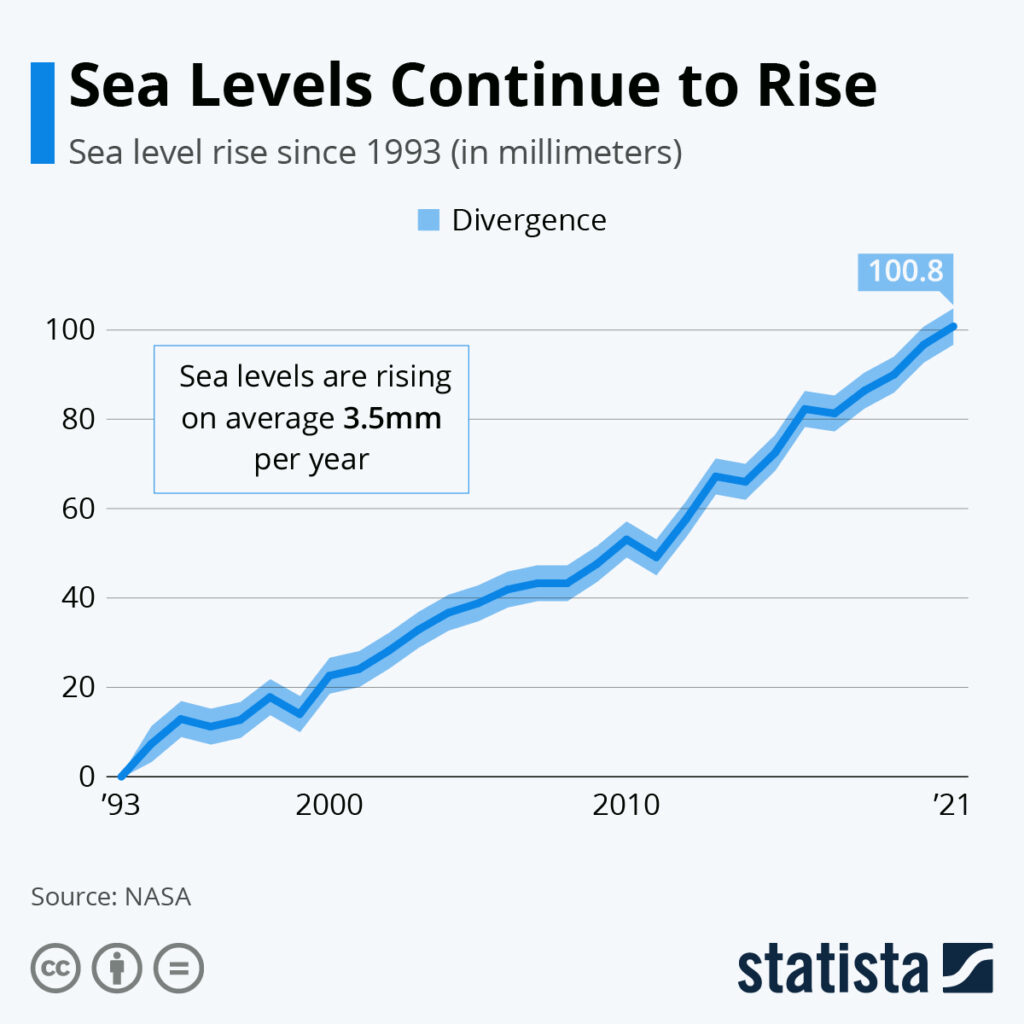
- Satellite Altimetry: Since 1993, satellite missions such as TOPEX/Poseidon and Jason‑3 show a sea‑level increase of 3.3 mm yr⁻¹, confirming the acceleration observed in tide‑gauge data.
- Ice‑Sheet Observations: NASA’s Operation IceBridge and ESA’s CryoSat‑2 document increasing mass loss from Greenland and Antarctica, supporting modelled contributions to sea‑level rise.
- IPCC Assessment (AR6, 2021): The report states that a rise of 0.5–1.0 m is very likely by 2100 under low‑emissions pathways, while a rise of 2–5 m is possible under high‑emissions pathways, reflecting the uncertainty in ice‑sheet dynamics.
Collectively, these observations provide strong, moderate, and emerging evidence that a multi‑meter rise is physically plausible within this century if greenhouse‑gas emissions remain unchecked.
Main Causes or Drivers
Direct Causes
- Continued increase in atmospheric CO₂ and other greenhouse gases, raising global mean temperature.
- Accelerated melt of the Greenland Ice Sheet, driven by surface melt and ice‑flow dynamics.
- Potential instability of the West Antarctic Ice Sheet’s marine‑based sectors.
Underlying Drivers
- Fossil‑fuel combustion and deforestation, which dominate anthropogenic carbon emissions.
- Industrial processes that release black carbon, which reduces surface albedo and enhances melt.
- Socio‑economic pathways that determine future emissions (e.g., rapid urbanization, energy demand).
Environmental and Human Impacts
Environmental Impacts
- Coastal Habitat Loss: Mangroves, salt marshes, and intertidal zones would be drowned, reducing natural storm‑buffer capacity and carbon sequestration.
- Coral Reef Bleaching: Higher sea levels combined with warming waters increase stress on reef systems, threatening biodiversity and fisheries.
- Freshwater Intrusion: Coastal aquifers would become saline, compromising drinking‑water supplies for millions.
Human Health and Social Impacts
- Displacement of up to 280 million people, creating climate‑related migration pressures and potential conflict over resources.
- Increased exposure to water‑borne diseases (e.g., cholera) as flooding contaminates sanitation infrastructure.
- Loss of cultural heritage sites located on low‑lying coastlines, affecting indigenous and local identities.
Economic and Infrastructure Impacts
- Major ports such as New York, Shanghai, and Rotterdam would require costly relocation or protective barriers.
- Insurance claims could surge, potentially destabilizing the global insurance market.
- Infrastructure retrofitting—elevating roads, building seawalls—could run into the trillions of dollars, diverting funds from other development goals.
Regional Differences
Because sea‑level change is not uniform, impacts vary:
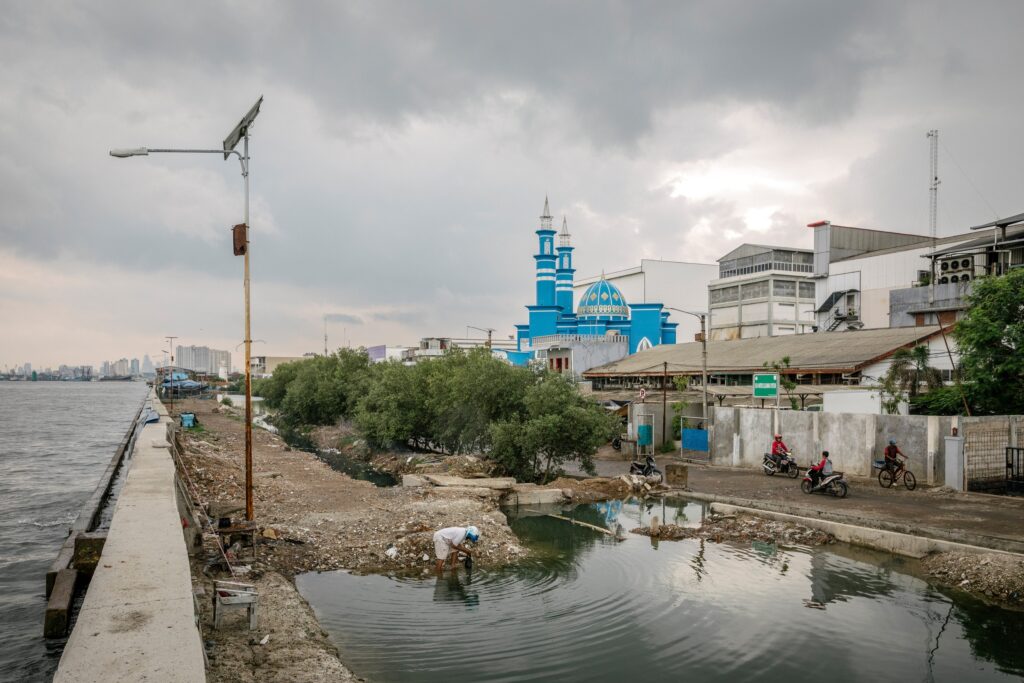
- South‑East Asia: Low‑lying deltas such as the Mekong and Ganges‑Brahmaputra are especially vulnerable; subsidence can add another 0.5–1 m of relative rise.
- United States Gulf Coast: Cities like New Orleans already sit below sea level; a 15‑ft rise would inundate large portions of the metropolitan area.
- Small Island Developing States (SIDS): Nations such as the Maldives and Kiribati could lose a significant share of land, threatening their very existence.
- Northern Europe: Higher latitude regions experience less thermal expansion but still face risks from storm surges and coastal erosion.
What Scientists Know With High Confidence
What Scientists Know With High Confidence
- Global mean sea level is rising and the rate is accelerating.
- Thermal expansion and ice‑sheet melt are the two largest contributors to future sea‑level rise.
- Coastal flooding and salt‑water intrusion will increase the frequency of extreme high‑tide events.
- Low‑lying coastal populations are disproportionately exposed to sea‑level impacts.
What Remains Uncertain
What Remains Uncertain
The timing and magnitude of rapid ice‑sheet collapse in West Antarctica remain the largest source of uncertainty. Model representations of ice‑sheet dynamics differ, leading to a wide range of projected contributions (0.5–3 m) by 2100. Additionally, the socioeconomic pathways that determine future emissions are uncertain, affecting the likelihood of high‑emission scenarios that could produce a 15‑ft rise.
Common Misconceptions
Common Misconceptions
Misconception: Sea level rise will happen uniformly everywhere.
Reality: Regional factors such as land subsidence, ocean currents, and gravitational redistribution cause sea‑level change to vary by several centimeters to meters across the globe.
Misconception: A 15‑foot rise is only a distant future scenario.
Reality: While precise timing is uncertain, climate models and ice‑sheet observations show that a multi‑meter rise is within the realm of possibility by the end of the 21st century under business‑as‑usual emissions.
Misconception: Building seawalls solves the problem.
Reality: Hard engineering can protect specific assets but cannot safeguard entire coastlines; it is expensive, can cause downstream erosion, and does not address the underlying cause of sea‑level rise.
Solutions and Limitations
Addressing a 15‑foot sea level rise requires a mix of mitigation, adaptation, and restoration:
- Mitigation: Rapid decarbonization of energy systems (e.g., renewable electricity, electrified transport) can limit future warming and thus reduce the ultimate sea‑level rise. Limitation: Requires global policy coordination and massive capital investment.
- Coastal Adaptation: Managed retreat, elevation of structures, and nature‑based solutions such as restoring mangroves. Limitation: Socially disruptive, especially for communities with strong cultural ties to place.
- Infrastructure Resilience: Designing flood‑adaptive roads, drainage, and storm‑water systems. Limitation: High upfront costs and may only be viable for wealthier regions.
- International Funding Mechanisms: Climate finance (e.g., Green Climate Fund) can support vulnerable nations. Limitation: Disbursement is often slow and tied to political negotiations.
What Individuals, Communities, and Governments Can Do
What Individuals Can Do
- Support policies that accelerate the transition to clean energy (e.g., voting, advocacy).
- Reduce personal carbon footprints by improving home energy efficiency and choosing low‑carbon transportation.
- Participate in local resilience planning, such as community mapping of flood risk.
What Communities and Organizations Can Do
- Implement nature‑based solutions: plant mangroves, restore wetlands, and protect dunes.
- Develop and regularly update local hazard‑risk assessments that incorporate sea‑level projections.
- Secure funding for adaptive infrastructure through public‑private partnerships.
What Governments Can Do
- Adopt and enforce ambitious emissions‑reduction targets aligned with the Paris Agreement’s 1.5 °C pathway.
- Integrate sea‑level rise scenarios into land‑use planning, zoning, and building codes.
- Provide equitable relocation assistance for communities at highest risk, ensuring participation of Indigenous peoples.
- Invest in research and monitoring of ice‑sheet dynamics to reduce scientific uncertainty.
Closing Synthesis
A 15‑foot sea level rise is not a hypothetical fantasy but a scientifically plausible outcome if greenhouse‑gas emissions continue unabated. The physical mechanisms—thermal expansion and ice‑sheet melt—are well understood, and observations confirm that the oceans are already rising faster than in the past century. The consequences span ecosystems, human health, economies, and geopolitics, with the greatest burden falling on low‑lying and low‑income populations. While uncertainties remain about the exact timing of rapid ice‑sheet collapse, the direction of change is clear. Mitigation to curb warming, combined with strategic adaptation and equitable policies, offers the most viable path to safeguard societies and the planet’s coastal heritage.
Frequently Asked Questions
What causes a 15‑foot sea level rise?
A 15‑foot rise is driven primarily by two processes: thermal expansion of warming ocean water and accelerated melting of the Greenland and Antarctic ice sheets. Additional contributions come from shrinking mountain glaciers and, in some regions, land subsidence.
How many people could be displaced by a 15‑foot rise?
Scientists estimate that up to 280 million people currently living within one meter of today’s coastlines could be forced to relocate if sea level rises 15 feet, creating one of the largest human displacement events in history.
What evidence confirms that sea levels are already rising?
Long‑term tide‑gauge records show a global average rise of 1.7 mm per year since 1901, while satellite altimetry since 1993 records an acceleration to about 3.3 mm per year. Satellite gravimetry also documents increasing mass loss from Greenland and Antarctica.
Can building seawalls fully protect coastal cities from a 15‑foot rise?
Seawalls can protect specific assets but cannot safeguard entire coastlines against a 15‑foot rise. They are costly, can cause erosion elsewhere, and do not address the underlying cause—global warming—so they must be part of a broader adaptation strategy.
What actions can governments take to reduce the risk of a 15‑foot sea level rise?
Governments can set ambitious emissions‑reduction targets, integrate sea‑level scenarios into land‑use planning, fund equitable relocation for at‑risk communities, and invest in research on ice‑sheet dynamics to improve future projections.




Leave a Comment