
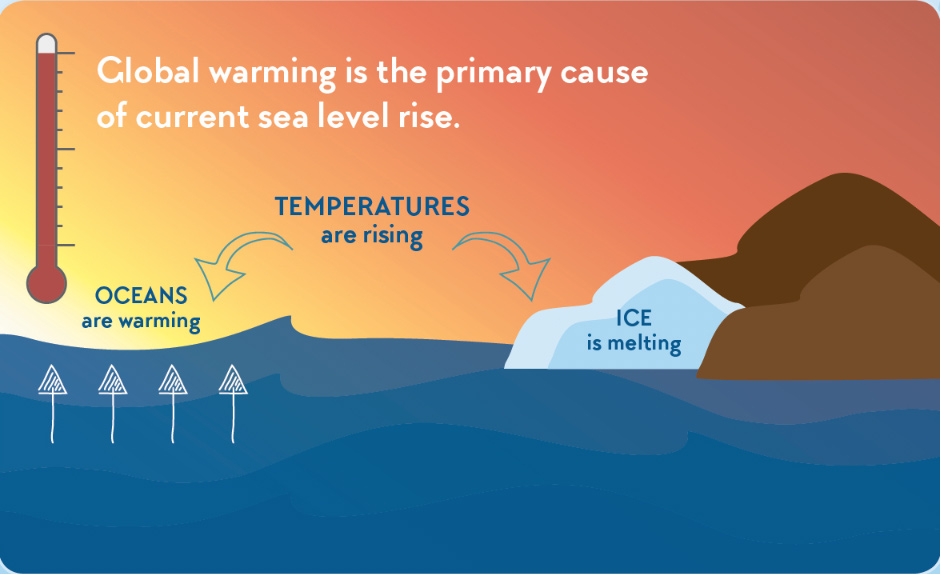
The ocean is rising because warming waters expand and melting ice adds water, with the global average sea level climbing about 3.3 mm per year in recent decades.
Quick Answer
Global warming drives sea‑level rise through two well‑understood mechanisms: thermal expansion of seawater as it absorbs roughly 93 % of excess heat, and the addition of meltwater from glaciers, the Greenland Ice Sheet, and the Antarctic Ice Sheet. Observations compiled by the Intergovernmental Panel on Climate Change (IPCC) show that the average global sea level has risen about 3.3 mm yr⁻¹ from 1993 to 2020—more than twice the rate of the early 20th century. The trend is robust, but exact future rates depend on greenhouse‑gas emissions, ice‑sheet dynamics, and regional factors.
Key Takeaways
- Thermal expansion accounts for roughly half of the observed sea‑level rise since the mid‑20th century.
- Melting of the Greenland and Antarctic ice sheets together contributes about 0.7–1.0 mm yr⁻¹, with glaciers adding another 0.3 mm yr⁻¹.
- Global average sea level has risen about 210 mm (≈8 inches) since 1880, accelerating to >3 mm yr⁻¹ in the past three decades.
- Low‑lying coastal cities face heightened flood risk, saltwater intrusion, and infrastructure strain.
- Mitigation (reducing emissions) and adaptation (coastal defenses, managed retreat) are both essential, each with limits and trade‑offs.
What Is How Fast Is the Ocean Rising Because of Global Warming?
The phrase asks for the rate at which global mean sea level is increasing as a direct consequence of anthropogenic climate change. It is measured in millimetres per year (mm yr⁻¹) using satellite altimetry, tide‑gauge networks, and gravimetric data. The rate differs from short‑term fluctuations such as tides or storm surges and is expressed as a long‑term average across the world’s oceans.
How Does It Work?
Thermal Expansion
When seawater warms, its density decreases and its volume expands—a physical property described by the coefficient of thermal expansion. Because the ocean stores about 93 % of the excess heat from greenhouse‑gas forcing, even a modest temperature increase of 0.2 °C since pre‑industrial times translates into measurable volume growth. The process is continuous as long as the climate remains warmer than the baseline.
Ice‑Sheet and Glacier Melt
Melting ice adds water that was previously stored on land. The Greenland Ice Sheet currently loses roughly 0.7 mm yr⁻¹ of sea‑level equivalent (SLE) mass, while the Antarctic contributes about 0.4 mm yr⁻¹ on average, with considerable variability between the West Antarctic and East Antarctic sectors. Mountain glaciers worldwide add another 0.3 mm yr⁻¹. The melt rate accelerates as surface albedo declines and meltwater lubricates ice‑sheet flow.
Other Contributors
Land‑water storage changes—such as groundwater extraction, reservoir impoundment, and river‑bed lowering—modify sea level by a few tenths of a millimetre per year, but their net effect is minor compared with thermal expansion and ice melt.
What Does the Evidence Show?
Multiple, independent lines of evidence converge on a consistent picture of accelerating sea‑level rise. Satellite altimeters (e.g., TOPEX/Poseidon, Jason‑1/2/3) have recorded a global mean increase of about 3.3 mm yr⁻¹ from 1993 to 2020 (IPCC AR6, 2021). Tide‑gauge records, some extending back to the 19th century, indicate a cumulative rise of roughly 210 mm since 1880. Gravimetric measurements from the GRACE satellite pair confirm that the dominant mass source is ice‑sheet loss, especially from Greenland. Peer‑reviewed synthesis papers (e.g., Church & White 2011; Nerem et al. 2018) find that thermal expansion contributed ~50 % of the total rise over the past half‑century, with the remainder split between glaciers and the two major ice sheets.
Main Causes or Drivers
Human‑Caused Greenhouse‑Gas Forcing
Burning of fossil fuels, deforestation, and industrial processes increase atmospheric concentrations of CO₂, CH₄, and N₂O. These gases trap infrared radiation, raising global mean surface temperature by about 1.1 °C above pre‑industrial levels (IPCC AR6, 2021). The warming is the primary driver of both thermal expansion and ice melt.
Feedback Mechanisms
- Albedo Feedback: Melting ice exposes darker ocean or land surfaces, absorbing more solar energy and amplifying warming.
- Ice‑Sheet Dynamics: Meltwater can percolate to the base of glaciers, lubricating their flow and accelerating discharge.
- Ocean Circulation Changes: Warming can alter wind patterns that redistribute heat, influencing regional sea‑level trends.
Environmental and Human Impacts
Environmental Impacts
Rising seas erode coastlines, submerge wetlands, and shift habitats for marine and terrestrial species. Saltwater intrusion threatens freshwater ecosystems and agricultural soils. Coral reefs experience increased stress from both higher temperatures and deeper water, reducing biodiversity.
Human Health and Social Impacts
Coastal flooding increases exposure to water‑borne pathogens and mold‑related respiratory issues. Displacement of up to 150 million people by 2050 is projected under high‑emission scenarios, creating climate‑related migration pressures and potential conflict over resources.
Economic and Infrastructure Impacts
Infrastructure built on low‑lying land—roads, ports, power plants—faces higher repair costs and reduced service life. Insurance premiums rise, and some insurers withdraw coverage entirely, affecting property markets in places like Miami, New Orleans, and parts of Southeast Asia.
Regional Differences
Sea‑level change is not uniform. The western Pacific experiences rates up to 10 mm yr⁻¹ due to ocean‑dynamic factors, while parts of the North Atlantic show slower rises. Land subsidence in the Gulf of Mexico and the Mekong Delta amplifies local sea‑level rise, whereas post‑glacial rebound in parts of Canada and Scandinavia can offset it.
What Scientists Know With High Confidence
- Human‑induced greenhouse‑gas emissions are the dominant cause of global warming since the mid‑20th century.
- Thermal expansion and meltwater from glaciers and the two major ice sheets together explain >90 % of observed sea‑level rise since 1990.
- Global average sea level has risen faster in the past three decades than at any time in the instrumental record.
- Coastal flooding risk increases non‑linearly with sea‑level rise because of storm surge amplification.
What Remains Uncertain
Key uncertainties centre on the future behavior of the Antarctic Ice Sheet, especially the West Antarctic grounding‑line basins, where limited observations make model projections divergent. The rate at which meltwater may accelerate ice‑sheet flow is also uncertain, leading to a wide range of sea‑level projections for 2100 (0.3–1.0 m under low‑ vs. high‑emission pathways). Regional land‑motion data gaps—particularly in developing coastal nations—limit precise local risk assessments.
Common Misconceptions
Misconception: Sea‑level rise is caused only by melting ice.
Reality: Thermal expansion accounts for roughly half of the observed rise, and land‑water storage changes also play a minor role.
Misconception: Sea‑level rise is the same everywhere.
Reality: Ocean dynamics, wind patterns, and local land movement cause regional variations of up to a factor of three.
Misconception: A few millimetres per year is negligible.
Reality: Over decades, a 3 mm yr⁻¹ increase adds more than 0.5 m of water, enough to inundate low‑lying islands and exacerbate storm surges.
Solutions and Limitations
Addressing sea‑level rise requires both mitigation—limiting future warming—and adaptation—protecting vulnerable coastlines.
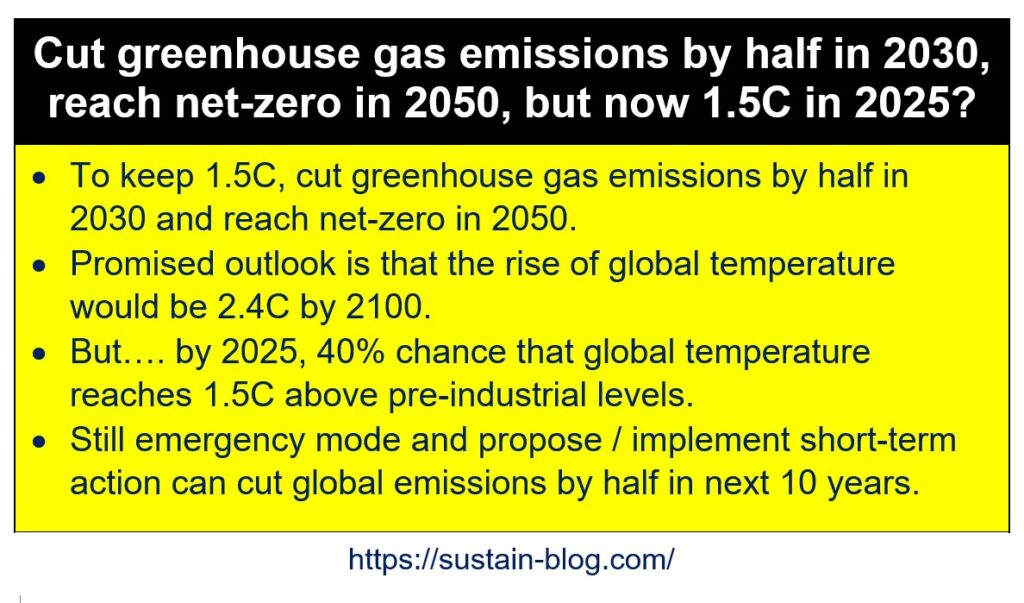
- Mitigation: Rapid decarbonisation of energy, transport, and industry can limit warming to 1.5 °C, reducing thermal expansion and slowing ice melt. However, mitigation alone cannot prevent all rise because some ice loss is already committed.
- Coastal Defenses: Seawalls, surge barriers, and beach nourishment provide short‑term protection but can be costly, may damage natural habitats, and can give a false sense of security.
- Nature‑Based Solutions: Restoring mangroves, saltmarshes, and coral reefs buffers wave energy and traps sediments, offering flexible protection while supporting biodiversity. Their effectiveness is limited by space and may be overwhelmed by extreme sea‑level scenarios.
- Managed Retreat: Relocating infrastructure away from high‑risk zones reduces long‑term exposure but involves social, economic, and political challenges, especially for densely populated regions.
What Individuals, Communities, and Governments Can Do
What Individuals Can Do
Support policies that accelerate clean‑energy transitions, reduce personal carbon footprints where feasible (e.g., energy efficiency, low‑carbon travel), and participate in local coastal‑restoration projects.
What Communities and Organizations Can Do
Develop and implement community‑level adaptation plans that incorporate risk mapping, enforce zoning that limits new development in high‑risk zones, and invest in nature‑based buffers.
What Governments Can Do
Adopt ambitious emission‑reduction targets aligned with the Paris Agreement, fund long‑term sea‑level monitoring networks, subsidise resilient infrastructure, and create legal frameworks for managed retreat where necessary.
Synthesis
Sea‑level rise is a measurable, accelerating consequence of global warming, driven principally by thermal expansion and ice‑sheet melt. The scientific consensus, backed by satellite and tide‑gauge records, confirms a current global average increase of about 3.3 mm yr⁻¹. While uncertainties remain—especially regarding the Antarctic’s future contribution—the core mechanisms are well understood. Effective responses must combine rapid mitigation to limit further warming with adaptive strategies that protect people and ecosystems, acknowledging the trade‑offs and equity challenges each approach entails.
Frequently Asked Questions
What is the current rate of global sea‑level rise?
The current observed global average sea‑level rise is about 3.3 mm per year, based on satellite altimetry measurements taken between 1993 and 2020.
How does thermal expansion contribute to sea‑level rise?
Thermal expansion occurs when seawater warms and expands; because the ocean absorbs roughly 93 % of excess heat, this process accounts for about half of the observed sea‑level rise since the mid‑20th century.
Which ice sheets are the biggest contributors to sea‑level rise?
The Greenland Ice Sheet and the Antarctic Ice Sheet together provide the majority of meltwater, with Greenland losing roughly 0.7 mm yr⁻¹ and Antarctica about 0.4 mm yr⁻¹ of sea‑level equivalent each year.
Why does sea‑level rise vary by region?
Regional variations arise from ocean‑dynamic factors, wind patterns, and local land motion such as subsidence or uplift, leading to rates that can be up to three times the global average in some areas.
What are the most effective ways to address rising seas?
The most effective approach combines mitigation—rapidly cutting greenhouse‑gas emissions to limit warming—with adaptation measures like coastal defenses, nature‑based buffers, and managed retreat, each having specific limitations.








Leave a Comment