
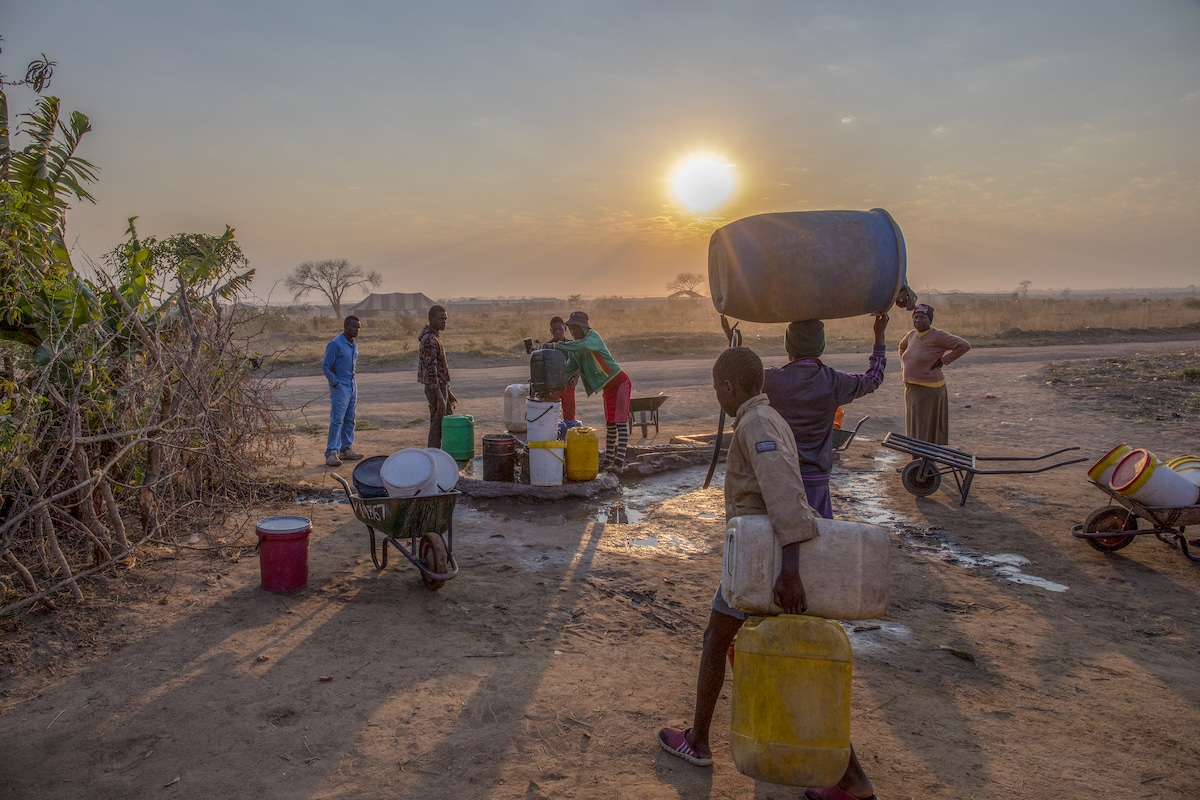
Africa’s exposure to rising temperatures, shifting rainfall and extreme events makes the continent highly vulnerable to global warming, with profound implications for ecosystems, food security and human health.
Quick Answer
Africa is among the world’s most climate‑vulnerable regions because its economies rely heavily on climate‑sensitive agriculture, many communities lack adaptive capacity, and the continent experiences rapid temperature rise and expanding aridity. Scientific assessments (IPCC 2021) show that average temperatures have already increased by about 1.2 °C since pre‑industrial times, and projected heat stress, droughts and flood frequency are likely to intensify. While uncertainty remains around exact regional precipitation changes, the consensus is that climate impacts will exacerbate food‑insecurity, water scarcity and health risks across the continent.
Key Takeaways
- Temperature in Africa has risen ~1.2 °C since 1850, outpacing the global average.
- Over 60 % of the population depends on rain‑fed agriculture, making livelihoods highly exposure‑sensitive.
- Projected declines in rainfall and increased drought risk threaten water security in the Sahel, Horn of Africa and Southern Africa.
- Heat‑related health burdens, especially malaria and heatstroke, are expected to grow.
- Adaptation strategies—such as climate‑smart agriculture, renewable energy deployment and improved water management—can reduce vulnerability but require substantial investment and governance support.
What Is How Vulnerable Is Africa to Global Warming and Climate Change?
The phrase asks how susceptible African societies and natural systems are to the physical changes caused by rising greenhouse‑gas concentrations. Vulnerability combines three components: exposure to climate hazards (e.g., heatwaves, floods), sensitivity of ecosystems or livelihoods to those hazards, and adaptive capacity to cope or recover. In the African context, vulnerability is measured through indicators such as temperature trends, crop yield projections, water‑availability models and health‑risk assessments.
How Does It Work?
Physical Climate Drivers
- Increasing greenhouse‑gas concentrations trap more long‑wave radiation, raising surface temperatures.
- Warmer air holds more moisture, altering regional precipitation patterns; the Intergovernmental Panel on Climate Change (IPCC) projects a north‑south dipole in rainfall for many African basins.
- Higher temperatures intensify evapotranspiration, accelerating soil moisture loss and expanding desert margins.
Socio‑Economic Pathways
Most African economies rely on smallholder farming, which is directly linked to seasonal rainfall. Limited infrastructure, low access to credit and scarce extension services reduce the capacity to adopt climate‑resilient practices. Urbanization is rapid, yet many cities lack drainage and cooling infrastructure, heightening exposure to floods and heat stress.
What Does the Evidence Show?
Long‑term temperature records from national meteorological services and the World Meteorological Organization indicate a mean warming of 0.9 °C–1.5 °C across Africa between 1950 and 2020. Systematic reviews of crop‑model simulations (e.g., FAO 2022) consistently find yield reductions of 10‑30 % for maize and sorghum under a +2 °C warming scenario. Hydrological studies show a 10‑20 % decline in annual runoff for the Niger and Zambezi basins under mid‑century projections. Health research links rising nighttime temperatures to a 5‑10 % increase in malaria incidence in East Africa. These lines of evidence converge on the conclusion that climate change is already affecting African systems and will intensify unless adaptation is scaled up.
Main Causes or Drivers
Direct Causes
- Global increase in carbon dioxide, methane and nitrous oxide emissions from fossil‑fuel combustion, deforestation and agriculture.
- Land‑use change that reduces albedo and evapotranspiration, amplifying local warming.
Underlying Drivers
- Rapid population growth (UN 2022 projects 2.5 billion Africans by 2050) increasing demand for food, water and energy.
- Economic reliance on climate‑sensitive sectors such as agriculture and hydro‑power.
- Limited financial and technical resources for climate adaptation.
Environmental and Human Impacts
Environmental Impacts
Heat stress reduces forest productivity and accelerates savanna encroachment. Desertification expands in the Sahel, with satellite data showing a 15 % loss of vegetation greenness between 2000 and 2020. Coastal erosion threatens mangroves along the West African shoreline, compromising biodiversity and carbon sequestration.
Human Health and Social Impacts
Rising temperatures expand the geographic range of malaria‑carrying mosquitoes, while increased flood frequency heightens the risk of water‑borne diseases such as cholera. Food‑insecurity indices indicate that up to 30 % of households in the Horn of Africa experienced severe hunger during the 2019‑2021 droughts, directly linked to climate anomalies.
Economic and Infrastructure Impacts
Extreme weather events cause an estimated US$10 billion in annual damages to infrastructure in Sub‑Saharan Africa (World Bank 2021). Urban flood events in Lagos and Nairobi have disrupted transport, electricity and health services, revealing gaps in city planning.
Regional Differences
North Africa, dominated by the Sahara, experiences the greatest temperature rise and the most acute water scarcity. The Sahel faces recurring droughts punctuated by occasional intense rains that cause flash floods. East Africa’s highlands are projected to become hotter but wetter, altering coffee and tea production zones. Southern Africa may see both increased heat and reduced winter rainfall, affecting vineyards and livestock grazing.
What Scientists Know With High Confidence
- Global warming is primarily driven by human greenhouse‑gas emissions (IPCC 2021).
- Africa has warmed faster than the global mean since the mid‑20th century.
- Rain‑fed agriculture dominates African livelihoods, making food production highly climate‑sensitive.
- Heat‑related mortality and vector‑borne disease burden are increasing with rising temperatures.
What Remains Uncertain
Regional precipitation responses remain the largest source of uncertainty because observational networks are sparse and climate models differ in simulating African monsoon dynamics. The exact thresholds at which ecosystem collapse (e.g., savanna to desert) will occur are also not well constrained, limiting precise risk mapping. Improved ground‑based monitoring and higher‑resolution modelling are needed to narrow these gaps.
Common Misconceptions
Misconception: Africa contributes the most to global emissions.
Reality: Africa accounts for roughly 3 % of global CO₂ emissions, yet it bears a disproportionate share of climate impacts because of limited adaptive capacity.
Misconception: Climate change will only bring hotter weather.
Reality: In addition to heat, many African regions are projected to experience more intense rainfall events, leading to floods and landslides alongside drought.
Misconception: Adaptation is too costly for African countries.
Reality: International evidence shows that well‑designed climate‑smart agriculture and renewable‑energy projects often deliver positive returns on investment by increasing yields and reducing energy costs.
Solutions and Limitations
Effective responses combine mitigation (reducing emissions) and adaptation (building resilience). Renewable‑energy expansion—particularly solar PV—can provide off‑grid electricity, but financing and grid‑integration challenges remain. Climate‑smart agriculture (e.g., drought‑tolerant seeds, conservation tillage) improves yields, yet adoption is limited by access to inputs and knowledge. Water‑resource management, such as rainwater harvesting and improved irrigation efficiency, mitigates scarcity but requires substantial infrastructure investment. Ecosystem restoration (re‑forestation, wetland protection) enhances carbon sinks and buffers floods, but land‑tenure disputes can impede implementation.
What Individuals, Communities, and Governments Can Do
What Individuals Can Do
- Support local renewable‑energy projects or choose solar home systems where available.
- Adopt water‑saving practices (e.g., drip irrigation for home gardens).
- Participate in community seed‑bank initiatives that preserve climate‑resilient crop varieties.
What Communities and Organizations Can Do
- Develop early‑warning systems for floods and heatwaves using mobile‑phone networks.
- Implement agroforestry and intercropping to diversify income and improve soil health.
- Partner with NGOs to secure climate‑finance for climate‑smart infrastructure.
What Governments Can Do
- Integrate climate risk assessments into national development plans and budgeting.
- Invest in expanding meteorological monitoring networks to improve forecast accuracy.
- Provide subsidies or credit schemes for smallholders adopting drought‑resistant seeds and efficient irrigation.
- Enact land‑use policies that protect wetlands and promote re‑forestation.
Closing Synthesis
Evidence from multiple scientific assessments confirms that Africa is highly vulnerable to global warming because of its climatic exposure, reliance on climate‑sensitive livelihoods and limited adaptive capacity. While uncertainties remain—particularly regarding regional rainfall patterns—the overarching picture is clear: without accelerated mitigation and targeted adaptation, heat, drought, floods and health risks will intensify. Investing in renewable energy, climate‑smart agriculture and robust water management offers the most credible pathways to reduce vulnerability, but success hinges on coordinated action across individuals, communities, private sector and governments.
Frequently Asked Questions
What does climate vulnerability mean for African countries?
Climate vulnerability in Africa refers to the degree to which societies and ecosystems are exposed to climate hazards, how sensitive they are to those hazards, and their capacity to adapt or recover. High reliance on rain‑fed agriculture, limited infrastructure and rapid population growth increase this vulnerability.
How much has Africa warmed compared with the global average?
Temperature records show that Africa has warmed by about 1.2 °C since pre‑industrial times, which is roughly 0.2 °C higher than the global average increase of 1.0 °C reported by the IPCC for the same period.
Which economic sectors in Africa are most at risk from climate change?
The most at‑risk sectors are rain‑fed agriculture, water resources, and public health. Smallholder farmers depend on seasonal rainfall, water‑dependent sectors face scarcity and flood threats, and rising temperatures increase the burden of malaria and heat‑related illnesses.
What adaptation strategies are most effective for African farmers?
Climate‑smart agriculture offers the greatest benefit: using drought‑tolerant seed varieties, practicing conservation tillage, intercropping and agroforestry, and adopting efficient irrigation methods such as drip systems. These practices improve yields while reducing water use and soil erosion.
How can expanding renewable energy reduce Africa’s climate vulnerability?
Renewable energy, especially solar PV, can provide reliable off‑grid electricity, reducing dependence on fossil fuels and improving resilience to climate shocks. Access to clean energy supports water‑pumping, refrigeration for food storage, and health‑care facilities, all of which mitigate the impacts of heat, drought and disease.





Leave a Comment