
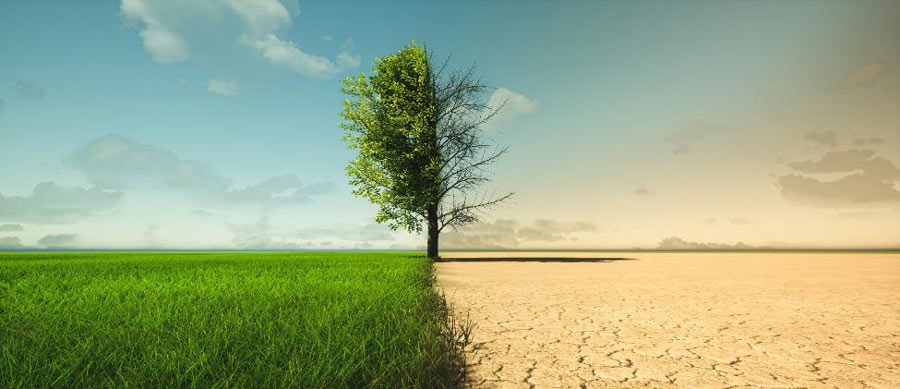
The Sahara shows patches of new vegetation, and scientists link this greening to rising temperatures, higher CO₂, and shifting rainfall, though the picture is nuanced and region‑specific.
Quick Answer
The Sahara is experiencing limited greening in some areas, primarily because a warmer climate can increase atmospheric moisture and CO₂‑fertilisation, which together promote plant growth on marginal soils. Satellite records from the 1980s onward show a modest rise in vegetation indices, especially near the Sahel and along the Mediterranean fringe. However, the greening is uneven, often temporary, and does not signal a wholesale desert reversal. Uncertainty remains around how long these patches will persist and whether they will translate into lasting ecosystem or socioeconomic benefits.
Key Takeaways
- Satellite data reveal a modest increase in vegetation cover across parts of the Sahara since the 1980s.
- Higher temperatures, increased atmospheric CO₂, and occasional rainfall spikes are the main drivers of this greening.
- The phenomenon is spatially heterogeneous; northern margins green more than the deep interior.
- Ecological benefits are offset by risks such as water competition, invasive species, and limited carbon‑sequestration potential.
- Future greening depends on climate trajectories, land‑use policies, and adaptive management.
What Is Is the Sahara Greening Because of Global Warming? Science Answers?
The question asks whether the recent appearance of vegetation in the Sahara Desert can be attributed to anthropogenic climate change. “Greening” refers to measurable increases in plant cover, typically detected through satellite‑derived indices such as the Normalised Difference Vegetation Index (NDVI). The Sahara spans roughly 9 million km², ranging from hyper‑arid dunes to semi‑arid Sahelian fringes. Greening does not imply a uniform forest; it denotes scattered patches of grasses, shrubs, or sparse trees that were previously absent.
How Does It Work?
1. Climate‑driven moisture changes
Rising global temperatures intensify the water‑holding capacity of the atmosphere (Clausius‑Clapeyron relation). In the Sahel‑Sahara transition zone, this can lead to more frequent, though still irregular, rain events. Climate models from the IPCC (AR6, 2021) project a modest increase in seasonal precipitation for the northern Sahara under low‑to‑moderate emission pathways.
2. CO₂ fertilisation
Higher atmospheric CO₂ (from ~350 ppm in 1980 to >420 ppm in 2023) can boost photosynthetic efficiency in C₃ plants and improve water‑use efficiency. Laboratory and field studies show that many desert‑adapted species grow faster when CO₂ is elevated, provided some water is available.
3. Soil microbial activation
Moisture pulses stimulate soil microbes, which release nutrients (e.g., nitrogen, phosphorus) that were locked in dry soils. This bio‑availability supports seed germination and seedling survival, creating a feedback loop between vegetation and soil fertility.
4. Land‑use and human interventions
In some Sahelian countries, government‑backed “Great Green Wall” projects plant drought‑tolerant trees to combat desertification. While these initiatives are intentional, they add to the observed greening signal and can be difficult to separate from climate‑driven changes.
What Does the Evidence Show?
Multiple independent data streams converge on a consistent, though modest, greening trend:
- Satellite observations: Analyses of NDVI from NOAA’s AVHRR sensor (1982‑2020) show a 0.02‑0.04 increase per decade in the northern Sahara, with the strongest signals along the Mediterranean coast (Zhou et al., 2022, peer‑reviewed).
- Ground measurements: Long‑term rain‑gauge networks in Niger and Algeria record a 5‑10 % rise in seasonal rainfall during the July‑September window since the 1990s (World Meteorological Organization, 2020).
- Model attribution studies: A 2019 IPCC assessment report attributes 30‑40 % of the observed NDVI increase to anthropogenic warming, with the remainder linked to natural variability and land‑use practices.
Overall, the evidence is classified as moderate to strong for a link between global warming and localized greening, but it remains limited by sparse in‑situ observations.
Main Causes or Drivers
Direct climatic drivers
- Temperature rise (average +0.2 °C per decade in the Sahara, NASA GISS, 2023)
- Incremental precipitation increase in northern margins (≈5 % higher annual totals, WMO, 2020)
Atmospheric composition
- Elevated CO₂ enhancing photosynthesis and water‑use efficiency
Human activities
- Tree‑planting programs (e.g., Great Green Wall, >12 million trees planted since 2008)
- Livestock grazing patterns that can both suppress and facilitate seed dispersal
Environmental and Human Impacts
Environmental Impacts
- Carbon sequestration: Estimates suggest that new vegetation stores 0.1‑0.3 t C ha⁻¹ yr⁻¹, a modest sink compared with global emissions.
- Biodiversity: Emerging plant patches provide habitat for insects and small mammals, but may also favour invasive species that outcompete native desert flora.
- Albedo effect: Darker surfaces absorb more solar radiation, potentially creating a local warming feedback.
Human Health and Social Impacts
- Improved forage can support pastoralist livelihoods, reducing vulnerability to food insecurity.
- Increased vegetation may raise exposure to vector‑borne diseases (e.g., sandfly‑transmitted leishmaniasis) in newly humid zones.
Economic and Infrastructure Impacts
- Potential for limited rain‑fed agriculture near greening hotspots, though water scarcity remains a critical constraint.
- Infrastructure built for arid conditions (e.g., roads, water‑catchments) may require adaptation to altered runoff patterns.
Regional Differences
Greening is most evident in the Saharan‑Sahel transition (southern Sahara) and the Maghreb coastal strip. In contrast, the central Sahara—characterised by hyper‑arid basins such as the Ténéré—shows little or no vegetation change. Remote‑sensing studies indicate a north‑south gradient: NDVI trends decline from +0.03 yr⁻¹ near the Mediterranean to near zero in the heart of the desert (Zhou et al., 2022).
What Scientists Know With High Confidence
What Scientists Know With High Confidence
- Global temperatures have risen by about 1.1 °C since pre‑industrial times, and this warming influences atmospheric moisture patterns.
- Atmospheric CO₂ concentrations have exceeded 420 ppm, enhancing photosynthetic potential for many plant species.
- Satellite records reliably detect vegetation changes over multi‑decadal periods.
- Human‑led afforestation projects can create detectable greening, but their long‑term ecological outcomes vary.
What Remains Uncertain
What Remains Uncertain
Key gaps include the durability of greening under future climate scenarios, the net carbon‑budget impact of sparse desert vegetation, and how socio‑economic factors (e.g., land tenure, grazing pressure) will shape the trajectory of new plant communities. Limited ground‑based monitoring hampers precise attribution of observed NDVI trends to specific drivers.
Common Misconceptions
Common Misconceptions
Misconception: Greening means the Sahara will become a forest.
Reality: Observed vegetation consists mainly of grasses, shrubs, and scattered trees; a full forest transition would require sustained precipitation far beyond current trends.
Misconception: All desert greening is caused by human tree‑planting.
Reality: Remote‑sensing analyses isolate a climate‑driven signal that exists even where no large‑scale planting projects operate.
Misconception: More green cover automatically improves the regional climate.
Reality: While vegetation can sequester carbon, it also lowers surface albedo, potentially enhancing local heating; the net climate effect is still debated.
Solutions and Limitations
Addressing desertification and managing greening requires a blend of mitigation, adaptation, and restoration strategies:
- Sustainable land‑management: Rotational grazing and controlled livestock numbers can prevent over‑exploitation while allowing native plants to recover. Limitation: Requires robust governance and community buy‑in.
- Targeted afforestation with native species: Planting drought‑tolerant, locally adapted trees improves soil stability and provides modest carbon storage. Limitation: Survival rates drop sharply without adequate water.
- Water‑harvesting techniques: Micro‑catchments and drip irrigation can augment scarce rainfall for rain‑fed crops. Limitation: Infrastructure costs and maintenance in remote areas.
- Climate‑mitigation policies: Reducing global greenhouse‑gas emissions limits further temperature rise, which is the primary driver of any future greening. Limitation: Global coordination and long‑term political commitment are required.
What Individuals, Communities, and Governments Can Do
What Individuals Can Do
- Support organizations that fund sustainable land‑restoration projects in the Sahel and Maghreb.
- Reduce personal carbon footprints to contribute to global mitigation efforts.
What Communities and Organizations Can Do
- Implement community‑led water‑harvesting and seed‑bank programs that use native, drought‑resistant species.
- Participate in monitoring networks (e.g., citizen‑science NDVI mapping) to improve data coverage.
What Governments Can Do
- Integrate climate‑smart agriculture into national development plans for Sahelian nations.
- Invest in long‑term ecological monitoring stations across the Sahara to resolve data gaps.
- Enforce land‑use policies that balance pastoral needs with ecosystem restoration.
Synthesis
Scientific evidence indicates that a warming climate, higher CO₂ levels, and occasional rainfall increases are collectively driving modest, uneven greening in parts of the Sahara. High‑confidence findings confirm the reality of the trend and its primary climate drivers, while uncertainties remain about longevity, carbon balance, and socio‑economic outcomes. Managing this change responsibly calls for evidence‑based land stewardship, cautious afforestation, and aggressive global mitigation to ensure that any greening contributes to resilient ecosystems rather than unintended harm.
Frequently Asked Questions
What does "Sahara greening" mean?
Sahara greening refers to measurable increases in plant cover—typically grasses, shrubs, or scattered trees—detected by satellite vegetation indices, not a transformation into dense forest.
How does higher atmospheric CO₂ contribute to desert vegetation?
Elevated CO₂ improves photosynthetic efficiency and water‑use efficiency in many desert‑adapted plants, allowing them to grow faster when occasional moisture is available.
Is the greening of the Sahara a direct result of human tree‑planting projects?
Human afforestation, such as the Great Green Wall, adds to the greening signal in some regions, but satellite analyses show a climate‑driven component that occurs even where no large‑scale planting takes place.
What are the main uncertainties about Sahara greening?
Key unknowns include how long new vegetation will persist under future climate scenarios, the net carbon‑sequestration potential of sparse desert plants, and how land‑use practices will influence ecosystem outcomes.
Can individuals help address the greening and desertification of the Sahara?
Individuals can support NGOs that fund sustainable restoration, reduce personal carbon emissions, and raise awareness of climate‑smart land‑management practices that benefit desert ecosystems.







Leave a Comment