
America’s climate response today combines federal policies, state initiatives, corporate pledges, and grassroots actions aimed at reducing greenhouse‑gas emissions and building resilience to a warming climate.
Quick Answer
America is pursuing a multi‑layered strategy that includes rejoining the Paris Agreement, enacting the Inflation Reduction Act’s clean‑energy tax credits, expanding renewable‑energy capacity, and supporting local climate‑justice projects. The approach targets both mitigation—cutting carbon dioxide and methane from power plants, transportation, and industry—and adaptation, such as upgrading flood‑prone infrastructure. Evidence from the U.S. Environmental Protection Agency (EPA) shows a 2.9% drop in national CO₂ emissions in 2022, while the International Energy Agency (IEA) notes that renewable electricity generation reached 22% of U.S. generation in 2023. Uncertainty remains around the speed of policy implementation and the scale of private‑sector investment.
Key Takeaways
- Federal legislation since 2022 has created the largest clean‑energy tax incentives in U.S. history.
- Renewable electricity now supplies over one‑fifth of national generation, driven by wind and solar growth.
- State and local governments are leading climate‑resilient infrastructure upgrades, especially in coastal and wildfire‑prone areas.
- Corporate commitments to net‑zero are expanding, but actual emissions reductions vary widely.
- Grassroots movements continue to shape policy and promote community‑scale projects.
- Key uncertainties include future political support, technology cost trajectories, and equitable implementation.
What Is America Actually Doing About Global Warming Today?
The phrase refers to the aggregate of actions taken by the United States at federal, state, local, corporate, and individual levels to address climate change. It encompasses legislation, regulatory standards, financial incentives, research programs, public‑health initiatives, and community‑driven projects that aim to lower greenhouse‑gas (GHG) emissions, increase energy efficiency, and enhance resilience to climate impacts. Unlike isolated measures, this umbrella term captures a coordinated, though sometimes fragmented, effort that spans the entire nation.
How Does It Work?
Federal Policy Mechanisms
- Legislation and Funding. The Inflation Reduction Act (2022) provides $369 billion for clean‑energy tax credits, electric‑vehicle incentives, and grid modernization.
- Regulatory Standards. EPA’s updated vehicle‑emission standards target a 52% reduction in fleet‑wide CO₂ by 2032, relative to 2021 levels.
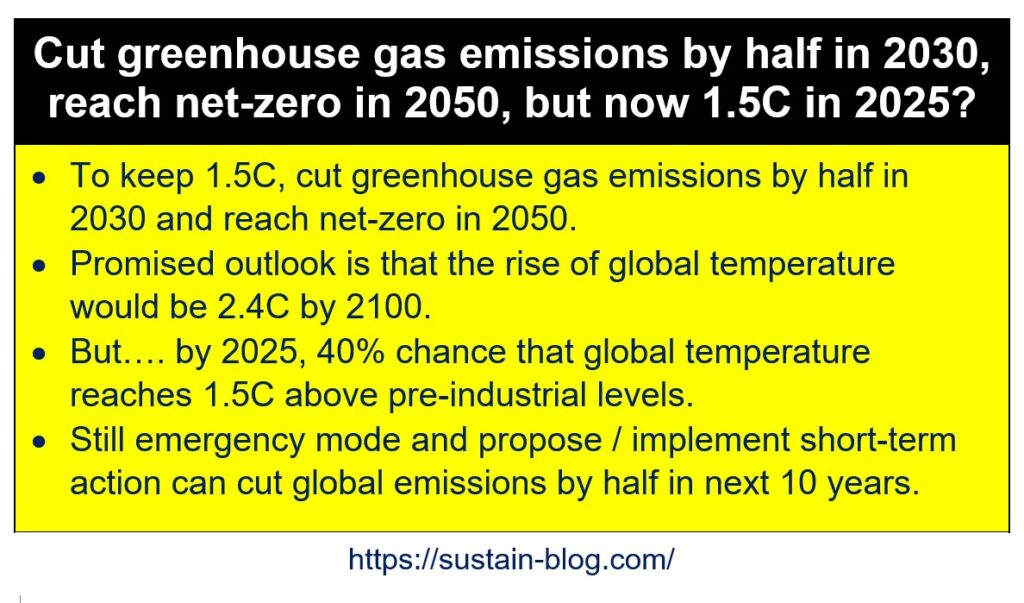
- International Commitments. Rejoining the Paris Agreement (2021) obligates the U.S. to cut net‑zero emissions by 2050.
State and Local Initiatives
- California’s cap‑and‑trade program caps emissions from power plants and large industrial sources, reducing them by roughly 10% since 2013 (California Air Resources Board, 2023).
- New York’s Climate Leadership and Community Protection Act mandates 70% renewable electricity by 2030.
- Municipalities such as Austin, TX, have adopted 100% renewable‑energy goals for city operations.
Corporate and Market Actions
- Fortune‑500 firms are purchasing renewable‑energy certificates; by 2023, corporate renewable procurement covered 45 GW of capacity (Renewable Energy Buyers Alliance, 2023).
- Technology firms pledge carbon‑neutral data‑center operations, often using direct‑air‑capture offsets.
Grassroots and Community Projects
- Community solar cooperatives have installed over 3 GW of distributed solar across the Midwest (U.S. Department of Energy, 2022).
- Local climate‑justice groups secure funding for tree‑planting, heat‑island mitigation, and flood‑resilience retrofits.
What Does the Evidence Show?
Long‑term monitoring by NOAA indicates that the U.S. average temperature has risen about 1.9 °F (1.1 °C) since the pre‑industrial era, consistent with IPCC (2021) assessments of anthropogenic warming. EPA’s Greenhouse Gas Inventory reports a 12% decline in total U.S. GHG emissions from 2005 to 2022, largely driven by a 30% drop in coal‑generated electricity. The International Energy Agency notes that renewable electricity’s share grew from 12% in 2010 to 22% in 2023, while coal’s share fell from 22% to 12% over the same period. These trends are supported by multiple independent data sets, indicating that policy incentives and market forces are beginning to shift the energy mix.
Main Causes or Drivers of America’s Climate Action
Direct Causes
- Legislative incentives that lower the cost of solar panels, wind turbines, and battery storage.
- State‑level carbon‑pricing mechanisms that internalize the cost of emissions.
Underlying Drivers
- Public opinion: Pew Research (2022) shows 68% of Americans consider climate change a major threat.
- Economic competitiveness: Renewable‑energy jobs grew 11% annually from 2015 to 2022 (U.S. Bureau of Labor Statistics).
\n
Amplifying Factors
- Continued reliance on natural‑gas for electricity, which still emits CO₂.
- Supply‑chain bottlenecks for critical minerals needed for batteries and wind turbines.
Environmental and Human Impacts
Environmental Impacts
Reduced coal combustion has lowered sulfur‑dioxide emissions by 45% since 2005, improving air quality and decreasing acid‑rain deposition (EPA, 2023). However, increased renewable infrastructure raises land‑use concerns, particularly for large‑scale solar farms in arid regions.
Human Health and Social Impacts
Cleaner air translates to fewer premature deaths; the EPA estimates that reductions in fine particulate matter (PM₂.₅) from 2010 to 2020 prevented approximately 30,000 premature deaths nationwide. Climate‑adaptation projects, such as seawall upgrades in New York City, protect low‑income coastal neighborhoods from rising flood risk.
Economic and Infrastructure Impacts
Investments in grid modernization aim to reduce outage durations by 30% by 2035 (Department of Energy, 2022). Conversely, the transition imposes short‑term costs for retrofitting buildings and retraining workers from fossil‑fuel sectors.
Regional Differences
In the Pacific Northwest, hydropower already supplies over 60% of electricity, so the focus is on integrating wind and solar. The Southeast relies heavily on natural gas, making it a priority for carbon‑capture pilot projects. Coastal states like Florida prioritize sea‑level‑rise adaptation, while the Great Plains emphasize wind‑energy expansion due to high wind resources.
What Scientists Know With High Confidence
- Human activities, especially fossil‑fuel combustion, are the dominant driver of observed global warming since the mid‑20th century (IPCC, 2021).
- Increasing atmospheric CO₂ concentrations enhance the greenhouse effect, leading to higher average temperatures.
- Renewable‑energy deployment reduces lifecycle GHG emissions compared with coal or natural gas.
- Climate‑related health impacts (e.g., heat‑related mortality) increase as average temperatures rise.
What Remains Uncertain
Key uncertainties include the pace at which emerging technologies such as solid‑state batteries and direct‑air capture will become cost‑competitive, and how future political cycles will affect the continuity of climate legislation. Additionally, regional climate projections for extreme precipitation events carry higher model variability, making precise local planning more challenging.
Common Misconceptions
Misconception: “The U.S. has stopped all fossil‑fuel use.”
Reality: Fossil fuels still provide about 60% of U.S. primary energy, though their share is declining.
Misconception: “Renewable energy can replace the grid overnight.”
Reality: Integrating variable renewables requires grid upgrades, storage solutions, and demand‑response programs that take years to implement.
Misconception: “Individual actions are enough to solve climate change.”
Reality: Personal choices matter but must be coupled with systemic policy and corporate changes to achieve the emissions reductions required by climate science.
Misconception: “Climate policies always increase electricity bills for consumers.”
Reality: While upfront costs can rise, long‑term price trends show renewable electricity becoming cheaper than coal and gas in many regions (EIA, 2023).
Solutions and Limitations
Effective U.S. climate action blends mitigation (e.g., decarbonizing power, improving vehicle efficiency) with adaptation (e.g., flood‑defense infrastructure). Renewable‑energy expansion offers large‑scale emissions cuts but faces land‑use and intermittency challenges. Carbon‑capture can reduce emissions from remaining fossil‑fuel plants, yet current costs exceed $100 per metric ton of CO₂, limiting near‑term deployment. Nature‑based solutions like reforestation sequester carbon but require long‑term land‑management commitments and can be vulnerable to wildfires.
What Individuals, Communities, and Governments Can Do
What Individuals Can Do
- Choose electricity plans with a renewable‑energy mix where available.
- Adopt energy‑efficient appliances and improve home insulation to lower heating‑cooling demand.
- Support climate‑friendly candidates and local ballot measures.
What Communities and Organizations Can Do
- Develop community solar projects to increase local access to clean power.
- Implement urban‑tree planting and green‑infrastructure to mitigate heat islands.
- Partner with schools and NGOs to provide climate‑education programs.
What Governments Can Do
- Enact and enforce stricter building‑energy codes.
- Allocate federal and state funding for resilient infrastructure in vulnerable regions.
- Maintain and expand incentives for electric‑vehicle adoption and renewable‑energy deployment.
What Businesses and Industries Can Do
- Set science‑based emissions targets aligned with net‑zero pathways.
- Invest in on‑site renewable generation and energy‑storage systems.
- Report climate‑related risks through standardized frameworks such as TCFD.
Synthesis
America’s climate response today is a mosaic of policy reforms, market incentives, technological advances, and community action. High‑confidence science confirms that reducing GHG emissions is essential to limit warming, and the evidence shows that U.S. emissions are beginning to plateau and decline. Uncertainties remain around policy durability and emerging‑technology costs, but the trajectory points toward deeper renewable integration and stronger adaptation measures. Continued coordination across all sectors will be critical to achieving the net‑zero goal while ensuring equity and economic resilience.
Frequently Asked Questions
What federal laws currently support climate action in the United States?
The Inflation Reduction Act of 2022 provides the largest clean‑energy tax incentives, including credits for solar, wind, and electric vehicles, while the Inflation Reduction Act also funds grid modernization and climate‑resilient infrastructure.
How much of U.S. electricity generation comes from renewable sources?
Renewable electricity accounted for about 22 % of total U.S. generation in 2023, driven mainly by wind and solar, according to the International Energy Agency.
What are the main health benefits of reducing air‑polluting emissions?
Lowering fine particulate matter (PM₂.₅) and sulfur‑dioxide has been linked to preventing roughly 30,000 premature deaths between 2010 and 2020, as estimated by the EPA.
Why is the transition to renewable energy considered challenging for the grid?
Renewable sources like wind and solar are variable, requiring upgrades to transmission infrastructure, energy‑storage solutions, and demand‑response programs to maintain reliability.
What role do community‑scale projects play in America’s climate strategy?
Community solar cooperatives and local climate‑justice initiatives increase access to clean energy, support resilience projects such as tree planting, and help translate national policies into tangible neighborhood benefits.







Leave a Comment