
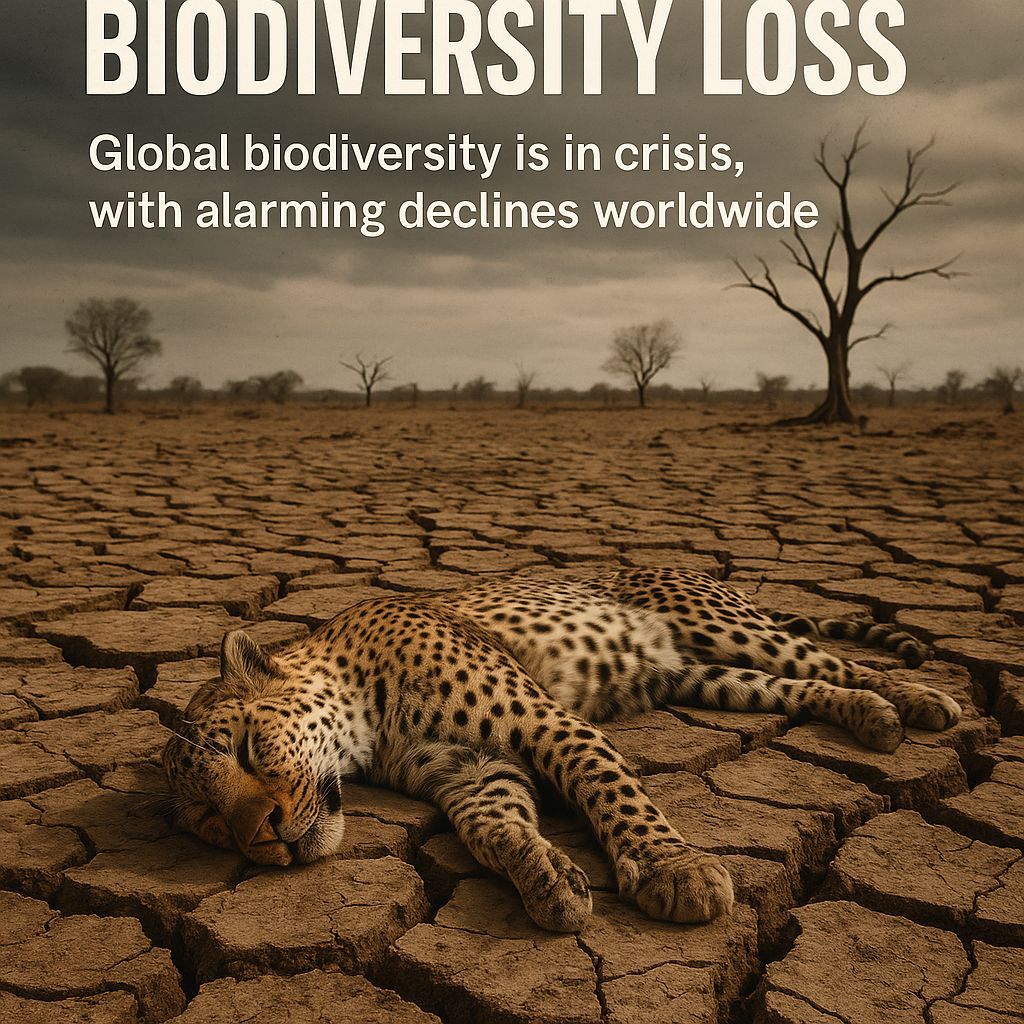
Biodiversity—the variety of life at genetic, species, and ecosystem levels—forms the living foundation of our planet, regulating climate, purifying water, pollinating crops, and providing resilience against environmental change, yet it is declining at an unprecedented rate due to human activities.
Quick Answer
Biodiversity refers to the full variety of life on Earth, including the diversity within species (genetic), between species, and of ecosystems. It matters because it underpins ecosystem services that sustain human life: clean air and water, fertile soils, pollination, climate regulation, and disease control. Scientific assessments, such as the 2019 IPBES Global Assessment, conclude that biodiversity is declining faster than at any time in human history, driven primarily by habitat loss, overexploitation, climate change, pollution, and invasive species. This loss threatens food security, health, and economic stability. While the broad trends are clear, the precise pace of extinctions and the resilience of some ecosystems remain uncertain.
Key Takeaways
- Biodiversity encompasses genetic, species, and ecosystem variety, and it is essential for the functioning of Earth’s life-support systems.
- Human activities—especially land-use change, overfishing, and pollution—are the dominant drivers of biodiversity loss.
- Ecosystem services such as pollination, water purification, and carbon sequestration depend directly on biodiversity.
- Current extinction rates are estimated to be tens to hundreds of times higher than the natural background rate, with around 1 million species at risk of extinction in the coming decades.
- Protecting biodiversity requires integrated solutions, including habitat conservation, sustainable resource use, and addressing climate change, but no single approach is sufficient alone.
- Individual actions, while important, must be complemented by systemic changes in policy, business practices, and global cooperation.
What Is Biodiversity?
Biodiversity, short for biological diversity, is defined by the Convention on Biological Diversity as the variability among living organisms from all sources, including terrestrial, marine, and other aquatic ecosystems and the ecological complexes of which they are part. This includes diversity within species (genetic variation), between species (species richness), and of ecosystems (the variety of habitats, communities, and ecological processes).
Genetic diversity allows populations to adapt to changing conditions; species diversity ensures a range of functions like pollination and predation; ecosystem diversity provides a mosaic of habitats that support different life forms. Together, these levels create a resilient web of life. Biodiversity is not evenly distributed—tropical regions, coral reefs, and islands hold disproportionately high numbers of species, while polar and desert regions have lower richness but unique adaptations.
How Does Biodiversity Work?
Biodiversity operates through complex interactions among organisms and their environment. At the ecosystem level, diverse communities tend to be more productive and stable. For example, a forest with many tree species can better withstand pests or drought than a monoculture. This is partly due to niche complementarity: different species use resources in slightly different ways, reducing competition and increasing overall efficiency.
Key processes include:
- Nutrient cycling: Decomposers like fungi and bacteria break down organic matter, releasing nutrients that plants need.
- Pollination: Insects, birds, and bats transfer pollen, enabling plant reproduction. Over 75% of global food crop types rely on animal pollination to some extent.
- Water purification: Wetlands and riparian zones filter pollutants and sediments, improving water quality.
- Climate regulation: Forests and oceans absorb carbon dioxide, while vegetation influences local rainfall patterns.
- Pest and disease control: Predators and parasites keep potential pest populations in check, reducing the need for chemical interventions.
These services are often taken for granted, but their loss can trigger cascading effects. The decline of pollinators, for instance, can reduce crop yields and increase food prices.
What Does the Evidence Show?
The most comprehensive assessment to date, the 2019 IPBES Global Assessment Report, drew on thousands of scientific studies and indigenous and local knowledge. It concluded that nature is declining globally at rates unprecedented in human history, with grave impacts on people around the world. Key findings include:
- Around 1 million animal and plant species are threatened with extinction, many within decades, more than ever before in human history.
- The average abundance of native species in most major terrestrial biomes has fallen by at least 20%, mostly since 1900.
- More than 40% of amphibian species, almost 33% of reef-forming corals, and more than a third of all marine mammals are threatened.
- Ecosystem extent and condition have declined by 47% against a baseline of natural reference states, with many ecosystems at risk of collapse.
These trends are corroborated by the IUCN Red List, long-term monitoring programs, and satellite data showing habitat loss. While the exact number of species on Earth remains uncertain (estimates range from 3 million to over 100 million), the direction of change is clear and negative.
Main Causes or Drivers of Biodiversity Loss
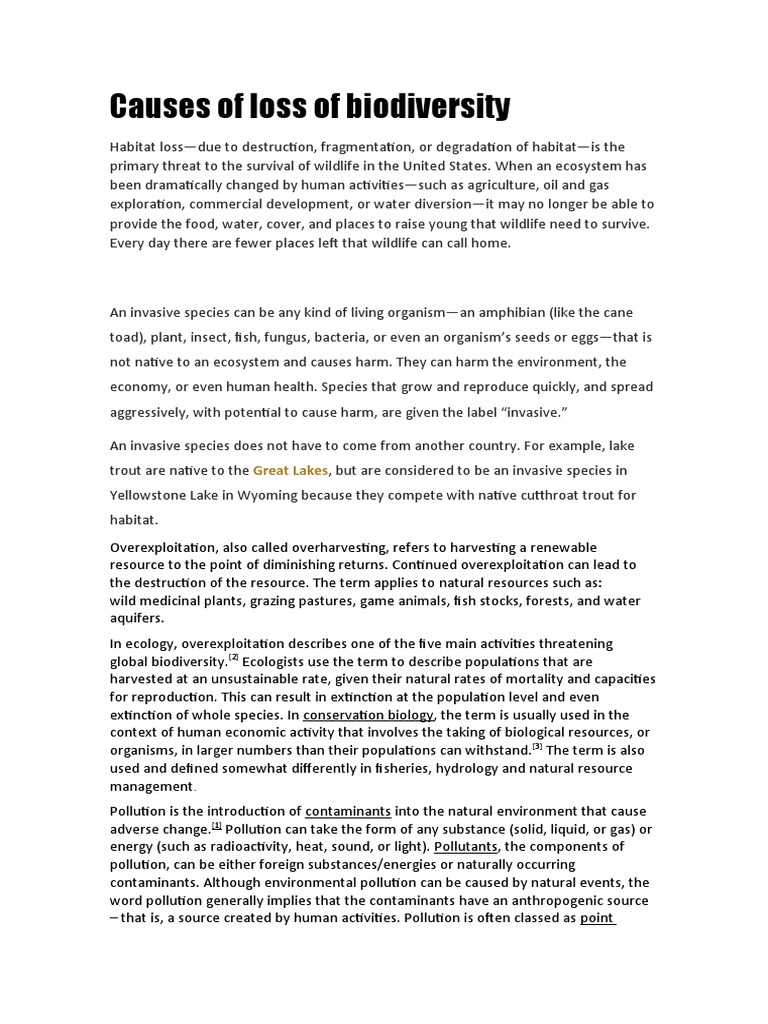
The IPBES identifies five direct drivers of biodiversity decline, ranked in order of global impact:
- Changes in land and sea use: Conversion of forests, grasslands, and wetlands for agriculture, urban expansion, and infrastructure is the largest driver. Over one-third of the world’s land surface is now used for crop or livestock production.
- Direct exploitation of organisms: Overfishing, unsustainable hunting, and logging deplete populations. Industrial fishing has reduced large predatory fish biomass by about 90% in many regions.
- Climate change: Rising temperatures, altered precipitation, and ocean acidification are already shifting species ranges and increasing extinction risk. Climate change is projected to become the dominant driver in the coming decades.
- Pollution: Nutrient runoff from agriculture causes dead zones in coastal waters; plastic pollution harms marine life; pesticides affect non-target species, including pollinators.
- Invasive alien species: Non-native species can outcompete, prey on, or bring diseases to native species, disrupting ecosystems. The rate of new introductions is higher than ever before.
Underlying these direct drivers are indirect factors such as population growth, unsustainable consumption patterns, weak governance, and economic systems that fail to account for nature’s value.
Environmental and Human Impacts
Environmental Impacts
Biodiversity loss reduces ecosystem resilience. Simplified ecosystems are more vulnerable to disturbances like fires, storms, and disease outbreaks. The loss of keystone species—such as large predators or seed-dispersing animals—can trigger trophic cascades that restructure entire communities. Coral bleaching, driven by warming oceans, not only kills corals but also eliminates habitat for thousands of fish species.
Human Health and Social Impacts
Declining biodiversity affects human health directly and indirectly. Reduced pollination threatens crop yields and nutritional diversity. Loss of natural pest control can increase pesticide use and associated health risks. The disruption of ecosystems can also increase the risk of zoonotic disease emergence, as habitat fragmentation brings humans and wildlife into closer contact. Many communities, particularly Indigenous peoples and rural populations, depend directly on wild species for food, medicine, and cultural identity.
Economic and Infrastructure Impacts
The World Economic Forum estimates that over half of global GDP—$44 trillion—is moderately or highly dependent on nature and its services. Biodiversity loss can undermine industries such as agriculture, fisheries, forestry, and tourism. Coastal ecosystems like mangroves and coral reefs provide natural flood protection; their degradation increases infrastructure damage from storms and sea-level rise.
Regional Differences
Biodiversity loss is a global phenomenon, but its patterns vary. Tropical regions, which harbor the highest species richness, are experiencing rapid deforestation and habitat conversion, particularly in Southeast Asia, the Amazon, and Central Africa. Small island developing states face disproportionate threats from invasive species and climate change. In temperate regions, historical habitat loss has already been extensive, but some ecosystems are recovering due to reforestation and conservation efforts. The Arctic is warming faster than the global average, threatening ice-dependent species. Monitoring capacity and conservation resources are unevenly distributed, with many biodiversity-rich countries lacking adequate funding for protection.
What Scientists Know With High Confidence
- Biodiversity is declining globally at rates unprecedented in human history, driven primarily by human activities.
- Habitat loss and degradation, especially from agricultural expansion, are the single largest driver of terrestrial biodiversity loss.
- Ecosystem services essential to human well-being are deteriorating, with negative consequences for food security, water quality, and health.
- Climate change is already impacting biodiversity and will increasingly exacerbate other drivers.
- Current conservation efforts, while important, are insufficient to halt overall biodiversity decline without transformative changes in production and consumption.
What Remains Uncertain
Despite strong evidence of decline, several uncertainties remain. The total number of species on Earth is unknown, making precise extinction rates difficult to calculate. The functional consequences of losing specific species are not always predictable, as ecosystems can exhibit thresholds and non-linear responses. The effectiveness of large-scale restoration and the potential for species to adapt to rapid environmental change are areas of active research. Additionally, the socio-economic pathways that could reverse biodiversity loss while meeting human needs are subject to complex modeling and depend on future policy choices.
Common Misconceptions
Misconception: Biodiversity is only about saving charismatic species like pandas and tigers.
Reality: While iconic species are important, biodiversity encompasses all life forms, including microbes, fungi, and insects that perform critical ecosystem functions. The loss of soil bacteria or pollinators can have far greater consequences for human survival than the loss of a single large mammal.
Misconception: Biodiversity loss is a future problem; we can address it later.
Reality: Biodiversity is declining now, and many ecosystems are already degraded. Delaying action increases the risk of irreversible tipping points, such as the collapse of coral reefs or the Amazon rainforest, which would have catastrophic and costly consequences.
Misconception: Technology can replace the services nature provides.
Reality: While technology can supplement some services (e.g., water treatment plants), it is often prohibitively expensive and energy-intensive. Natural pollination, for instance, is provided free by insects and cannot be fully replicated by human-made alternatives at a global scale.
Solutions and Limitations
Addressing biodiversity loss requires a combination of conservation, sustainable use, and restoration. Key strategies include:
- Protected areas: Expanding and effectively managing protected areas can safeguard critical habitats. However, many protected areas are underfunded, poorly enforced, or too small to maintain viable populations. They must be complemented by conservation on working lands and seascapes.
- Ecosystem restoration: Restoring degraded forests, wetlands, and grasslands can recover biodiversity and ecosystem services. The UN Decade on Ecosystem Restoration (2021–2030) aims to scale up efforts, but restoration is costly, slow, and may not fully recover original species composition.
- Sustainable agriculture and fisheries: Practices such as agroecology, reduced pesticide use, and sustainable fishing quotas can reduce pressure. Yet adoption is hindered by economic incentives favoring intensive production and by global supply chains.
- Addressing climate change: Mitigating climate change is essential to limit future biodiversity loss. Nature-based solutions like reforestation can help, but they must be carefully designed to avoid monoculture plantations that harm biodiversity.
- Policy and economic instruments: Reforming subsidies harmful to biodiversity, valuing natural capital, and integrating biodiversity into national accounting can shift incentives. The Kunming-Montreal Global Biodiversity Framework (2022) sets targets, but implementation depends on political will and financing.
No single solution is a panacea. Trade-offs exist: bioenergy crops can compete with food production and natural habitats; marine protected areas may displace fishing pressure elsewhere. Effective action requires integrated approaches that consider social equity and local contexts.
What Individuals, Communities, and Governments Can Do
What Individuals Can Do
Individuals can reduce their ecological footprint by consuming less, reducing food waste, choosing sustainably sourced products, and supporting conservation organizations. Dietary shifts toward more plant-based foods can lower the land and water demands of agriculture. However, individual actions alone cannot reverse systemic biodiversity loss; they must be paired with collective action and policy change.
What Communities and Organizations Can Do
Local communities can engage in habitat restoration, citizen science monitoring, and sustainable resource management. Indigenous and community-conserved areas have proven effective in protecting biodiversity. Businesses can adopt sustainable supply chains, reduce pollution, and invest in nature-positive practices. Financial institutions can divest from activities that harm biodiversity.
What Governments Can Do
Governments hold the primary responsibility for enacting and enforcing environmental laws, establishing protected area networks, and integrating biodiversity into sectoral policies (agriculture, energy, infrastructure). They can redirect harmful subsidies, invest in green infrastructure, and support international cooperation. Meeting the targets of the Global Biodiversity Framework will require significant increases in funding and political commitment.
Why Biodiversity Matters: A Living Foundation
Biodiversity is not a luxury; it is the living fabric that sustains the planet’s life-support systems. The evidence is overwhelming that human activities are eroding this foundation at an alarming rate, with direct consequences for human health, food security, and economic stability. While uncertainties remain about the precise trajectory of some ecosystems, the overall direction is clear and the need for action urgent. Protecting biodiversity requires a fundamental shift in how we value and interact with nature—from individual choices to global governance. The solutions exist, but their success depends on collective will and a recognition that human well-being is inseparable from the health of the living world.
Frequently Asked Questions
What is biodiversity in simple terms?
Biodiversity refers to the variety of life on Earth at all levels, from genes to ecosystems. It includes the differences within species, the number of species in a given area, and the range of habitats and ecological processes. This diversity is essential for ecosystem resilience and the services nature provides, such as clean water and pollination.
Why is biodiversity important for humans?
Biodiversity underpins ecosystem services that humans rely on: pollination of crops, purification of air and water, fertile soils, climate regulation, and disease control. The loss of biodiversity can reduce food security, increase vulnerability to natural disasters, and harm economies. Over half of global GDP depends moderately or highly on nature, according to the World Economic Forum.
What are the main threats to biodiversity?
The five main direct drivers, as identified by IPBES, are changes in land and sea use (e.g., deforestation for agriculture), direct exploitation (overfishing, hunting), climate change, pollution, and invasive alien species. Underlying these are indirect drivers like population growth, unsustainable consumption, and economic systems that do not account for nature's value.
How fast are species going extinct?
Current extinction rates are estimated to be tens to hundreds of times higher than the natural background rate. The 2019 IPBES Global Assessment found that around 1 million species are threatened with extinction, many within decades. However, the exact rate is uncertain because the total number of species on Earth is not known, and monitoring is incomplete.
What can I do to help protect biodiversity?
Individuals can reduce their impact by consuming less, cutting food waste, choosing sustainably sourced products, and supporting conservation groups. Dietary shifts toward plant-based foods can lower pressure on land and water. However, individual actions must be combined with systemic changes—such as policy reform and corporate accountability—to effectively halt biodiversity loss.





Leave a Comment