
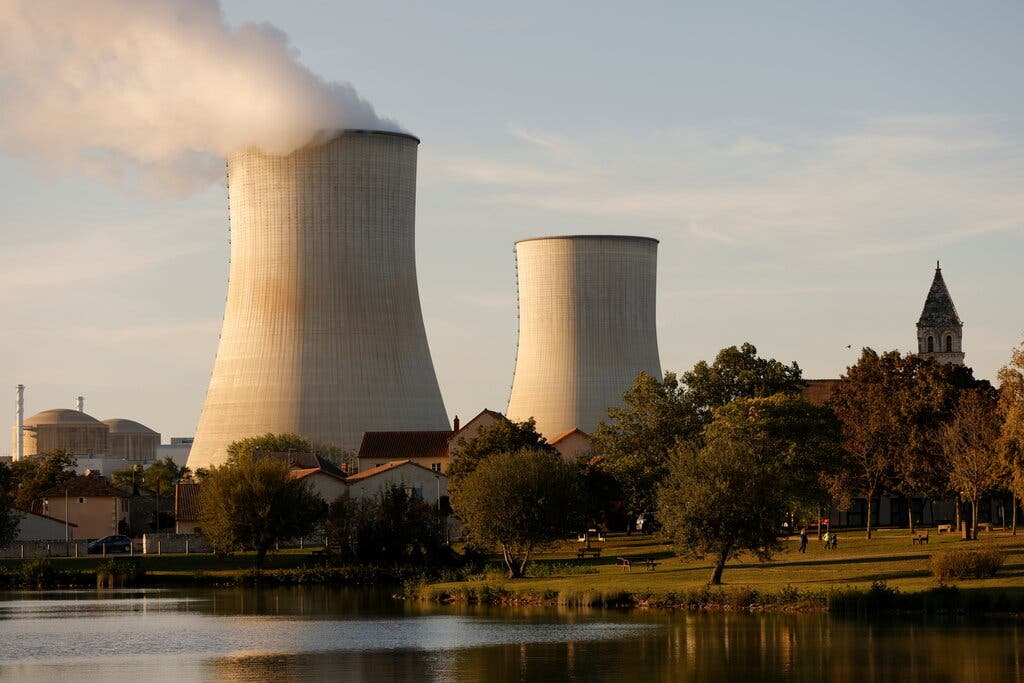
Ten EU countries, led by France, are urging the European Commission to classify nuclear power as a green activity, a move that could reshape sustainable finance, energy security, and climate policy across the bloc.
\n\n
Quick Answer
\n
Under the EU’s Sustainable Finance Taxonomy, a \”green\” activity is one that substantially contributes to climate‑change mitigation and does not cause significant environmental harm. The ten‑country coalition argues that nuclear power meets these criteria because its lifecycle greenhouse‑gas emissions are comparable to wind and solar, and it provides reliable, low‑carbon electricity. If the Commission accepts the proposal, nuclear projects would become eligible for green‑label investment funds, potentially unlocking billions of euros. However, scientific and public‑policy debates remain about long‑term waste management, accident risk, and whether nuclear should count toward the EU’s 2030 climate targets.
\n
\n\n
Key Takeaways
\n
- \n
- EU taxonomy revision could label nuclear power as a green activity, opening sustainable‑finance capital.
- Low‑carbon electricity from nuclear helps meet the EU’s net‑zero goal while reducing dependence on imported fossil fuels.
- Safety, waste, and public perception remain major sources of uncertainty and political resistance.
- Advanced reactor designs, such as small modular reactors, aim to improve safety and reduce costs.
- The decision will affect investment flows, energy security, and the climate‑policy calculus across all member states.
\n
\n
\n
\n
\n
\n
\n\n
What Is the EU Push to Label Nuclear Power as Green Energy?
\n
The proposal concerns the European Commission’s Sustainable Finance Taxonomy, a classification system that determines which economic activities qualify for \”green\” investment. Currently, the taxonomy includes renewable electricity, energy efficiency, and low‑carbon transport, but it excludes nuclear power. The coalition of ten EU members – France, Germany, Spain, Belgium, Netherlands, Luxembourg, Portugal, Ireland, Denmark, and Finland – seeks to amend the taxonomy so that new and existing nuclear plants are recognised as climate‑mitigating activities. The move is not a claim that nuclear is without environmental impact; rather, it is an effort to position nuclear alongside wind and solar as a low‑carbon source within the EU’s climate‑change strategy.
\n\n
How Does It Work?
\n
1. Taxonomy Amendment Process
\n
- \n
- Member states submit a joint technical recommendation to the European Commission.
- The Commission conducts a scientific assessment, consulting bodies such as the European Environment Agency and the International Energy Agency.
- Based on the assessment, the Commission may adopt a delegated act that adds nuclear power to the taxonomy.
- Financial market participants must then align their product disclosures with the updated taxonomy, directing green‑label funds toward qualifying nuclear projects.
\n
\n
\n
\n
\n\n
2. Nuclear’s Climate‑Mitigation Contribution
\n
Nuclear reactors generate electricity through fission of uranium‑235 or plutonium‑239, releasing heat that drives turbines. Life‑cycle analyses compiled by the International Atomic Energy Agency (IAEA) show that nuclear emits 12 g CO₂‑equivalent per kilowatt‑hour, comparable to on‑shore wind (10‑15 g/kWh) and lower than solar PV (40‑50 g/kWh). Because nuclear plants operate at high capacity factors (≈90 %), they provide steady baseload power without the intermittency of wind or solar.
\n\n
3. Safeguards and Waste Management
\n
Modern reactors incorporate multiple safety layers, including passive cooling and hardened containment structures. Small modular reactors (SMRs) are designed for factory fabrication, reduced on‑site construction, and enhanced passive safety. High‑level radioactive waste is currently stored in deep geological repositories in France (Cigéo project) and Finland (Onkalo), with long‑term safety assessments extending over 100 000 years.
\n\n
What Does the Evidence Show?
\n
Multiple peer‑reviewed life‑cycle assessments (e.g., a 2020 systematic review by the European Commission’s Joint Research Centre) conclude that nuclear power’s greenhouse‑gas emissions are consistently below 20 g CO₂‑eq/kWh, placing it within the \”low‑carbon\” threshold used by the taxonomy. The International Energy Agency’s 2022 World Energy Outlook reports that nuclear contributed 26 % of the EU’s low‑carbon electricity in 2021, making it the second‑largest source after wind. Monitoring data from the European Network of Transmission System Operators for Electricity (ENTSO‑E) show that nuclear’s capacity factor remains the highest among all generation technologies, providing grid stability.
\n\n
Main Causes or Drivers
\n
Policy Drivers
\n
The EU’s 2050 climate‑neutrality target, embodied in the European Green Deal, creates a financing gap for low‑carbon infrastructure. Taxonomy‑aligned capital is estimated to reach €2.5 trillion by 2030, prompting countries reliant on nuclear to seek inclusion.
\n
Energy‑Security Drivers
\n
Geopolitical tensions, especially after the 2022 Russia‑Ukraine war, exposed the vulnerability of fossil‑fuel imports. Nuclear’s domestic fuel cycle reduces exposure to external supply shocks.
\n
Economic Drivers
\n
France’s nuclear fleet supplies about 70 % of its electricity at a levelized cost of €50‑60/MWh, lower than many renewable projects when accounting for storage and backup capacity.
\n\n
Environmental and Human Impacts
\n
Environmental Impacts
\n
Low‑carbon generation helps limit global warming, contributing to the EU’s 1.5 °C pathway. However, nuclear mining and fuel processing generate localized water usage and trace radioactive releases. Land use is minimal compared with utility‑scale solar farms, preserving habitats.
\n
Human Health and Social Impacts
\n
Occupational exposure to radiation is tightly regulated; the IAEA reports that modern plants keep worker doses below 20 mSv per year, well under the 100 mSv occupational limit. Public health concerns focus on accident risk; historical events (Chernobyl 1986, Fukushima 2011) have driven stricter safety standards, but the probability of a severe accident remains low (<10⁻⁶ per reactor‑year according to probabilistic risk assessments).
\n
Economic and Infrastructure Impacts
\n
Inclusion in the taxonomy could attract green‑bond financing, reducing borrowing costs for new reactors. Conversely, decommissioning costs—estimated at €1‑2 billion per gigawatt for older plants—must be funded, potentially shifting financial risk to taxpayers.
\n\n
Regional Differences
\n
France, with a 61‑GW nuclear fleet, stands to benefit most, as taxonomy inclusion would legitimize continued operation and new builds. Germany, which plans to phase out nuclear by 2025, supports the proposal to protect existing plants that provide grid stability during the transition to renewables. In the Baltic states, limited nuclear capacity means the impact would be indirect, primarily through cross‑border electricity trade. Southern EU members such as Spain and Italy see nuclear as a way to reduce reliance on imported gas, whereas Austria and Luxembourg remain opposed, citing waste and non‑proliferation concerns.
\n\n
What Scientists Know With High Confidence
\n
- \n
- Nuclear electricity has life‑cycle greenhouse‑gas emissions comparable to wind and lower than solar PV.
- High capacity factors make nuclear a reliable baseload source that supports grid stability.
- Modern reactor designs incorporate passive safety features that markedly reduce accident probability.
- Deep geological repositories can isolate high‑level waste for the time scales required by radiological safety assessments.
\n
\n
\n
\n
\n
\n\n
What Remains Uncertain
\n
Key uncertainties include the long‑term societal acceptance of nuclear waste facilities, the economic competitiveness of next‑generation reactors versus rapidly falling renewable and storage costs, and the exact magnitude of future policy incentives that would affect investment decisions. Additionally, the extent to which taxonomy inclusion will actually translate into increased green‑bond issuance remains to be empirically demonstrated.
\n
\n\n
Common Misconceptions
\n
Misconception: Nuclear power emits no greenhouse gases.
\n
Reality: While operational emissions are negligible, mining, fuel fabrication, and decommissioning generate modest emissions; life‑cycle analyses place nuclear at ~12 g CO₂‑eq/kWh.
\n
Misconception: All nuclear reactors are equally safe.
\n
Reality: Safety varies by design generation; Generation III+ and SMR technologies incorporate passive safety systems that are absent in older reactors.
\n
Misconception: Classifying nuclear as green will automatically solve the EU’s climate goal.
\n
Reality: Taxonomy inclusion is one policy lever; achieving net‑zero also requires massive renewable deployment, energy efficiency, and demand‑side measures.
\n
\n\n
Solutions and Limitations
\n
Policy solutions include amending the taxonomy, establishing clear waste‑management pathways, and providing targeted R&D subsidies for SMRs. Financial solutions involve green‑bond frameworks that earmark proceeds for nuclear projects while maintaining transparency. Technological solutions focus on reactor designs that reduce construction time and cost. Each approach carries trade‑offs: policy changes may face opposition from anti‑nuclear parties; waste repositories require long‑term public consent; R&D subsidies compete with renewable incentives; and new reactors carry upfront capital risk.
\n\n
What Individuals, Communities, and Governments Can Do
\n
What Individuals Can Do
\n
Engage in local energy planning meetings to voice balanced perspectives on nuclear, support transparent waste‑management discussions, and advocate for policies that prioritize low‑carbon options overall.
\n
What Communities and Organizations Can Do
\n
Partner with universities or research institutes to host public seminars on nuclear safety and lifecycle emissions, and develop community‑owned renewable projects that complement nuclear baseload.
\n
What Governments Can Do
\n
Conduct rigorous, peer‑reviewed safety assessments; fund pilot SMR projects; align public procurement with taxonomy‑qualified low‑carbon sources; and ensure that waste‑disposal strategies are financially and socially sustainable.
\n\n
Closing Synthesis
\n
The EU’s effort to label nuclear power as green reflects a pragmatic response to climate targets, energy security concerns, and the need for substantial investment in low‑carbon infrastructure. Scientific evidence confirms nuclear’s low‑carbon credentials, yet uncertainties around waste, cost, and public acceptance persist. By integrating nuclear into the sustainable‑finance taxonomy, the bloc can unlock new capital streams, but success will depend on transparent governance, robust safety standards, and complementary renewable development.
Frequently Asked Questions
What does it mean for nuclear power to be classified as green under the EU taxonomy?
Classifying nuclear power as green means the activity meets the EU taxonomy’s criteria for substantial climate‑mitigation contribution and low environmental harm, allowing nuclear projects to qualify for green‑label investment funds.
How do the greenhouse‑gas emissions of nuclear electricity compare with wind and solar?
Life‑cycle analyses show nuclear electricity emits about 12 g CO₂‑equivalent per kilowatt‑hour, similar to on‑shore wind (10‑15 g/kWh) and markedly lower than solar PV (40‑50 g/kWh).
Which EU countries are part of the coalition pushing for nuclear’s green classification?
The coalition includes France, Germany, Spain, Belgium, the Netherlands, Luxembourg, Portugal, Ireland, Denmark and Finland, all advocating for taxonomy inclusion of nuclear power.
What are the main safety concerns associated with nuclear power?
Key safety concerns involve the potential for severe accidents, long‑term radioactive waste management, and ensuring that modern reactors maintain low occupational radiation doses and robust passive safety systems.
How could the taxonomy change affect investment in nuclear projects?
If nuclear is added to the taxonomy, it becomes eligible for green‑bond financing and other sustainable‑investment products, potentially lowering borrowing costs and attracting billions of euros of capital for new and existing plants.





Leave a Comment