
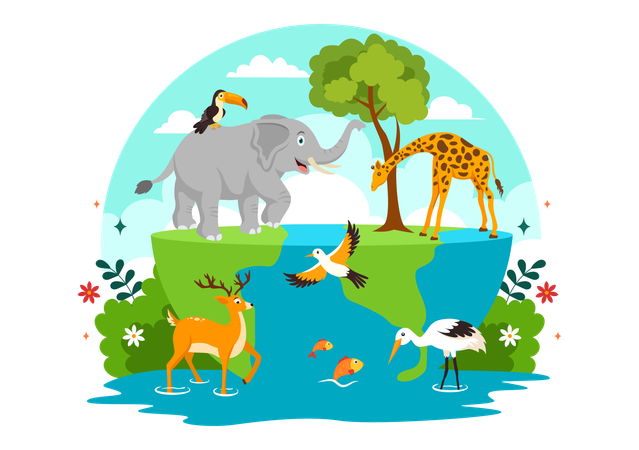
World Biodiversity Day, observed each year on May 22, highlights the planet’s living variety, explains why biodiversity underpins ecosystem health, and calls for evidence‑based actions to safeguard it.
Quick Answer
World Biodiversity Day is an annual observance on 22 May that commemorates the Convention on Biological Diversity’s goal of protecting the variety of life on Earth. It draws attention to the scientific consensus that biodiversity underlies essential ecosystem services—clean water, pollination, climate regulation—and that accelerating species loss threatens human well‑being. While the exact magnitude of future loss is uncertain, robust monitoring shows that habitat conversion, overexploitation and climate change already drive an estimated one‑million species toward extinction, making immediate conservation action a high‑priority global challenge.
Key Takeaways
- World Biodiversity Day occurs every 22 May and originates from the 1992 Convention on Biological Diversity.
- Biodiversity includes genetic, species, and ecosystem diversity, each essential for resilience.
- Human activities have placed roughly one‑million species at risk of extinction, according to the Intergovernmental Science‑Policy Platform on Biodiversity and Ecosystem Services (IPBES, 2019).
- Loss of biodiversity reduces ecosystem services that support food, water, health and climate stability.
- Evidence‑based solutions—protected areas, sustainable land use, and nature‑based restoration—show measurable benefits but require adequate funding and equitable implementation.
- Individual actions matter when they aggregate—e.g., planting native species, reducing plastic waste, and supporting policy change.
What Is World Biodiversity Day: When It Is and Why It Matters?
World Biodiversity Day is a global awareness event held on 22 May each year. It was established by the United Nations Convention on Biological Diversity (CBD) to promote public understanding of biodiversity—the variety of life at genetic, species, and ecosystem levels—and to inspire concrete actions for its preservation. Unlike a holiday focused on a single species or habitat, the day addresses the whole web of life and the services that ecosystems provide to human societies.
How Does It Work?
The observance functions through coordinated activities that connect scientific knowledge, policy frameworks, and community engagement.
1. International Coordination
UN bodies, the CBD Secretariat, and intergovernmental panels issue annual themes and guidance notes. These documents synthesize the latest assessment reports (e.g., IPBES Global Assessment 2019) and set priorities for national governments.
2. National and Local Implementation
Countries adopt the theme through official statements, educational campaigns in schools, and public events such as tree‑planting or citizen‑science monitoring. Local NGOs often organize habitat‑restoration workshops, biodiversity walks, or digital webinars.
3. Public Participation
Media outlets, social‑media hashtags, and community challenges amplify the message, encouraging individuals to record observations on platforms like iNaturalist, reduce waste, or lobby for stronger protection laws.
What Does the Evidence Show?
Multiple lines of evidence converge on three core findings:
- Accelerating Species Decline: The IPBES 2019 assessment, based on peer‑reviewed studies worldwide, estimates that around 1 million species are at risk of extinction, a rate tens to hundreds of times higher than the background fossil record.
- Ecosystem Service Loss: Long‑term monitoring by the World Resources Institute (2020) links declining pollinator populations to a 5‑10 % reduction in global crop yields, illustrating direct food‑security implications.
- Effectiveness of Protected Areas: A systematic review in *Conservation Biology* (2021) finds that well‑managed protected areas reduce deforestation rates by 30‑50 % on average, demonstrating measurable conservation outcomes.
Main Causes or Drivers
Direct Human Pressures
- Habitat conversion for agriculture, urban development and infrastructure.
- Overexploitation of wildlife for food, trade, and recreation.
- Pollution, including plastic debris, nutrient runoff and chemical contaminants.
Underlying Drivers
- Population growth and rising consumption patterns, especially in high‑income economies.
- Globalized trade that moves invasive species and creates distant supply‑chain impacts.
- Climate change, which alters temperature and precipitation regimes, amplifying stress on vulnerable species.
Environmental and Human Impacts
Environmental Impacts
Loss of biodiversity reduces ecosystem resilience, making habitats more susceptible to pests, disease outbreaks, and extreme weather events. Coral reef degradation, for example, diminishes coastal protection and erodes the habitat for countless marine species.
Human Health and Social Impacts
Reduced pollination services affect nutrition by limiting fruit and vegetable production. Declines in forest‑dependent medicinal plants threaten traditional health practices of Indigenous peoples. Moreover, ecosystem degradation can increase exposure to vector‑borne diseases as altered habitats favor disease‑carrying insects.
Economic and Infrastructure Impacts
The World Bank (2022) estimates that ecosystem‑service loss could cost economies up to US$10 trillion annually by 2050 if trends continue, affecting sectors such as agriculture, fisheries, and tourism.
Regional Differences
Biodiversity loss is not uniform. Tropical regions, which harbor more than 60 % of known species, experience the highest rates of deforestation—approximately 10 % of primary forest lost per decade in the Amazon and Congo basins (FAO, 2020). Temperate regions see more pressure from urban sprawl, while Arctic ecosystems are rapidly changing due to permafrost melt, affecting species adapted to cold environments.
What Scientists Know With High Confidence
What Scientists Know With High Confidence
- Biodiversity underpins key ecosystem services that directly support human livelihoods.
- Human activities are the primary driver of the current accelerated extinction crisis.
- Protected areas and sustainable land‑use practices can halt or reverse local biodiversity loss when adequately funded and managed.
- Climate change interacts with other stressors, increasing the risk of tipping points in vulnerable ecosystems.
What Remains Uncertain
What Remains Uncertain
Uncertainties centre on the exact timing and magnitude of species extinctions under different climate‑scenario pathways, the effectiveness of large‑scale restoration projects across diverse biomes, and how socioeconomic inequalities will shape future biodiversity outcomes. Improved long‑term monitoring and integrative modelling are needed to narrow these gaps.
Common Misconceptions
Common Misconceptions
Misconception: Biodiversity loss only affects exotic or remote species.
Reality: Many common species—such as pollinating insects, freshwater fish, and forest birds—are declining, directly influencing food production, water quality and cultural values worldwide.
Misconception: Planting a few trees fully compensates for habitat loss.
Reality: Tree planting can aid carbon sequestration, but restoring functional ecosystems requires native species diversity, soil health, and connectivity to existing habitats.
Misconception: Individual lifestyle changes are enough to stop the biodiversity crisis.
Reality: Personal actions are valuable when they aggregate, but systemic change—policy, funding, and corporate responsibility—is essential for large‑scale impact.
Solutions and Limitations
Effective responses fall into several categories, each with evidence‑based benefits and trade‑offs.
Conservation and Protected Areas
Designating and managing protected lands reduces habitat loss, yet limitations include insufficient funding, illegal extraction, and sometimes displacement of local communities if not planned inclusively.
Nature‑Based Restoration
Ecological restoration—such as rewilding degraded grasslands—can rebuild species richness and carbon storage. Success depends on appropriate species selection, long‑term stewardship, and realistic expectations about recovery rates.
Sustainable Agriculture
Agroecological practices (e.g., crop diversification, reduced pesticide use) maintain pollinator populations and soil biodiversity. However, transition costs and yield uncertainties can deter adoption without policy incentives.
Policy Instruments
International agreements (CBD, IPBES) set targets, while national legislation—like biodiversity offsets or habitat‑restoration subsidies—creates enforceable pathways. Limitations involve monitoring compliance and avoiding perverse incentives.
Technology and Data
Remote sensing, eDNA monitoring, and citizen‑science platforms improve biodiversity tracking, yet data gaps persist in many tropical regions and for less‑charismatic taxa.
What Individuals, Communities, and Governments Can Do
What Individuals Can Do
- Choose native plants for gardens and support local seed banks.
- Reduce single‑use plastic and support waste‑reduction policies.
- Participate in citizen‑science projects that document local species.
- Vote for leaders who prioritize biodiversity funding.
What Communities and Organizations Can Do
- Implement community‑led habitat restoration projects that involve Indigenous knowledge.
- Run educational workshops in schools to build early awareness of ecosystem services.
- Adopt sustainable procurement policies that avoid products linked to habitat destruction.
What Governments Can Do
- Expand and adequately fund protected‑area networks to meet the CBD’s 30 % land and 10 % ocean targets by 2030.
- Integrate biodiversity considerations into all sectoral policies, from agriculture to infrastructure planning.
- Provide financial incentives for farmers adopting agroecological practices.
- Support long‑term biodiversity monitoring programs and open data portals.
Synthesis
World Biodiversity Day on 22 May serves as a focal point for communicating a well‑established scientific reality: the variety of life on Earth is essential for ecosystem stability and human welfare, yet human pressures are driving unprecedented loss. High‑confidence evidence confirms that protected areas, sustainable land use, and nature‑based restoration can mitigate these trends, while uncertainties remain around future extinction timelines and the scaling of restoration outcomes. By combining informed policy, community action, and individual stewardship, societies can preserve the living fabric that sustains the planet for current and future generations.
Frequently Asked Questions
When is World Biodiversity Day celebrated?
World Biodiversity Day is observed each year on May 22, marking the date when the United Nations Convention on Biological Diversity encourages global awareness and action.
What is the main purpose of World Biodiversity Day?
The day aims to raise public understanding of biodiversity’s importance, highlight scientific findings on species loss, and inspire coordinated conservation actions across governments, NGOs, and individuals.
How does biodiversity affect human well‑being?
Biodiversity underpins ecosystem services such as pollination, clean water, climate regulation, and sources of medicine, all of which directly support food security, health, and economic stability.
What are the biggest drivers of biodiversity loss?
Habitat conversion, overexploitation, pollution, and climate change are the primary human‑induced pressures that accelerate species decline and degrade ecosystem function.
What actions can individuals take on World Biodiversity Day?
Individuals can plant native species, reduce plastic waste, join citizen‑science monitoring programs, and support policies and leaders that prioritize biodiversity protection.





Leave a Comment