
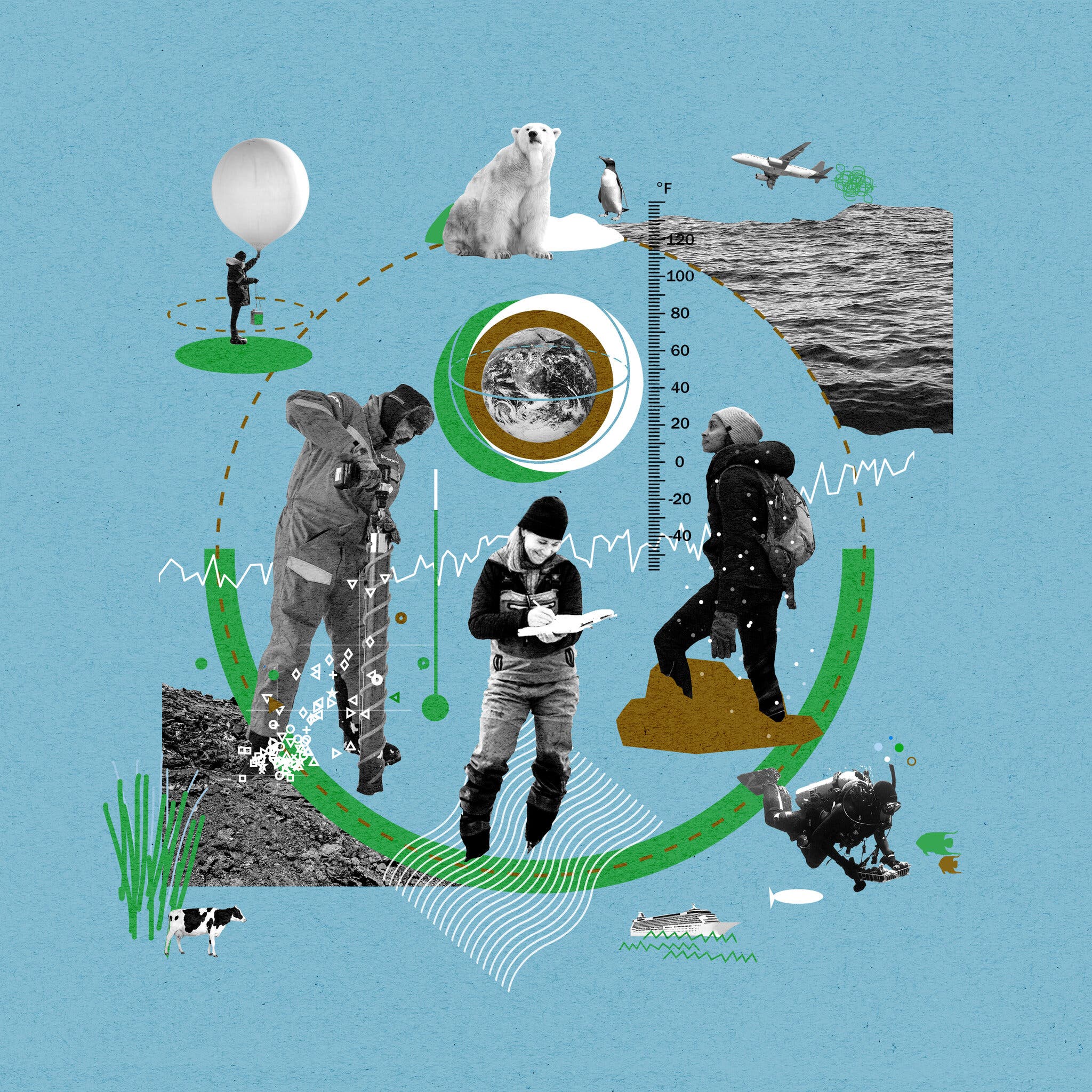
Understanding why climate change dominates public discourse reveals how its physical drivers, scientific evidence, and far‑reaching impacts intertwine, making it a pivotal focus for policy, research, and everyday decision‑making.
Quick Answer
Climate change refers to the long‑term alteration of Earth’s average weather patterns, primarily driven by the accumulation of greenhouse gases such as carbon dioxide from human activities. The core mechanism is enhanced radiative forcing, which traps heat in the atmosphere and leads to warming, sea‑level rise, and extreme events. Scientists are highly confident that these changes are occurring and that they pose substantial risks to ecosystems, economies, and public health, though uncertainties remain about the timing of regional impacts and the effectiveness of mitigation pathways.
Key Takeaways
- Human‑derived greenhouse gas emissions are the dominant cause of observed global warming since the mid‑20th century.
- Multiple independent lines of evidence—satellite data, ocean heat content, and ice‑sheet mass balance—converge on a warming trend.
- Impacts are uneven: low‑income, coastal, and Indigenous communities face the greatest exposure.
- High‑confidence actions include rapid decarbonisation, energy efficiency, and ecosystem‑based adaptation.
- Key uncertainties involve climate sensitivity, regional precipitation changes, and socio‑economic pathways.
What Is Why Climate Change Is Chosen as a Topic—And Why It Matters?
The phrase captures two linked ideas: first, that climate change has become a central subject of scientific, political, and cultural conversation; second, that this focus matters because the issue influences virtually every aspect of human and natural systems. Unlike isolated environmental problems, climate change integrates atmospheric physics, ocean chemistry, biodiversity, and socioeconomic structures, making it a comprehensive barometer of planetary health.
How Does It Work?
Physical Mechanism
Greenhouse gases (GHGs) such as CO₂, methane (CH₄), and nitrous oxide (N₂O) absorb infrared radiation emitted by Earth’s surface and re‑emit it in all directions, including back toward the surface. This “radiative forcing” raises the average global temperature—a process quantified by the Intergovernmental Panel on Climate Change (IPCC) as the primary driver of modern warming.
Feedback Loops
Warming triggers feedbacks that can amplify or dampen the initial forcing. For example, melting Arctic sea ice reduces surface albedo (reflectivity), causing more solar energy to be absorbed—a positive feedback. Conversely, increased plant growth in some regions can draw down CO₂, providing a modest negative feedback.
Human Amplification
Industrial activities release GHGs at rates far exceeding natural sources. Since 1750, atmospheric CO₂ concentrations have risen from ~280 ppm to 419 ppm in 2022 (NOAA), a 50 % increase that intensifies the greenhouse effect. Land‑use change, fossil‑fuel combustion, and waste management are the main anthropogenic contributors.
What Does the Evidence Show?
Long‑term surface temperature records, maintained by agencies such as NASA’s Goddard Institute for Space Studies, indicate a global mean increase of about 1.1 °C relative to the pre‑industrial baseline (1850‑1900). Satellite observations confirm rising tropospheric temperatures, while ocean heat content—measured by the Argo float network—has increased by roughly 30 % since the 1960s, confirming that excess heat is stored in the oceans.
Glacial retreat, sea‑level rise of 3.3 mm yr⁻¹ (1993‑2022, IPCC AR6), and the frequency of extreme weather events constitute independent, converging lines of evidence. Attribution studies using climate models consistently link these changes to anthropogenic GHG emissions with a probability exceeding 95 %.
Main Causes or Drivers
Direct Causes
- Combustion of coal, oil, and natural gas for electricity, transport, and industry, accounting for ~76 % of global CO₂ emissions (IEA, 2023).
- Agricultural practices that emit methane from enteric fermentation and rice paddies, plus nitrous oxide from synthetic fertilizers.
- Deforestation and land‑use change, which reduce carbon sinks and release stored carbon.
Underlying Drivers
- Economic growth models that prioritize fossil‑fuel expansion.
- Population increase and urbanisation, which raise energy demand.
- Policy frameworks that lack stringent carbon pricing or emissions standards.
Environmental and Human Impacts
Environmental Impacts
Rising temperatures shift species’ geographic ranges, contributing to biodiversity loss. Coral bleaching events have increased five‑fold since the 1980s, threatening reef ecosystems that support ~25 % of marine species. Permafrost thaw releases additional CO₂ and CH₄, creating a potential feedback loop.
Human Health and Social Impacts
Heatwaves elevate mortality risk, especially for older adults and outdoor workers. Vector‑borne diseases such as malaria expand into higher latitudes as mosquito habitats warm. Food security is jeopardized by reduced crop yields in tropical regions, where heat stress and drought are intensifying.
Economic and Infrastructure Impacts
Extreme weather damages cost an estimated US$650 billion annually (World Bank, 2022), with infrastructure in coastal cities facing sea‑level rise and storm surge. Insurance premiums rise, and supply‑chain disruptions affect global trade.
Regional Differences
High‑latitude regions experience amplified warming (up to twice the global average), accelerating ice‑sheet loss in Greenland and Antarctica. Tropical low‑lying islands confront sea‑level rise and saltwater intrusion, threatening freshwater supplies. In contrast, some mid‑latitude areas may see modest temperature increases but heightened precipitation variability, affecting agriculture.
What Scientists Know With High Confidence
What Scientists Know With High Confidence
- Atmospheric concentrations of CO₂, CH₄, and N₂O have risen sharply due to human activities.
- Global average surface temperature has increased by about 1.1 °C since the pre‑industrial era.
- The majority of observed warming since the mid‑20th century is attributable to anthropogenic GHG emissions.
- Sea‑level rise, glacier retreat, and ocean heat uptake are ongoing and measurable.
- Climate change disproportionately affects vulnerable populations and ecosystems.
What Remains Uncertain
What Remains Uncertain
Key uncertainties include the exact value of climate sensitivity (the temperature response to a doubling of CO₂), regional precipitation patterns, and the timing of threshold events such as large‑scale permafrost carbon release. These gaps stem from limited observational networks in remote areas, model differences in cloud feedback representation, and unpredictable future socioeconomic pathways.
Common Misconceptions
Common Misconceptions
Misconception: Climate change is just about hotter summers.
Reality: Climate change encompasses shifts in temperature, precipitation, sea level, and extreme events across the entire climate system, affecting ecosystems and societies worldwide.
Misconception: Individual lifestyle changes can solve the crisis alone.
Reality: Personal actions matter, but systemic changes in energy production, land‑use policy, and industrial practices are required to achieve the emissions reductions needed for stabilising temperatures.
Misconception: Climate models are unreliable guesses.
Reality: Climate models are rigorously tested against past observations and have successfully reproduced historical temperature trends, making them robust tools for scenario analysis.
Solutions and Limitations
Effective responses fall into three broad categories: mitigation (reducing GHG emissions), adaptation (preparing for unavoidable impacts), and conservation/restoration (protecting and enhancing natural carbon sinks).
Mitigation
- Rapid decarbonisation of the power sector through renewable energy deployment—highly effective but limited by intermittency and grid integration challenges.
- Energy efficiency in buildings and industry—offers low‑cost emissions cuts but requires upfront investment and regulatory support.
- Carbon pricing mechanisms—can incentivise reductions but depend on political will and may face equity concerns.
Adaptation
- Coastal defenses such as seawalls and managed retreat—protect communities but can be expensive and may relocate risk.
- Climate‑smart agriculture—improves resilience but may need new knowledge transfer and financing for smallholders.
- Early‑warning systems for heatwaves and floods—reduce health impacts but rely on robust monitoring infrastructure.
Conservation and Restoration
- Protecting intact forests preserves carbon stocks and biodiversity—effective yet vulnerable to illegal logging and land‑use pressure.
- Restoring wetlands enhances carbon sequestration and flood mitigation—beneficial but requires long‑term maintenance.
All strategies involve trade‑offs: land‑based mitigation can compete with food production; large‑scale renewable deployment needs rare‑earth minerals; adaptation measures may shift risk elsewhere.
What Individuals, Communities, and Governments Can Do
What Individuals Can Do
- Reduce personal carbon footprints by prioritising public transit, improving home energy efficiency, and opting for lower‑carbon diets.
- Support policies that fund renewable energy and climate research through voting and advocacy.
- Engage in local climate‑action groups to promote community resilience projects.
What Communities and Organizations Can Do
- Develop climate‑risk assessments for local infrastructure and implement nature‑based solutions such as urban tree planting.
- Adopt corporate sustainability targets aligned with the Science‑Based Targets initiative, ensuring emissions reductions are measurable.
- Invest in education and climate literacy programs to build local capacity for adaptation.
What Governments Can Do
- Implement nationally determined contributions (NDCs) that aim for net‑zero emissions by mid‑century, backed by clear policy instruments.
- Provide financing mechanisms for low‑income countries to build resilient infrastructure and transition to clean energy.
- Strengthen monitoring networks (e.g., satellite Earth observation) to improve data quality for climate science.
Synthesis
Climate change is chosen as a focal topic because its physical drivers, robust evidence base, and widespread impacts intersect with every facet of modern life. Scientists are confident that human‑driven greenhouse gas emissions are warming the planet, leading to sea‑level rise, ecosystem disruption, and heightened social vulnerability. While uncertainties remain regarding regional climate responses and the timing of feedbacks, the overarching picture is clear: swift mitigation, strategic adaptation, and conservation actions are essential. By aligning individual choices, community initiatives, and government policies with evidence‑based solutions, societies can reduce risk and safeguard a livable planet for future generations.
Frequently Asked Questions
What does the term "climate change" actually mean?
Climate change refers to long‑term alterations in average weather patterns, driven primarily by increased concentrations of greenhouse gases like carbon dioxide, which trap heat in Earth’s atmosphere.
Why has climate change become such a central topic in public discussion?
Because its physical drivers affect temperature, sea level, and extreme events worldwide, influencing ecosystems, economies, and health, making it relevant to virtually every sector of society.
What are the main human activities that cause climate change?
The biggest contributors are burning fossil fuels for electricity and transport, agricultural emissions of methane and nitrous oxide, and deforestation that releases stored carbon and reduces natural sinks.
Which impacts of climate change are most certain according to scientists?
Scientists are highly confident that atmospheric greenhouse gases have risen sharply, global average temperatures have increased by about 1.1 °C since pre‑industrial times, and sea level, ice loss, and ocean heat content are all rising.
What practical steps can governments take to address climate change?
Governments can set ambitious net‑zero targets, create carbon pricing, fund clean‑energy infrastructure, support climate‑resilient development in vulnerable regions, and strengthen monitoring networks for better data.









Leave a Comment