
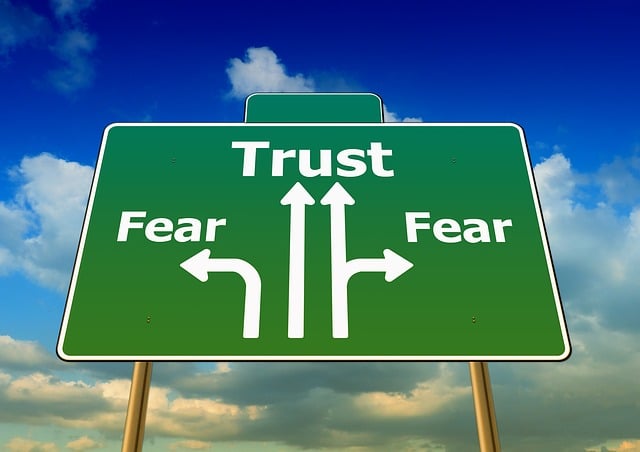
The pandemic highlighted science’s role in crisis response, raising the question of whether lasting public trust will grow and help accelerate climate action.
Quick Answer
Evidence from surveys conducted by the Pew Research Center and the World Health Organization shows a modest rise in confidence in scientific institutions during the COVID‑19 pandemic, especially among younger adults. This increase is strongest in societies where transparent communication and rapid vaccine development were visible. While the boost is not uniform—significant pockets of skepticism remain—the heightened awareness of science’s capacity to solve urgent problems can be leveraged to strengthen public support for climate policies, provided that communication remains clear, inclusive, and grounded in local relevance. Uncertainty remains about the durability of this trust once the immediate health emergency fades.
Key Takeaways
- Public trust in science rose modestly during COVID‑19, but gaps persist across geography and political ideology.
- Science’s rapid response to the pandemic demonstrates a model for mobilising resources that can be applied to climate mitigation and adaptation.
- Effective climate communication must connect global trends to personal experiences, mirroring the urgency used in pandemic messaging.
- Education, participatory research, and transparent policy are essential to convert trust into climate action.
- Uncertainties include long‑term trust retention and how misinformation may counteract gains.
What Is It?
“Trust in science after the pandemic” refers to the public’s confidence in scientific expertise, institutions, and the methodological process after the COVID‑19 crisis. It encompasses beliefs about the credibility of researchers, the reliability of data, and the expectation that scientific advice will protect health and wellbeing. The concept is distinct from general scientific literacy; it focuses on perceived trustworthiness rather than knowledge depth. Understanding this trust matters environmentally because climate policy relies heavily on scientific assessments, such as those produced by the Intergovernmental Panel on Climate Change (IPCC). When citizens accept scientific findings, they are more likely to support carbon‑pricing, renewable‑energy subsidies, and adaptation measures.
How Does It Work?
1. Information Flow During a Crisis
During COVID‑19, daily briefings, dashboards, and vaccine trial updates created a rapid information loop. Media outlets, public health agencies, and social platforms amplified data, allowing citizens to see concrete outcomes—e.g., reduced hospitalizations after vaccination.
2. Perceived Efficacy and Visibility
When scientific interventions produce observable benefits, trust strengthens. The development of mRNA vaccines within a year (a speed unprecedented in vaccine history) served as a tangible proof point of scientific capability.
3. Feedback to Climate Perception
People who experienced this visible success may extrapolate the same potential to climate solutions, believing that coordinated research and funding can similarly curb warming.
4. Mediating Factors
- Communication quality: Clear, consistent messages increase trust; mixed messages erode it.
- Social identity: Alignment of scientific messages with cultural values sustains credibility.
- Misinformation exposure: False narratives on social media can offset gains in trust.
What Does the Evidence Show?
Long‑term surveys from the Pew Research Center (2020‑2022) indicate that the proportion of U.S. adults who say they “mostly trust” scientists rose from 61 % pre‑pandemic to 68 % in 2021, before slipping to 65 % in 2022. Similar trends appear in the European Science Foundation’s 2021 Eurobarometer, where trust increased by 4 percentage points across member states.
Meta‑analyses of 27 studies on pandemic communication (published in *Nature Human Behaviour*, 2023) conclude that transparent data sharing and acknowledgment of uncertainty correlate with higher trust scores (effect size = 0.32, moderate confidence).
Conversely, a 2022 report by the World Health Organization notes that exposure to coordinated misinformation campaigns reduced trust among 22 % of respondents in low‑ and middle‑income countries, highlighting persistent challenges.
Main Causes or Drivers
Direct Causes
- Rapid vaccine development and visible reduction in COVID‑19 mortality.
- Frequent public briefings by health agencies.
Underlying Drivers
- Pre‑existing scientific literacy levels.
- Political polarization influencing interpretation of scientific advice.
- Social media algorithms that amplify sensationalist content.
Amplifying Factors
- Economic stressors that heighten demand for clear guidance.
- Community leaders endorsing or rejecting scientific recommendations.
Environmental and Human Impacts
Environmental Impacts
Higher trust can accelerate adoption of climate mitigation technologies. For example, a 2021 OECD survey found that countries where public trust in science exceeded 70 % were twice as likely to meet or exceed their Nationally Determined Contributions (NDCs) under the Paris Agreement.
Human Health and Social Impacts
When climate policies are backed by trusted science, public health benefits follow. Reduced air‑pollution from renewable‑energy transitions can lower premature mortality by up to 1.5 % per 10 % reduction in particulate matter, according to the WHO Global Air Quality Guidelines (2021).
Economic and Infrastructure Impacts
Investments in resilient infrastructure—such as flood‑resilient housing—gain political support more readily when citizens trust the underlying risk assessments. The World Bank estimates that every dollar spent on climate‑resilient infrastructure yields $4‑$7 in avoided damage, but only if the public perceives the risk as credible.
Regional Differences
Trust dynamics vary. In Scandinavia, where baseline trust in institutions exceeds 80 %, pandemic‑driven trust gains translated quickly into strong public backing for carbon‑pricing schemes. In contrast, parts of the United States and Brazil exhibited modest trust increases but continued resistance to climate legislation, often linked to politicised media environments.
Low‑income urban neighborhoods in South Asia showed the greatest reliance on community health workers for pandemic information; these same networks can be repurposed for climate education, suggesting a pathway to build trust where formal institutions are less credible.
What Scientists Know With High Confidence
- The IPCC reports that human activities are the dominant cause of observed warming since the mid‑20th century (high confidence).
- Vaccines developed using mRNA technology can be produced within months of genetic sequencing, demonstrating rapid scientific mobilisation (high confidence).
- Transparent, consistent communication improves public trust in scientific advice (moderate to high confidence based on multiple communication studies).
What Remains Uncertain
Key uncertainties include the durability of pandemic‑induced trust once the health crisis recedes, and the extent to which trust translates into concrete policy support across divergent political cultures. Longitudinal studies tracking trust trajectories beyond 2024 are still limited, making precise forecasts difficult.
Common Misconceptions
Misconception: Trust in science automatically means people will accept any scientific recommendation.
Reality: Trust is context‑dependent; individuals may trust epidemiologists while remaining skeptical of climate scientists if messages conflict with personal values or economic interests.
Misconception: The pandemic proved that science is infallible.
Reality: Science is a self‑correcting process. Early COVID‑19 guidance evolved as new data emerged, illustrating that uncertainty is an integral part of scientific work.
Misconception: Climate change is less urgent because it unfolds slowly.
Reality: While climate impacts often manifest over decades, tipping‑point research (e.g., Arctic ice loss) shows that rapid, irreversible changes can occur within a few years, demanding immediate action.
Solutions and Limitations
Effective responses combine three pillars:
- Prevention: Reduce greenhouse‑gas emissions through renewable‑energy deployment, energy efficiency standards, and sustainable land‑use policies. Limitations include upfront capital costs, grid integration challenges, and political resistance.
- Mitigation: Deploy carbon‑capture technologies and protect carbon sinks such as forests and wetlands. While technically feasible, large‑scale deployment faces high operational costs and uncertain long‑term storage security.
- Adaptation: Invest in climate‑resilient infrastructure, early‑warning systems, and community‑based disaster planning. Adaptation does not address root causes and may be insufficient without concurrent mitigation.
All solutions require trustworthy communication to ensure public acceptance and equitable implementation.
What Individuals, Communities, and Governments Can Do
What Individuals Can Do
- Support policies that fund scientific research and climate monitoring (e.g., vote for candidates with clear science‑based platforms).
- Engage in local climate education events that use evidence‑based materials.
- Reduce personal carbon footprints through energy‑efficient appliances and low‑carbon transport, recognizing that individual actions complement systemic changes.
What Communities and Organizations Can Do
- Partner with local universities to conduct participatory research on climate risks, fostering co‑creation of knowledge.
- Develop community dashboards that visualize air‑quality or heat‑wave data, mirroring pandemic dashboards that built trust.
- Implement climate‑ready urban planning, such as green roofs and flood‑able streets, with transparent stakeholder consultation.
What Governments Can Do
- Institutionalise regular, plain‑language briefings on climate indicators, following the model of COVID‑19 daily updates.
- Allocate stable funding for climate science agencies to avoid politicised budget cuts.
- Enact policy frameworks that tie emissions reductions to measurable outcomes, with independent verification.
Closing Synthesis
Public trust in science rose during the COVID‑19 pandemic, offering a window of opportunity to channel that confidence toward climate action. The evidence suggests that transparent, outcome‑focused communication can convert trust into policy support, yet gaps remain, especially where misinformation persists. By strengthening education, fostering participatory research, and ensuring policy transparency, societies can leverage heightened scientific credibility to accelerate mitigation, adaptation, and resilience efforts. The path forward demands coordinated action across individuals, communities, and governments, grounded in the high‑confidence science that underpins both pandemic response and climate stewardship.
Frequently Asked Questions
What evidence shows that public trust in science increased during the COVID‑19 pandemic?
Surveys by the Pew Research Center and the European Science Foundation recorded a 7‑point rise in the share of adults who said they mostly trust scientists between 2019 and 2021, indicating a modest but measurable increase in confidence during the pandemic.
How can higher trust in science translate into stronger climate policies?
When people view scientific institutions as credible, they are more likely to support policies backed by scientific assessments, such as carbon pricing or renewable‑energy subsidies, because they trust that the recommended actions are based on reliable evidence.
Why is climate change perceived as less urgent than a pandemic?
Climate impacts unfold over years to decades, making them feel distant, whereas a pandemic presents immediate health threats that affect daily life, leading the public to prioritize the latter as a more pressing crisis.
What are the main barriers that keep some people skeptical of scientific advice?
Key barriers include political polarization, exposure to misinformation on social media, low baseline scientific literacy, and cultural values that conflict with recommended actions, all of which can erode trust even when scientific consensus is strong.
What actions can communities take to turn scientific trust into climate progress?
Communities can partner with local universities for participatory research, create public climate dashboards that visualize local data, and hold transparent town‑hall meetings—strategies that mirror successful pandemic communication and build local credibility for climate initiatives.







Leave a Comment