
Australia’s reluctance to adopt robust climate policies stems from entrenched political interests, a fossil‑fuel‑dependent economy, cultural attitudes toward land use, and uneven public consensus, all of which limit decisive action despite clear scientific evidence of worsening impacts.
Quick Answer
Australia’s limited climate action is driven by a combination of strong fossil‑fuel lobbying, economic reliance on coal and gas exports, and a political narrative that equates resource extraction with national identity and prosperity. Scientific assessments show that greenhouse‑gas emissions remain high, leading to amplified bushfire risk, drought, and marine stress. While the direction of policy is uncertain, the evidence that current emissions trajectories exceed Australia’s Paris‑Agreement commitments is robust.
Key Takeaways
- Australia is one of the world’s largest coal exporters, and the fossil‑fuel sector wields significant political influence.
- Climate‑related events such as the 2019‑2020 Black Summer fires illustrate the immediate risks of inaction.
- High‑confidence scientific findings link Australia’s warming trend to global anthropogenic emissions.
- Economic transition, cultural narratives, and political fragmentation hinder rapid policy change.
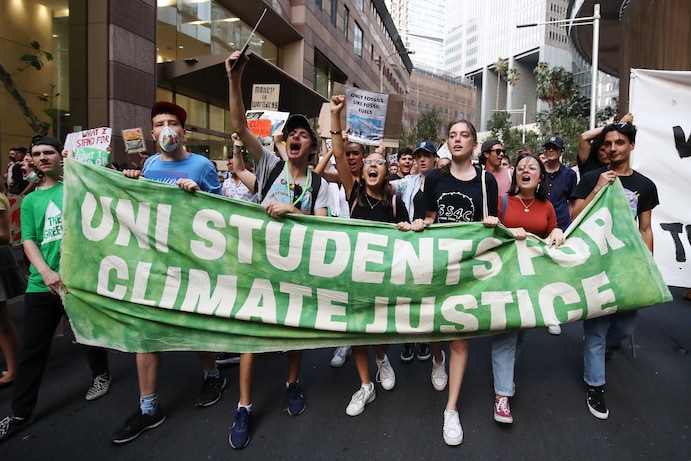
- Emerging youth activism and renewable‑energy potential offer pathways for stronger mitigation.
What Is Why Australia Still Refuses to Take Strong Climate Action?
The phrase describes the persistent gap between Australia’s observable climate impacts and the nation’s comparatively weak mitigation policies. It encompasses political inertia, economic dependence on fossil fuels, and social attitudes that prioritize resource extraction over emissions reductions. The issue is distinct from general climate‑change denial; it refers specifically to the systemic resistance to adopt policies that would meaningfully curb national greenhouse‑gas outputs.
How Does It Work?
Political and Institutional Dynamics
- Policy formulation is heavily influenced by industry lobby groups representing coal mines and liquefied natural gas (LNG) exporters.
- Successive governments have alternated between modest emissions‑reduction targets and incentives for new fossil‑fuel projects, creating regulatory uncertainty.
- Federal‑state jurisdictional splits dilute coordinated climate strategies, especially in energy planning.
Economic Feedback Loops
Revenue from coal and gas fuels national budgets, funds regional employment, and underpins trade balances. Reducing production would lower export earnings, potentially increasing short‑term unemployment in mining towns, which fuels political resistance.
Cultural and Social Factors
Australian identity often celebrates “the outback” and “resource‑rich land,” framing extraction as a patriotic duty. Rural‑urban divides amplify skepticism toward climate‑policy initiatives perceived as urban elite agendas.
What Does the Evidence Show?
Long‑term temperature records from the Australian Bureau of Meteorology indicate a warming of ~1.4 °C since 1910 (Bureau, 2023). The Intergovernmental Panel on Climate Change (IPCC) AR6 attributes the majority of this rise to anthropogenic greenhouse gases. Attribution studies link the increased frequency of extreme fire weather to higher average temperatures and reduced rainfall (CSIRO, 2022). Monitoring of atmospheric CO₂ shows national emissions of 535 Mt CO₂e in 2022, making Australia’s per‑capita emissions among the highest globally (UNFCCC, 2023).
Main Causes or Drivers
Direct Causes
- Continued operation and expansion of coal mines, especially in Queensland and New South Wales.
- LNG export projects on the east coast that lock in fossil‑fuel production for decades.
Underlying Drivers
- Economic dependence on fossil‑fuel royalties, which account for roughly 10 % of federal revenue (Australian Treasury, 2022).
- Political financing from industry groups that shape legislative agendas.
- Social narratives that equate land exploitation with national prosperity.
Environmental and Human Impacts
Environmental Impacts
Rising temperatures intensify bushfire seasons, degrade coral reefs (e.g., the 2016‑2017 Great Barrier Reef bleaching event), and alter rainfall patterns, affecting agriculture and water security. Ocean acidification, measured at a pH decline of 0.1 units since pre‑industrial times, threatens marine biodiversity.
Human Health and Social Impacts
Heatwaves increase mortality, especially among older adults; the 2019 heatwave was associated with an estimated 200 excess deaths (Australian Institute of Health and Welfare, 2020). Drought reduces crop yields, raising food‑price volatility for low‑income households.
Economic and Infrastructure Impacts
Fire‑related damages in the 2019‑2020 season cost over AU$100 billion, highlighting the economic risk of delayed mitigation. Energy security concerns arise as reliance on coal conflicts with global shifts toward renewable grids.
Regional Differences
Coastal Queensland faces intense cyclone activity amplified by warmer sea‑surface temperatures, while the arid interior experiences longer droughts and reduced groundwater recharge. Renewable‑energy potential varies: South Australia leads in wind capacity, whereas Western Australia has high solar irradiance but limited transmission infrastructure.
What Scientists Know With High Confidence
- Human‑generated greenhouse gases are the primary driver of global warming (IPCC AR6, 2021).
- Australia’s average temperature is rising faster than the global mean.
- Increased frequency and intensity of extreme fire weather are linked to climate change.
- Continued high emissions will exceed Australia’s 2030 target of a 26 % reduction below 2005 levels.
What Remains Uncertain
Key uncertainties include the precise timing of tipping points in the Great Barrier Reef ecosystem, the socioeconomic outcomes of a rapid shift away from coal for regional communities, and the effectiveness of emerging carbon‑capture technologies under Australian conditions. Improved long‑term monitoring and region‑specific climate models are needed to narrow these gaps.
Common Misconceptions
Misconception: Australia’s climate impacts are solely due to natural variability.
Reality: Attribution studies consistently show that recent extremes are strongly amplified by anthropogenic warming, not just natural cycles.
Misconception: Reducing coal production will devastate the national economy.
Reality: Economic analyses indicate that a managed transition to renewables can sustain jobs and generate new export opportunities, though targeted support is required for affected mining regions.
Misconception: Individual lifestyle changes are enough to solve Australia’s climate crisis.
Reality: Personal actions reduce household emissions, but systemic change—policy reform, infrastructure investment, and industry decarbonisation—is essential for national‑scale impact.
Solutions and Limitations
- Renewable‑energy expansion: Solar and wind are cost‑competitive, yet grid integration and storage remain technical challenges, especially in remote areas.
- Carbon pricing: A national emissions‑trading scheme can internalise climate costs, but political opposition and concerns about competitiveness have stalled implementation.
- Energy efficiency standards: Upgrading buildings reduces demand, but retrofitting costs can be prohibitive without subsidies.
- Nature‑based solutions: Reforestation and mangrove restoration sequester carbon, yet land‑use competition limits scale.
What Individuals, Communities, and Governments Can Do
What Individuals Can Do
- Choose renewable electricity plans where available.
- Reduce car travel and adopt electric vehicles, supported by government incentives.
- Engage in local climate advocacy groups to amplify community voices.
What Communities and Organizations Can Do
- Implement district‑scale solar or wind projects to reduce reliance on coal‑generated power.
- Develop climate‑resilient land‑management practices that protect water resources.
- Partner with Indigenous groups to incorporate traditional ecological knowledge into adaptation planning.
What Governments Can Do
- Adopt a comprehensive national emissions‑trading scheme aligned with the Paris Agreement.
- Allocate transition funds to diversify economies of coal‑dependent regions.
- Invest in transmission infrastructure to connect high‑renewable‑potential zones with demand centres.
- Strengthen building codes to require higher energy‑efficiency standards.
Closing Synthesis
Australia’s resistance to strong climate action is rooted in a powerful fossil‑fuel economy, cultural narratives of resource entitlement, and fragmented political will. The scientific record—high‑confidence warming trends, fire‑risk amplification, and reef degradation—demands decisive mitigation and adaptation. While uncertainties remain around transition pathways, the convergence of evidence and emerging renewable‑energy opportunities indicate a viable route toward lower emissions. Realising this path requires coordinated policy, community engagement, and targeted support for regions most affected by the shift away from coal.
Frequently Asked Questions
What are the main reasons Australia has not adopted strong climate policies?
Australia’s weak climate policies are driven by powerful fossil‑fuel lobbying, significant economic reliance on coal and gas exports, political narratives that link resource extraction to national identity, and a divided public opinion that hampers unified action.
How does Australia’s reliance on fossil‑fuel exports affect its climate action?
Export revenues from coal and LNG account for about 10 % of federal income, creating a fiscal incentive to maintain production. This economic dependence discourages policies that would reduce emissions, as it could jeopardise jobs and trade balances.
What evidence shows that climate change is already impacting Australia?
Temperature records show a ~1.4 °C rise since 1910, and attribution studies link the increased frequency of extreme fire weather to this warming. The 2019‑2020 Black Summer fires and repeated coral‑bleaching events on the Great Barrier Reef provide tangible examples of climate‑driven impacts.
Which solutions are most effective for reducing emissions in Australia?
Scaling renewable energy (solar and wind), implementing a national emissions‑trading scheme, and improving energy‑efficiency standards are the most evidence‑based measures. Each offers substantial emissions cuts, though they require supportive policy frameworks and investment in grid infrastructure.
What can ordinary Australians do to support stronger climate action?
Individuals can switch to renewable electricity, adopt low‑carbon transport, and join local climate advocacy groups. While personal choices alone won’t solve the crisis, they add pressure for broader policy change and demonstrate community demand for action.







Leave a Comment