
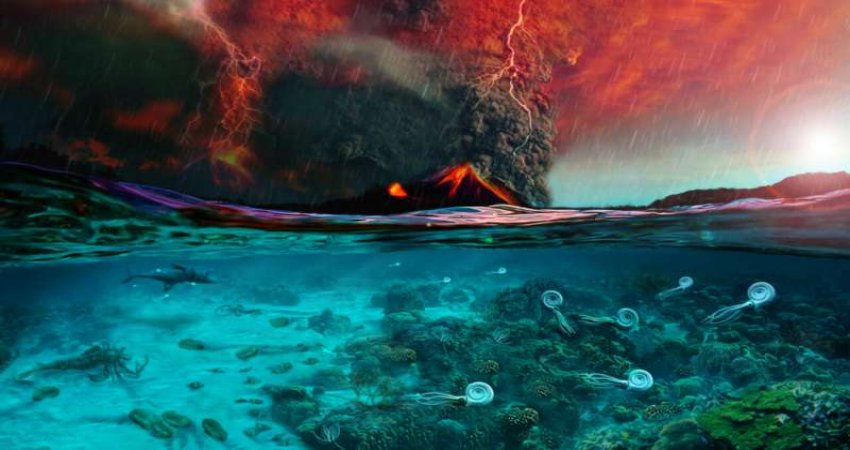
The largest mass extinction, known as the Permian‑Triassic or “Great Dying,” occurred about 252 million years ago, reshaping life on Earth and offering lessons for today’s environmental challenges.
Quick Answer
The biggest extinction event in Earth’s history happened at the boundary between the Permian and Triassic periods, roughly 252 million years ago. Scientists call it the Permian‑Triassic extinction or the “Great Dying” because it eliminated an estimated 90 % of marine species and 70 % of terrestrial vertebrates. The leading hypothesis points to massive volcanic eruptions in what is now Siberia, which released huge amounts of carbon dioxide, triggered rapid warming, ocean acidification, and widespread anoxia. While the timing is well constrained, uncertainties remain about the precise sequence of environmental changes and how they interacted.
Key Takeaways
- The Permian‑Triassic extinction occurred ~252 million years ago, marking the end of the Permian period.
- Volcanic activity in the Siberian Traps is the primary driver, releasing CO₂ and other gases that caused severe climate disruption.
- Marine ecosystems suffered the greatest losses (≈90 % of species), followed by terrestrial vertebrates (≈70 %).
- Evidence comes from multiple lines: stratigraphic records, isotopic signatures, fossil diversity trends, and climate modelling.
- Uncertainties involve the relative importance of oceanic anoxia versus acidification and the timing of ecosystem recovery.
What Is When Did the Largest Mass Extinction in Earth’s History Occur??
The phrase simply asks for the age of the most severe biodiversity loss in the geologic record. In scientific terms it refers to the end‑Permian mass extinction, a global event recorded in sedimentary layers worldwide. It is distinct from later extinctions such as the Cretaceous‑Paleogene event that wiped out the non‑avian dinosaurs. Understanding when it happened helps geologists correlate rock strata, paleontologists reconstruct ancient ecosystems, and climate scientists draw analogues for rapid greenhouse‑gas‑driven change.
How Does It Work?
1. Massive Volcanism
During the late Permian, the Siberian Traps—a huge igneous province covering over 2 million km²—experienced prolonged flood‑basalt eruptions lasting hundreds of thousands of years. These eruptions emitted billions of tonnes of CO₂, SO₂, and halogen gases.
2. Greenhouse‑Gas‑Driven Warming
The rapid increase in atmospheric CO₂ lifted global temperatures by an estimated 5–10 °C, as indicated by carbon‑isotope excursions in marine carbonates (e.g., a negative δ¹³C shift of ~5‑7‰). Warmed oceans held less dissolved oxygen, fostering anoxic conditions.
3. Ocean Acidification and Anoxia
Elevated CO₂ also increased oceanic carbonic acid, lowering pH by up to 0.3 units. Combined with stagnant, warm waters, this led to widespread dead zones where most marine life could not survive.
4. Collapse of Food Webs
Photosynthetic plankton declined, starving higher trophic levels. On land, plant communities shifted from diverse gymnosperm forests to more drought‑tolerant, low‑diversity assemblages, disrupting herbivore and predator populations.
What Does the Evidence Show?
Multiple, independent data streams converge on the same timeline and mechanisms:
- Stratigraphic Correlation: The Permian‑Triassic boundary is identified worldwide by a thin layer enriched in the rare metal iridium and a sharp negative carbon‑isotope excursion.
- Fossil Diversity Curves: Global databases such as the Paleobiology Database record a steep drop in marine genera at the boundary, followed by a slower, staggered recovery over ~10 million years.
- Geochemical Proxies: Elevated mercury concentrations in boundary sediments point to large‑scale volcanism, while sulfur isotopes indicate increased atmospheric SO₂.
- Climate Models: Simulations that input Siberian Trap CO₂ emissions reproduce temperature spikes and ocean anoxia consistent with the fossil record (e.g., studies published in *Nature Geoscience*, 2016).
These lines of evidence are classified as strong to moderate, providing high confidence in the timing and primary drivers of the event.
Main Causes or Drivers
Direct Causes
- Volcanic outgassing from the Siberian Traps (CO₂, SO₂, CH₄).
- Resulting rapid greenhouse warming.
Underlying Drivers
- Continental configuration: The supercontinent Pangaea limited ocean circulation, amplifying heat buildup.
- Pre‑existing ecological stress: Late‑Permian ecosystems already faced habitat fragmentation and climate variability.
Amplifying Factors
- Release of methane from destabilized clathrates, potentially creating a feedback loop.
- Acid rain from volcanic SO₂, damaging terrestrial plant communities.
Environmental and Human Impacts
Environmental Impacts
- Marine Life: Approx. 90 % of marine species vanished, including trilobites, brachiopods, and many reef‑forming organisms.
- Terrestrial Vertebrates: Around 70 % of land vertebrates, such as the early synapsids, were lost.
- Ecosystem Services: Collapse of primary producers reduced carbon sequestration capacity, likely prolonging warming.
Human‑Relevant Implications
While the event predates humanity, its mechanisms mirror modern climate change: rapid CO₂ release, warming, ocean acidification, and biodiversity loss. Understanding this ancient crisis informs risk assessments for present‑day societies that depend on stable climate and functional ecosystems.
Regional Differences
Fossil records show that extinction intensity varied:
- South China: Marine sections record near‑complete loss of conodonts and ammonoids.
- Gondwana (southern continents): Terrestrial vertebrate fossils indicate a slightly slower decline, perhaps due to regional climate buffering.
- North America and Europe: Evidence of fluctuating anoxia suggests episodic stress rather than a single pulse.
These patterns reflect differences in paleogeography, ocean circulation, and local volcanic ash deposition.
What Scientists Know With High Confidence
- The Permian‑Triassic extinction occurred ~252 million years ago, marking the end of the Permian period.
- Volcanic activity in the Siberian Traps released enough greenhouse gases to cause rapid global warming.
- Marine ecosystems suffered the most severe losses, followed by terrestrial vertebrates.
- Multiple independent proxies (isotopic, geochemical, fossil) converge on the same timing and magnitude.
What Remains Uncertain
Key uncertainties include the relative contribution of methane clathrate release versus volcanic CO₂, the exact duration of peak anoxia, and why some regions (e.g., parts of Gondwana) show a delayed recovery. Ongoing high‑resolution stratigraphic studies and improved climate‑carbon cycle models aim to resolve these gaps.
Common Misconceptions
Misconception: The “Great Dying” happened overnight.
Reality: Evidence indicates the crisis unfolded over several hundred thousand years, with multiple pulses of volcanic activity and environmental stress.
Misconception: Only marine life was affected.
Reality: While marine loss was proportionally larger, terrestrial plants, insects, and vertebrates also experienced massive declines.
Misconception: The extinction was caused solely by an asteroid impact.
Reality: No impact crater of the appropriate age has been found; the dominant driver is volcanic, although impact hypotheses have been largely discounted.
Solutions and Limitations
Because the Permian‑Triassic event was natural, “solutions” focus on learning from its mechanisms to avoid repeating similar pathways today. Strategies include:
- Rapid CO₂ Emission Reductions: Limiting anthropogenic greenhouse gases can prevent temperature spikes comparable to those 252 million years ago. However, transition timelines and economic costs present challenges.
- Ocean Acidification Mitigation: Protecting marine carbon sinks (e.g., mangroves, seagrasses) can buffer pH changes, yet these ecosystems are also vulnerable to warming.
- Biodiversity Conservation: Maintaining species and functional diversity enhances ecosystem resilience, but requires coordinated global policies and funding.
Each measure faces trade‑offs: mitigation may demand rapid energy system overhaul; conservation can conflict with land‑use needs; and geo‑engineering proposals carry unknown side‑effects.
What Individuals, Communities, and Governments Can Do
What Individuals Can Do
- Reduce personal carbon footprints by using public transport, improving home energy efficiency, and supporting renewable energy.
- Support organizations that protect critical habitats and promote climate‑smart agriculture.
- Advocate for policies that set science‑based emission targets.
What Communities and Organizations Can Do
- Implement local climate adaptation plans (e.g., flood‑resilient infrastructure) that also protect biodiversity.
- Invest in green infrastructure such as urban forests, which sequester carbon and reduce heat islands.
- Partner with researchers to monitor local environmental changes, contributing data to global databases.
What Governments Can Do
- Set and enforce ambitious, verifiable CO₂ reduction targets aligned with the Paris Agreement.
- Fund long‑term geological and paleontological research to improve understanding of past crises.
- Develop regulations that limit emissions from high‑impact sectors (e.g., coal, heavy industry) and promote clean energy subsidies.
Synthesizing the Evidence
The Permian‑Triassic extinction, occurring about 252 million years ago, stands as the most severe loss of life in Earth’s history. Strong geochemical and fossil evidence points to massive Siberian Trap volcanism as the primary trigger, leading to rapid warming, ocean acidification, and widespread anoxia. While the broad narrative is well established, details about feedback mechanisms and regional recovery rates remain active research areas. The event offers a stark natural analogue for today’s climate challenge: rapid greenhouse‑gas release can destabilize global systems and precipitate massive biodiversity loss. By applying the lessons of deep time—reducing emissions, protecting ecosystems, and investing in robust scientific monitoring—we can lower the risk of repeating a “Great Dying” in the Anthropocene.
Frequently Asked Questions
When did the Permian‑Triassic mass extinction occur?
The Permian‑Triassic extinction, also called the "Great Dying," took place around 252 million years ago, marking the transition from the Permian to the Triassic period.
What is considered the main cause of the largest mass extinction?
The primary cause is believed to be massive volcanic eruptions in the Siberian Traps, which released huge amounts of CO₂ and other gases, driving rapid warming, ocean acidification, and anoxia.
How do scientists know the timing of this extinction event?
Scientists use stratigraphic markers such as a distinct carbon‑isotope shift, iridium enrichment, and unique fossil assemblages that appear worldwide at the same geological layer.
Did the extinction affect land animals as much as marine life?
Marine species suffered the greatest losses (about 90 % of genera), while terrestrial vertebrates lost roughly 70 % of species, indicating severe but slightly less extreme impacts on land.
What modern lessons can we draw from the Permian‑Triassic extinction?
The event shows how rapid greenhouse‑gas release can destabilize climate and ecosystems, highlighting the importance of cutting emissions, protecting biodiversity, and monitoring climate feedbacks today.








Leave a Comment