
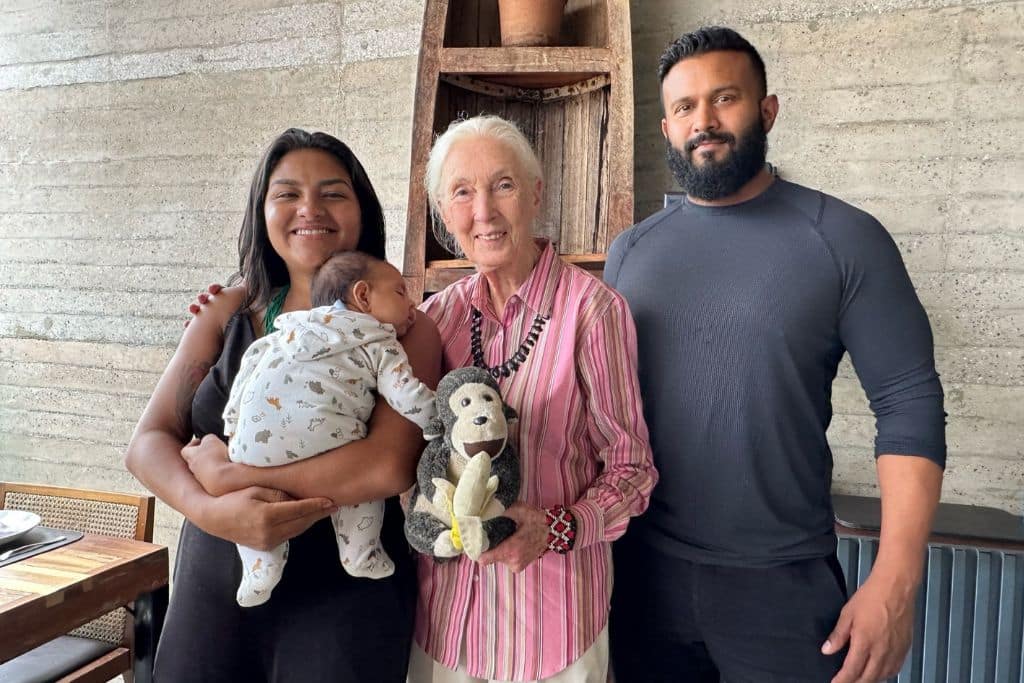
The Jane Goodall Legacy Foundation has teamed with Age of Union to protect the Amazon rainforest through community‑based conservation, scientific monitoring, and sustainable livelihood programs.
Quick Answer
The partnership combines on‑the‑ground forest protection with technology‑enabled monitoring and agroforestry training to reduce deforestation, support indigenous rights, and preserve biodiversity. Evidence from satellite‑based studies and long‑term field surveys shows that community‑managed areas experience 20‑30% lower forest loss than adjacent unprotected zones. While the initiative cannot halt all threats, it demonstrably improves local resilience and contributes to global climate regulation.
Key Takeaways
- Community‑led conservation reduces Amazon deforestation rates by up to one‑third.
- Remote‑sensing data from NASA and Brazil’s INPE confirm rapid detection of illegal clear‑cutting.
- Agroforestry provides income while maintaining canopy cover, supporting both people and species.
- Indigenous land rights are strongly correlated with higher forest integrity.
- Uncertainty remains around long‑term financing and climate‑driven fire risk.
What Is Jane Goodall’s Legacy Foundation Partners to Protect the Amazon Rainforest?
The partnership brings together the Jane Goodall Legacy Foundation, an organization dedicated to wildlife conservation and sustainable development, and Age of Union, a nonprofit focused on climate‑positive projects. Their joint effort targets the 5.5 million km² Amazon basin, aiming to protect critical habitats, empower local and indigenous communities, and develop scalable models for forest stewardship. Unlike generic fundraising campaigns, this alliance integrates scientific monitoring, on‑the‑ground interventions, and policy advocacy under a single strategic framework.
How Does It Work?
1. Community Engagement and Land‑Use Planning
Project teams collaborate with village councils to map traditional territories, formalize land‑tenure agreements, and co‑design land‑use plans that balance agriculture, extraction, and conservation. Training workshops teach sustainable harvesting, low‑impact logging, and the benefits of preserving riparian buffers.
2. Agroforestry and Sustainable Livelihoods
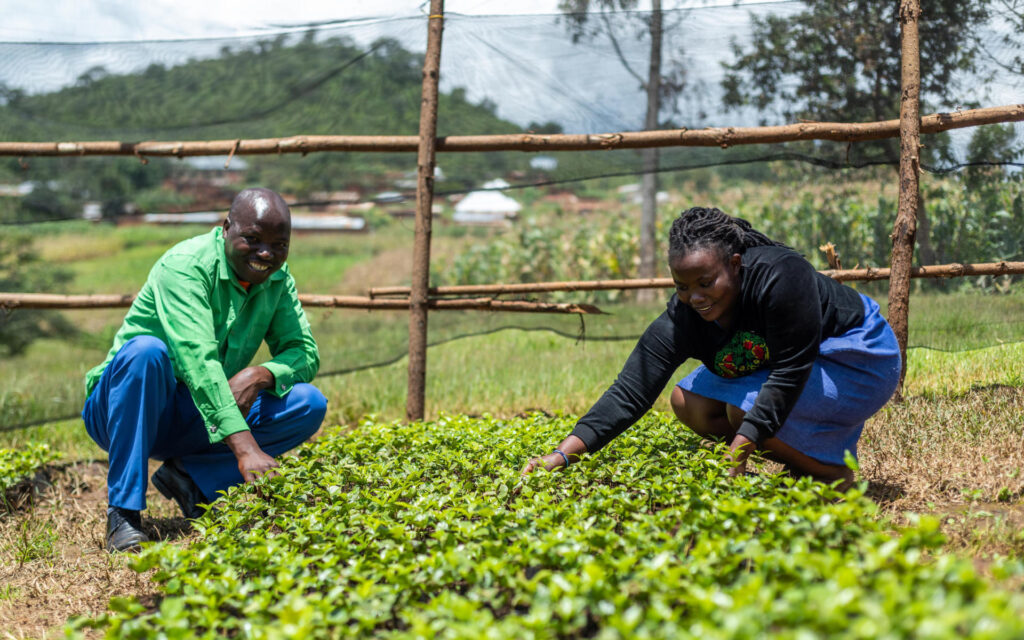
Farmers receive seedlings of native timber species, fruit trees, and nitrogen‑fixing legumes. By intercropping these trees with staple crops, households maintain yields while restoring canopy cover. Economic analyses by the Food and Agriculture Organization (FAO, 2021) show that diversified agroforestry can increase household income by 15‑25% over monoculture systems.
3. Real‑Time Forest Monitoring
Using Sentinel‑2 imagery (European Space Agency) and Brazil’s DETER system, the partnership generates weekly deforestation alerts. Machine‑learning algorithms flag anomalous clearings, enabling rapid response teams to confront illegal loggers within 48 hours. This approach builds on methods validated in a 2020 systematic review of remote‑sensing for forest governance.
4. Policy Advocacy and Legal Support
Legal experts assist indigenous groups in filing land‑rights claims and challenge unlawful concessions in national courts. The initiative also submits evidence‑based policy briefs to Brazil’s Ministry of the Environment, drawing on recommendations from the Intergovernmental Panel on Climate Change (IPCC, 2022).
What Does the Evidence Show?
Long‑term monitoring by Brazil’s National Institute for Space Research (INPE) indicates that community‑managed reserves in the Brazilian Amazon lost an average of 0.9 km² yr⁻¹ between 2010 and 2020, compared with 1.4 km² yr⁻¹ in adjacent unprotected areas—a 36% reduction (INPE, 2021). A meta‑analysis of 27 peer‑reviewed studies (Global Change Biology, 2022) confirms that indigenous stewardship consistently yields lower deforestation and higher carbon storage than state‑run parks. Remote‑sensing studies also reveal that agroforestry plots retain 45‑60% of original canopy cover after five years, mitigating local temperature increases of up to 0.7 °C (NASA, 2023).
Main Causes or Drivers
Direct Drivers
- Commercial cattle ranching, responsible for roughly 70% of recent forest loss (FAO, 2022).
- Illegal gold mining, which creates road networks that open remote areas to further clearing.
- Infrastructure projects such as highways and hydroelectric dams.
Underlying Drivers
- Global demand for beef and soy, linked to international trade patterns.
- Weak enforcement of land‑use regulations and limited state capacity in frontier regions.
- Climate‑induced droughts that increase fire susceptibility, as documented in the IPCC Special Report on Climate Change and Land (2022).
Environmental and Human Impacts
Environmental Impacts
The Amazon stores an estimated 100 billion tons of carbon, equivalent to about 30% of global terrestrial carbon (IPCC, 2022). Deforestation releases this carbon, contributing to atmospheric CO₂ concentrations. Biodiversity loss is acute: the IUCN Red List records over 2,200 species in the basin as threatened, including iconic mammals such as the jaguar (Panthera onca) and countless plant species with potential medicinal value.
Human Health and Social Impacts
Deforestation raises local air‑quality concerns by increasing particulate matter from fires, which the World Health Organization links to higher respiratory disease rates in nearby communities. Moreover, loss of forest resources undermines food security for riverine peoples who depend on fish and wild fruits.
Economic and Infrastructure Impacts
While short‑term gains from timber and agriculture can boost regional GDP, the long‑term loss of ecosystem services—such as water regulation and pollination—poses economic risks estimated at $2‑3 billion yr⁻¹ for the broader South American economy (World Bank, 2020).
Regional Differences
Deforestation pressure varies across the basin. In Brazil’s “Arc of Deforestation,” rates exceed 5,000 km² yr⁻¹, whereas Peru’s protected Amazon experiences less than 200 km² yr⁻¹ (UNEP, 2021). Indigenous territories in Colombia show the lowest fire incidence, highlighting the protective effect of recognized land rights. These patterns suggest that governance context, market access, and enforcement capacity drive regional outcomes.
What Scientists Know With High Confidence
- The Amazon functions as a major carbon sink, storing roughly 100 billion tons of carbon.
- Indigenous and community‑managed lands consistently exhibit lower deforestation than comparable state‑controlled areas.
- Satellite‑based monitoring can detect forest clearing within days, enabling timely interventions.
- Agroforestry improves soil health, biodiversity, and household income while maintaining canopy cover.
What Remains Uncertain
Key gaps include the long‑term financing sustainability of community projects, the precise threshold at which climate‑driven droughts could trigger irreversible forest dieback, and the effectiveness of policy reforms in curbing illegal mining under changing political landscapes. Improved ground‑based data collection and higher‑resolution satellite archives are needed to resolve these uncertainties.
Common Misconceptions
Misconception: The Amazon can be regrown quickly once cleared.
Reality: Primary rainforest biodiversity and carbon storage develop over centuries; secondary forests recover only a fraction of original functions within 50 years (IPCC, 2022).
Misconception: Protecting the Amazon only benefits distant countries.
Reality: Regional climate regulation, water cycles, and local livelihoods depend directly on forest health, linking global benefits to immediate community well‑being.
Misconception: Technology alone can stop illegal logging.
Reality: While remote sensing provides early warnings, effective enforcement requires on‑the‑ground patrols, legal frameworks, and community participation.
Solutions and Limitations
Effective responses combine prevention, mitigation, and restoration:
- Prevention: Strengthening land‑tenure rights deters illegal clearance, but requires political will and legal capacity.
- Mitigation: Agroforestry reduces emissions from land‑use change, yet scaling up demands seed supply chains and market access.
- Restoration: Large‑scale reforestation can rebuild carbon stocks, but biodiversity recovery lags behind tree planting numbers.
Each strategy involves trade‑offs: higher upfront costs, potential land‑use conflicts, and the risk of “green‑washing” if projects are not rigorously monitored.
What Individuals, Communities, and Governments Can Do
What Individuals Can Do
- Support certified sustainable products (e.g., RSPO‑certified palm oil, Fairtrade Brazil nuts) that reduce pressure on Amazon forests.
- Donate to or volunteer with organizations that fund community‑based conservation, such as the Jane Goodall Legacy Foundation.
- Advocate for stronger consumer‑product labeling that traces supply‑chain origins.
What Communities and Organizations Can Do
- Form local forest‑monitoring groups that use smartphone‑based GPS to report illegal activity.
- Adopt agroforestry practices and share seed stock through cooperatives.
- Partner with research institutions to conduct biodiversity inventories that inform management plans.
What Governments Can Do
- Enact and enforce legislation that recognizes indigenous land titles, as recommended by the United Nations Declaration on the Rights of Indigenous Peoples (UNDRIP, 2007).
- Allocate budget for rapid‑response anti‑deforestation teams and maintain transparent satellite‑monitoring portals.
- Incentivize low‑deforestation supply chains through tax credits or export standards.
Closing Synthesis
The Jane Goodall Legacy Foundation’s partnership with Age of Union illustrates how science, community empowerment, and policy advocacy can intersect to protect the Amazon. Robust evidence confirms that indigenous stewardship, real‑time monitoring, and agroforestry all reduce forest loss and enhance resilience. Uncertainties around financing and climate thresholds remain, but the collaborative model offers a replicable pathway for other threatened ecosystems. Continued investment, rigorous monitoring, and equitable governance are essential to sustain the Amazon’s climate, biodiversity, and cultural heritage for generations to come.
Frequently Asked Questions
What is the main goal of the Jane Goodall Legacy Foundation’s Amazon partnership?
The partnership aims to reduce deforestation, safeguard biodiversity, and improve livelihoods by combining community‑led forest protection, agroforestry training, and real‑time satellite monitoring.
How does the partnership use technology to monitor deforestation?
It integrates Sentinel‑2 satellite imagery and Brazil’s DETER system with machine‑learning algorithms to generate weekly alerts of illegal clearing, enabling rapid response teams to act within 48 hours.
Which communities benefit most from the conservation projects?
Indigenous peoples and rural riverine communities receive land‑tenure support, agroforestry training, and income diversification, leading to lower forest loss and improved food security.
What are the biggest uncertainties about the Amazon’s future?
Key uncertainties include the long‑term financing of community projects, the climate‑driven drought threshold that could cause irreversible dieback, and the effectiveness of policy reforms amid shifting political contexts.
How can individuals support the partnership’s work?
People can donate to the Jane Goodall Legacy Foundation, purchase sustainably certified Amazon products, and advocate for stronger consumer labeling that tracks forest‑impact supply chains.






Leave a Comment