
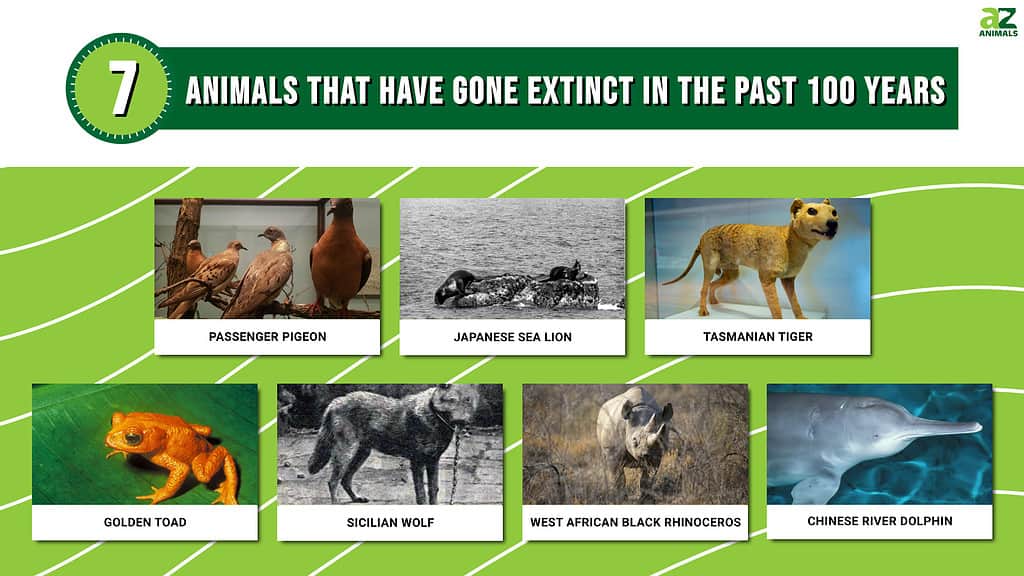
Since 1800, scientists estimate that over 1,000 documented species have vanished, a loss driven by habitat change, overexploitation, invasive species, and climate change, though the true number is likely higher due to data gaps.
Quick Answer
Current assessments by the International Union for Conservation of Nature (IUCN) and the Global Biodiversity Information Facility (GBIF) indicate that at least 1,000 species have been confirmed extinct worldwide since the beginning of the nineteenth century. Extinction occurs when the last viable individual of a species dies, erasing its genetic lineage forever. The primary drivers are habitat destruction, unsustainable harvesting, invasive species, and a rapidly changing climate. Because many taxa remain poorly surveyed, the actual count is probably larger, and uncertainty remains high for groups such as insects and deep‑sea organisms.
Key Takeaways
- Over 1,000 species are documented as extinct since 1800, but the true figure is uncertain.
- Habitat loss, overexploitation, invasive species, and climate change are the dominant drivers.
- Data gaps are especially large for invertebrates, microbes, and poorly studied regions.
- Conservation actions—protected areas, species recovery programs, and invasive‑species control—can reduce future losses.
- Individual choices matter, but systemic policy and funding are essential for large‑scale impact.
What Is How Many Species Have Gone Extinct Since 1800?
The phrase refers to the cumulative count of species that have been declared globally extinct from the year 1800 onward. A species is classified as extinct when exhaustive surveys, following IUCN Red List criteria, fail to locate any living individuals. This metric differs from “locally extinct” (extirpated) where a species disappears from part of its range but persists elsewhere. It also differs from “critically endangered,” which denotes a very high risk of extinction but not yet confirmed loss.
How Does It Work?
1. Species Monitoring and Assessment
Scientists monitor populations through field surveys, museum records, citizen‑science databases, and genetic sampling. When a species has not been observed for a period that exceeds its known life‑history parameters, a formal extinction assessment is initiated.
2. Criteria for Declaring Extinction
The IUCN Red List requires that exhaustive surveys be conducted across the species’ historic range, at appropriate times (season, diurnal cycle), and using suitable methods. Only after these efforts fail is the species listed as Extinct (EX).
3. Data Compilation and Global Estimates
Aggregated data from regional Red Lists, peer‑reviewed studies, and biodiversity databases are compiled to produce a global tally. Statistical models adjust for known observation bias, especially in taxa with limited monitoring.
What Does the Evidence Show?
Long‑term monitoring programs in Europe, North America, and parts of Asia have documented dozens of mammal, bird, and plant extinctions since 1800. Notable examples include the passenger pigeon (Ectopistes migratorius) in 1914 and the Caribbean monk seal (Neomonachus tropicalis) in 2008. Systematic reviews published in Science (2020) and the IUCN Red List (2021) converge on an estimate of roughly 1,000–1,200 confirmed extinctions across all kingdoms.
However, a 2022 meta‑analysis of insect biodiversity highlighted that less than 10 % of described insect species have been evaluated for extinction risk, suggesting a substantial hidden loss. Similarly, marine invertebrate assessments indicate that many deep‑sea species may have vanished unnoticed.
Main Causes or Drivers
Direct Causes
- Habitat destruction: Deforestation, urban expansion, and agricultural conversion remove the physical space species need to survive.
- Overexploitation: Unsustainable hunting, fishing, and trade have driven mammals such as the thylacine (Thylacinus cynocephalus) and many large fish to extinction.
- Invasive species: Introduced predators (e.g., rats on islands) and competitors have caused rapid declines in endemic birds and reptiles.
- Climate change: Shifts in temperature and precipitation patterns exceed the adaptive capacity of many species, especially those with narrow ecological niches.
Underlying Drivers
- Industrialization and the associated rise in fossil‑fuel use.
- Global trade networks that facilitate species introductions.
- Economic incentives that prioritize short‑term resource extraction.
Environmental and Human Impacts
Environmental Impacts
Each extinction removes a unique set of ecological functions—pollination, seed dispersal, nutrient cycling, or predator‑prey regulation. The loss of keystone species can trigger cascading effects, reducing ecosystem resilience and altering community composition.
Human Health and Social Impacts
Reduced biodiversity can diminish ecosystem services that support food security, clean water, and disease regulation. For example, the disappearance of certain amphibian species has been linked to increased mosquito populations, which can affect malaria transmission risk.
Economic and Infrastructure Impacts
Tourism economies that rely on charismatic wildlife suffer when flagship species disappear. Fisheries dependent on specific reef fish have reported lower catches following coral‑reef degradation driven partly by species loss.
Regional Differences
Extinction rates are highest in biodiversity hotspots where human pressure is intense. In the tropical Andes, rapid agricultural expansion has led to the loss of dozens of plant species. In contrast, temperate regions such as Europe have seen many extinctions historically but now benefit from extensive protected‑area networks that slow further loss.
Island ecosystems are disproportionately vulnerable; the Hawaiian archipelago, for instance, has lost over 30 bird species since 1800, primarily due to invasive predators and habitat alteration.
What Scientists Know With High Confidence
- Human activities have accelerated global extinction rates far beyond background levels observed in the fossil record.
- Habitat loss is the leading direct cause of species extinction across taxa.
- The IUCN Red List provides the most reliable, peer‑reviewed global accounting of confirmed extinctions.
- Conservation actions such as establishing protected areas and controlling invasive species can measurably reduce extinction risk.
What Remains Uncertain
Common Misconceptions
Misconception: Extinction rates are negligible compared to the total number of species.
Reality: While the total number of described species exceeds 1.8 million, the loss of over 1,000 species in just two centuries represents a measurable erosion of biodiversity, especially given that many extinctions involve ecologically pivotal taxa.
Misconception: Only charismatic megafauna matter.
Reality: Small, inconspicuous organisms (e.g., pollinating insects, soil microbes) perform essential ecosystem services; their loss can have outsized indirect effects on human well‑being.
Misconception: Extinctions are inevitable and cannot be prevented.
Reality: Targeted interventions—habitat protection, anti‑poaching laws, invasive‑species eradication—have successfully brought several species back from the brink, demonstrating that extinction is not a foregone conclusion.
Solutions and Limitations
Effective strategies combine prevention, mitigation, and restoration:
- Protected areas: Expand and properly manage reserves, but effectiveness depends on adequate funding and enforcement.
- Invasive‑species control: Eradication programs can rescue island birds, yet they are costly and may have non‑target impacts.
- Sustainable resource use: Certification schemes reduce overharvesting, but market demand can undermine compliance.
- Climate‑adaptation planning: Assisted migration helps some species shift ranges, but ecological risks and ethical concerns remain.
- Ex‑situ conservation: Captive breeding and seed banks preserve genetic material, yet reintroduction success varies and does not replace habitat protection.
What Individuals, Communities, and Governments Can Do
What Individuals Can Do
Support reputable conservation organizations, choose sustainably sourced products, reduce personal carbon footprints, and participate in citizen‑science monitoring programs that improve data on local species.
What Communities and Organizations Can Do
Develop local habitat restoration projects, implement invasive‑species monitoring, and create community‑managed protected zones that align conservation with livelihoods.
What Governments Can Do
Enact and enforce strong biodiversity laws, fund long‑term monitoring, integrate biodiversity considerations into land‑use planning, and honor international commitments such as the Convention on Biological Diversity.
Synthesising the Evidence
The extinction of over a thousand species since 1800 reflects a clear, human‑driven signal in the Earth’s biosphere. Robust data confirm habitat loss, overexploitation, invasive species, and climate change as the primary drivers, while substantial knowledge gaps persist for many less‑studied taxa. Conservation actions that protect habitats, curb unsustainable use, and manage invasive species have demonstrated success, yet their scale must expand to match the magnitude of the challenge. By combining evidence‑based policy, community engagement, and responsible individual choices, society can slow the current trajectory and preserve the planet’s remaining biological heritage.
Frequently Asked Questions
How many species are known to have gone extinct since 1800?
Scientists estimate that at least 1,000 species have been confirmed extinct worldwide since 1800, based on IUCN Red List assessments and global biodiversity databases.
What are the main causes behind recent species extinctions?
The dominant drivers are habitat destruction, overexploitation of wildlife, invasive species, and climate change, all of which accelerate the loss of viable populations.
Why is the true number of extinct species likely higher than reported?
Many groups—especially insects, deep‑sea organisms, and microbes—are poorly surveyed, and limited monitoring in some regions means extinctions can go unnoticed.
Can conservation actions actually prevent extinctions?
Yes, measures such as protected‑area establishment, invasive‑species control, sustainable resource management, and captive‑breeding programs have successfully reduced extinction risk for numerous species.
What can individuals do to help reduce species loss?
Individuals can support reputable conservation groups, choose sustainably sourced products, lower their carbon footprints, and take part in citizen‑science projects that track local biodiversity.









Leave a Comment