

The greenhouse effect is a natural atmospheric process that traps infrared radiation, keeping Earth warm, but human‑driven increases in greenhouse gases amplify this effect and drive climate change.
Quick Answer
The greenhouse effect occurs when gases such as carbon dioxide, methane, nitrous oxide and water vapor absorb infrared radiation emitted by Earth’s surface and re‑emit it in all directions, including back toward the surface. This natural process maintains a livable climate, but rising concentrations of these gases intensify heat retention, leading to global warming. Scientists are highly confident that the enhanced greenhouse effect is the primary driver of recent climate change, though uncertainties remain about exact regional impacts and future feedbacks.
Key Takeaways
- The greenhouse effect is a fundamental physical process that keeps Earth about 33 °C warmer than it would be without an atmosphere.
- Greenhouse gases absorb and re‑emit infrared radiation, creating a heat‑trapping “blanket.”
- Human activities have raised atmospheric CO₂ from ~280 ppm pre‑industrial to over 420 ppm in 2023, intensifying the effect.
- Enhanced warming influences climate patterns, ecosystems, human health and economies worldwide.
- Mitigation requires rapid reductions in emissions, while adaptation prepares societies for unavoidable changes.
What Is How Greenhouse Effects Occur: A Clear Scientific Breakdown?
The greenhouse effect describes the process by which certain atmospheric gases capture outgoing infrared (IR) radiation and re‑radiate it, partly back toward Earth’s surface. This mechanism is distinct from the term “global warming,” which refers to the observed rise in average surface temperatures. The effect operates in the troposphere and stratosphere, involving gases that have molecular vibrations resonant with IR wavelengths. It matters because without it, average surface temperatures would be near –18 °C, making the planet inhospitable for most known life.
How Does It Work?
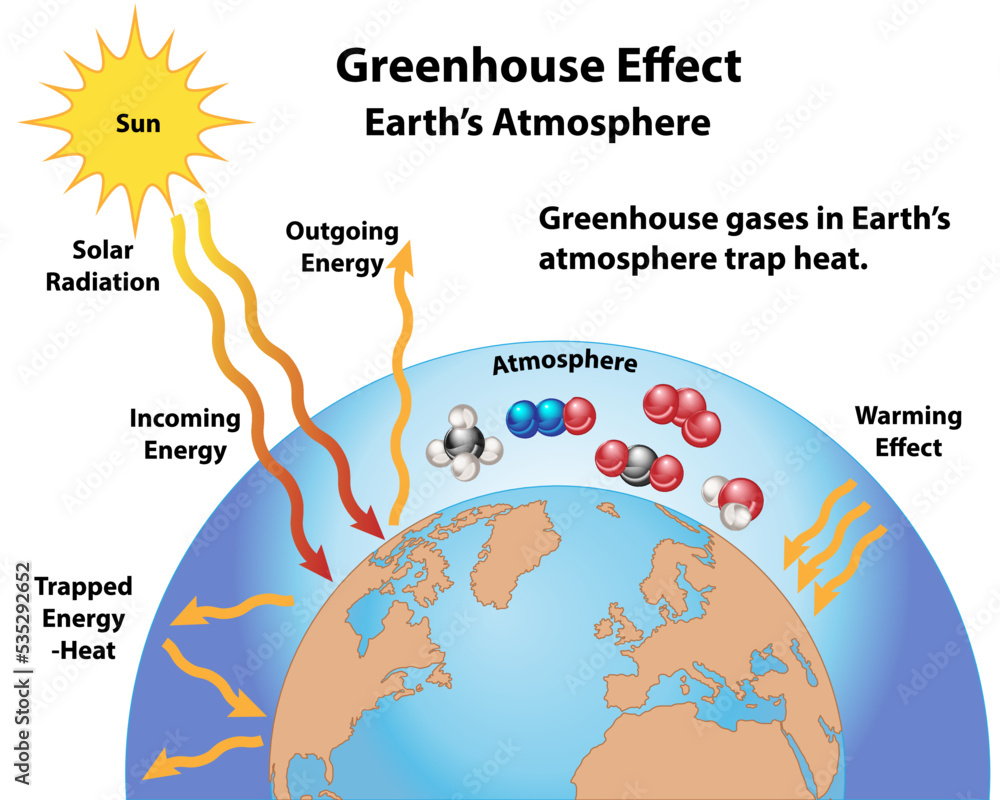
1. Solar Energy Arrives as Shortwave Radiation
Sunlight, primarily visible and near‑infrared wavelengths, passes through the atmosphere and is absorbed by land, oceans and vegetation, converting photon energy to heat.
2. Earth Emits Longwave Infrared Radiation
Warm surfaces re‑emit energy as longwave infrared radiation. In a vacuum, this IR would escape to space, cooling the planet.
3. Greenhouse Gases Absorb Infrared Photons
Molecules of CO₂, CH₄, N₂O and H₂O have vibrational modes that match infrared wavelengths. When an IR photon hits such a molecule, the energy is absorbed, raising the molecule’s vibrational energy state.
4. Re‑Emission in All Directions
The excited molecule quickly relaxes, emitting a photon in a random direction. Approximately half of this re‑emitted radiation travels downward, adding heat to the surface, while the other half continues upward.
5. Net Energy Balance Shifts
Because more infrared energy is redirected back to the surface, the planet’s energy budget requires a higher equilibrium temperature to radiate the same amount of energy to space. This is the essence of the greenhouse warming.
What Does the Evidence Show?
Multiple lines of evidence confirm the greenhouse effect and its enhancement by human activity:
- Laboratory spectroscopy demonstrates that CO₂, CH₄ and other gases absorb infrared wavelengths matching Earth’s emission spectrum.
- Long‑term atmospheric records from ice cores and modern monitoring (e.g., NOAA, 2023) show CO₂ concentrations rising from ~280 ppm to >420 ppm.
- Satellite observations (NASA’s CERES instrument) detect reduced outgoing longwave radiation in spectral bands associated with greenhouse gases.
- Climate‑model attribution studies (IPCC AR6, 2021) consistently attribute >95 % of observed warming since 1950 to anthropogenic greenhouse‑gas emissions.
- Historical reconstructions of temperature and CO₂ over the past 800,000 years (e.g., EPICA ice core) show a tight correlation between greenhouse‑gas concentrations and global temperature.
Main Causes or Drivers
Direct Human Sources
- Fossil‑fuel combustion for electricity, transport and industry releases ~35 Gt CO₂ per year (IEA, 2022).
- Agricultural activities emit methane from livestock and rice paddies, and nitrous oxide from fertilizer use.
- Deforestation reduces the biosphere’s capacity to absorb CO₂.
Underlying Socio‑Economic Drivers
- Global demand for energy and material goods.
- Urbanization and population growth increasing transport and heating needs.
- Policy and market structures that favor carbon‑intensive technologies.
Environmental and Human Impacts
Environmental Impacts
- Rising average temperatures shift climate zones, affecting species distributions and phenology.
- Melting polar ice and glacier retreat contribute to sea‑level rise.
- Ocean warming and acidification stress coral reefs, marine food webs and fisheries.
- Increased frequency of heatwaves, droughts and heavy precipitation events.
Human Health and Social Impacts
- Heat stress raises mortality risk, especially for vulnerable populations.
- Warmer climates expand the range of disease‑carrying vectors such as mosquitoes, influencing malaria and dengue incidence.
- Food security is threatened by crop yield variability under altered temperature and precipitation patterns.
- Extreme weather can damage infrastructure, displace communities and exacerbate socioeconomic inequality.
Regional Differences
Impacts are not uniform. High‑latitude regions experience faster warming (Arctic amplification) and permafrost melt, while tropical regions face intensified heat stress and altered monsoon patterns. Low‑income coastal nations confront greater sea‑level rise threats due to limited adaptive capacity. Conversely, some temperate zones may see longer growing seasons, though this potential benefit is offset by increased pest pressure and water scarcity.
What Scientists Know With High Confidence
- The basic physics of infrared absorption by greenhouse gases is well established.
- Atmospheric CO₂, CH₄ and N₂O concentrations have increased dramatically due to human activities since the mid‑20th century.
- The enhanced greenhouse effect is the dominant driver of global average surface warming observed over the past century.
- Continental warming is occurring faster than ocean warming, leading to amplified impacts on land ecosystems.
What Remains Uncertain
Key uncertainties involve the magnitude of climate feedbacks, such as permafrost carbon release, cloud‑cover responses and regional precipitation changes. These uncertainties affect projections of future warming rates and extreme‑event frequency, but they do not overturn the core conclusion that increased greenhouse gases warm the climate.
Common Misconceptions
Misconception: The greenhouse effect is “bad” and should be stopped entirely.
Reality: A natural greenhouse effect is essential for life; the problem is the *enhanced* effect caused by excess anthropogenic gases.
Misconception: Only carbon dioxide matters.
Reality: While CO₂ is the largest long‑lived contributor, methane, nitrous oxide and water vapor also play significant roles, especially in short‑term warming.
Misconception: Climate change is caused solely by natural cycles.
Reality: Natural variability (e.g., solar cycles, volcanic eruptions) influences climate, but the unprecedented rise in greenhouse‑gas concentrations aligns with industrial activity and cannot be explained by natural factors alone.
Solutions and Limitations
- Renewable energy transition reduces CO₂ emissions but requires substantial grid upgrades and material inputs.
- Energy efficiency offers cost‑effective emission cuts, yet depends on policy incentives and behavioral adoption.
- Reforestation and afforestation increase carbon sinks, but land‑use competition and long‑term permanence are challenges.
- Carbon‑capture technologies (e.g., DAC) are still emerging, with high energy and financial costs.
- Adaptation measures (e.g., flood defenses, heat‑action plans) protect vulnerable communities but do not address the root cause of warming.
What Individuals, Communities, and Governments Can Do
What Individuals Can Do
- Reduce personal energy consumption (e.g., efficient appliances, home insulation).
- Choose low‑carbon transportation options such as public transit, cycling or electric vehicles where feasible.
- Support policies and companies with credible climate commitments.
What Communities and Organizations Can Do
- Implement local renewable‑energy projects (solar farms, community wind).
- Develop climate‑resilient infrastructure (green roofs, storm‑water management).
- Promote education and climate‑preparedness programs.
What Governments Can Do
- Set ambitious, enforceable emissions‑reduction targets aligned with the Paris Agreement.
- Provide subsidies and tax incentives for clean energy and energy‑efficiency retrofits.
- Invest in climate‑research, monitoring networks and early‑warning systems.
- Enact land‑use policies that protect forests and restore degraded ecosystems.
Closing Synthesis
The greenhouse effect is a natural, physics‑based process that keeps Earth habitable; human‑driven increases in greenhouse gases amplify this effect, leading to measurable global warming. Robust laboratory, observational and modeling evidence gives scientists high confidence in this mechanism and its role as the primary driver of recent climate change. While uncertainties remain in feedback strength and regional outcomes, the direction of change is clear. Mitigation through rapid emission cuts, alongside adaptation to unavoidable impacts, offers the most effective path forward. Collective action across individuals, communities, industry and governments is essential to preserve the delicate energy balance that sustains life on our planet.
Frequently Asked Questions
What is the greenhouse effect and why is it important?
The greenhouse effect is the process by which gases like carbon dioxide and water vapor absorb infrared radiation from Earth and re‑emit it, keeping the planet about 33 °C warmer than it would be without an atmosphere, which is essential for supporting life.
How do greenhouse gases trap heat?
Greenhouse‑gas molecules have vibrational modes that match infrared wavelengths; they absorb outgoing infrared photons and re‑emit them in all directions, sending some energy back toward the surface and raising global temperatures.
What evidence confirms that human activities enhance the greenhouse effect?
Evidence includes laboratory spectroscopy of gas absorption, ice‑core records of rising CO₂, satellite measurements of reduced outgoing infrared radiation, and attribution studies that link >95 % of post‑1950 warming to anthropogenic emissions.
Which regions are most affected by the enhanced greenhouse effect?
High‑latitude regions experience faster warming and permafrost melt, while tropical areas face intensified heat stress and altered monsoon patterns; low‑income coastal nations are especially vulnerable to sea‑level rise.
What actions can reduce the enhanced greenhouse effect?
Key actions include rapidly transitioning to renewable energy, improving energy efficiency, protecting and restoring forests, and implementing policies that set enforceable emission‑reduction targets aligned with the Paris Agreement.





Leave a Comment