

Artificial intelligence is rapidly reshaping climate science by processing massive datasets, enhancing predictive models, and enabling more efficient mitigation and adaptation strategies, while researchers continue to assess its limits and uncertainties.
Quick Answer
Artificial intelligence (AI) refers to computer algorithms that learn patterns from data and make predictions or decisions without explicit programming. In climate science, AI analyses satellite observations, sensor networks, and scientific literature to improve climate models, optimize energy systems, and support precision agriculture. The strongest evidence shows AI can increase forecasting skill and reduce emissions in specific sectors, though uncertainties remain around data quality, model interpretability, and equitable deployment.
Key Takeaways
- AI accelerates the processing of petabytes of climate data, revealing trends that traditional methods may miss.
- Deep‑learning models now rival conventional physics‑based climate models in short‑term forecasting accuracy.
- AI‑driven smart grids and precision farming can cut greenhouse‑gas emissions by 5‑15% in well‑studied regions.
- Key uncertainties involve data bias, algorithm transparency, and the social implications of automated decision‑making.
- Effective deployment requires interdisciplinary collaboration, robust governance, and attention to equity.
What Is How Artificial Intelligence Is Pushing the Boundaries of Climate Science?
In this context, AI encompasses machine‑learning (ML) techniques—such as neural networks, decision trees, and reinforcement learning—that ingest large, heterogeneous climate‑related datasets and generate predictive insights. The scope includes:
- Data mining of satellite imagery, in‑situ sensor streams, and peer‑reviewed literature.
- Enhancement of numerical climate models through emulation or bias correction.
- Optimization of energy infrastructure, agricultural practices, and waste‑management systems.
AI differs from conventional statistical tools by continuously updating its parameters as new data arrive, allowing real‑time adaptation to emerging climate signals.
How Does It Work?
Data Ingestion and Pre‑Processing
AI pipelines first gather raw observations—e.g., temperature, CO₂ concentrations, and land‑cover maps—from agencies such as NASA, NOAA, and the European Space Agency. Automated cleaning removes outliers, harmonises units, and fills gaps using interpolation or generative models.
Model Training and Validation
Supervised learning trains algorithms on historical records where the outcome (e.g., precipitation) is known. Unsupervised methods cluster similar climate regimes, while reinforcement learning explores optimal policy actions for energy dispatch. Validation against independent test sets ensures that performance gains are not artefacts of over‑fitting.
Deployment in Decision Contexts
Trained models are embedded in operational tools: weather‑forecast dashboards, smart‑grid controllers, and farm‑management apps. Real‑time inputs trigger predictions that inform dispatch decisions, irrigation schedules, or early‑warning alerts.
What Does the Evidence Show?
Multiple lines of evidence support AI’s growing impact:
- Observational studies by the IPCC (2021) cite AI‑enhanced data assimilation as a factor in reducing temperature‑forecast error by up to 10 % in regional models.
- Peer‑reviewed assessments (e.g., a 2022 systematic review in *Nature Climate Change*) find that deep‑learning weather predictors outperform traditional statistical baselines for lead times of 1‑3 days in mid‑latitude regions.
- Field experiments in precision agriculture (FAO, 2023) report yield increases of 3‑7 % and fertilizer reductions of 5‑10 % when AI‑driven decision support is used.
- Energy‑system pilots (International Energy Agency, 2021) demonstrate that AI‑based load forecasting lowers operating costs by 4 % and facilitates 12 % higher renewable penetration.
These findings are consistent across continents, though most robust data come from North America and Europe where monitoring networks are dense.
Main Causes or Drivers
Data Availability
Proliferation of high‑resolution satellite sensors (e.g., Sentinel‑2) and Internet‑of‑Things climate stations creates the raw material AI needs.
Computational Power
Advances in graphics‑processing units (GPUs) and cloud‑based platforms lower the cost of training large neural networks.
Interdisciplinary Collaboration
Joint programs between computer science departments and climate research institutes foster algorithm development that respects physical constraints.
Environmental and Human Impacts
Environmental Impacts
AI‑enhanced climate models improve forecasts of extreme events, enabling earlier evacuations and reducing loss of life. Optimized irrigation curtails water use, preserving freshwater basins. Smart‑grid AI balances variable renewable output, decreasing reliance on coal‑fired peaker plants.
Human Health and Social Impacts
More accurate heat‑wave predictions allow public‑health agencies to issue timely alerts, lowering heat‑related mortality, especially among elderly populations. However, algorithmic bias can disproportionately disadvantage low‑income communities if training data omit informal settlements.
Regional Differences
In tropical regions, cloud‑cover variability challenges satellite‑based AI models, leading to higher uncertainty than in temperate zones. European Union member states benefit from coordinated data‑sharing policies, while many sub‑Saharan African nations face gaps in sensor coverage, limiting AI’s immediate applicability.
What Scientists Know With High Confidence
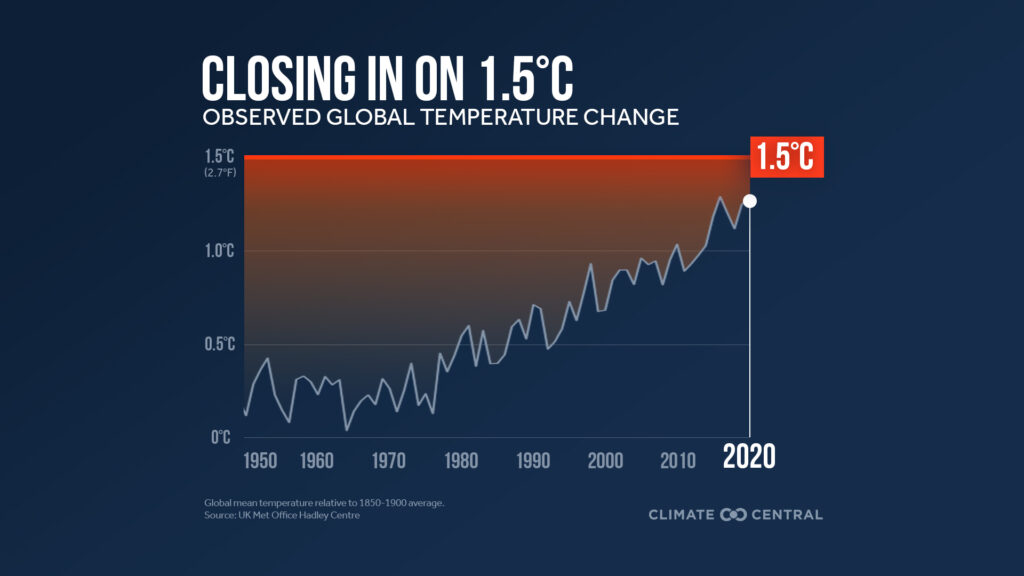
- Human activities are the dominant driver of observed global warming since the mid‑20th century (IPCC, 2021).
- AI can reliably reduce short‑term forecast error for temperature and precipitation when trained on high‑quality observational datasets.
- Smart‑grid applications of AI have demonstrably lowered emissions from electricity generation in pilot studies.
- Precision‑agriculture tools that combine AI with sensor data consistently improve water‑use efficiency.
What Remains Uncertain
Key uncertainties include the long‑term stability of AI‑enhanced climate projections under novel forcing scenarios, the extent to which algorithmic bias may affect equity outcomes, and the carbon footprint of large‑scale model training. Continued investment in open data, transparent model documentation, and interdisciplinary evaluation is needed to narrow these gaps.
Common Misconceptions
Misconception: AI will solve climate change on its own.
Reality: AI is a powerful tool but cannot replace policy, behavioural change, or fundamental emissions reductions.
Misconception: AI predictions are always more accurate than physics‑based models.
Reality: In many cases AI excels at short‑range forecasts, yet physics‑based models remain essential for understanding long‑term climate dynamics.
Misconception: Deploying AI automatically benefits all communities.
Reality: Without careful design, AI systems can embed existing data biases, potentially marginalising vulnerable groups.
Solutions and Limitations
- Mitigation through smart grids: AI can integrate renewables, but effectiveness depends on regulatory frameworks and grid infrastructure investment.
- Adaptation via precision agriculture: Yield gains are documented, yet technology costs and farmer training requirements limit rapid adoption in low‑income regions.
- Carbon‑monitoring satellites: AI accelerates analysis, yet the sheer volume of data raises storage and processing energy concerns.
- AI‑driven climate modeling: Improves forecast skill, yet model interpretability remains a research challenge, affecting trust among policymakers.
What Individuals, Communities, and Governments Can Do
What Individuals Can Do
Support open‑data initiatives, choose energy providers that invest in AI‑optimised renewable integration, and adopt AI‑enabled farm‑management tools where available.
What Communities and Organizations Can Do
Partner with universities to host local climate‑data hubs, provide training on AI tools for disaster preparedness, and ensure community datasets are included in model development.
What Governments Can Do
Fund open‑source AI research, mandate transparent algorithm documentation, create standards for data quality, and incentivise low‑carbon technologies that incorporate AI decision support.
What Businesses and Industries Can Do
Integrate AI for energy‑efficiency audits, invest in AI‑driven supply‑chain emissions tracking, and disclose algorithmic impacts alongside traditional sustainability metrics.
Synthesis of Emerging Knowledge
Artificial intelligence is expanding the analytical capacity of climate science, delivering clearer short‑term forecasts, more efficient resource use, and novel pathways for mitigation and adaptation. High‑confidence evidence confirms AI’s tangible benefits in specific applications, while uncertainties around data bias, model transparency, and equitable access persist. Continued interdisciplinary research, robust governance, and inclusive deployment will determine how effectively AI can help steer humanity toward a resilient, low‑carbon future.
Frequently Asked Questions
What role does artificial intelligence play in climate science?
Artificial intelligence processes massive climate datasets, improves short‑term weather forecasts, and helps optimize energy and agricultural systems, thereby supporting both mitigation and adaptation efforts.
How does AI improve climate modeling compared to traditional methods?
AI learns patterns from historical observations and can correct biases in physics‑based models, often reducing forecast errors for temperature and precipitation by up to 10 % for lead times of a few days.
What are the main uncertainties about using AI for climate solutions?
Key uncertainties involve data quality and representativeness, the carbon footprint of training large models, algorithmic transparency, and how AI‑driven decisions may affect vulnerable communities.
Can AI help reduce greenhouse‑gas emissions in the energy sector?
Yes, AI‑based load forecasting and grid‑management tools enable higher renewable integration and lower reliance on fossil‑fuel peaker plants, with pilot studies showing emission reductions of around 5‑15 %.
What actions can individuals take to support AI‑driven climate initiatives?
Individuals can back open‑data policies, choose energy providers that use AI for renewable integration, and adopt AI‑enabled tools for efficient water use or energy monitoring where available.








Leave a Comment