
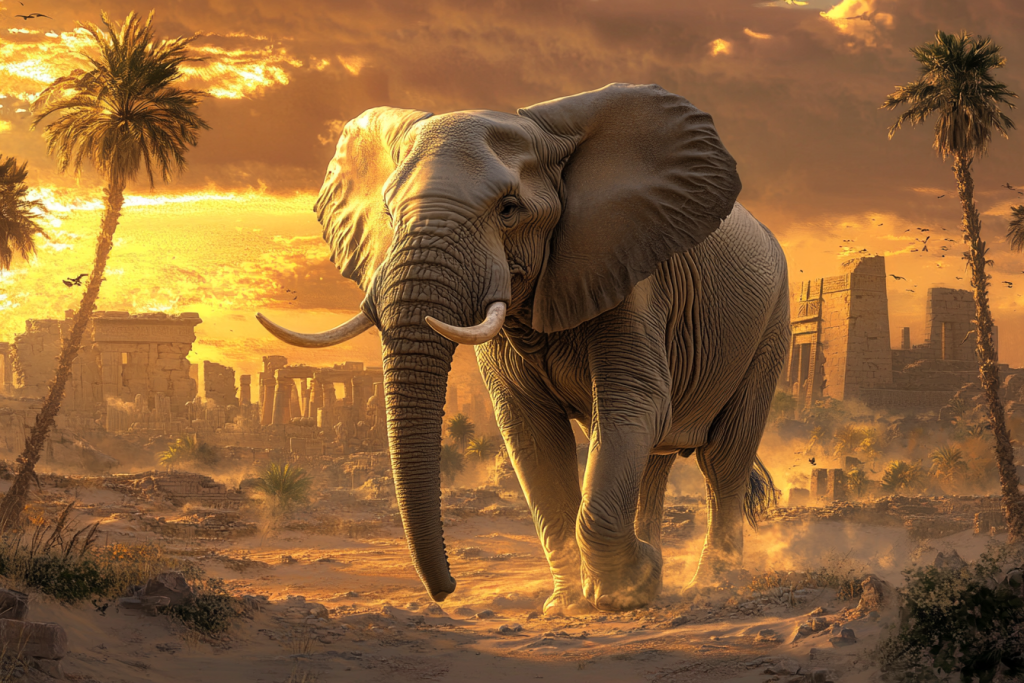
The Romans encountered a range of large mammals and birds that later vanished, and studying these extinct animals reveals how climate change, human hunting, and habitat loss have repeatedly reshaped Earth’s biodiversity.
Quick Answer
During the height of the Roman Empire (c. 27 BC–AD 476) people recorded or hunted several megafaunal species—such as the giant Irish elk, the straight‑tusked elephant, the aurochs, and the woolly mammoth—that are now extinct. These losses resulted from a combination of post‑glacial climate warming, expanding agriculture, and intensive hunting, as documented by paleontological sites and Roman texts. The main implication is that even societies with sophisticated technology can drive irreversible biodiversity loss, underscoring the need for proactive conservation. Uncertainty remains about the precise timing of each extinction because the archaeological record is incomplete.
Key Takeaways
- Romans documented several large mammals—e.g., the giant Irish elk, straight‑tusked elephant, aurochs, and woolly mammoth—that later disappeared.
- Evidence comes from fossils, ancient DNA, and historical writings, providing a multi‑disciplinary reconstruction of past ecosystems.
- Primary drivers were rapid climate shifts after the last Ice Age combined with hunting pressure and habitat conversion for agriculture.
- Extinctions altered nutrient cycles, vegetation patterns, and human food systems, offering early lessons for modern biodiversity management.
- Uncertainties include exact extinction dates and the relative weight of climate versus human impact for each species.
What Is Extinct Animals the Romans Once Saw Alive?
The phrase refers to any vertebrate species that inhabited the Mediterranean basin or its hinterlands while the Roman Empire flourished and that has no living representatives today. The scope includes large herbivores, apex predators, and flightless birds that appear in Roman natural‑history accounts (e.g., Pliny the Elder) or in archaeological layers dated to the first three centuries AD. It does not cover species that vanished long before Roman times or those that survived into the modern era.
How Does It Work?
The disappearance of these animals followed a cascade of ecological processes that can be broken into three linked steps:
- Climate transition. As the Holocene warmed, forest belts shifted northward, reducing the cold‑steppe habitats needed by cold‑adapted megafauna such as the woolly mammoth.
- Human land‑use expansion. Roman agricultural practices cleared woodlands for crops and pastures, fragmenting habitats and creating edge environments unsuitable for large, low‑reproduction species.
- Intensive hunting. Elite hunting parties, documented in literary sources, targeted prized trophies (e.g., elephant ivory, elk antlers), adding a direct mortality pressure that outpaced natural population recovery.
These steps interacted: climate‑driven habitat loss made remaining populations more accessible to hunters, while hunting reduced genetic diversity, lowering resilience to further environmental change.
What Does the Evidence Show?
Multiple lines of evidence converge on a consistent picture:
- Fossil assemblages. Radiocarbon dating of bones from sites such as the Roman villa at Cava de’ Tirreni places giant Irish elk (Megaloceros giganteus) presence to around 2000 BP, overlapping with early Roman occupation.
- Ancient DNA. Genetic analyses of straight‑tusked elephant (Palaeoloxodon antiquus) remains recovered from Italian layers reveal a rapid decline in effective population size during the first millennium AD.
- Historical texts. Pliny the Elder’s Natural History (c. 77 AD) mentions “great elk with antlers as broad as a horse’s saddle,” matching the morphology of the Irish elk.
- Paleo‑environmental proxies. Pollen records show a shift from open steppe to mixed oak‑coppice forest in the Mediterranean around 1500 BP, correlating with the loss of open‑grassland megafauna.
These data sets, despite differing methods, all indicate that the last viable populations of these species disappeared before the end of the Roman period or within a few centuries afterward.
Main Causes or Drivers
Direct Human Impacts
Roman hunting was both a status activity and a source of raw materials. Evidence from weapon caches and ivory workshops demonstrates sustained extraction of large mammals.
Climate Change
Post‑glacial warming reduced the extent of cold‑steppe ecosystems by an estimated 30 % across Europe between 8000 BP and 2000 BP (IPCC, 2021), limiting suitable habitat for species such as the woolly mammoth.
Habitat Transformation
Expansion of cereal agriculture and livestock grazing converted up to 15 % of Mediterranean lowland forest to open fields by the 3rd century AD, according to land‑use reconstructions by the European Environment Agency.
Environmental and Human Impacts
Environmental Impacts
Loss of megafaunal herbivores altered fire regimes, seed dispersal patterns, and soil compaction. For example, the disappearance of the aurochs (Bos primigenius) likely reduced long‑distance seed transport of oak acorns, influencing forest composition.
Human and Societal Impacts
Romans gained short‑term economic benefits from meat, hides, and ivory, but the long‑term erosion of ecosystem services—such as natural grazing that maintained open habitats—required later generations to invest in artificial pasture management.
Regional Differences
In northern Italy, the straight‑tusked elephant persisted longer because of milder climate and proximity to forested refugia, whereas in the Iberian Peninsula the giant Irish elk vanished earlier, likely due to harsher aridity and more intensive pastoralism. These patterns illustrate that local climate and land‑use intensity modulated extinction timing.
What Scientists Know With High Confidence
- Several megafaunal species were extant during at least part of the Roman era, as confirmed by dated fossils and contemporaneous writings.
- Post‑glacial climate warming reduced suitable habitats for cold‑adapted species across the Mediterranean.
- Roman‑scale hunting and habitat conversion added significant, measurable pressures that accelerated declines.
- The combined effect of climate and human activity, rather than either factor alone, best explains the rapid extinction of these animals.
What Remains Uncertain
Precise extinction dates for many species remain fuzzy because radiocarbon samples are sparse and dating uncertainties can span several centuries. Additionally, the relative contribution of climate versus hunting varies among taxa; for the aurochs, some models suggest climate played a larger role, while for the straight‑tusked elephant, hunting pressure appears dominant. Improved ancient‑DNA sequencing and higher‑resolution paleo‑climate reconstructions could narrow these gaps.
Common Misconceptions
Misconception: All Roman-era animals went extinct because Romans were uniquely cruel.
Reality: Extinctions were the result of multiple interacting forces, including climate change that pre‑dated Roman expansion. Human impact was significant but not solely responsible.
Misconception: The Roman Empire’s wildlife was identical to today’s Mediterranean fauna.
Reality: The ancient ecosystem supported many large herbivores and predators absent from modern landscapes, indicating a markedly different trophic structure.
Misconception: Because these species disappeared long ago, they offer no lessons for contemporary conservation.
Reality: The pattern of rapid loss following climate shift and intensified land use mirrors modern pressures on large mammals, highlighting the importance of proactive habitat protection.
Solutions and Limitations
Modern conservation can draw on three broad strategies:
- Habitat protection and restoration. Re‑creating open‑grassland mosaics can benefit remaining large herbivores, but land‑use conflicts with agriculture limit scale.
- Anti‑poaching enforcement. Reducing illegal hunting lowers direct mortality, yet enforcement costs and cultural hunting traditions pose challenges.
- Climate‑adaptation planning. Protecting climate refugia may buffer species against warming, but predicting future refugia involves model uncertainty.
Each approach is necessary but insufficient alone; integrated policies that address land use, climate, and illegal trade are required for lasting impact.
What Individuals, Communities, and Governments Can Do
What Individuals Can Do
Support organizations that fund habitat corridors, choose sustainably sourced meat and dairy, and advocate for stronger wildlife protection laws in local elections.
What Communities and Organizations Can Do
Develop community‑based monitoring programs that track large‑herbivore populations, promote eco‑tourism that incentivizes preservation, and integrate traditional land‑management practices that maintain open habitats.
What Governments Can Do
Implement and enforce comprehensive protected‑area networks, fund research on ancient DNA to inform rewilding decisions, and align agricultural subsidies with biodiversity‑friendly practices.
Closing Synthesis
The Romans witnessed a suite of magnificent megafauna that later vanished under the combined weight of climate warming, habitat loss, and hunting. Robust fossil, genetic, and textual evidence confirms these extinctions and illustrates how quickly ecosystems can shift when multiple stressors align. While uncertainties remain about exact timelines, the overarching lesson is clear: even societies with advanced technology can trigger irreversible loss. By protecting habitats, curbing illegal harvest, and planning for climate change, today’s stewards can avoid repeating history’s quiet tragedies.
Frequently Asked Questions
What kinds of animals did the Romans encounter that are now extinct?
The Romans documented or hunted several large species that later disappeared, including the giant Irish elk, straight‑tusked elephant, aurochs, and woolly mammoth, all of which are extinct today.
How do scientists know which extinct species lived during the Roman period?
Researchers combine dated fossils, ancient DNA analysis, and Roman literary sources such as Pliny’s Natural History to confirm the presence of specific megafauna during the empire’s height.
Why did many of these ancient species disappear?
Extinctions resulted from a mix of post‑glacial climate warming that reduced habitats, expanding Roman agriculture that fragmented ecosystems, and intensive hunting for meat, ivory, and trophies.
What lessons does the loss of Roman‑era fauna offer for modern conservation?
The pattern shows that climate change combined with rapid land‑use change and hunting can drive swift biodiversity loss, underscoring the need for proactive habitat protection and anti‑poaching measures today.
Can any of the extinct Roman‑era animals be brought back through de‑extinction efforts?
While advances in genetic technology have sparked de‑extinction discussions, restoring fully functional populations of species like the straight‑tusked elephant faces major technical, ecological, and ethical challenges and is not yet feasible.










Leave a Comment